
Verwandte Artikel zu The FastDiet Cookbook: 150 Delicious, Calorie-Controlled...
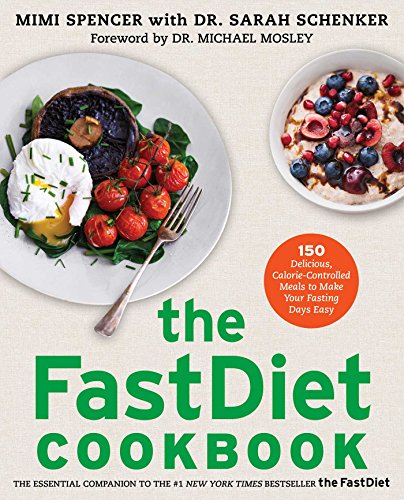
The FastDiet Cookbook: 150 Delicious, Calorie-Controlled Meals to Make Your Fasting Days Easy - Softcover
Inhaltsangabe
The indispensable companion to the #1 New York Times bestselling diet book—enjoy delicious low-calorie meals that can help you lose weight, become heart-healthy, and lower your risk of major diseases.
The FastDiet became an instant international bestseller with a powerful life-changing message: it’s possible to lose weight and reduce your risk of diabetes, cardiovascular disease, and cancer, all while eating what you would normally eat five days a week. You simply cut your caloric intake two days a week to 500 calories for women, 600 for men. Now, the FastDiet Cookbook offers 150 nutritious, low-calorie recipes, ranging from simple breakfasts to leisurely suppers, enabling you to incorporate the FastDiet into your daily life. With this indispensable companion book, you will never have to worry about planning your fast days again!
Die Inhaltsangabe kann sich auf eine andere Ausgabe dieses Titels beziehen.
Über die Autorinnen und Autoren
Mimi Spencer is a feature writer, columnist, and the author of 101 Things to Do Before You Diet.
Dr. Sarah Schenker is a Registered Dietitian and Nutritionist who has served on both professional and government committees. She now combines her sports nutrition work, consulting for football clubs in the UK, with regular appearances on television and writing for scientific journals, as well as for newspapers, magazines, and websites.
Dr. Michael Mosley (1957–2024) was the #1 New York Times bestselling author of The FastDiet, FastExercise, FastLife, The 8-Week Blood Sugar Diet, The Clever Gut Diet, and The Fast800 Diet among others. Dr. Mosley trained to be a doctor at the Royal Free Hospital in London before joining the BBC, where he spent three decades as a science journalist and executive producer. Following his time at the BBC, he was a well-known television personality and won numerous television awards, including an RTS (Royal Television Award), and was named Medical Journalist of the Year by the British Medical Association.
Auszug. © Genehmigter Nachdruck. Alle Rechte vorbehalten.
The Fast Diet Cookbook
contents
Foreword by Dr. Michael Mosley
CHAPTER ONE: All You Need to Know About the FastDiet
CHAPTER TWO: What, When, and How to Eat on a Fast Day
CHAPTER THREE: The Nuts and Bolts of the Book
CHAPTER FOUR: Simple Breakfasts
CHAPTER FIVE: Leisurely Breakfasts
CHAPTER SIX: Simple Suppers
CHAPTER SEVEN: Vegetables
CHAPTER EIGHT: Fish
CHAPTER NINE: Meat & Poultry
CHAPTER TEN: Soups
CHAPTER ELEVEN: Salads
CHAPTER TWELVE: Flavor Savior Condiments
CHAPTER THIRTEEN: Fast Day Snacks
Meal Plans
Fast Day Calorie Countdown
Resources
Glossary
Acknowledgments
About the Authors
About Mimi Spencer and Dr. Sarah Schenker
Notes
Index
The Fast Diet Cookbook
CHAPTER THREE
THE NUTS AND BOLTS OF THE BOOK
Some of the recipes are gloriously simple, others are more complex; some are favorites adapted for the FastDiet, while others introduce new flavor combinations. Some will get you walking or gardening. Others will send you to the cupboard for a bunch of cans.
• The book includes both simple recipes and leisurely recipes, allowing you to spend as much or as little time as you please preparing your fast day food.
• Each recipe has a clear calorie count per portion, with calorie contents increasing as you go through each chapter. The idea is that you can choose a breakfast and a supper, in whatever combination you wish, to arrive at your 500- or 600-calorie budget for the day. For good pairings, refer to the examples in the Meal Plans.
• Some recipes serve two or more—simply because the cooking method works better that way (it’s difficult to make a sauce work for one)—but the calorie count is always for a single portion.
• Feel free to bump up the leafy vegetables in most of the recipes; it won’t make much difference to overall calorie intake, but will add bulk and welcome nutrients.
• Each recipe clearly shows its Nutritional Bonus (look for NB), together with the GI or GL score where useful.
Finding Flavor Without Fat
We all know that adding a generous slab of butter to almost anything will make it taste fantastic. Our job here is to fill the flavor vacuum with something other than saturated fat. In this race, the humble lemon is in pole position: Lemon juice is a remarkable flavor enhancer, capable of lending goodness to countless slow-cooked savory dishes. Roasted garlic is similarly delicious. You’ll discover that plenty of the recipes in this book depend on the “fantastic five”—lime juice, soy sauce, fresh ginger, garlic, and Asian fish sauce—which deliver mighty bursts of flavor with the merest suggestion of calories. Herbs and spices also feature heavily in fast day cooking. Cumin seeds, cardamom pods, sweet Spanish paprika, dense green basil, delicate tendrils of dill . . . they are not garnishes here, but central to the proceedings. Chiles, too, are worth their weight in gold. Do remember to wear gloves when you slice or chop them—your eyes will thank you later.
Here, then, are the basic ingredients for a fast day cupboard.
CARBS
For an alternative to pasta or wheat noodles, try shirataki noodles. Made from a water-soluble, plant-based fiber called glucomannan, they have no fat, sugar, gluten, or starch. No flavor either, so call upon the fantastic five. If you need a bread substitute, have a thin rye crispbread. But as a rule, avoid white carbs on a fast day.
GRAINS
Though carbs are necessarily limited on a fast day, those you do eat should be whole grains, not refined ones—they have more fiber, B vitamins, and other nutrients, and take longer to digest. Quinoa is a great source of protein, as is bulgur, while the best fast day rice is brown basmati. Old-fashioned oatmeal outranks the rest: less processed, more bulky.
LEGUMES
Legumes such as lentils, chickpeas, split peas, and a whole world of beans are excellent sources of plant protein and fiber, and rank low on the GI scale. Toss cans of pintos, borlotti, or butter beans (experiment—you can’t really go wrong) into your shopping cart—you’ll find plenty of recipes here to turn a can into a dinner.
CANNED GOODS
You won’t get far around here without a can of diced tomatoes, so always have one or two on hand (plus a tube of tomato paste to add bass-note depth to all manner of savory dishes). I particularly like fire-roasted tomatoes, which are especially tasty. A couple of cans of tuna (in spring water to minimize calories) and a jar or can of anchovy fillets? Vital.
FATS
Choose “smart fats” over saturated fats, which means butter must take a backseat. Instead, use
Olive oil A monounsaturated oil that is more resistant to the damaging effects of heat than polyunsaturated oils such as corn oil. A recent study from the University of Munich found that olive oil keeps you feeling fuller longer.1 You need expensive extra virgin olive oil only for salad dressings and drizzling; use standard olive oil for cooking.
Unrefined flaxseed oil Flaxseeds are rich in alpha linolenic acid (an omega-3 fat) and are a condensed source of antiviral, antioxidant lignans. Use cold-pressed flaxseed oil for salad dressings (don’t cook with it or you’ll annihilate the goodness).
Coconut oil Slower to oxidize and less damaged by heat than other cooking oils; a good source of heart-healthy fatty acids, and it shouldn’t your raise cholesterol.
Canola oil Only 7 percent saturated fat (butter is 51 percent), and unlike olive oil, it doesn’t degrade at high heat, so this is one for the wok.
DAIRY
Steer clear of heavy dairy on a fast day. Some recipes in this book call for crème fraîche or unflavored low-fat yogurt. It’s worth noting that certain cheeses are lower in calories than others: Feta, for example, is made from sheep’s milk and is a good source of protein, calcium, and vitamin B12. Low-fat mozzarella is a handy staple in the fridge.
SEEDS AND NUTS
Sunflower and pumpkin seeds are nutritious additions to morning muesli and salad suppers, bringing good plant fats to your diet.
Nuts are satiating, full of fiber, and handy to have around when hunger calls. Though they are generally calorific, it’s worth keeping packets of pine nuts, almonds, pistachios, and walnuts (rich in omega-9s) to add to salads and oatmeal.
FLAVORINGS
Your own tastes will dictate exactly what you keep on this shelf (in the cupboard and in the fridge).
Bouillon cubes and powders, including Vegeta
As many spices as you can...
„Über diesen Titel“ kann sich auf eine andere Ausgabe dieses Titels beziehen.
Suchergebnisse für The FastDiet Cookbook: 150 Delicious, Calorie-Controlled...

Beispielbild für diese ISBN
The FastDiet Cookbook: 150 Delicious, Calorie-Controlled Meals to Make Your Fasting Days Easy
Anbieter: World of Books (was SecondSale), Montgomery, IL, USA
Verkäuferbewertung 5 von 5 Sternen

Zustand: Good. Item in good condition. Textbooks may not include supplemental items i.e. CDs, access codes etc. Artikel-Nr. 00085953040
Gebraucht kaufen
EUR 4,04
Versand gratis
Versand innerhalb von USA
Versand innerhalb von USA
Anzahl: 4 verfügbar
Beispielbild für diese ISBN
The FastDiet Cookbook: 150 Delicious, Calorie-Controlled Meals to Make Your Fasting Days Easy
Anbieter: Wonder Book, Frederick, MD, USA
Verkäuferbewertung 5 von 5 Sternen
Zustand: Good. . With remainder mark. Artikel-Nr. B20D-00668
Gebraucht kaufen
EUR 4,85
Versand gratis
Versand innerhalb von USA
Versand innerhalb von USA
Anzahl: 1 verfügbar
Beispielbild für diese ISBN
The FastDiet Cookbook: 150 Delicious, Calorie-Controlled Meals to Make Your Fasting Days Easy
Verlag:
Atria Books (edition Illustrated), 2013
ISBN 10: 1476749868
ISBN 13: 9781476749860
Gebraucht
Paperback
Anbieter: BooksRun, Philadelphia, PA, USA
Verkäuferbewertung 5 von 5 Sternen
Paperback. Zustand: Very Good. Illustrated. It's a well-cared-for item that has seen limited use. The item may show minor signs of wear. All the text is legible, with all pages included. It may have slight markings and/or highlighting. Artikel-Nr. 1476749868-11-1
Gebraucht kaufen
EUR 5,39
Versand gratis
Versand innerhalb von USA
Versand innerhalb von USA
Anzahl: 1 verfügbar
Beispielbild für diese ISBN
The Fastdiet Cookbook: 150 Delicious, Calorie-Controlled Meals to Make Your Fasting Days Easy
Anbieter: ThriftBooks-Dallas, Dallas, TX, USA
Verkäuferbewertung 5 von 5 Sternen
Paperback. Zustand: Good. No Jacket. Pages can have notes/highlighting. Spine may show signs of wear. ~ ThriftBooks: Read More, Spend Less. Artikel-Nr. G1476749868I3N00
Gebraucht kaufen
EUR 5,98
Versand gratis
Versand innerhalb von USA
Versand innerhalb von USA
Anzahl: 1 verfügbar
Beispielbild für diese ISBN
The Fastdiet Cookbook: 150 Delicious, Calorie-Controlled Meals to Make Your Fasting Days Easy
Anbieter: ThriftBooks-Dallas, Dallas, TX, USA
Verkäuferbewertung 5 von 5 Sternen
Paperback. Zustand: As New. No Jacket. Pages are clean and are not marred by notes or folds of any kind. ~ ThriftBooks: Read More, Spend Less. Artikel-Nr. G1476749868I2N00
Gebraucht kaufen
EUR 5,98
Versand gratis
Versand innerhalb von USA
Versand innerhalb von USA
Anzahl: 1 verfügbar
Beispielbild für diese ISBN
The FastDiet Cookbook : 150 Delicious, Calorie-Controlled Meals to Make Your Fasting Days Easy
Verlag:
Atria Books, 2013
ISBN 10: 1476749868
ISBN 13: 9781476749860
Gebraucht
Softcover
Erstausgabe
Anbieter: Better World Books: West, Reno, NV, USA
Verkäuferbewertung 5 von 5 Sternen
Zustand: Good. 1st Edition. Pages intact with minimal writing/highlighting. The binding may be loose and creased. Dust jackets/supplements are not included. Stock photo provided. Product includes identifying sticker. Better World Books: Buy Books. Do Good. Artikel-Nr. 5329556-20
Gebraucht kaufen
EUR 6,49
Versand gratis
Versand innerhalb von USA
Versand innerhalb von USA
Anzahl: 1 verfügbar
Beispielbild für diese ISBN
The FastDiet Cookbook : 150 Delicious, Calorie-Controlled Meals to Make Your Fasting Days Easy
Verlag:
Atria Books, 2013
ISBN 10: 1476749868
ISBN 13: 9781476749860
Gebraucht
Softcover
Erstausgabe
Anbieter: Better World Books, Mishawaka, IN, USA
Verkäuferbewertung 5 von 5 Sternen
Zustand: Good. 1st Edition. Pages intact with minimal writing/highlighting. The binding may be loose and creased. Dust jackets/supplements are not included. Stock photo provided. Product includes identifying sticker. Better World Books: Buy Books. Do Good. Artikel-Nr. 5329556-20
Gebraucht kaufen
EUR 6,49
Versand gratis
Versand innerhalb von USA
Versand innerhalb von USA
Anzahl: 1 verfügbar
Beispielbild für diese ISBN
The FastDiet Cookbook: 150 Delicious, Calorie-Controlled Meals to Make Your Fasting Days Easy
Anbieter: Wonder Book, Frederick, MD, USA
Verkäuferbewertung 5 von 5 Sternen
Zustand: Very Good. Very Good condition. With remainder mark. A copy that may have a few cosmetic defects. May also contain light spine creasing or a few markings such as an owner's name, short gifter's inscription or light stamp. Artikel-Nr. Y09J-00328
Gebraucht kaufen
EUR 6,90
Versand gratis
Versand innerhalb von USA
Versand innerhalb von USA
Anzahl: 1 verfügbar
Beispielbild für diese ISBN
The FastDiet Cookbook: 150 Delicious, Calorie-Controlled Meals to Make Your Fasting Days Easy
Anbieter: Wonder Book, Frederick, MD, USA
Verkäuferbewertung 5 von 5 Sternen
Zustand: Very Good. Very Good condition. A copy that may have a few cosmetic defects. May also contain light spine creasing or a few markings such as an owner's name, short gifter's inscription or light stamp. Artikel-Nr. V14B-04929
Gebraucht kaufen
EUR 6,90
Versand gratis
Versand innerhalb von USA
Versand innerhalb von USA
Anzahl: 2 verfügbar
Beispielbild für diese ISBN
The Fastdiet Cookbook: 150 Delicious, Calorie-Controlled Meals to Make Your Fasting Days Easy
Anbieter: AwesomeBooks, Wallingford, Vereinigtes Königreich
Verkäuferbewertung 5 von 5 Sternen
Zustand: Very Good. This book is in very good condition and will be shipped within 24 hours of ordering. The cover may have some limited signs of wear but the pages are clean, intact and the spine remains undamaged. This book has clearly been well maintained and looked after thus far. Money back guarantee if you are not satisfied. See all our books here, order more than 1 book and get discounted shipping. . Artikel-Nr. 7719-9781476749860
Gebraucht kaufen
EUR 3,46
EUR 4,91 Versand
Versand von Vereinigtes Königreich nach USA
Versand von Vereinigtes Königreich nach USA
Anzahl: 2 verfügbar