
Verwandte Artikel zu p53: The Gene that Cracked the Cancer Code
Inhaltsangabe
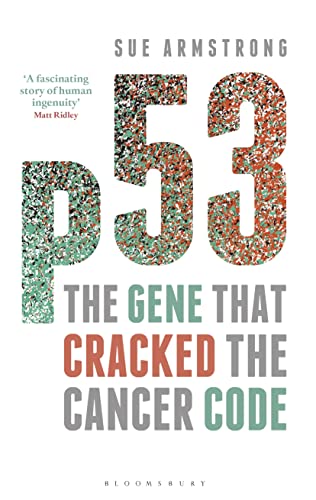
The story of the search for p53 - the most important gene in medicine. Shortlisted for the BMA Medical Book Awards 2015.
Die Inhaltsangabe kann sich auf eine andere Ausgabe dieses Titels beziehen.
Über die Autorin bzw. den Autor
Sue Armstrong is a science writer and broadcaster based in Edinburgh. She has worked for a variety of media organisations, including New Scientist, and since the 1980s has undertaken regular assignments for the World Health Organization (WHO) and UNAIDS, writing about women's health issues and the AIDS pandemic, among many other topics, and reporting from the frontline in countries as diverse as Haiti, Papua New Guinea, Uganda, Thailand, Namibia and Serbia. Sue has been involved, as presenter, writer and researcher, in several major documentaries for BBC Radio 4; programmes have focused on the biology of ageing, and of drug addiction, alcoholism, obesity, AIDS, CJD, cancer and stress. Her books p53: The Gene that Cracked the Cancer Code and Borrowed Time: The Science of How and Why We Age are published by Bloomsbury Sigma.
Auszug. © Genehmigter Nachdruck. Alle Rechte vorbehalten.
p53
The Gene That Cracked The Cancer Code
By Sue ArmstrongBloomsbury Publishing Plc
Copyright © 2014 Sue Armstrong
All rights reserved.
ISBN: 978-1-4729-1051-6All rights reserved.
Contents
Preface, 9,
Chapter 1: Flesh of our Own Flesh, 17,
Chapter 2: The Enemy Within, 27,
Chapter 3: Discovery, 39,
Chapter 4: Unseeable Biology, 53,
Chapter 5: Cloning the Gene, 59,
Chapter 6: A Case of Mistaken Identity, 67,
Chapter 7: A New Angle on Cancer, 75,
Chapter 8: p53 Reveals its True Colours, 89,
Chapter 9: Master Switch, 101,
Chapter 10: 'Guardian of the Genome', 109,
Chapter 11: Of Autumn Leaves and Cell Death, 123,
Chapter 12: Of Mice and Men, 133,
Chapter 13: The Guardian's Gatekeeper, 151,
Chapter 14: The Smoking Gun, 157,
Chapter 15: Following the Fingerprints, 171,
Chapter 16: Cancer in the Family, 183,
Chapter 17: The Tropeiro Connection?, 197,
Chapter 18: Jekyll and Hyde, 213,
Chapter 19: Cancer and Ageing: A Balancing Act?, 229,
Chapter 20: The Treatment Revolution, 239,
Dramatis Personae, 261,
Glossary, 265,
Notes on Sources, 269,
Acknowledgements, 279,
Index, 281,
CHAPTER 1
Flesh of our Own Flesh
In which we learn that cancer is more than 200 different diseases, but they all share some common characteristics – the most important being that, if p53 is functioning properly, a cell cannot turn malignant.
* * *
Tumours destroy man in a unique and appalling way, as flesh of his own flesh which has somehow been rendered proliferative, rampant, predatory and ungovernable.
Peyton Rous
'The question that's obsessed me for the whole of my career is: why is cancer so rare?' Gerard Evan, a professor of molecular biology at the University of California, San Francisco, and Cambridge, England, pauses to let his comment sink in. He knows it will startle me, for the statistics most commonly quoted in the media paint a bleak picture: that one in three of us will be diagnosed with cancer at some point in our lives and one in four of us will die of the disease. But Evan, talking to me in his office in the Sanger Building in a leafy corner of Cambridge about his years of research at the most fundamental level of the genes, is looking at cancer from the viewpoint of the cells, not of the whole human being. It takes just one rogue cell which has lost its normal regulatory machinery and run haywire to trigger cancer, yet billions upon billions of cells in our bodies that are growing and replicating themselves all the time do so typically for 50, 60 years or more without producing a tumour. And in two in three of us they never do. 'I mean, if you were doing the lottery you'd never gamble on this!' continues Evan. 'Cancers do arise, but clearly we've evolved amazingly elaborate and effective mechanisms to restrict the spontaneous evolution of autonomous cells within our bodies. And even though we bomb ourselves with mutagens and carcinogens and do all sorts of things we shouldn't do, still most people die of heart disease; they don't die of cancer.'
A measure of just how resistant our cells are to corruption is the fact that a goodly chunk of our DNA – nature's instruction manual for building our bodies – can be traced back to the original single- celled organism known as the 'last universal common ancestor' of all life on earth (often referred to by the acronym LUCA), whose existence was first proposed by Charles Darwin in his book On the Origin of Species, published in 1859. In other words, some of our genes are more than 3.5 million years old and have been passed down faithfully from one generation to the next over unimaginable eons of time.
The term 'cancer' represents not one but a collection of around 200 different diseases which share this common characteristic: they all originate from a single cell that has become corrupted. The great majority of cancers – well over 80 per cent – are carcinomas, which means they are in the epithelial cells that form the outer membranes of all the organs, tubes and cavities in our bodies, and include our skin. The connective tissue, which provides the structural framework for our bodies, and support and packaging for the other tissues and organs – it includes, for example, bone, cartilage, fibrous tissue such as tendons and ligaments, collagen and fatty tissue – appears extremely resistant to turning malignant. Sarcomas, which are cancers of the connective tissue, account for only about one in a hundred cases.
No one yet knows the reason for this bias, though speculation is intense. Could it be that epithelial cells tend to divide more often than connective tissue cells and the opportunity for mutation is much greater? Our skin, for instance, has an intense programme of self-renewal with cells at the base layer dividing and undergoing processes of differentiation and maturation as they push up towards the surface, where they are eventually sloughed off (that's what causes the tidemark around the bathtub). The lining of the gut, too, is constantly renewing itself, and the sloughed cells are excreted. However, an argument against high rates of proliferation being the main reason why epithelial cells are at greatest risk of malignancy is the fact that some of the most cancer- prone epithelial cells are not ones that divide most frequently. Some suggest that it is because epithelial cells are a first line of defence against the outside world and are more likely to come into contact with cancer- causing agents. But this argument too has weaknesses, since epithelial and connective tissue cells are equally exposed to carcinogens in some organs, notably the prostate, yet the epithelial cells are the more vulnerable.
Looking for answers to this conundrum, one lab took samples of healthy breast tissue, teased apart connective tissue cells from epithelial cells and watched what happened when they attacked them with chemical carcinogens in their Petri dishes. To their surprise, they saw that the two cell types reacted completely differently, though they still don't know exactly how or why. That's the Holy Grail, as it might point to chinks in cancer's armour as targets for new drugs.
Tumours typically arise from the pool of stem cells in a tissue that are responsible for the repair and replacement of cells as part of the routine maintenance of our bodies. It can take years, even decades, for a rogue cell to grow into a tumour that is detectable. This is because it depends on progressive breakdown of the cellular machinery through the mutation and/or loss of crucial genes that regulate growth, replication, repair and timely death of cells – mutations that occur independently and, crucially, don't result in the cell being eliminated, which is the normal fate of damaged cells. The growing tumour is parasitic: it competes with the normal cells around it for nutrients and oxygen, and it can't grow much beyond 1–2mm (1/25th–1/12th of an inch) in diameter unless it develops its own blood supply.
What distinguishes a malignant tumour from a benign one is the former's ability to spread – to send out microscopic shoots that penetrate the walls and invade neighbouring tissue, and to seed itself in distant sites from breakaway cells carried in the bloodstream or lymph system. Blood-borne dissemination is particularly efficient at spreading cancer, with the blood depositing its cargo of delinquent cells along natural drainage sites, most commonly the liver and...
„Über diesen Titel“ kann sich auf eine andere Ausgabe dieses Titels beziehen.
Suchergebnisse für p53: The Gene that Cracked the Cancer Code

Beispielbild für diese ISBN
P53: The Gene That Cracked the Cancer Code
Anbieter: ThriftBooks-Reno, Reno, NV, USA
Verkäuferbewertung 5 von 5 Sternen

Hardcover. Zustand: Very Good. No Jacket. Former library book; May have limited writing in cover pages. Pages are unmarked. ~ ThriftBooks: Read More, Spend Less. Artikel-Nr. G1472910516I4N10
Gebraucht kaufen
EUR 6,03
Versand gratis
Versand innerhalb von USA
Versand innerhalb von USA
Anzahl: 1 verfügbar
Beispielbild für diese ISBN
P53: The Gene That Cracked the Cancer Code
Anbieter: ThriftBooks-Dallas, Dallas, TX, USA
Verkäuferbewertung 5 von 5 Sternen
Hardcover. Zustand: Very Good. No Jacket. Missing dust jacket; May have limited writing in cover pages. Pages are unmarked. ~ ThriftBooks: Read More, Spend Less. Artikel-Nr. G1472910516I4N01
Gebraucht kaufen
EUR 6,06
Versand gratis
Versand innerhalb von USA
Versand innerhalb von USA
Anzahl: 1 verfügbar
Beispielbild für diese ISBN
P53: The Gene That Cracked the Cancer Code
Anbieter: ThriftBooks-Atlanta, AUSTELL, GA, USA
Verkäuferbewertung 5 von 5 Sternen
Hardcover. Zustand: Very Good. No Jacket. Former library book; May have limited writing in cover pages. Pages are unmarked. ~ ThriftBooks: Read More, Spend Less. Artikel-Nr. G1472910516I4N10
Gebraucht kaufen
EUR 6,06
Versand gratis
Versand innerhalb von USA
Versand innerhalb von USA
Anzahl: 1 verfügbar
Beispielbild für diese ISBN
P53: The Gene That Cracked the Cancer Code
Anbieter: ThriftBooks-Dallas, Dallas, TX, USA
Verkäuferbewertung 5 von 5 Sternen
Hardcover. Zustand: Very Good. No Jacket. Former library book; May have limited writing in cover pages. Pages are unmarked. ~ ThriftBooks: Read More, Spend Less. Artikel-Nr. G1472910516I4N10
Gebraucht kaufen
EUR 6,06
Versand gratis
Versand innerhalb von USA
Versand innerhalb von USA
Anzahl: 1 verfügbar
Beispielbild für diese ISBN
P53: The Gene That Cracked the Cancer Code
Anbieter: ThriftBooks-Dallas, Dallas, TX, USA
Verkäuferbewertung 5 von 5 Sternen
Hardcover. Zustand: Very Good. No Jacket. May have limited writing in cover pages. Pages are unmarked. ~ ThriftBooks: Read More, Spend Less. Artikel-Nr. G1472910516I4N00
Gebraucht kaufen
EUR 6,06
Versand gratis
Versand innerhalb von USA
Versand innerhalb von USA
Anzahl: 1 verfügbar
Beispielbild für diese ISBN
P53: The Gene That Cracked the Cancer Code
Anbieter: ThriftBooks-Atlanta, AUSTELL, GA, USA
Verkäuferbewertung 5 von 5 Sternen
Hardcover. Zustand: Good. No Jacket. Former library book; Pages can have notes/highlighting. Spine may show signs of wear. ~ ThriftBooks: Read More, Spend Less. Artikel-Nr. G1472910516I3N10
Gebraucht kaufen
EUR 6,06
Versand gratis
Versand innerhalb von USA
Versand innerhalb von USA
Anzahl: 1 verfügbar
Beispielbild für diese ISBN
p53: The Gene that Cracked the Cancer Code
Verlag:
Bloomsbury Publishing PLC, 2014
ISBN 10: 1472910516
ISBN 13: 9781472910516
Gebraucht
Hardcover
Anbieter: World of Books (was SecondSale), Montgomery, IL, USA
Verkäuferbewertung 5 von 5 Sternen
Hardback. Zustand: Good. All of us have lurking in our DNA a most remarkable gene, which has a crucial job ? it protects us from cancer. Known simply as p53, this gene constantly scans our cells to ensure that they grow and divide without mishap, as part of the routine maintenance of our bodies. If a cell makes a mistake in copying its DNA during the process of division, p53 stops it in its tracks, summoning a repair team before allowing the cell to carry on dividing. If the mistake is irreparable and the rogue cell threatens to grow out of control, p53 commands the cell to commit suicide. Cancer cannot develop unless p53 itself is damaged or prevented from functioning normally.Perhaps unsurprisingly, p53 is the most studied single gene in history.This book tells the story of medical science?s mission to unravel the mysteries of this crucial gene, and to get to the heart of what happens in our cells when they turn cancerous. Through the personal accounts of key researchers, p53: The Gene that Cracked the Cancer Code reveals the fascination of the quest for scientific understanding, as well as the huge excitement of the chase for new cures ? the hype, the enthusiasm, the lost opportunities, the blind alleys, and the thrilling breakthroughs. And as the long-anticipated revolution in cancer treatment tailored to each individual patient?s symptoms begins to take off at last, p53 remains at the cutting edge.This timely tale of scientific discovery highlights the tremendous recent advances made in our understanding of cancer, a disease that affects more than one in three of us at some point in our lives. Artikel-Nr. 00104389689
Gebraucht kaufen
EUR 6,13
Versand gratis
Versand innerhalb von USA
Versand innerhalb von USA
Anzahl: 3 verfügbar
Beispielbild für diese ISBN
P53 : The Gene That Cracked the Cancer Code
Verlag:
Bloomsbury Publishing USA, 2015
ISBN 10: 1472910516
ISBN 13: 9781472910516
Gebraucht
Hardcover
Erstausgabe
Anbieter: Better World Books: West, Reno, NV, USA
Verkäuferbewertung 5 von 5 Sternen
Zustand: Good. 1st Edition. Former library copy. Pages intact with minimal writing/highlighting. The binding may be loose and creased. Dust jackets/supplements are not included. Includes library markings. Stock photo provided. Product includes identifying sticker. Better World Books: Buy Books. Do Good. Artikel-Nr. GRP95804801
Gebraucht kaufen
EUR 7,19
Versand gratis
Versand innerhalb von USA
Versand innerhalb von USA
Anzahl: 1 verfügbar
Beispielbild für diese ISBN
P53 : The Gene That Cracked the Cancer Code
Verlag:
Bloomsbury Publishing USA, 2015
ISBN 10: 1472910516
ISBN 13: 9781472910516
Gebraucht
Hardcover
Erstausgabe
Anbieter: Better World Books, Mishawaka, IN, USA
Verkäuferbewertung 5 von 5 Sternen
Zustand: Good. 1st Edition. Pages intact with minimal writing/highlighting. The binding may be loose and creased. Dust jackets/supplements are not included. Stock photo provided. Product includes identifying sticker. Better World Books: Buy Books. Do Good. Artikel-Nr. 6461132-6
Gebraucht kaufen
EUR 7,19
Versand gratis
Versand innerhalb von USA
Versand innerhalb von USA
Anzahl: 1 verfügbar
Beispielbild für diese ISBN
P53 : The Gene That Cracked the Cancer Code
Verlag:
Bloomsbury Publishing USA, 2015
ISBN 10: 1472910516
ISBN 13: 9781472910516
Gebraucht
Hardcover
Erstausgabe
Anbieter: Better World Books: West, Reno, NV, USA
Verkäuferbewertung 5 von 5 Sternen
Zustand: Very Good. 1st Edition. Pages intact with possible writing/highlighting. Binding strong with minor wear. Dust jackets/supplements may not be included. Stock photo provided. Product includes identifying sticker. Better World Books: Buy Books. Do Good. Artikel-Nr. 11784143-6
Gebraucht kaufen
EUR 7,19
Versand gratis
Versand innerhalb von USA
Versand innerhalb von USA
Anzahl: 1 verfügbar