
Verwandte Artikel zu Scone Island (Ike Schwartz Series, 8)
Inhaltsangabe
"All the fast-paced action and danger readers have come to expect." ―Kirkus Reviews
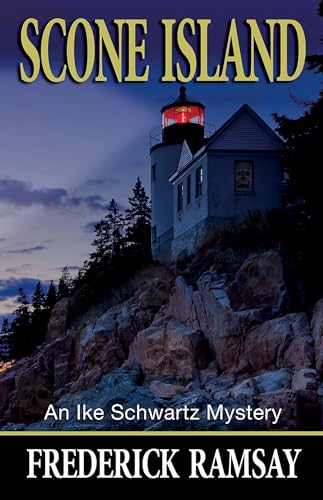
Ike Schwartz, Sheriff of Picketsville, Virginia, and his fiancée Ruth Dennis, the President of a local university, seek asylum from a trying year of academic and local politics on Scone Island, four miles off the coast of Maine. Its lack of electricity, reliable water supply, and phone service guarantee their seclusion and peace. The suspicious accident that resulted in the death of the mysterious Harmon Staley should not concern them at all. And it doesn't...until Ike's past as a CIA agent rolls in on him like the area's famous twelve-foot tides. Two more murders involving former colleagues send Ike's old CIA friend Charlie Garland searching for a connection. Stonewalling by the CIA and conspiracies―real and imagined―leave Ike and Ruth facing an unknown number of determined assassins alone on the island. Then Ruth's mother decides to drop in on them just as the excitement begins....
Die Inhaltsangabe kann sich auf eine andere Ausgabe dieses Titels beziehen.
Über die Autorin bzw. den Autor
Frederick Ramsay was raised on the east coast and attended graduate school in Chicago. He was a writer of mysteries set in Virginia, (the Ike Schwartz Mysteries) Botswana Mystery series, Jerusalem Mystery series and stand-alones (Impulse, Judas: The Gospel of Betrayal). He was a retired Episcopal Priest, Academic, and author.
Auszug. © Genehmigter Nachdruck. Alle Rechte vorbehalten.
Scone Island
An Ike Schwartz MysteryBy Frederick RamsayPoisoned Pen Press
Copyright © 2012 Frederick RamsayAll right reserved.
ISBN: 978-1-46420-055-7
Chapter One
Harmon Staley would never be thought of as a patient man. Those who knew him well kept their distance unless business or necessity required them to do otherwise. Yet he'd listened to Barstow's offer several times. His response never changed. Would he sell Cliffside? No, he would not. Neither would he approach the Scone Island Owners Association about the project. Yes, he would support any plan within reason to develop the island into an upscale resort. He would not do so, however, if it meant investing in Barstow's company or a substantial dollar assessment on the other owners."Barstow, you do not strike me as Colin Tennant, and Scone Island is certainly no Mustique," he'd said at the time.
Barstow had replied, "Pardon?"
"Not important—some Scottish Lord who bought an island like you're trying to do, and after he had his fun with celebrities and their entourages, he lost his shirt. Are you prepared to lose your shirt, Barstow? There is no electrical power here, no certain supply of water, and no phone service. How do you plan to turn this rock in the middle of nowhere into a resort?"
But the man only smiled. "I suppose the same way you intend to turn that tumbledown monstrosity of yours into a bed-and-breakfast." And then he shrugged as if the two of them shared a secret, as if they alone knew what others did not, as if they coconspired in a complex scheme, an adventure. Harmon guessed that Barstow had no clue as to what either of them might or might not know, and the smug "I know something you don't know" expression infuriated him almost as much as the constant pestering. Only reluctantly had he agreed to meet Barstow for what he hoped would be a final and successful attempt to get rid of the developer. He couldn't possibly know the secret.
"A compromise," Barstow had said. "A sweetener."
In the days Harmon would refer to as his "previous life," he might have wondered at Barstow, would have had his antennae up, so to speak. Certainly he would have been more cautious. After all, he had not lived this long by being careless. But since he'd reinvented himself for this new stage in his life and since this was a piece of the Maine coast at the end of never, what were the chances something could go wrong?
Against his better judgment, he'd agreed to meet the man one last time. He paced the length of the big house's porch, oblivious to the structure's peeling paint and badly weathered and missing shakes, nothing that a small infusion of money could not fix. Where this money might come from remained a mystery to those who saw this latest member of the island's population as a somewhat seedy and down-at-the-heels opportunist. They could not have guessed that Harmon had assets. That he only had to sit tight for a few more months until no one would notice, or care, or dare object to the slow hemorrhage of funds from one or more of those ubiquitous off-budget, off-shore accounts into his personal account.
No need to stir up the suits in accounting or the IRS, not yet. Especially the IRS. Slow and steady would do the job. Hell, as far as Harmon was concerned, they owed him for all he'd done for them over the years, ungrateful bastards! They owed him big time. Instead, they'd chosen to dump him. Well then, they'd pay for that, simple. No way would he'd give it back either. To hell with the big shots and all the pussies who worked down there. He'd paid his life insurance premiums, and as far as they were concerned he was officially dead. So, okay fine, now he'd be his own beneficiary. He looked at his watch. What had happened to Barstow anyway?
Night rolled in from the west like the twelve foot tides that characterized this part of the Maine coast, accompanied by a salty mist that hung in the air and made Harmon uneasy. He couldn't say why. He walked to the center of the porch ignoring the squeak of loose boards, pivoted on his heel and started back the way he'd come. Soon he'd need to light a lamp. He stretched and searched his pockets for a match. What was keeping that smarmy wheeler-dealer anyway? He heard a scraping sound behind him. How had Barstow arrived at Cliffside without walking up the path? Harmon turned and squinted into the darkness.
"So, it's you," he said. And after a pause, "How'd you find me?"
"It was only a matter of time. I have friends in high places."
"How high would that be? Never mind. So, what happens now?"
"We walk. We talk."
* * *
Mary Smithwick had celebrated her seventy-fifth birthday the previous month, shortly before she left Chevy Chase to take up her annual summer residence on Scone Island. Her early arrival in late May meant it was her year to open her house before the rest of the family, if any, arrived in the third week of June.
She and her family, when she still had one, had spent the three summer months, June, July, and August, on the island every year as far back as she could remember. No, that wasn't correct. There were those years in the mid-forties during the war when it was not possible to travel from Utica, where she'd grown up, to the island. Her memories were sketchy as she'd been very young at the time. The government restricted travel back then and the Coast Guard had taken up a position on the island. They'd replaced the old light house on the eastern point of the island with a watch tower to surveil for German U-boats and to track convoys heading across the Atlantic to England or Murmansk. Also, they had established a Coast Guard Station in Southport in the Bite ostensibly to serve as a rescue point should one of the ships, Liberty Ships they were called, be torpedoed and sink.
The coast artillery arrived shortly afterwards and built gun emplacements on the point next to the tower as well. She couldn't remember if they'd ever fired at a German submarine—or was it aircraft? She never found out which, but in any case, she liked to think they had. During the war years, most of the cottages had been commandeered by the government to house their personnel. The few families who'd managed to get to the island then had stories to tell. Oh, my, yes. Well, that was a long time ago and the world had changed so much. Now she enjoyed her retirement after thirty years of government service, alternately living out the winter months in the snug condominium she owned in Maryland and summering on the island. Old friends from the past made sure there was always something for her to do so her mind stayed active and excited even if her body had lost some of its spring.
She walked steadily along the gravel path the residents insisted on calling West Road, to Cliffside, the largest house on the island. Harmon Staley, who'd bought Cliffside from the Willards back in the fall had said, "Yes, indeed, you're more than welcome to pick wild strawberries over on the fence line." Cliffside, for as long as she could remember, had had tiny wild berries ripening under the leaves that collected at the fence every spring—weeks before the cultivated ones were ready elsewhere. It had become a Scone Island tradition—or once was. Not many of the new owners or the descendents of the old ones cared for that sort of thing. Nobody picked wild berries anymore, much less put them up. If she gathered enough, she wanted to put up one jar of jam for Mr. Staley, poor thing.
Mary had a generous spirit and...
„Über diesen Titel“ kann sich auf eine andere Ausgabe dieses Titels beziehen.
Suchergebnisse für Scone Island (Ike Schwartz Series, 8)

Beispielbild für diese ISBN
Scone Island (Ike Schwartz Series, 8)
Anbieter: Wonder Book, Frederick, MD, USA
Verkäuferbewertung 5 von 5 Sternen

Zustand: Good. Good condition. Volume 8. A copy that has been read but remains intact. May contain markings such as bookplates, stamps, limited notes and highlighting, or a few light stains. Artikel-Nr. D03G-02461
Gebraucht kaufen
EUR 6,49
Versand gratis
Versand innerhalb von USA
Versand innerhalb von USA
Anzahl: 1 verfügbar
Beispielbild für diese ISBN
Scone Island (Ike Schwartz Series, 8)
Anbieter: California Books, Miami, FL, USA
Verkäuferbewertung 5 von 5 Sternen
Zustand: New. Artikel-Nr. I-9781464200557
Neu kaufen
EUR 19,50
EUR 2,70 Versand
Versand innerhalb von USA
Versand innerhalb von USA
Anzahl: Mehr als 20 verfügbar
Beispielbild für diese ISBN
Scone Island: An Ike Schwartz Mystery
Anbieter: Revaluation Books, Exeter, Vereinigtes Königreich
Verkäuferbewertung 5 von 5 Sternen
Paperback. Zustand: Brand New. 250 pages. 8.49x5.57x0.77 inches. In Stock. Artikel-Nr. x-1464200556
Neu kaufen
EUR 22,13
EUR 11,97 Versand
Versand von Vereinigtes Königreich nach USA
Versand von Vereinigtes Königreich nach USA
Anzahl: 2 verfügbar
Foto des Verkäufers
Scone Island
Anbieter: AHA-BUCH GmbH, Einbeck, Deutschland
Verkäuferbewertung 5 von 5 Sternen
Taschenbuch. Zustand: Neu. Neuware - 'All the fast-paced action and danger readers have come to expect.' --Kirkus ReviewsIke Schwartz, Sheriff of Picketsville, Virginia, and his fiancée Ruth Dennis, the President of a local university, seek asylum from a trying year of academic and local politics on Scone Island, four miles off the coast of Maine. Its lack of electricity, reliable water supply, and phone service guarantee their seclusion and peace. The suspicious accident that resulted in the death of the mysterious Harmon Staley should not concern them at all. And it doesn't.until Ike's past as a CIA agent rolls in on him like the area's famous twelve-foot tides. Two more murders involving former colleagues send Ike's old CIA friend Charlie Garland searching for a connection. Stonewalling by the CIA and conspiracies--real and imagined--leave Ike and Ruth facing an unknown number of determined assassins alone on the island. Then Ruth's mother decides to drop in on them just as the excitement begins. Artikel-Nr. 9781464200557
Neu kaufen
EUR 26,98
EUR 35,00 Versand
Versand von Deutschland nach USA
Versand von Deutschland nach USA
Anzahl: 2 verfügbar
Foto des Verkäufers
Scone Island
Anbieter: moluna, Greven, Deutschland
Verkäuferbewertung 5 von 5 Sternen
Zustand: New. Praise for Scone Island. All the fast-paced action and danger readers have come to expect. -Kirkus Reviews Surefooted prose speeds this well-told tale of greed and betrayal among the nation s covert elite. Ruth and Ike s intellectual bickering will a. Artikel-Nr. 902947678
Neu kaufen
EUR 20,06
EUR 48,99 Versand
Versand von Deutschland nach USA
Versand von Deutschland nach USA
Anzahl: Mehr als 20 verfügbar