
Verwandte Artikel zu The Mindful Way Workbook: An 8-week Program to Free...
The Mindful Way Workbook: An 8-week Program to Free Yourself from Depression and Emotional Distress - Softcover
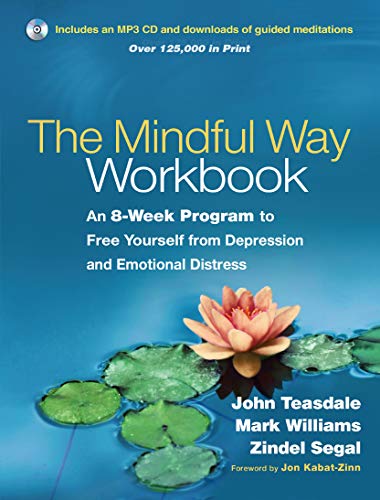
Inhaltsangabe
Imagine an 8-week program that can help you overcome depression, anxiety, and stress--by simply learning new ways to respond to your own thoughts and feelings. That program is mindfulness-based cognitive therapy (MBCT), and it has been tested and proven effective in clinical trials throughout the world. Now you can get the benefits of MBCT any time, any place, by working through this carefully constructed book. For each week, the expert authors introduce specific mindfulness practices to try (with accompanying audio downloads), reflection questions, comments from others going through the program, and tools for keeping track of progress, which you can download and print for repeated use. Like a trusted map, this book guides you step by step along the path of change.
See also the authors' The Mindful Way through Depression, which demonstrates these proven strategies with in-depth stories and examples. Plus, mental health professionals, see also the authors' bestselling therapy guide: Mindfulness-Based Cognitive Therapy for Depression, Second Edition.
Winner (Second Place)--American Journal of Nursing Book of the Year Award, Consumer Health Category
See also the authors' The Mindful Way through Depression, which demonstrates these proven strategies with in-depth stories and examples. Plus, mental health professionals, see also the authors' bestselling therapy guide: Mindfulness-Based Cognitive Therapy for Depression, Second Edition.
Winner (Second Place)--American Journal of Nursing Book of the Year Award, Consumer Health Category
Die Inhaltsangabe kann sich auf eine andere Ausgabe dieses Titels beziehen.
Über die Autorinnen und Autoren
John Teasdale, PhD, held a Special Scientific Appointment with the United Kingdom Medical Research Council’s Cognition and Brain Sciences Unit in Cambridge. He is a Fellow of the British Academy and the Academy of Medical Sciences. He collaborated with Mark Williams and Zindel Segal in developing mindfulness-based cognitive therapy (MBCT) to prevent relapse and recurrence in major depression; together, they coauthored Mindfulness-Based Cognitive Therapy for Depression, Second Edition (for mental health professionals), as well as the self-help guides The Mindful Way Workbook and (with Jon Kabat-Zinn) The Mindful Way through Depression. Since retiring, Dr. Teasdale has taught mindfulness and insight meditation internationally. He continues to explore and seek to understand the wider implications of mindfulness and meditation for enhancing our way of being.
Mark Williams, DPhil, is Emeritus Professor of Clinical Psychology at the University of Oxford, having been Wellcome Principal Research Fellow at Oxford from 2003 to 2012 and at Bangor University from 1991 to 2002. He collaborated with John Teasdale and Zindel Segal in developing mindfulness-based cognitive therapy (MBCT) to prevent relapse and recurrence in major depression; together, they coauthored Mindfulness-Based Cognitive Therapy for Depression, Second Edition (for mental health professionals), as well as the self-help guides The Mindful Way Workbook and (with Jon Kabat-Zinn) The Mindful Way through Depression. Dr. Williams is also coauthor of Mindfulness-Based Cognitive Therapy with People at Risk of Suicide (for mental health professionals). He is a Fellow of the British Psychological Society, the Academy of Medical Sciences and the British Academy. Now retired, he continues to live near Oxford, to teach mindfulness to teachers-in-training across the world, and to explore, with colleagues, how mindfulness might be used in evidence-based public policy.
Zindel V. Segal, PhD, is Distinguished Professor of Psychology in Mood Disorders at the University of Toronto–Scarborough. He is Director of Clinical Training in the Clinical Psychological Science Program and is also Professor in the Department of Psychiatry. Dr. Segal has conducted influential research into the psychological processes that make certain people more vulnerable than others to developing depression and experiencing recurrent episodes. He actively advocates for the relevance of mindfulness-based clinical care in psychiatry and mental health. He collaborated with John Teasdale and Mark Williams in developing mindfulness-based cognitive therapy (MBCT) to prevent relapse and recurrence in major depression; together, they coauthored Mindfulness-Based Cognitive Therapy for Depression, Second Edition (for mental health professionals), as well as the self-help guides The Mindful Way Workbook and (with Jon Kabat-Zinn) The Mindful Way through Depression.
Mark Williams, DPhil, is Emeritus Professor of Clinical Psychology at the University of Oxford, having been Wellcome Principal Research Fellow at Oxford from 2003 to 2012 and at Bangor University from 1991 to 2002. He collaborated with John Teasdale and Zindel Segal in developing mindfulness-based cognitive therapy (MBCT) to prevent relapse and recurrence in major depression; together, they coauthored Mindfulness-Based Cognitive Therapy for Depression, Second Edition (for mental health professionals), as well as the self-help guides The Mindful Way Workbook and (with Jon Kabat-Zinn) The Mindful Way through Depression. Dr. Williams is also coauthor of Mindfulness-Based Cognitive Therapy with People at Risk of Suicide (for mental health professionals). He is a Fellow of the British Psychological Society, the Academy of Medical Sciences and the British Academy. Now retired, he continues to live near Oxford, to teach mindfulness to teachers-in-training across the world, and to explore, with colleagues, how mindfulness might be used in evidence-based public policy.
Zindel V. Segal, PhD, is Distinguished Professor of Psychology in Mood Disorders at the University of Toronto–Scarborough. He is Director of Clinical Training in the Clinical Psychological Science Program and is also Professor in the Department of Psychiatry. Dr. Segal has conducted influential research into the psychological processes that make certain people more vulnerable than others to developing depression and experiencing recurrent episodes. He actively advocates for the relevance of mindfulness-based clinical care in psychiatry and mental health. He collaborated with John Teasdale and Mark Williams in developing mindfulness-based cognitive therapy (MBCT) to prevent relapse and recurrence in major depression; together, they coauthored Mindfulness-Based Cognitive Therapy for Depression, Second Edition (for mental health professionals), as well as the self-help guides The Mindful Way Workbook and (with Jon Kabat-Zinn) The Mindful Way through Depression.
John Teasdale, PhD, held a Special Scientific Appointment with the United Kingdom Medical Research Council’s Cognition and Brain Sciences Unit in Cambridge. He is a Fellow of the British Academy and the Academy of Medical Sciences. He collaborated with Mark Williams and Zindel Segal in developing mindfulness-based cognitive therapy (MBCT) to prevent relapse and recurrence in major depression; together, they coauthored Mindfulness-Based Cognitive Therapy for Depression, Second Edition (for mental health professionals), as well as the self-help guides The Mindful Way Workbook and (with Jon Kabat-Zinn) The Mindful Way through Depression. Since retiring, Dr. Teasdale has taught mindfulness and insight meditation internationally. He continues to explore and seek to understand the wider implications of mindfulness and meditation for enhancing our way of being.
Mark Williams, DPhil, is Emeritus Professor of Clinical Psychology at the University of Oxford, having been Wellcome Principal Research Fellow at Oxford from 2003 to 2012 and at Bangor University from 1991 to 2002. He collaborated with John Teasdale and Zindel Segal in developing mindfulness-based cognitive therapy (MBCT) to prevent relapse and recurrence in major depression; together, they coauthored Mindfulness-Based Cognitive Therapy for Depression, Second Edition (for mental health professionals), as well as the self-help guides The Mindful Way Workbook and (with Jon Kabat-Zinn) The Mindful Way through Depression. Dr. Williams is also coauthor of Mindfulness-Based Cognitive Therapy with People at Risk of Suicide (for mental health professionals). He is a Fellow of the British Psychological Society, the Academy of Medical Sciences and the British Academy. Now retired, he continues to live near Oxford, to teach mindfulness to teachers-in-training across the world, and to explore, with colleagues, how mindfulness might be used in evidence-based public policy.
Zindel V. Segal, PhD, is Distinguished Professor of Psychology in Mood Disorders at the University of Toronto–Scarborough. He is Director of Clinical Training in the Clinical Psychological Science Program and is also Professor in the Department of Psychiatry. Dr. Segal has conducted influential research into the psychological processes that make certain people more vulnerable than others to developing depression and experiencing recurrent episodes. He actively advocates for the relevance of mindfulness-based clinical care in psychiatry and mental health. He collaborated with John Teasdale and Mark Williams in developing mindfulness-based cognitive therapy (MBCT) to prevent relapse and recurrence in major depression; together, they coauthored Mindfulness-Based Cognitive Therapy for Depression, Second Edition (for mental health professionals), as well as the self-help guides The Mindful Way Workbook and (with Jon Kabat-Zinn) The Mindful Way through Depression.
Auszug. © Genehmigter Nachdruck. Alle Rechte vorbehalten.
The Mindful Way Workbook
An 8-Week Program to Free Yourself from Depression and Emotional Distress
By John Teasdale, Mark Williams, Zindel SegalThe Guilford Press
Copyright © 2014 The Guilford Press
All rights reserved.
ISBN: 978-1-4625-0814-3All rights reserved.
Contents
Foreword, vii,
Acknowledgments, ix,
Authors' Note, xi,
PART I. FOUNDATIONS,
1. Welcome, 3,
2. Depression, Unhappiness, and Emotional Distress: Why Do We Get Stuck?, 10,
3. Doing, Being, and Mindfulness, 20,
4. Getting Ready, 31,
PART II. THE MINDFULNESS-BASED COGNITIVE THERAPY (MBCT) PROGRAM,
5. Week 1: Beyond Automatic Pilot, 41,
6. Week 2: Another Way of Knowing, 60,
7. Week 3: Coming Home to the Present—Gathering the Scattered Mind, 83,
8. Week 4: Recognizing Aversion, 107,
9. Week 5: Allowing Things to Be as They Already Are, 130,
10. Week 6: Seeing Thoughts as Thoughts, 148,
11. Week 7: Kindness in Action, 170,
12. Week 8: What Now?, 196,
Resources, 211,
Notes, 215,
Index, 223,
About the Authors, 227,
List of Audio Files, 228,
CHAPTER 1
Welcome
Welcome to the 8-week MBCT program. MBCT stands for mindfulness-based cognitive therapy. It is a program specifically designed to help you deal with persistent unwanted mood states.
MBCT has been tested in research and proven effective for depression, as well as for anxiety and a wide range of other problems.
You can use this book in a number of ways: as a member of a professionally guided MBCT class, as part of individual therapy, or as self-help.
We wish you well as you embark on this voyage—to discover how you may best nourish your deepest capacity for wholeness and healing.
If you've ever been deeply unhappy with your life for any length of time, you know how difficult it can be to do anything about it. No matter how hard you may try, things just don't get better—or not for long. You feel stressed out, exhausted with the effort of just keeping going. Life has lost its color, and you don't seem to know how to get it back.
Gradually you may come to believe that there must be something wrong with you, that fundamentally you are just not good enough.
This sense of inner emptiness might come from an accumulation of stresses over a long period of time or from one or two traumatic events that unexpectedly dislocate your life. It might even just arise out of the blue without any apparent cause. You might find yourself lost in inconsolable sorrow; feeling profoundly empty; or painfully disappointed with yourself, with other people, or with the world in general.
If these feelings escalate, they may become severe enough to be called clinical depression. But the sort of unhappiness we are speaking of here touches all of us from time to time.
For any of us who find ourselves with low mood of any magnitude or duration—whether it's major depression; persistent, nagging unhappiness; or intermittent periods of the blues that feel disruptive or disabling—the despair and demoralization, the sheer joylessness typical of depression, are never very far away.
When things get overwhelming, we may distract ourselves for a while, but questions keep nagging at the back of the mind: "Why can't I pull myself out of this?" "What if it stays this way forever?" "What's wrong with me?"
Bringing Back Hope
What if, despite what your thoughts may try to tell you, there is nothing wrong with you at all?
What if your heroic efforts to prevent your feelings from getting the best of you are actually backfiring?
What if they are the very things that are keeping you stuck in suffering or even making things worse?
This book is written to help you understand how this happens and what you can do about it.
Mindfulness-Based Cognitive Therapy (MBCT)
In these pages we will guide you, step by step, through the MBCT program.
This research-based 8-week course is designed to give you the skills and understanding that will empower you to free yourself from getting entangled in painful emotions.
Of course, depression often arrives hand in hand with anxiety, irritability, or other unwanted emotions. The good news is that while MBCT was developed and has proven extremely effective for depression, research is now also showing powerful effects of MBCT on persistent anxiety and other destructive emotions.
The heart of MBCT is gentle, systematic training in mindfulness (we'll say more about what mindfulness is later).
This training frees us from the grip of two critical processes that lie at the root of depression and many other emotional problems:
1. the tendency to overthink, ruminate, or worry too much about some things,
coupled with
2. a tendency to avoid, suppress, or push away other things.
If you have suffered long-term emotional difficulties, you'll have already discovered that worrying or suppressing doesn't really help.
But you may feel powerless to stop it.
Redoubling your efforts to switch off your troubled mind may give temporary relief, but it can also make things worse.
Your attention is still hijacked by whatever is troubling you: it's so difficult to prevent the mind from being dragged back again and again to the very place from which you want to escape.
What if it were possible to learn wholly new skills that allowed you to cultivate a radically different way of working with your mind?
Mindfulness training teaches exactly these skills: it gives you back control of your attention so that, moment by moment, you can experience yourself and the world without the harsh self-critical voice of judgment that may so often follow you around.
Daily practice of mindfulness reduces the tendency to brood and worry about everything.
You wake up to the small beauties and pleasures of the world.
You learn to respond wisely and compassionately to the people and events that affect you.
We developed MBCT, and we have seen, over and over again, how it liberates people from their burden of low mood and the stress and exhaustion that goes with it. We've seen the extraordinary consequences of their discovery that there is a way to live life more fully than they ever imagined.
Who Is This Book For?
This book is for anyone who wishes to take the 8-week MBCT program.
This might be as part of a class taught by an instructor, as part of individual therapy, or as a form of self-help, working through the program by yourself or with a friend. Whichever of these routes you take, you will be supported on a daily basis by the guided practices recorded on the CD or audio downloads that come with the book.
And, of course, you don't have to have been seriously depressed to find the MBCT program valuable:
• Research is constantly expanding the range of emotional problems that benefit from MBCT.
• MBCT focuses on the core psychological processes that lie at the root of many different ways in which we can get stuck in unhappiness.
Why Another Book?
We have already written one book describing MBCT for a wide audience: The Mindful Way through Depression (coauthored with our colleague Jon Kabat-Zinn, the principal figure catalyzing and guiding the surge of interest in mindfulness that has swept the world in recent decades).
That book and this workbook complement each other; it is very helpful to use them in...
„Über diesen Titel“ kann sich auf eine andere Ausgabe dieses Titels beziehen.
Suchergebnisse für The Mindful Way Workbook: An 8-week Program to Free...

Beispielbild für diese ISBN
The Mindful Way Workbook: An 8-Week Program to Free Yourself from Depression and Emotional Distress
Anbieter: ThriftBooks-Dallas, Dallas, TX, USA
Verkäuferbewertung 5 von 5 Sternen

Paperback. Zustand: Very Good. No Jacket. Former library book; May have limited writing in cover pages. Pages are unmarked. ~ ThriftBooks: Read More, Spend Less. Artikel-Nr. G1462508146I4N10
Gebraucht kaufen
EUR 5,93
Versand gratis
Versand innerhalb von USA
Versand innerhalb von USA
Anzahl: 1 verfügbar
Beispielbild für diese ISBN
The Mindful Way Workbook: An 8-Week Program to Free Yourself from Depression and Emotional Distress
Anbieter: ThriftBooks-Atlanta, AUSTELL, GA, USA
Verkäuferbewertung 5 von 5 Sternen
Paperback. Zustand: Good. No Jacket. Pages can have notes/highlighting. Spine may show signs of wear. ~ ThriftBooks: Read More, Spend Less. Artikel-Nr. G1462508146I3N00
Gebraucht kaufen
EUR 5,93
Versand gratis
Versand innerhalb von USA
Versand innerhalb von USA
Anzahl: 1 verfügbar
Beispielbild für diese ISBN
The Mindful Way Workbook: An 8-Week Program to Free Yourself from Depression and Emotional Distress
Anbieter: ThriftBooks-Dallas, Dallas, TX, USA
Verkäuferbewertung 5 von 5 Sternen
Paperback. Zustand: Good. No Jacket. Pages can have notes/highlighting. Spine may show signs of wear. ~ ThriftBooks: Read More, Spend Less. Artikel-Nr. G1462508146I3N00
Gebraucht kaufen
EUR 5,93
Versand gratis
Versand innerhalb von USA
Versand innerhalb von USA
Anzahl: 1 verfügbar
Beispielbild für diese ISBN
The Mindful Way Workbook: An 8-Week Program to Free Yourself from Depression and Emotional Distress
Verlag:
The Guilford Press (edition Paperback + MP3 CD), 2014
ISBN 10: 1462508146
ISBN 13: 9781462508143
Gebraucht
Paperback
Anbieter: BooksRun, Philadelphia, PA, USA
Verkäuferbewertung 5 von 5 Sternen
Paperback. Zustand: Very Good. Paperback + MP3 CD. It's a well-cared-for item that has seen limited use. The item may show minor signs of wear. All the text is legible, with all pages included. It may have slight markings and/or highlighting. Workbook. Artikel-Nr. 1462508146-8-1-42
Gebraucht kaufen
EUR 6,15
Versand gratis
Versand innerhalb von USA
Versand innerhalb von USA
Anzahl: 1 verfügbar
Beispielbild für diese ISBN
The Mindful Way Workbook : An 8-Week Program to Free Yourself from Depression and Emotional Distress
Anbieter: Better World Books, Mishawaka, IN, USA
Verkäuferbewertung 5 von 5 Sternen
Zustand: Good. Pages intact with minimal writing/highlighting. The binding may be loose and creased. Dust jackets/supplements are not included. Stock photo provided. Product includes identifying sticker. Better World Books: Buy Books. Do Good. Artikel-Nr. 8872076-20
Gebraucht kaufen
EUR 6,65
Versand gratis
Versand innerhalb von USA
Versand innerhalb von USA
Anzahl: 8 verfügbar
Beispielbild für diese ISBN
The Mindful Way Workbook : An 8-Week Program to Free Yourself from Depression and Emotional Distress
Anbieter: Better World Books: West, Reno, NV, USA
Verkäuferbewertung 5 von 5 Sternen
Zustand: Very Good. Pages intact with possible writing/highlighting. Binding strong with minor wear. Dust jackets/supplements may not be included. Stock photo provided. Product includes identifying sticker. Better World Books: Buy Books. Do Good. Artikel-Nr. 8084809-6
Gebraucht kaufen
EUR 6,65
Versand gratis
Versand innerhalb von USA
Versand innerhalb von USA
Anzahl: 1 verfügbar
Beispielbild für diese ISBN
The Mindful Way Workbook : An 8-Week Program to Free Yourself from Depression and Emotional Distress
Anbieter: Better World Books: West, Reno, NV, USA
Verkäuferbewertung 5 von 5 Sternen
Zustand: Good. Pages intact with minimal writing/highlighting. The binding may be loose and creased. Dust jackets/supplements are not included. Stock photo provided. Product includes identifying sticker. Better World Books: Buy Books. Do Good. Artikel-Nr. 8872076-20
Gebraucht kaufen
EUR 6,65
Versand gratis
Versand innerhalb von USA
Versand innerhalb von USA
Anzahl: 2 verfügbar
Beispielbild für diese ISBN
The Mindful Way Workbook : An 8-Week Program to Free Yourself from Depression and Emotional Distress
Anbieter: Better World Books: West, Reno, NV, USA
Verkäuferbewertung 5 von 5 Sternen
Zustand: Very Good. Former library copy. Pages intact with possible writing/highlighting. Binding strong with minor wear. Dust jackets/supplements may not be included. Includes library markings. Stock photo provided. Product includes identifying sticker. Better World Books: Buy Books. Do Good. Artikel-Nr. GRP97181248
Gebraucht kaufen
EUR 6,65
Versand gratis
Versand innerhalb von USA
Versand innerhalb von USA
Anzahl: 1 verfügbar
Beispielbild für diese ISBN
The Mindful Way Workbook : An 8-Week Program to Free Yourself from Depression and Emotional Distress
Anbieter: Better World Books, Mishawaka, IN, USA
Verkäuferbewertung 5 von 5 Sternen
Zustand: Good. Former library copy. Pages intact with minimal writing/highlighting. The binding may be loose and creased. Dust jackets/supplements are not included. Includes library markings. Stock photo provided. Product includes identifying sticker. Better World Books: Buy Books. Do Good. Artikel-Nr. GRP95870373
Gebraucht kaufen
EUR 6,65
Versand gratis
Versand innerhalb von USA
Versand innerhalb von USA
Anzahl: 2 verfügbar
Beispielbild für diese ISBN
The Mindful Way Workbook : An 8-Week Program to Free Yourself from Depression and Emotional Distress
Anbieter: Better World Books, Mishawaka, IN, USA
Verkäuferbewertung 5 von 5 Sternen
Zustand: Very Good. Former library copy. Pages intact with possible writing/highlighting. Binding strong with minor wear. Dust jackets/supplements may not be included. Includes library markings. Stock photo provided. Product includes identifying sticker. Better World Books: Buy Books. Do Good. Artikel-Nr. GRP97181248
Gebraucht kaufen
EUR 6,65
Versand gratis
Versand innerhalb von USA
Versand innerhalb von USA
Anzahl: 2 verfügbar