
Verwandte Artikel zu The Developing Mind: How Relationships and the Brain...
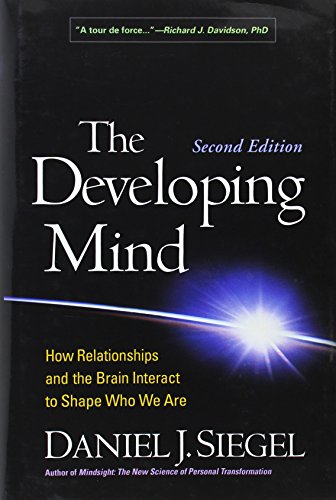
Inhaltsangabe
Practitioners, researchers, instructors, and students in child clinical and developmental psychology, child psychiatry, and cognitive neuroscience. Serves as a text in advanced undergraduate- and graduate-level courses in developmental psychology and child development.
 
Die Inhaltsangabe kann sich auf eine andere Ausgabe dieses Titels beziehen.
Über die Autorin bzw. den Autor
Daniel J. Siegel, MD, is an internationally acclaimed author, award-winning educator, and child psychiatrist. He is Clinical Professor of Psychiatry at the School of Medicine of the University of California, Los Angeles, where he serves as Co-Investigator at the Center for Culture, Brain, and Development, and Codirector of the Mindful Awareness Research Center. He is also the Executive Director of the Mindsight Institute, an educational center devoted to promoting insight, compassion, and empathy in individuals, families, institutions, and communities. Dr. Siegel's books include Mindsight, Pocket Guide to InterpersonalNeurobiology, The Mindful Therapist, The Mindful Brain, Parenting from the Inside Out, and The Whole-Brain Child.
Aus dem Klappentext
This bestselling book put the field of interpersonal neurobiology on the map for many tens of thousands of readers. Daniel J. Siegel goes beyond the nature and nurture divisions that traditionally have constrained much of our thinking about development, exploring the role of interpersonal experiences in forging key connections in the brain. He presents a groundbreaking integrative framework for understanding the emergence of the growing, feeling, communicating mind. Reflecting significant scientific and technical advances, the second edition incorporates new discussions of cutting-edge topics, plus an epilogue describing specific pathways to well-being and therapeutic change.
Using a wealth of illustrative examples from clinical practice and everyday life, Siegel traces the interplay of human and neural connections in early childhood and beyond. The book reveals how difficulties with attachment to caregivers can result in problems with memory, self-organization, and emotional regulation. Implications for adult states of mind, emotional competence, and the ability to cope with stress are considered, as are links to such clinical problems as dissociation and depression. Siegel offers compelling insights into how therapeutic and personal relationships can promote healing and integration as the mind continues to develop throughout the lifespan. The second edition provides expanded discussions of neuroplasticity, epigenetics, mindfulness, the neural correlates of consciousness, and more. It also includes useful pedagogical features, such as diagrams and an extensive glossary.
Illuminating how and why interpersonal neurobiology matters, this book is essential reading for clinicians, educators, researchers, and students interested in promoting healthy development and resilience. It has been widely adopted as a text in advanced undergraduate- and graduate-level courses in developmental psychology, child development, and clinical practice.
„Über diesen Titel“ kann sich auf eine andere Ausgabe dieses Titels beziehen.
Suchergebnisse für The Developing Mind: How Relationships and the Brain...

Beispielbild für diese ISBN
The Developing Mind, Second Edition: How Relationships and the Brain Interact to Shape Who We Are
Anbieter: World of Books (was SecondSale), Montgomery, IL, USA
Verkäuferbewertung 5 von 5 Sternen

Hardback. Zustand: Good. This bestselling book put the field of interpersonal neurobiology on the map for many tens of thousands of readers. Artikel-Nr. 00110239997
Gebraucht kaufen
EUR 13,02
Versand gratis
Versand innerhalb von USA
Versand innerhalb von USA
Anzahl: 4 verfügbar
Beispielbild für diese ISBN
The Developing Mind : How Relationships and the Brain Interact to Shape Who We Are
Anbieter: Better World Books: West, Reno, NV, USA
Verkäuferbewertung 5 von 5 Sternen
Zustand: Very Good. Pages intact with possible writing/highlighting. Binding strong with minor wear. Dust jackets/supplements may not be included. Stock photo provided. Product includes identifying sticker. Better World Books: Buy Books. Do Good. Artikel-Nr. 15644412-75
Gebraucht kaufen
EUR 14,55
Versand gratis
Versand innerhalb von USA
Versand innerhalb von USA
Anzahl: 1 verfügbar
Foto des Verkäufers
The Developing Mind, Second Edition How Relationships and the Brain Interact to Shape Who We Are
Verlag:
The Guilford Press, New York, NY, 2012
ISBN 10: 146250390X
ISBN 13: 9781462503902
Gebraucht
Hardcover
Anbieter: True Oak Books, Highland, NY, USA
Verkäuferbewertung 5 von 5 Sternen
Hardcover. Zustand: Good+. Zustand des Schutzumschlags: Very Good-. Second Edition; First Printing. 506 pages; minor creasing to DJ edges. Minor smudges to the exterior edges of textblock. Dog-earing to the top corner of a few pages. Very Good condition otherwise. No other noteworthy defects. No markings. ; - Your satisfaction is our priority. We offer free returns and respond promptly to all inquiries. Your item will be carefully cushioned in bubble wrap and securely boxed. All orders ship on the same or next business day. Buy with confidence. Artikel-Nr. HVD-47325-A-0
Gebraucht kaufen
EUR 27,54
Versand gratis
Versand innerhalb von USA
Versand innerhalb von USA
Anzahl: 1 verfügbar
Beispielbild für diese ISBN
The Developing Mind: How Relationships and the Brain Interact to Shape Who We Are
Anbieter: Revaluation Books, Exeter, Vereinigtes Königreich
Verkäuferbewertung 5 von 5 Sternen
Hardcover. Zustand: Brand New. 2nd edition. 492 pages. 9.75x6.25x1.50 inches. In Stock. Artikel-Nr. 146250390X
Neu kaufen
EUR 102,51
EUR 14,73 Versand
Versand von Vereinigtes Königreich nach USA
Versand von Vereinigtes Königreich nach USA
Anzahl: 1 verfügbar