
Verwandte Artikel zu Reconstructing Meaningful Life Worlds: A New Approach...
Inhaltsangabe
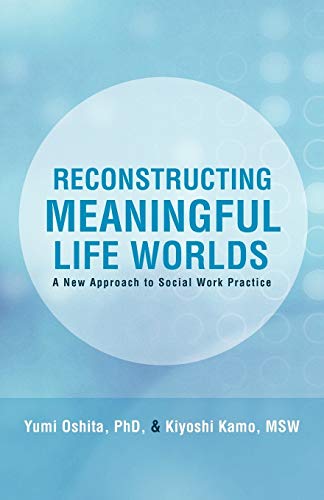
The future of social work in Japan is confused, unclear, and stagnant. A lot of social workers experience burnout because they have to help a wide variety of clients without the benefit of a consistently effective method. In Reconstructing Meaningful Life Worlds: A New Approach to Social Work Practice, co-authors and practicing social workers Dr. Yumi Oshita and Kiyoshi Kamo present the fruitful results of ten years of researching social constructions and other related theories to develop a new paradigm of social work theory and practice.
Die Inhaltsangabe kann sich auf eine andere Ausgabe dieses Titels beziehen.
Auszug. © Genehmigter Nachdruck. Alle Rechte vorbehalten.
Reconstructing Meaningful Life Worlds
A New Approach to Social Work PracticeBy Yumi Oshita Kiyoshi KamoiUniverse, Inc.
Copyright © 2011 Yumi Oshita, PhD, and Kiyoshi Kamo, MSWAll right reserved.
ISBN: 978-1-4620-0617-5
Contents
FOREWORD........................................................................................................................................................................................................viiPREFACE.........................................................................................................................................................................................................ixPART 1..........................................................................................................................................................................................................1Chapter 1 Outline for the New Social Work Kiyoshi Kamo.........................................................................................................................................................3Chapter 2 A New Perspective on Helping Principles Fumie Yamagishi..............................................................................................................................................20Chapter 3 New Perspectives on Problem Solving Skills and Research Methods Kiyoshi Kamo and Yumi Oshita.........................................................................................................41PART 2..........................................................................................................................................................................................................61Chapter 4 Social Work Practice for the Abused Child with Hyperventilation Syndrome at a Residential Care Institution for Children Yumi Oshita, Kiyoshi Kamo, Kayo Maeda and Harumi Okamoto.....................63Chapter 5 Social Work Practice for the Client with Hyperosmia Yumi Oshita......................................................................................................................................79Chapter 6 Medical Social Work Practice for the Patient with the Chronic Pain Yumi Oshita and Kiyoshi Kamo......................................................................................................102EPILOGUE Toward the Creation of a New Approach to Social Work Yumi Oshita and Kiyoshi Kamo.....................................................................................................................137APPENDICES......................................................................................................................................................................................................143Appendix A: Framework for Assessment, Intervention and Measurement of Social Work Models Kiyoshi Kamo and Yumi Oshita..........................................................................................145Appendix B: Measurement Method of Intervention Effect Yumi Oshita and Kiyoshi Kamo.............................................................................................................................157REFERENCE.......................................................................................................................................................................................................163INDEX...........................................................................................................................................................................................................169
Chapter One
Outline for the New Social WorkKiyoshi Kamo
Social Work Reconstructed
The most serious problem that exists in traditional social work practice is the absence of a systematized social theory. This basic problem goes beyond the level of systematization of theory to something deeper. Even the idea that the construction of a theoretical system is a necessary condition for understanding social phenomenon is not necessarily shared by social workers in Japan. Naturally, the absence of an adequate social theory results in the absence of a coherent social work methodology. Therefore, a second problem is the absence of an effective practice theory. Following this is the absence of a method to measure the effects of practice. The single case design has been a refined research method used in social work intervention (Theyer and Wodarski, 2007), however, this is a research model to measure behavioral change of the individual. This research model cannot measure the transactional process in life situations.
How can we then provide an adequate theory for social work practice? The answer to this question is not easy. The procedure for problem solving in the natural sciences is summarized as follows: the subject doing the observation objectively analyzes the mechanism of the generation of the problem, identifies the cause of the problem generation, and tries to remove it. This whole approach is epistemologically denied in the social constructionist approach. For starters, social constructionism denies the concept of the real existence of a 'problem'. Furthermore, it denies the possibility of objective observation; it is thus a kind of metaphysics. The idea of pure observation not influenced by outer conditions is actually metaphysical, because in the circuit of human communication the sender's message is processed and realized by the receiver, who punctuates the sequence of messages of the sender based on the context of his reality construction (Wilden, 1980, pp. 112-117). This theory asserts that the 'problem' is the unique construction of the life situation by the client (Gergen, 1985). This new theoretical frame transforms the 'problem' of the client by the solution focused method. Transforming the method of the problem construction of the client is the strategy for solving the 'problems' of the client of this theory. In this approach the authors of this book have shifted the philosophical basis of the practice from logical empiricism to a social constructionist perspective. In following chapters practice theory, practice technique, and the research method based on the social constructionist theory are discussed. We begin by asking the question, what is precisely social theory which is based on social constructionism?
Social Theory
Social Theory as the Precondition for the Social Work Practice
The object of social work intervention are human transactions where new social situations are continually being generated anew. Analyses of these transactions are impossible without using some theoretical framework. The social worker often drowns in a flood of information without this theoretical framework to help make sense of what transpires. It is necessary to reconstruct the client's discourse about the problem by using a theoretical framework for problem solving. The purpose of an analysis of a transaction in social work practice is to clarify the contradiction amplifying mechanisms in the social situation based on this new theoretical framework of problem solving. This theoretical framework should have the power to explain the amplification process of the case. Structural social theories that are often used to explain the transactional social process in social work are highly systematized theories. These grand theories translate the dynamics of the daily life situation into refined concepts of systems theory (Bertalanffy, 1968). These are...
„Über diesen Titel“ kann sich auf eine andere Ausgabe dieses Titels beziehen.
Suchergebnisse für Reconstructing Meaningful Life Worlds: A New Approach...

Beispielbild für diese ISBN
Reconstructing Meaningful Life Worlds: A New Approach to Social Work Practice
Verlag:
iUniverse.com (edition ), 2011
ISBN 10: 1462006175
ISBN 13: 9781462006175
Gebraucht
Paperback
Anbieter: BooksRun, Philadelphia, PA, USA
Verkäuferbewertung 5 von 5 Sternen

Paperback. Zustand: Very Good. It's a well-cared-for item that has seen limited use. The item may show minor signs of wear. All the text is legible, with all pages included. It may have slight markings and/or highlighting. Artikel-Nr. 1462006175-11-1
Gebraucht kaufen
EUR 4,86
Versand gratis
Versand innerhalb von USA
Versand innerhalb von USA
Anzahl: 1 verfügbar
Beispielbild für diese ISBN
Reconstructing Meaningful Life Worlds: A New Approach to Social Work Practice
Anbieter: Ria Christie Collections, Uxbridge, Vereinigtes Königreich
Verkäuferbewertung 5 von 5 Sternen
Zustand: New. In English. Artikel-Nr. ria9781462006175_new
Neu kaufen
EUR 21,02
EUR 10,90 Versand
Versand von Vereinigtes Königreich nach USA
Versand von Vereinigtes Königreich nach USA
Anzahl: Mehr als 20 verfügbar