
Verwandte Artikel zu Forbidden Knowledge: A Self-Advocate's Guide to...
Inhaltsangabe
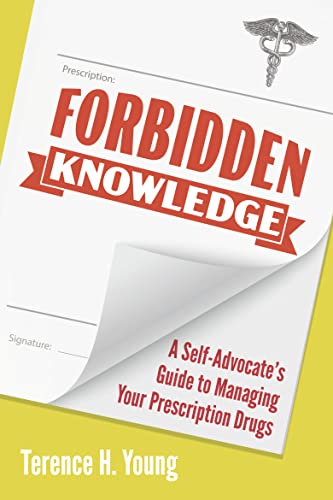
Terence Young exposes the pharmaceutical industry secrets and cultural myths that thwart our safe use of prescription drugs.… Everyone should read it before their next visit to a doctor. — DR. NANCY OLIVIERI, MD, physician and professor
When it comes to drug safety, Big Pharma holds all the power, and it’s time for patients to take it back.
Tens of millions of patients in North America take prescription drugs, but the safety of these drugs is often based on medical myths. We are led to believe that if a medication isn’t safe, the government would never allow it on the market and that doctors would never prescribe a drug that isn’t proven effective. Who controls these narratives? And do they always have the best interests of patients in mind?
In an in-depth study of the enormous influence the pharmaceutical industry has over our health, drug safety advocate Terence Young explores how those with the most to gain financially are also those who wield all the power in health care — and withhold the knowledge that is critical to the safety of patients.
Forbidden Knowledge reveals the truth you need to know about prescription drugs and what to do about it. It will empower you to partner with your doctor to talk openly and plainly about medications to help avoid serious adverse drug reactions. This is your survival guide to Big Pharma.
Die Inhaltsangabe kann sich auf eine andere Ausgabe dieses Titels beziehen.
Über die Autorin bzw. den Autor
Terence H. Young is chair of Drug Safety Canada and a former member of Parliament. He lives in Ancaster, Ontario.
Auszug. © Genehmigter Nachdruck. Alle Rechte vorbehalten.
Chapter 1
Forbidden Knowledge and the Four Truths
Only puny secrets need protection. Big discoveries are protected by public incredulity. — Marshall McLuhan, Take Today: The Executive as Dropout
Once exposed, a secret loses all its power. — Ann Aguirre, Grimspace
Forbidden knowledge is knowedge the general population isn’t party to. It becomes forbidden when the most powerful people in a civilization repress knowledge they see as threatening or dangerous, or when they want to reduce the public’s interest and trust in such information. The repressed information can be commonly available, but citing it publicly is discouraged or disallowed. Or it can be secret. Forbidden knowledge flourishes and endures when people hold a subconscious preference to conform, defer to authority, and choose not to explore certain information, even when investigating that knowledge is in their best interest. In other words, every past and present civilization. This happens millions of times a day when people who are injured or sick visit their doctors. We hand over our power and responsibility for our own health to our doctors. Worse, we don’t know enough about our own bodies and the drugs we take to ask the right questions. We actually decide not to ask tough questions that might prevent serious harms or deaths. That’s a problem.
In Genesis, God told Adam and Eve they could eat the fruit of any tree in the Garden of Eden except the fruit of the Tree of Knowledge of Good and Evil. That was forbidden. But Adam and Eve wanted to be like God and thought they could determine themselves what was good and what was evil. So they ate the fruit of the forbidden tree. Chaos has flourished ever since.
Throughout history, political and religious leaders have prohibited access to certain knowledge because it was a threat to their power. Knowledge is power and isn’t something humans naturally give away. They tend to hoard it. This helped to preserve their dominance, titles, and wealth and led to far more comfortable and secure lives than everyone else. Forbidden knowledge still does that today.
Before the Reformation began in the early 16th century, only educated elites could read. All books were written by hand, and there were only a few thousand in all of Europe. The Bible was written in Latin, a language few people understood. People were discouraged from praying without a priest leading them, since they might undermine their relationship with God and undercut the power of priests.
In the 1440s, a goldsmith and printer named Johannes Gutenberg, from Mainz, Germany, introduced one of the most powerful technologies since the beginning of civilization — movable type printing. His invention could produce books far faster and more cheaply, ushering in the era of mass communication. By 1500, there were millions of books in Europe and literacy was booming. The reformers of the Catholic Church demonstrated the power of literacy when they distributed tens of thousands of pamphlets across Europe, igniting revolutions and wars and eventually establishing new Protestant denominations.
Change was the new normal in Europe because with widespread literacy ordinary people, the masses, could become acquainted with truth on their own terms. They could have an opinion. They could congregate and seize power. The Gutenberg press was also crucial to the Renaissance in the 15th and 16th centuries and the Enlightenment in the 17th and 18th centuries, sowing the seeds of modern democracy as represented in the American and French Revolutions. The genie was out of the bottle. There could be no greater demonstration that knowledge was power than ordinary people learning to read, think for themselves, and demand self-government.
Knowledge could no longer be easily forbidden. But some people never stopped trying. It certainly could be hidden. In the 20th century, it wasn’t kings or religious leaders who created forbidden knowledge; it was dictators, governments, and corporations. They’re all steeped in secrets. They use them to control the masses, to enrich themselves, to cover up their mistakes, and to commit crimes. There are lots of examples of corporate secrets in this book that lead to injuries and deaths of patients every day.
But in democracies all people are supposed to be equal. That’s the goal we claim to strive for. British colonists purchased equality with blood in the American Revolution, and it was enshrined in law by some brilliant and creative thinkers who knew they could never build the country they dreamed of when one person was above the law and held ultimate power over others, namely, a foreign king. It was the rallying call of the modern world’s largest democratic republic, the United States, immortalized in the Declaration of Independence from Great Britain, that all men were created equal and endowed by their Creator with the inalienable rights of life, liberty, and the pursuit of happiness. Freedom of speech and freedom of the press were supposed to ensure no authority could control what others thought or believed.
The subject of this book is how the largest international pharmaceutical corporations — Big Pharma — hide the knowledge people need to exercise those freedoms: the truths necessary to prevent being injured or killed by our medicines. Big Pharma controls what we think and believe about its products and our own health. This is done in part under the legal protection of patents — exclusive rights for drugs and processes they invent that no other companies can legally copy for a limited time. It’s also done with trade secrets in clinical research, so-called confidential business information (CBI), protected mostly under common law that can last indefinitely. Antiquated medical practices, such as the use of pharmaspeak and medicalspeak — languages few patients can understand — mask the knowledge about drug effectiveness and safety from patients. And Big Pharma intentionally covers up known risks of its drugs, doing all that because the less information patients and physicians have about a drug, the easier it is to sell it to them.
What Big Pharma deems to be CBI is shocking. It claims patent rights and trade secrets benefit everyone because they lead to new breakthrough drugs and cures that make everyone healthier. The truth is they often do the exact opposite. They protect monopoly drugs for up to 40 years, keeping prices sky-high
and making it more difficult for others to raise capital and compete. Big Pharma employs brilliant marketing deceptions, disinformation, trickery, subterfuge, scientific bully tactics, and legal manoeuvres to repress the publication of any information that makes its drugs look risky or dangerous, because many of them are, or makes them look as if they don’t work very well, because many of them don’t.
Big Pharma does this using science itself — clinical drug trials, an imperfect method of proving drugs are effective and safe that’s easily subject to manipulation and biased thinking. Brilliant doctors and scientists who are passionate about discovery and finding new medicines — the wizards — populate Big Pharma’s senior ranks. They have a singular focus on creating new medicines. When they get it right, their powers are supernatural. Their potions do immeasurable good.
However, CEOs who are passionate about making sales and profits, and another group of wizards — the marketers — rule Big Pharma companies. Their claims that patient safety always comes first are illusions, since their potions also do immeasurable harm. What’s the result? In the United States, 81 million harms, 2.7 million hospitalizations, and...
„Über diesen Titel“ kann sich auf eine andere Ausgabe dieses Titels beziehen.
Suchergebnisse für Forbidden Knowledge: A Self-Advocate's Guide to...

Beispielbild für diese ISBN
Forbidden Knowledge : What Big Pharma Will Never Tell You about Prescription Drugs
Anbieter: Better World Books, Mishawaka, IN, USA
Verkäuferbewertung 5 von 5 Sternen

Zustand: Good. Former library copy. Pages intact with minimal writing/highlighting. The binding may be loose and creased. Dust jackets/supplements are not included. Includes library markings. Stock photo provided. Product includes identifying sticker. Better World Books: Buy Books. Do Good. Artikel-Nr. 55635304-75
Gebraucht kaufen
EUR 16,25
Versand gratis
Versand innerhalb von USA
Versand innerhalb von USA
Anzahl: 1 verfügbar
Beispielbild für diese ISBN
Forbidden Knowledge: A Self-Advocate's Guide to Managing Your Prescription Drugs
Anbieter: Books From California, Simi Valley, CA, USA
Verkäuferbewertung 4 von 5 Sternen

paperback. Zustand: Fine. Artikel-Nr. mon0003840338
Gebraucht kaufen
EUR 13,76
EUR 4,44 Versand
Versand innerhalb von USA
Versand innerhalb von USA
Anzahl: 1 verfügbar
Beispielbild für diese ISBN
Forbidden Knowledge: A Self-Advocate's Guide to Managing Your Prescription Drugs
Anbieter: Books From California, Simi Valley, CA, USA
Verkäuferbewertung 4 von 5 Sternen
paperback. Zustand: Very Good. Artikel-Nr. mon0003839082
Gebraucht kaufen
EUR 13,91
EUR 4,44 Versand
Versand innerhalb von USA
Versand innerhalb von USA
Anzahl: 1 verfügbar
Beispielbild für diese ISBN
Forbidden Knowledge
Anbieter: PBShop.store UK, Fairford, GLOS, Vereinigtes Königreich
Verkäuferbewertung 5 von 5 Sternen
PAP. Zustand: New. New Book. Shipped from UK. Established seller since 2000. Artikel-Nr. CW-9781459750685
Neu kaufen
EUR 20,02
EUR 5,95 Versand
Versand von Vereinigtes Königreich nach USA
Versand von Vereinigtes Königreich nach USA
Anzahl: 12 verfügbar
Beispielbild für diese ISBN
Forbidden Knowledge: A Self-Advocate's Guide to Managing Your Prescription Drugs
Anbieter: Ria Christie Collections, Uxbridge, Vereinigtes Königreich
Verkäuferbewertung 5 von 5 Sternen
Zustand: New. In English. Artikel-Nr. ria9781459750685_new
Neu kaufen
EUR 23,64
EUR 13,39 Versand
Versand von Vereinigtes Königreich nach USA
Versand von Vereinigtes Königreich nach USA
Anzahl: 16 verfügbar
Beispielbild für diese ISBN
Forbidden Knowledge: What Big Pharma Will Never Tell You About Prescription Drugs
Anbieter: Revaluation Books, Exeter, Vereinigtes Königreich
Verkäuferbewertung 5 von 5 Sternen
Paperback. Zustand: Brand New. 1st edition. 363 pages. 9.00x6.00x1.00 inches. In Stock. Artikel-Nr. __1459750683
Neu kaufen
EUR 23,02
EUR 14,82 Versand
Versand von Vereinigtes Königreich nach USA
Versand von Vereinigtes Königreich nach USA
Anzahl: 1 verfügbar
Beispielbild für diese ISBN
Forbidden Knowledge: A Self-Advocate s Guide to Managing Your Prescription Drugs
Anbieter: Kennys Bookstore, Olney, MD, USA
Verkäuferbewertung 5 von 5 Sternen
Zustand: New. 2023. Paperback. . . . . . Books ship from the US and Ireland. Artikel-Nr. V9781459750685
Neu kaufen
EUR 30,84
EUR 9,34 Versand
Versand innerhalb von USA
Versand innerhalb von USA
Anzahl: 1 verfügbar
Beispielbild für diese ISBN
FORBIDDEN KNOWLEDGE
Anbieter: Speedyhen, Hertfordshire, Vereinigtes Königreich
Verkäuferbewertung 5 von 5 Sternen
Zustand: NEW. Artikel-Nr. NW9781459750685
Neu kaufen
EUR 18,95
EUR 48,62 Versand
Versand von Vereinigtes Königreich nach USA
Versand von Vereinigtes Königreich nach USA
Anzahl: 1 verfügbar
Foto des Verkäufers
Forbidden Knowledge : A Self-Advocate's Guide to Managing Your Prescription Drugs
Anbieter: AHA-BUCH GmbH, Einbeck, Deutschland
Verkäuferbewertung 5 von 5 Sternen
Taschenbuch. Zustand: Neu. Neuware - Terence Young exposes the pharmaceutical industry secrets and cultural myths that thwart our safe use of prescription drugs. Everyone should read it before their next visit to a doctor. -- DR. NANCY OLIVIERI, MD, physician and professor When it comes to drug safety, Big Pharma holds all the power, and it's time for patients to take it back.Tens of millions of patients in North America take prescription drugs, but the safety of these drugs is often based on medical myths. We are led to believe that if a medication isn't safe, the government would never allow it on the market and that doctors would never prescribe a drug that isn't proven effective. Who controls these narratives And do they always have the best interests of patients in mind In an in-depth study of the enormous influence the pharmaceutical industry has over our health, drug safety advocate Terence Young explores how those with the most to gain financially are also those who wield all the power in health care -- and withhold the knowledge that is critical to the safety of patients.Forbidden Knowledge reveals the truth you need to know about prescription drugs and what to do about it. It will empower you to partner with your doctor to talk openly and plainly about medications to help avoid serious adverse drug reactions. This is your survival guide to Big Pharma. Artikel-Nr. 9781459750685
Neu kaufen
EUR 33,97
EUR 35,00 Versand
Versand von Deutschland nach USA
Versand von Deutschland nach USA
Anzahl: 2 verfügbar
Foto des Verkäufers
Forbidden Knowledge: What Big Pharma Will Never Tell You about Prescription Drugs
Anbieter: moluna, Greven, Deutschland
Verkäuferbewertung 5 von 5 Sternen
Zustand: New. KlappentextIn Forbidden Knowledge, drug safety advocate Terence Young reveals how Big Pharma came to hold all the power in the pharmaceutical industry, and empowers patients to partner with their doctor to talk openly and plainly . Artikel-Nr. 585468506
Neu kaufen
EUR 25,13
EUR 48,99 Versand
Versand von Deutschland nach USA
Versand von Deutschland nach USA
Anzahl: 1 verfügbar