
Verwandte Artikel zu The Lies Behind the Truth: Free Yourself from Your...
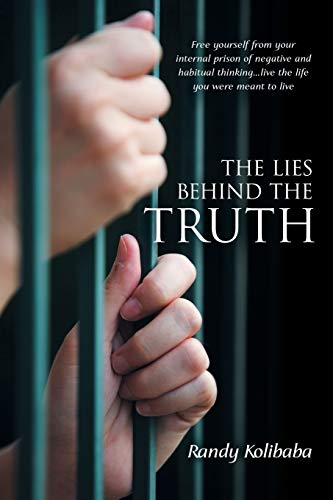
The Lies Behind the Truth: Free Yourself from Your Internal Prison of Negative and Habitual Thinking . . . Live the Life You Were Meant to Live - Softcover
Inhaltsangabe
"The Lies behind the Truth" will take you on a journey, a journey of self-exploration. The book is dedicated to all those people who were lead to believe that the manifestation of happiness, health, or abundance was not attainable. It's also for those who have struggled to live up to the expectations of others, expectations we've allowed them to set for us, instead of charting our own destiny, our own greatness, and our own happiness.
By reflecting back on his own life, Randy Kolibaba will show you how your current thoughts and beliefs can truly influence what you experience and manifest into your life. Randy will also show you how easy it is to make a positive change in your life by simply starting to look at what you're thinking.
Die Inhaltsangabe kann sich auf eine andere Ausgabe dieses Titels beziehen.
Auszug. © Genehmigter Nachdruck. Alle Rechte vorbehalten.
THE LIES BEHIND THE TRUTH
By Randy KolibabaBalboa Press
Copyright © 2014 Randy Kolibaba
All rights reserved.
ISBN: 978-1-4525-9209-1All rights reserved.
Contents
Author's Biography, v,
Acknowledgment, ix,
Preface, xi,
Chapter 1 The Foundation of the Myth, 1,
Chapter 2 Living the dream ... Or so I thought, 14,
Chapter 3 (Beauval Detachment), 34,
Chapter 4 (Climax Detachment), 46,
Chapter 5 (Pelly Detachment), 52,
Chapter 6 (Lloydminster Detachment), 63,
Chapter 7 (Punnichy Detachment), 71,
Chapter 8 (Kosovo – United Nations), 79,
Chapter 9 (Vernon Detachment), 103,
Chapter 10 (Kelowna – South East District), 120,
Chapter 11 (The Conclusion), 134,
Glossary, 139,
References, 141,
CHAPTER 1
The Foundation of the Myth
"Though no one can go back and make a brand new beginning ... Anyone can start from now and make a new ending.."
—Carl Bard
My spiritual journey began on January 21st, 1959. I was born in a small city called, Grande Prairie, Alberta (Canada). My parents, Rose and Walter, were hard working people in the community. My brother, Wayne, was six years older than me; unfortunately, we never did seem to get along.
When I was four my parents marriage was in shambles, and they decided to separate. In 1964, my mom, brother and I moved to Calgary to start a new life. We never had much money, and we ended up renting a small two-bedroom house in a community in the southeast portion of Calgary, called Inglewood. The community itself was older. Basically everyone labeled Inglewood as being "the other side of the tracks" as it related to the rest of Calgary.
Four years after moving to Calgary, in 1968, a plain-clothes Royal Canadian Mounted Police officer came to our house. At the time, because I really never knew my father, I remember not understanding or appreciating what was really going on. What I do remember was that whatever was happening was serious—the policeman told my mother that my father had passed away in his sleep from a brain aneurysm.
My mother and brother were extremely upset; both cried and hugged each other. As I said, I didn't really remember my father so I didn't cry because he passed away, but because my mom was obviously upset.
It wasn't until I was twenty-six that I found out exactly what type of relationship my mother and father had. It pained me to learn that my father was an alcoholic, he was a wife beater, and had even violently raped my mom.
When my mother said she had withheld the details of her marriage back because she didn't want to taint my impression of my father, I'll admit I was deeply hurt. I couldn't understand why my mother didn't have the trust or confidence that I could handle the information. I guess she was right though, as I immediately hated my father. I couldn't imagine anyone ever wanting to hurt this dear, sweet lady. She was a woman who poured her heart and soul into always trying to help people, especially her family.
God rest my mother; she tried to provide the best possible life for my brother, Wayne, and myself. When my father died, my mother had to go back to work while trying to raise two small children. Besides working at a local Chinese café as a waitress, Mom was also on social assistance (welfare). Coming from an area where everyone I knew of came from whole family units, consisting of a mother and father, I always felt there was a stigma about not having a father.
I remembered feeling so embarrassed that I didn't have a father that I would make up stories. I would say things like my father was working up North and rarely ever came home.
Being as we were on welfare, I grew up with that added stigma. When kids talked about what they did with their moms and dads and where they went, I could only dream of how neat that would be.
I remember when I went on field trips in elementary school and my mom couldn't afford to send me to school with sandwiches, fruit and juices like other kids had. Instead, she made me what we could afford, mainly homemade tea biscuits. When other kids were opening their lunch boxes and pulling out sandwiches, I sat off to the side unwrapping my jam tea biscuits.
We were so poor; my mother made my first couple of winter jackets out of old jackets that she recycled. When I think back on how my mother tried so hard to provide for her children, I'm humbled.
My father left me a small inheritance when he passed on; however, I wouldn't be able to access it until my eighteenth birthday. It wasn't a lot of money. When all things were said and done, I had approximately twelve thousand dollars. What's sad is that even though my dad left money to my brother and me, he never left a dime to my mother.
I know I lived a lie about having a father and trying not to let anyone find out about our family being on welfare. You see, like so many of us, I was raised in an era where in school, in church and in society, we were told that in order to be anything or anyone special, we needed to be better than everyone. We needed to be smarter, faster, better looking, or richer in order to be successful. I still struggle with seeing people define success as what some else has suggested as a bench mark.
During the early years in elementary and junior high I went to a school called Colonel Walker. It was an old sandstone school which was about five blocks from my house. Although I excelled athletically and somewhat academically, I still had a serious self esteem problem. When I reflect back on those years, I can see exactly how my beliefs and way of thinking caused me to have difficulty in some areas and not in others.
I believe my home situation had engrained the need to make up for what I believed was a lack and limitation in my life. I never wanted to fail, or be beaten. I was always striving, but never arriving. As a result of this constant competition I missed out on many incredible years of my life.
It wasn't until later that I was able to recognize that unless I changed that habitual way of thinking, I would never really achieve true enlightenment and happiness. To this point, I reflect on the words of Dr. Wayne Dyer, who said that "When you change the way you look at things, the things you look at change".
Most religious text that I've researched seem to follow the idea of "you reap what you sow". I think one great example of this comes out of my early years in junior high school. I had a crush on a young lady, named Colleen. She came from the "perfect family," with a mother and father, a nice house, and brothers and sisters who cared for each other. Not only did Colleen have this great family situation, but she was also attractive, intelligent, kind, and caring.
However, I had set myself up to believe that I was not good enough, not worthy, to have a relationship with someone like Colleen. At the same time, I was scared that she might find out about my home situation ... And so, I backed away; I never put myself in a position to get to know her.
Of course at the time, my friends were also interested in Colleen. The more they expressed their interest, the more I backed away. In retrospect, I was really only backing away from a potential confrontation with my friends and having them not like me. By wanting to be liked and allowing what my friends thought of me to be important, I was allowing them to control my happiness. In some ways, this experience made Colleen an early teacher of mine.
I wish I would've known that everything we're feeling and thinking is exactly...
„Über diesen Titel“ kann sich auf eine andere Ausgabe dieses Titels beziehen.
Suchergebnisse für The Lies Behind the Truth: Free Yourself from Your...

Beispielbild für diese ISBN
The Lies Behind the Truth: Free Yourself from Your Internal Prison of Negative and Habitual Thinking . . . Live the Life You Were Meant to Live
Anbieter: Ria Christie Collections, Uxbridge, Vereinigtes Königreich
Verkäuferbewertung 5 von 5 Sternen

Zustand: New. In. Artikel-Nr. ria9781452592091_new
Neu kaufen
EUR 12,67
EUR 13,98 Versand
Versand von Vereinigtes Königreich nach USA
Versand von Vereinigtes Königreich nach USA
Anzahl: Mehr als 20 verfügbar
Foto des Verkäufers
The Lies Behind the Truth
Anbieter: moluna, Greven, Deutschland
Verkäuferbewertung 5 von 5 Sternen
Zustand: New. Klappentext The Lies behind the Truth will take you on a journey, a journey of self-exploration. The book is dedicated to all those people who were lead to believe that the manifestation of happiness, health, or abundance wa. Artikel-Nr. 447800608
Neu kaufen
EUR 16,96
EUR 48,99 Versand
Versand von Deutschland nach USA
Versand von Deutschland nach USA
Anzahl: Mehr als 20 verfügbar