
Verwandte Artikel zu My Notorious Life: A Novel
Inhaltsangabe
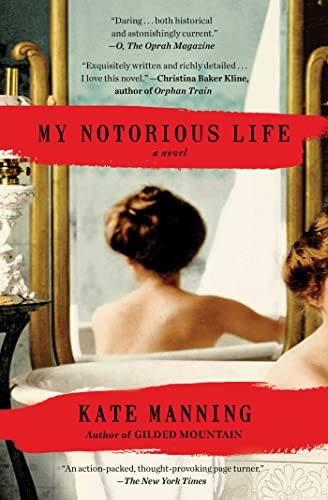
Inspired by a real midwife who became one of the most controversial figures in Victorian New York City, this “daring page-turner” (O, The Oprah Magazine) is an unforgettable tale—a love story, a family saga, and the confessions of a charismatic and passionate woman who changed the lives of countless others.
Meet the incomparable Axie Muldoon. Axie’s story begins on the streets of 1860s New York. The impoverished child of Irish immigrants, she grows up to become one of the wealthiest and most controversial women of her day. In vivid prose, Axie recounts how she is forcibly separated from her mother and siblings, apprenticed to a doctor, and how she and her husband parlay the sale of a few bottles of “Lunar Tablets for Female Complaint” into a thriving midwifery business. Flouting convention and defying the law in the name of women’s rights, Axie rises from grim tenement rooms to the splendor of a mansion on Fifth Avenue, amassing wealth while learning over and over never to trust a man who says “trust me.”
When her services attract outraged headlines, Axie finds herself on a collision course with a crusading official—Anthony Comstock, founder of the Society for the Suppression of Vice. It will take all of Axie’s power to outwit him in the fight to preserve her freedom and everything she holds dear. Inspired by the true history of an infamous physician who was once called “the Wickedest Woman in New York,” Kate Manning is “writing in the venerable tradition of Stephen Crane…those social reformers knew that a powerful tale with memorable characters could draw us into the heat of social debates like nothing else” (The Washington Post).
Die Inhaltsangabe kann sich auf eine andere Ausgabe dieses Titels beziehen.
Über die Autorin bzw. den Autor
Kate Manning is the author of the critically acclaimed novels My Notorious Life, Whitegirl, and Gilded Mountain. A former documentary television producer and winner of two Emmy Awards, she has written for The New York Times, The Washington Post, the Los Angeles Times Book Review, Time, Glamour, and The Guardian, among other publications. She has taught creative writing at Bard High School Early College in Manhattan, and lives with her family in New York City.
Auszug. © Genehmigter Nachdruck. Alle Rechte vorbehalten.
Chapter Two
For Bread Alone
I
n the year 1860, when the Western Great Plain of America was the home of the buffalo roaming, the cobbled hard pavement of New York City was the roofless and only domicile of thirty-five thousand children. In our hideous number we scraps was cast outdoors or lost by our parents, we was orphans and half orphans and runaways, the miserable offspring of Irish and Germans, Italians and Russians, servants and slaves, Magdalenes and miscreants, all the unwashed poor huddled slubs who landed yearning and unlucky on the Battery with nothing to own but our muscles and teeth, the hunger of our bellies. Our Fathers and Mothers produced labor and sweat and disease and babies that would’ve been better off never born. The infant ones, small as a drop of dew on a cabbage leaf, was left wrapped in newspaper and still bloody on the doorsteps of churches, in the aisles of dry goods stores. Others among us was not older than two, just wee toddlers with the skulls still soft when they was thrust Friendless upon the paving stones of Broadway. These kids dressed in bits and pickings. They begged what they ate or filched it. Many never had known a shoe. The girls started out young to sell themselves and the boys turned to thuggery. Half the babies dropped at the foundling hospital died before they had a birthday. The rest of the so-called street Arabs was lucky if they lived to twenty.
Me and my sister Dutch and my brother Joe was nearly permanent among this sorry crowd, but by the mossy skin of our teeth we got turned from that path by a stranger who came upon us and exchanged our uncertain fate for another, equally uncertain.
The day in question I was not more than twelve years of age. Turned up nose, raggedy dress, button boots full of holes and painful in the toe, dark black hair I was vain of pulled back, but no ribbon. And my father’s eyes, the color of the Irish sea, he always said, blue as waves. I was two heads taller than a barstool. My legs was sticks, my ribs a ladder. I was not no beauty like Dutch, but I managed with what I got. And That Day we three got our whole new proposition. It walked right up and introduced itself.
Hello there, wayfarers.
We stood in the doorway of the bakery. If you stayed there long enough, you could get maybe a roll that was old, maybe the heels they would give you of the loaves. We were not particular. We would eat crumbs they swept out for the birds. We was worse than birds, we was desperate as rats. That day the smell was like a torture, of the bread baking, them cakes and the pies and them chocolate éclairs like all of your dreams coming up your nose and turning to water in your mouth. We Muldoons had not eaten since yesterday. It was February or maybe March, but no matter the date, we were frozen, no mittens, no hats, us girls without no woolies under our skirts, just britches full of moth bites. We had baby Joe warm in our arms, heavy as beer in a half keg. Dutch had my muffler I gave her, she was so cold. We wrapped it around my head and her head both, and there we stood looking like that two-headed calf I saw once in Madison Square. Two heads, four legs, one body. Two heads is better than one, but we children should’ve been smarter that day and seen what was coming.
A customer started in the door. This big fat guy with big fat neck rolls over the collar of his coat, like a meat scarf.
Dutch said, —Mister? with those blue eyes she has, such jewelry in her face, sparkling sadlike eyes.
The Meat Neck Gent said, —Go home to your Ma.
Dutch said back, —We ain’t got no Ma.
—Yeah yeah yeah, he said. —I heard that before, now beat it.
—Please mister, I said. —We ain’t. It’s the truth. (Though it wasn’t exactly.)
—Just one a them rolls or a bannock of bread.
And the guy said, —Beat it, again. He was a miserable cockroach in fine boots, but he was not the one who ruined us, that was the kindness of strangers.
So we started to cry very quiet now, me and Dutch, because we had not had food since yesterday noon, standing there the whole morning with pain like teeth in our guts. The scarf around our head was frozen solid with our tears and snuffle.
Along at last came another customer, quite fancy. This one had the type of a beard that straps under the chin, and a clump of hair left stranded in the center of his bald dome that we saw when he removed his tall hat, like a rainbarrel on his head.
With the tears fresh in our eyes, we said, —Hey Mister.
—Why hello there, wayfarers.
Right away he got down low, peering hard at us like we were interesting, and asked in the voice of an angel, —Why you poor children! Why are you here in the cold? Don’t cry, sweet innocents. Come inside and warm yourselves.
—Nossir, I said, —we ain’t allowed. They tell us scram and kick us.
—That’s an outrage, he said. —You’ll freeze to death.
Picking baby Joe out of our arms and handling him, he marched us into the warm smell of the shop. We were hemorrhaging in the mouth practically with want. You could eat the air in the place, so thick with bread and warmth that it stang our cheeks.
—Out out out out, cried the bakery hag when she saw us. The dough of her body was trembling with fury. —Out! I told you.
—These children shall have three rolls of that white bread there, and tea with milk, said the Gentleman, and he slapped down his money bright on the counter.
The dark scowl of the miserable proprietress smoked over at us in fumes. But she swallowed her bile when she seen the Gentleman’s copper and fetched us tea. It scalded our tongues but did nothing to damage the softness of her bread or the crunch of its golden crust. It made no sense to have such a hard woman with such soft bread. We were fainting and trying not to wolf it down like beasts. The Gentleman watched us eat the same as if we were a free show.
—There now, he said, his voice a low burr in his throat, —there you are, children.
Dutch threw her arms around his neck. —Oh thank you kind Gentleman, she said. Her sweetness was like payment to him, you could see by his smile. Even with the grime on her face, Dutch was a pretty child. No one could resist her blarney and her charm, and though she was only seven years of age, she knew this well.
When we were done with the first bread, he says, —Are yiz still hungry?
Wait. Let me get his voice right. In fact, he said it all beautiful, with elocution: —Do you jolly young wayfarers still have an appetite?
And we said, —Yessir.
It was our lucky day then, for he bought us another round of penny rolls and fed us under the glare of the bakery woman’s eyes.
—Children, where are your parents? the Gentleman said.
—Please mister, our father art in heaven, said Dutch. It was the wish to be proper was why she mangled her vocabulary with a prayer. Our father was not our Father Who Art in Heaven, though he was dead. Perhaps he was in hell, what with the one sin we knew of him, which was his death two years before, from drunkenness and falling off a scaffold while carrying a hod of bricks, leaving Mam with us girls and Joe, his infant son. It was just after Joe’s arrival and our Da was celebrating with his lunch bucket and a drop, for he did like his drop, Mam said, coming home every night, so dusty and singing Toura loura loo, a stick of licorice in his pockets if we was lucky and a blast of whiskey in our faces if we wasn’t. —Fill me the growler, there’s a good girl, Axie, he says to me...
„Über diesen Titel“ kann sich auf eine andere Ausgabe dieses Titels beziehen.
Suchergebnisse für My Notorious Life: A Novel

Beispielbild für diese ISBN
My Notorious Life
Anbieter: World of Books (was SecondSale), Montgomery, IL, USA
Verkäuferbewertung 5 von 5 Sternen

Paperback. Zustand: Fair. Inspired by a real midwife who became one of the most controversial figures in Victorian New York City, this "action-packed, thought-provoking page-turner" (The New York Times) is an unforgettable tale--a love story and a family saga, featuring a charismatic and passionate woman who became a pioneer for women's rights and changed the lives of countless others. Meet the incomparable Axie Muldoon. Axie's story begins on the streets of 1860s New York. The impoverished child of Irish immigrants, she grows up to become one of the wealthiest and most controversial women of her day. In vivid prose, Axie recounts how she is forcibly separated from her mother and siblings, apprenticed to a doctor, and how she and her husband parlay the sale of a few bottles of "Lunar Tablets for Female Complaint" into a thriving midwifery business. Flouting convention and defying the law in the name of women's rights, Axie rises from grim tenement rooms to the splendor of a mansion on Fifth Avenue, amassing wealth while learning over and over never to trust a man who says "trust me." When her services attract outraged headlines, Axie finds herself on a collision course with a crusading official--Anthony Comstock, founder of the Society for the Suppression of Vice. It will take all of Axie's power to outwit him in the fight to preserve her freedom and everything she holds dear. Inspired by the true history of an infamous physician who was once called "the Wickedest Woman in New York," Kate Manning is "writing in the venerable tradition of Stephen Crane.those social reformers knew that a powerful tale with memorable characters could draw us into the heat of social debates like nothing else" (The Washington Post). Artikel-Nr. 00059299775
Gebraucht kaufen
EUR 3,87
Versand gratis
Versand innerhalb von USA
Versand innerhalb von USA
Anzahl: 8 verfügbar
Beispielbild für diese ISBN
My Notorious Life
Anbieter: World of Books (was SecondSale), Montgomery, IL, USA
Verkäuferbewertung 5 von 5 Sternen
Paperback. Zustand: Good. Inspired by a real midwife who became one of the most controversial figures in Victorian New York City, this "action-packed, thought-provoking page-turner" (The New York Times) is an unforgettable tale--a love story and a family saga, featuring a charismatic and passionate woman who became a pioneer for women's rights and changed the lives of countless others. Meet the incomparable Axie Muldoon. Axie's story begins on the streets of 1860s New York. The impoverished child of Irish immigrants, she grows up to become one of the wealthiest and most controversial women of her day. In vivid prose, Axie recounts how she is forcibly separated from her mother and siblings, apprenticed to a doctor, and how she and her husband parlay the sale of a few bottles of "Lunar Tablets for Female Complaint" into a thriving midwifery business. Flouting convention and defying the law in the name of women's rights, Axie rises from grim tenement rooms to the splendor of a mansion on Fifth Avenue, amassing wealth while learning over and over never to trust a man who says "trust me." When her services attract outraged headlines, Axie finds herself on a collision course with a crusading official--Anthony Comstock, founder of the Society for the Suppression of Vice. It will take all of Axie's power to outwit him in the fight to preserve her freedom and everything she holds dear. Inspired by the true history of an infamous physician who was once called "the Wickedest Woman in New York," Kate Manning is "writing in the venerable tradition of Stephen Crane.those social reformers knew that a powerful tale with memorable characters could draw us into the heat of social debates like nothing else" (The Washington Post). Artikel-Nr. 00096693154
Gebraucht kaufen
EUR 3,87
Versand gratis
Versand innerhalb von USA
Versand innerhalb von USA
Anzahl: 19 verfügbar
Beispielbild für diese ISBN
My Notorious Life
Anbieter: World of Books (was SecondSale), Montgomery, IL, USA
Verkäuferbewertung 5 von 5 Sternen
Paperback. Zustand: Very Good. Inspired by a real midwife who became one of the most controversial figures in Victorian New York City, this "action-packed, thought-provoking page-turner" (The New York Times) is an unforgettable tale--a love story and a family saga, featuring a charismatic and passionate woman who became a pioneer for women's rights and changed the lives of countless others. Meet the incomparable Axie Muldoon. Axie's story begins on the streets of 1860s New York. The impoverished child of Irish immigrants, she grows up to become one of the wealthiest and most controversial women of her day. In vivid prose, Axie recounts how she is forcibly separated from her mother and siblings, apprenticed to a doctor, and how she and her husband parlay the sale of a few bottles of "Lunar Tablets for Female Complaint" into a thriving midwifery business. Flouting convention and defying the law in the name of women's rights, Axie rises from grim tenement rooms to the splendor of a mansion on Fifth Avenue, amassing wealth while learning over and over never to trust a man who says "trust me." When her services attract outraged headlines, Axie finds herself on a collision course with a crusading official--Anthony Comstock, founder of the Society for the Suppression of Vice. It will take all of Axie's power to outwit him in the fight to preserve her freedom and everything she holds dear. Inspired by the true history of an infamous physician who was once called "the Wickedest Woman in New York," Kate Manning is "writing in the venerable tradition of Stephen Crane.those social reformers knew that a powerful tale with memorable characters could draw us into the heat of social debates like nothing else" (The Washington Post). Artikel-Nr. 00107145167
Gebraucht kaufen
EUR 3,87
Versand gratis
Versand innerhalb von USA
Versand innerhalb von USA
Anzahl: 2 verfügbar
Beispielbild für diese ISBN
My Notorious Life: A Novel
Verlag:
Scribner (edition Reprint), 2014
ISBN 10: 1451698070
ISBN 13: 9781451698077
Gebraucht
Paperback
Anbieter: BooksRun, Philadelphia, PA, USA
Verkäuferbewertung 5 von 5 Sternen
Paperback. Zustand: Very Good. Reprint. It's a well-cared-for item that has seen limited use. The item may show minor signs of wear. All the text is legible, with all pages included. It may have slight markings and/or highlighting. Artikel-Nr. 1451698070-11-6
Gebraucht kaufen
EUR 5,04
Versand gratis
Versand innerhalb von USA
Versand innerhalb von USA
Anzahl: 1 verfügbar
Beispielbild für diese ISBN
My Notorious Life
Anbieter: ThriftBooks-Atlanta, AUSTELL, GA, USA
Verkäuferbewertung 5 von 5 Sternen
Paperback. Zustand: Very Good. No Jacket. May have limited writing in cover pages. Pages are unmarked. ~ ThriftBooks: Read More, Spend Less. Artikel-Nr. G1451698070I4N00
Gebraucht kaufen
EUR 5,95
Versand gratis
Versand innerhalb von USA
Versand innerhalb von USA
Anzahl: 1 verfügbar
Beispielbild für diese ISBN
My Notorious Life
Anbieter: ThriftBooks-Dallas, Dallas, TX, USA
Verkäuferbewertung 5 von 5 Sternen
Paperback. Zustand: Very Good. No Jacket. May have limited writing in cover pages. Pages are unmarked. ~ ThriftBooks: Read More, Spend Less. Artikel-Nr. G1451698070I4N00
Gebraucht kaufen
EUR 5,95
Versand gratis
Versand innerhalb von USA
Versand innerhalb von USA
Anzahl: 1 verfügbar
Beispielbild für diese ISBN
My Notorious Life
Anbieter: ThriftBooks-Dallas, Dallas, TX, USA
Verkäuferbewertung 5 von 5 Sternen
Paperback. Zustand: Very Good. No Jacket. Former library book; May have limited writing in cover pages. Pages are unmarked. ~ ThriftBooks: Read More, Spend Less. Artikel-Nr. G1451698070I4N10
Gebraucht kaufen
EUR 5,95
Versand gratis
Versand innerhalb von USA
Versand innerhalb von USA
Anzahl: 1 verfügbar
Beispielbild für diese ISBN
My Notorious Life
Anbieter: ThriftBooks-Atlanta, AUSTELL, GA, USA
Verkäuferbewertung 5 von 5 Sternen
Paperback. Zustand: Good. No Jacket. Pages can have notes/highlighting. Spine may show signs of wear. ~ ThriftBooks: Read More, Spend Less. Artikel-Nr. G1451698070I3N00
Gebraucht kaufen
EUR 5,95
Versand gratis
Versand innerhalb von USA
Versand innerhalb von USA
Anzahl: 1 verfügbar
Beispielbild für diese ISBN
My Notorious Life
Anbieter: ThriftBooks-Dallas, Dallas, TX, USA
Verkäuferbewertung 5 von 5 Sternen
Paperback. Zustand: Good. No Jacket. Pages can have notes/highlighting. Spine may show signs of wear. ~ ThriftBooks: Read More, Spend Less. Artikel-Nr. G1451698070I3N00
Gebraucht kaufen
EUR 5,95
Versand gratis
Versand innerhalb von USA
Versand innerhalb von USA
Anzahl: 1 verfügbar
Beispielbild für diese ISBN
My Notorious Life
Anbieter: ThriftBooks-Reno, Reno, NV, USA
Verkäuferbewertung 5 von 5 Sternen
Paperback. Zustand: Very Good. No Jacket. May have limited writing in cover pages. Pages are unmarked. ~ ThriftBooks: Read More, Spend Less. Artikel-Nr. G1451698070I4N00
Gebraucht kaufen
EUR 6,10
Versand gratis
Versand innerhalb von USA
Versand innerhalb von USA
Anzahl: 1 verfügbar