
Verwandte Artikel zu The Marriage of Opposites
Inhaltsangabe
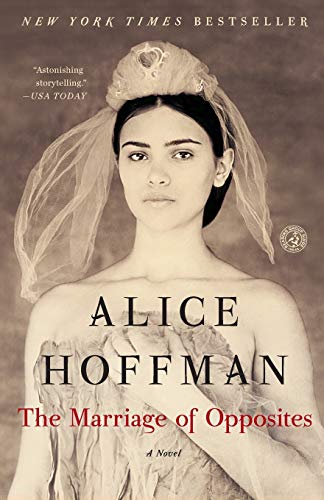
“A luminous, Marquez-esque tale” (O, The Oprah Magazine) from the New York Times bestselling author of The Museum of Extraordinary Things: a forbidden love story set on a tropical island about the extraordinary woman who gave birth to painter Camille Pissarro—the Father of Impressionism.
Growing up on idyllic St. Thomas in the early 1800s, Rachel dreams of life in faraway Paris. Rachel’s mother, a pillar of their small refugee community of Jews who escaped the Inquisition, has never forgiven her daughter for being a difficult girl who refuses to live by the rules. Growing up, Rachel’s salvation is their maid Adelle’s belief in her strengths, and her deep, life-long friendship with Jestine, Adelle’s daughter. But Rachel’s life is not her own. She is married off to a widower with three children to save her father’s business. When her older husband dies suddenly and his handsome, much younger nephew, Frédérick, arrives from France to settle the estate, Rachel seizes her own life story, beginning a defiant, passionate love affair that sparks a scandal that affects all of her family, including her favorite son, who will become one of the greatest artists of France.
“A work of art” (Dallas Morning News), The Marriage of Opposites showcases the beloved, bestselling Alice Hoffman at the height of her considerable powers. “Her lush, seductive prose, and heart-pounding subject…make this latest skinny-dip in enchanted realism…the Platonic ideal of the beach read” (Slate.com). Once forgotten to history, the marriage of Rachel and Frédérick “will only renew your commitment to Hoffman’s astonishing storytelling” (USA TODAY).
Die Inhaltsangabe kann sich auf eine andere Ausgabe dieses Titels beziehen.
Über die Autorin bzw. den Autor
Alice Hoffman is the author of thirty works of fiction, including Practical Magic, Practical Magic 2, The Dovekeepers, and Magic Lessons. Visit her website: AliceHoffman.com.
Auszug. © Genehmigter Nachdruck. Alle Rechte vorbehalten.
The Marriage of Opposites CHAPTER ONE We Followed the Turtles CHARLOTTE AMALIE, ST. THOMAS 1807 RACHEL POMIÉ
I always left my window open at night, despite the warnings I’d been given. I rarely did as I was told. According to my mother, this had been my response to life ever since my birth, for it took three days for me to arrive in the world. As a child I did not sleep through the night, and I certainly didn’t follow any rules. But I was a girl who knew what I wanted.
Other people shivered when the rains came and were chilled to the bone, but I longed for cold weather. Nights on our island were pitch dark, the air fragrant and heavy, perfect for dreaming. As soon as the light began to fade it was possible to hear the swift footsteps of lizards rattling through the leaves and the hum of the gnats as they came through the windows. Inside our stucco houses, we slept within tents made of thick white netting, meant to keep mosquitoes away. In rain barrels of drinking water we kept small fish that would eat the eggs these pests laid atop the water’s surface so there would be fewer of them to plague us. All the same, huge clouds of insects drifted through the heat, especially at dusk, bringing a fever that could burn a man alive. Scores of bats descended upon our garden, flitting through the still air to drink the nectar of our flowers, until even they disappeared, settling into the branches of the trees. When they were gone there was only the quiet and the heat and the night. Heat was at the core of our lives, a shape-shifter that never was too far from the door. It made me want to step out of my clothes and dive into another life, one where there were linden trees and green lawns, where women wore black silk dresses and crinolines that rustled when they walked, a country where the moon rose like a silver disc into a cold, clear sky.
I knew where such a place could be found. Once, it had been the country of my grandparents. They had come to the New World from France, carrying with them an apple tree to remind them of the orchards they’d once owned. Our very name, Pomié, came from the fruit that they tended. My father told me that our ancestors had searched for freedom, first in Spain, then in Portugal, then in Bordeaux, the only region in France that accepted people of our faith at that time. Yet freedom was fleeting in France; our people were jailed, then murdered and burned. Those who escaped journeyed across the ocean to Mexico and Brazil, many aided by the Marrano Fernão de Loronha, who financed expeditions and hid his faith from those in power. Even Columbus, who called our island Heaven-on-earth upon spying it, was said to be one of us, searching for new land and liberty.
In 1492 Queen Isabella expelled our people from Spain on the Ninth of Av, the worst day in the history of our people. It was on this date when the first Temple in Jerusalem was destroyed by Babylonia and the second Temple was destroyed by Rome. It was on this very day, in the year 1290, that all Jews had been expelled from England. Thousands of our children were baptized and shipped to the island of São Tomé off the coast of Africa, then sold as slaves. In the year 1506 four thousand were massacred in Portugal during Passover. Many converted, continuing to practice their religion underground. I pitied those who had stayed behind, forced to take on Christianity. My father had told me that in time even that sacrifice wasn’t good enough; such persons were called Conversos, and were looked down upon and degraded, their property and rights taken from them. Those who survived were the ones who knew when to flee.
The Inquisition followed our people across the ocean, where they were once again murdered and cast out in Mexico and Brazil. My grandfather was among those who found themselves on the island of Saint-Domingue, and it was there both my parents were raised. But there was no peace in societies where sugarcane was king and people were enslaved. In 1754 the King of Denmark had passed an edict proclaiming that all men could practice their religions freely on St. Thomas; he outlawed new slavery and gave Jews the civil rights of other men, even granting them admission to associations such as the brotherhood of Masons, which allowed our people to do business with non-Jews. My parents came, then, to the island of the turtles, for more free people could be found here than anywhere in the new world, and people of our faith were soon accepted as Danish citizens, in 1814. Nearly everyone spoke English or French, but all were grateful for the Danish rule. In 1789 there were fewer than ten Jewish households listed in the tax registers, but in 1795, the year I was born, there were seventy-five people, with more settling on our shores each year.
Once he arrived my father swore that he would never again travel. He brought along the apple tree, and my mother, and the one man who was loyal to him.
OUR ISLAND WAS A small speck of land, little more than thirty square miles set in the blue-green sea. The original population had all vanished, destroyed by disease and murder. The native people, called the Caribs, believed their ancestors journeyed to this island from the moon; having seen the dull earth, they’d come to give it light, traveling through the clouds, drenching our island with color, so that shades of orange and blue and red were scattered everywhere. But the Caribs’ ancestors were trapped here by storms and had no choice but to stay in a place where they never belonged. They wound their long, black hair into plaits of mourning both for themselves and for our world. They were right to mourn, for until the Danes brought freedom here, the island’s history was one of injustice and sorrow, a society built by convicts and slaves.
AS IT TURNED OUT, the fruit of our name did not grow well in tropical weather. It was far better suited for cooler climates. My grandparents’ apple tree, planted in a large ceramic pot in the courtyard, never grew any bigger. When I watered it during the dry season, it was so thirsty, it could never drink enough. Its brown leaves crinkled and sounded like fluttering moths as they fell to the ground. The fruit it bore was hard, the skin more green than red. Still this was our heritage, the fruit of France. I ate every apple I could find, no matter how bitter, until my mother found me out and slapped my face. My mother’s full name was Madame Sara Monsanto Pomié, and she was a force few people would dare to go up against. Her anger was a quiet, terrifying thing.
“These apples were meant for your father,” she told me when she found me gathering fruit that had fallen onto the patio. I walked away from my mother and from the tree without a word. Unlike other people, I had no fear of her. I knew she wasn’t as strong as she seemed for I’d heard her weeping late into the night. I told myself I would be in Paris when I next ate the fruit of our name. Though I’d been born here, I’d always believed it was not my true home. I was trapped on this island much like the people who had come across the sky and could do nothing more than stare at the moon through the vast distance. But unlike them, I would reach my destination.
From the time I could read, I found solace in my father’s library, where he collected maps of Paris, some made by the great cartographer Nicolas de Fer. I traced my hand along la rivière de Seine and memorized the parks and the tiny twisted streets and the paths of the Tuileries Garden, created by Catherine de’ Medici in 1564, covered with ice in the winter, a cold fairyland. It was my father who first told me about Paris, as his father had told him, and to us, it was the place where everything beautiful began and ended. Although my father had...
„Über diesen Titel“ kann sich auf eine andere Ausgabe dieses Titels beziehen.
Suchergebnisse für The Marriage of Opposites

Beispielbild für diese ISBN
The Marriage of Opposites
Verlag:
Scribner (edition Reprint), 2016
ISBN 10: 1451693605
ISBN 13: 9781451693607
Gebraucht
Paperback
Anbieter: BooksRun, Philadelphia, PA, USA
Verkäuferbewertung 5 von 5 Sternen

Paperback. Zustand: Very Good. Reprint. It's a well-cared-for item that has seen limited use. The item may show minor signs of wear. All the text is legible, with all pages included. It may have slight markings and/or highlighting. Artikel-Nr. 1451693605-11-1
Gebraucht kaufen
EUR 4,90
Versand gratis
Versand innerhalb von USA
Versand innerhalb von USA
Anzahl: 1 verfügbar
Beispielbild für diese ISBN
The Marriage of Opposites
Verlag:
Scribner (edition Reprint), 2016
ISBN 10: 1451693605
ISBN 13: 9781451693607
Gebraucht
Paperback
Anbieter: BooksRun, Philadelphia, PA, USA
Verkäuferbewertung 5 von 5 Sternen
Paperback. Zustand: Fair. Reprint. The item might be beaten up but readable. May contain markings or highlighting, as well as stains, bent corners, or any other major defect, but the text is not obscured in any way. Artikel-Nr. 1451693605-7-1
Gebraucht kaufen
EUR 5,38
Versand gratis
Versand innerhalb von USA
Versand innerhalb von USA
Anzahl: 1 verfügbar
Beispielbild für diese ISBN
The Marriage of Opposites
Anbieter: ThriftBooks-Atlanta, AUSTELL, GA, USA
Verkäuferbewertung 5 von 5 Sternen
Paperback. Zustand: Good. No Jacket. Pages can have notes/highlighting. Spine may show signs of wear. ~ ThriftBooks: Read More, Spend Less. Artikel-Nr. G1451693605I3N00
Gebraucht kaufen
EUR 5,96
Versand gratis
Versand innerhalb von USA
Versand innerhalb von USA
Anzahl: 1 verfügbar
Beispielbild für diese ISBN
The Marriage of Opposites
Anbieter: ThriftBooks-Atlanta, AUSTELL, GA, USA
Verkäuferbewertung 5 von 5 Sternen
Paperback. Zustand: Fair. No Jacket. Readable copy. Pages may have considerable notes/highlighting. ~ ThriftBooks: Read More, Spend Less. Artikel-Nr. G1451693605I5N00
Gebraucht kaufen
EUR 5,96
Versand gratis
Versand innerhalb von USA
Versand innerhalb von USA
Anzahl: 1 verfügbar
Beispielbild für diese ISBN
The Marriage of Opposites
Anbieter: ThriftBooks-Reno, Reno, NV, USA
Verkäuferbewertung 5 von 5 Sternen
Paperback. Zustand: Good. No Jacket. Pages can have notes/highlighting. Spine may show signs of wear. ~ ThriftBooks: Read More, Spend Less. Artikel-Nr. G1451693605I3N00
Gebraucht kaufen
EUR 5,96
Versand gratis
Versand innerhalb von USA
Versand innerhalb von USA
Anzahl: 1 verfügbar
Beispielbild für diese ISBN
The Marriage of Opposites
Anbieter: ThriftBooks-Phoenix, Phoenix, AZ, USA
Verkäuferbewertung 5 von 5 Sternen
Paperback. Zustand: Good. No Jacket. Pages can have notes/highlighting. Spine may show signs of wear. ~ ThriftBooks: Read More, Spend Less. Artikel-Nr. G1451693605I3N00
Gebraucht kaufen
EUR 5,96
Versand gratis
Versand innerhalb von USA
Versand innerhalb von USA
Anzahl: 1 verfügbar
Beispielbild für diese ISBN
The Marriage of Opposites
Anbieter: ThriftBooks-Dallas, Dallas, TX, USA
Verkäuferbewertung 5 von 5 Sternen
Paperback. Zustand: Good. No Jacket. Pages can have notes/highlighting. Spine may show signs of wear. ~ ThriftBooks: Read More, Spend Less. Artikel-Nr. G1451693605I3N00
Gebraucht kaufen
EUR 5,96
Versand gratis
Versand innerhalb von USA
Versand innerhalb von USA
Anzahl: 1 verfügbar
Beispielbild für diese ISBN
The Marriage of Opposites
Anbieter: Better World Books, Mishawaka, IN, USA
Verkäuferbewertung 5 von 5 Sternen
Zustand: Good. Pages intact with minimal writing/highlighting. The binding may be loose and creased. Dust jackets/supplements are not included. Stock photo provided. Product includes identifying sticker. Better World Books: Buy Books. Do Good. Artikel-Nr. 9947972-20
Gebraucht kaufen
EUR 6,18
Versand gratis
Versand innerhalb von USA
Versand innerhalb von USA
Anzahl: 9 verfügbar
Beispielbild für diese ISBN
The Marriage of Opposites
Anbieter: Better World Books: West, Reno, NV, USA
Verkäuferbewertung 5 von 5 Sternen
Zustand: Good. Former library copy. Pages intact with minimal writing/highlighting. The binding may be loose and creased. Dust jackets/supplements are not included. Includes library markings. Stock photo provided. Product includes identifying sticker. Better World Books: Buy Books. Do Good. Artikel-Nr. 9808461-6
Gebraucht kaufen
EUR 6,18
Versand gratis
Versand innerhalb von USA
Versand innerhalb von USA
Anzahl: 1 verfügbar
Beispielbild für diese ISBN
The Marriage of Opposites
Anbieter: Better World Books: West, Reno, NV, USA
Verkäuferbewertung 5 von 5 Sternen
Zustand: Good. Pages intact with minimal writing/highlighting. The binding may be loose and creased. Dust jackets/supplements are not included. Stock photo provided. Product includes identifying sticker. Better World Books: Buy Books. Do Good. Artikel-Nr. 9947972-20
Gebraucht kaufen
EUR 6,18
Versand gratis
Versand innerhalb von USA
Versand innerhalb von USA
Anzahl: 1 verfügbar