
Verwandte Artikel zu The Light Between Oceans: A Novel
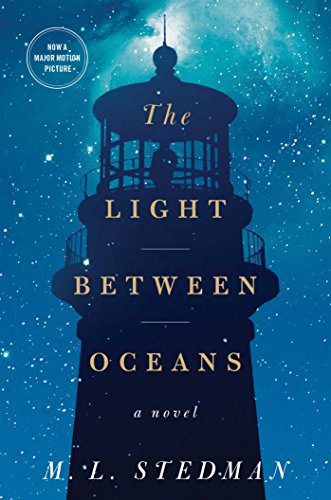
Inhaltsangabe
The years-long New York Times bestseller soon to be a major motion picture from Spielberg’s Dreamworks that is “irresistible…seductive…with a high concept plot that keeps you riveted from the first page” (O, The Oprah Magazine).
After four harrowing years on the Western Front, Tom Sherbourne returns to Australia and takes a job as the lighthouse keeper on Janus Rock, nearly half a day’s journey from the coast. To this isolated island, where the supply boat comes once a season, Tom brings a young, bold, and loving wife, Isabel. Years later, after two miscarriages and one stillbirth, the grieving Isabel hears a baby’s cries on the wind. A boat has washed up onshore carrying a dead man and a living baby.
Tom, who keeps meticulous records and whose moral principles have withstood a horrific war, wants to report the man and infant immediately. But Isabel insists the baby is a “gift from God,” and against Tom’s judgment, they claim her as their own and name her Lucy. When she is two, Tom and Isabel return to the mainland and are reminded that there are other people in the world. Their choice has devastated one of them.
Die Inhaltsangabe kann sich auf eine andere Ausgabe dieses Titels beziehen.
Über die Autorin bzw. den Autor
M.L. Stedman was born and raised in Western Australia and now lives in London. The Light Between Oceans is her first novel.
Auszug. © Genehmigter Nachdruck. Alle Rechte vorbehalten.
Light Between Oceans
CHAPTER 1
16th December 1918
Yes, I realize that,” Tom Sherbourne said. He was sitting in a spartan room, barely cooler than the sultry day outside. The Sydney summer rain pelted the window, and sent the people on the pavement scurrying for shelter.
“I mean very tough.” The man across the desk leaned forward for emphasis. “It’s no picnic. Not that Byron Bay’s the worst posting on the Lights, but I want to make sure you know what you’re in for.” He tamped down the tobacco with his thumb and lit his pipe. Tom’s letter of application had told the same story as many a fellow’s around that time: born 28 September 1893; war spent in the Army; experience with the International Code and Morse; physically fit and well; honorable discharge. The rules stipulated that preference should be given to ex-servicemen.
“It can’t—” Tom stopped, and began again. “All due respect, Mr. Coughlan, it’s not likely to be tougher than the Western Front.”
The man looked again at the details on the discharge papers, then at Tom, searching for something in his eyes, in his face. “No, son. You’re probably right on that score.” He rattled off some rules: “You pay your own passage to every posting. You’re relief, so you don’t get holidays. Permanent staff get a month’s leave at the end of each three-year contract.” He took up his fat pen and signed the form in front of him. As he rolled the stamp back and forth across the inkpad he said, “Welcome”—he thumped it down in three places on the paper—“to the Commonwealth Lighthouse Service.” On the form, “16th December 1918” glistened in wet ink.
The six months’ relief posting at Byron Bay, up on the New South Wales coast, with two other keepers and their families, taught Tom the basics of life on the Lights. He followed that with a stint down on Maatsuyker, the wild island south of Tasmania where it rained most days of the year and the chickens blew into the sea during storms.
On the Lights, Tom Sherbourne has plenty of time to think about the war. About the faces, the voices of the blokes who had stood beside him, who saved his life one way or another; the ones whose dying words he heard, and those whose muttered jumbles he couldn’t make out, but who he nodded to anyway.
Tom isn’t one of the men whose legs trailed by a hank of sinews, or whose guts cascaded from their casing like slithering eels. Nor were his lungs turned to glue or his brains to stodge by the gas. But he’s scarred all the same, having to live in the same skin as the man who did the things that needed to be done back then. He carries that other shadow, which is cast inward.
He tries not to dwell on it: he’s seen plenty of men turned worse than useless that way. So he gets on with life around the edges of this thing he’s got no name for. When he dreams about those years, the Tom who is experiencing them, the Tom who is there with blood on his hands, is a boy of eight or so. It’s this small boy who’s up against blokes with guns and bayonets, and he’s worried because his school socks have slipped down and he can’t hitch them up because he’ll have to drop his gun to do it, and he’s barely big enough even to hold that. And he can’t find his mother anywhere.
Then he wakes and he’s in a place where there’s just wind and waves and light, and the intricate machinery that keeps the flame burning and the lantern turning. Always turning, always looking over its shoulder.
If he can only get far enough away—from people, from memory—time will do its job.
Thousands of miles away on the west coast, Janus Rock was the furthest place on the continent from Tom’s childhood home in Sydney. But Janus Light was the last sign of Australia he had seen as his troopship steamed for Egypt in 1915. The smell of the eucalypts had wafted for miles offshore from Albany, and when the scent faded away he was suddenly sick at the loss of something he didn’t know he could miss. Then, hours later, true and steady, the light, with its five-second flash, came into view—his homeland’s furthest reach—and its memory stayed with him through the years of hell that followed, like a farewell kiss. When, in June 1920, he got news of an urgent vacancy going on Janus, it was as though the light there were calling to him.
Teetering on the edge of the continental shelf, Janus was not a popular posting. Though its Grade One hardship rating meant a slightly higher salary, the old hands said it wasn’t worth the money, which was meager all the same. The keeper Tom replaced on Janus was Trimble Docherty, who had caused a stir by reporting that his wife was signaling to passing ships by stringing up messages in the colored flags of the International Code. This was unsatisfactory to the authorities for two reasons: first, because the Deputy Director of Lighthouses had some years previously forbidden signaling by flags on Janus, as vessels put themselves at risk by sailing close enough to decipher them; and secondly, because the wife in question was recently deceased.
Considerable correspondence on the subject was generated in triplicate between Fremantle and Melbourne, with the Deputy Director in Fremantle putting the case for Docherty and his years of excellent service, to a Head Office concerned strictly with efficiency and cost and obeying the rules. A compromise was reached by which a temporary keeper would be engaged while Docherty was given six months’ medical leave.
“We wouldn’t normally send a single man to Janus—it’s pretty remote and a wife and family can be a great practical help, not just a comfort,” the District Officer had said to Tom. “But seeing it’s only temporary… You’ll leave for Partageuse in two days,” he said, and signed him up for six months.
There wasn’t much to organize. No one to farewell. Two days later, Tom walked up the gangplank of the boat, armed with a kit bag and not much else. The SS Prometheus worked its way along the southern shores of Australia, stopping at various ports on its run between Sydney and Perth. The few cabins reserved for first-class passengers were on the upper deck, toward the bow. In third class, Tom shared a cabin with an elderly sailor. “Been making this trip for fifty years—they wouldn’t have the cheek to ask me to pay. Bad luck, you know,” the man had said cheerfully, then returned his attention to the large bottle of over-proof rum that kept him occupied. To escape the alcohol fumes, Tom took to walking the deck during the day. Of an evening there’d usually be a card game belowdecks.
You could still tell at a glance who’d been over there and who’d sat the war out at home. You could smell it on a man. Each tended to keep to his own kind. Being in the bowels of the vessel brought back memories of the troopships that took them first to the Middle East, and later to France. Within moments of arriving on board, they’d deduced, almost by an animal sense, who was an officer, who was...
„Über diesen Titel“ kann sich auf eine andere Ausgabe dieses Titels beziehen.
Suchergebnisse für The Light Between Oceans: A Novel

Beispielbild für diese ISBN
The Light Between Oceans A Nov
Anbieter: World of Books (was SecondSale), Montgomery, IL, USA
Verkäuferbewertung 5 von 5 Sternen

Zustand: Acceptable. Item in acceptable condition! Textbooks may not include supplemental items i.e. CDs, access codes etc. Artikel-Nr. 00104730163
Gebraucht kaufen
EUR 3,67
Versand gratis
Versand innerhalb von USA
Versand innerhalb von USA
Anzahl: 6 verfügbar
Beispielbild für diese ISBN
The Light Between Oceans
Anbieter: World of Books (was SecondSale), Montgomery, IL, USA
Verkäuferbewertung 5 von 5 Sternen
Zustand: Good. Item in good condition. Textbooks may not include supplemental items i.e. CDs, access codes etc. Artikel-Nr. 00102086752
Gebraucht kaufen
EUR 3,67
Versand gratis
Versand innerhalb von USA
Versand innerhalb von USA
Anzahl: Mehr als 20 verfügbar
Beispielbild für diese ISBN
The Light Between Oceans: A Novel
Verlag:
Scribner (edition First Edition), 2012
ISBN 10: 1451681739
ISBN 13: 9781451681734
Gebraucht
Hardcover
Erstausgabe
Anbieter: BooksRun, Philadelphia, PA, USA
Verkäuferbewertung 5 von 5 Sternen
Hardcover. Zustand: Fair. First Edition. With dust jacket. The item might be beaten up but readable. May contain markings or highlighting, as well as stains, bent corners, or any other major defect, but the text is not obscured in any way. Artikel-Nr. 1451681739-7-18-29
Gebraucht kaufen
EUR 5,34
Versand gratis
Versand innerhalb von USA
Versand innerhalb von USA
Anzahl: 1 verfügbar
Beispielbild für diese ISBN
The Light Between Oceans
Anbieter: ThriftBooks-Dallas, Dallas, TX, USA
Verkäuferbewertung 5 von 5 Sternen
Hardcover. Zustand: Fair. No Jacket. Readable copy. Pages may have considerable notes/highlighting. ~ ThriftBooks: Read More, Spend Less. Artikel-Nr. G1451681739I5N00
Gebraucht kaufen
EUR 5,79
Versand gratis
Versand innerhalb von USA
Versand innerhalb von USA
Anzahl: 1 verfügbar
Beispielbild für diese ISBN
The Light Between Oceans
Anbieter: ThriftBooks-Reno, Reno, NV, USA
Verkäuferbewertung 5 von 5 Sternen
Hardcover. Zustand: Fair. No Jacket. Missing dust jacket; Readable copy. Pages may have considerable notes/highlighting. ~ ThriftBooks: Read More, Spend Less. Artikel-Nr. G1451681739I5N01
Gebraucht kaufen
EUR 5,79
Versand gratis
Versand innerhalb von USA
Versand innerhalb von USA
Anzahl: 1 verfügbar
Beispielbild für diese ISBN
The Light Between Oceans
Anbieter: ThriftBooks-Atlanta, AUSTELL, GA, USA
Verkäuferbewertung 5 von 5 Sternen
Hardcover. Zustand: Good. No Jacket. Missing dust jacket; Pages can have notes/highlighting. Spine may show signs of wear. ~ ThriftBooks: Read More, Spend Less. Artikel-Nr. G1451681739I3N01
Gebraucht kaufen
EUR 5,79
Versand gratis
Versand innerhalb von USA
Versand innerhalb von USA
Anzahl: 2 verfügbar
Beispielbild für diese ISBN
The Light Between Oceans
Anbieter: ThriftBooks-Dallas, Dallas, TX, USA
Verkäuferbewertung 5 von 5 Sternen
Hardcover. Zustand: Good. No Jacket. Missing dust jacket; Pages can have notes/highlighting. Spine may show signs of wear. ~ ThriftBooks: Read More, Spend Less. Artikel-Nr. G1451681739I3N01
Gebraucht kaufen
EUR 5,79
Versand gratis
Versand innerhalb von USA
Versand innerhalb von USA
Anzahl: 2 verfügbar
Beispielbild für diese ISBN
The Light Between Oceans
Anbieter: ThriftBooks-Reno, Reno, NV, USA
Verkäuferbewertung 5 von 5 Sternen
Hardcover. Zustand: Good. No Jacket. Missing dust jacket; Pages can have notes/highlighting. Spine may show signs of wear. ~ ThriftBooks: Read More, Spend Less. Artikel-Nr. G1451681739I3N01
Gebraucht kaufen
EUR 5,79
Versand gratis
Versand innerhalb von USA
Versand innerhalb von USA
Anzahl: 2 verfügbar
Beispielbild für diese ISBN
The Light Between Oceans
Anbieter: ThriftBooks-Reno, Reno, NV, USA
Verkäuferbewertung 5 von 5 Sternen
Hardcover. Zustand: Good. No Jacket. Former library book; Pages can have notes/highlighting. Spine may show signs of wear. ~ ThriftBooks: Read More, Spend Less. Artikel-Nr. G1451681739I3N10
Gebraucht kaufen
EUR 5,79
Versand gratis
Versand innerhalb von USA
Versand innerhalb von USA
Anzahl: 3 verfügbar
Beispielbild für diese ISBN
The Light Between Oceans
Anbieter: ThriftBooks-Atlanta, AUSTELL, GA, USA
Verkäuferbewertung 5 von 5 Sternen
Hardcover. Zustand: Good. No Jacket. Pages can have notes/highlighting. Spine may show signs of wear. ~ ThriftBooks: Read More, Spend Less. Artikel-Nr. G1451681739I3N00
Gebraucht kaufen
EUR 5,79
Versand gratis
Versand innerhalb von USA
Versand innerhalb von USA
Anzahl: Mehr als 20 verfügbar