
Verwandte Artikel zu Happy Money: The Science of Smarter Spending
Inhaltsangabe
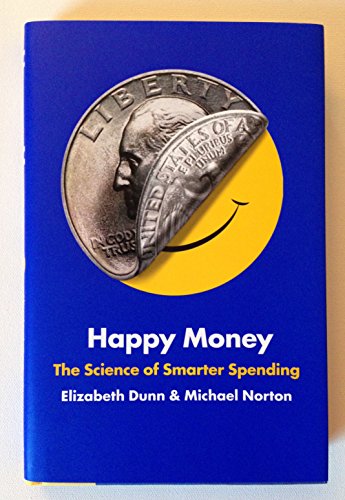
Two professors combine their fascinating and cutting-edge research in behavioral science to explain how money can buy happiness—if you follow five core principles of smart spending.
Most people recognize that they need professional advice on how to earn, save, and invest their money. When it comes to spending that money, most people just follow their intuitions. But scientific research shows that those intuitions are often wrong.
Happy Money offers a tour of research on the science of spending, explaining how you can get more happiness for your money. Authors Elizabeth Dunn and Michael Norton have outlined five principles—from choosing experiences over stuff to spending money on others—to guide not only individuals looking for financial security, but also companies seeking to create happier employees and provide “happier products” to their customers. Dunn and Norton show how companies from Google to Pepsi to Charmin have put these ideas into action.
Along the way, Dunn and Norton explore fascinating research that reveals that luxury cars often provide no more pleasure than economy models, that commercials can actually enhance the enjoyment of watching television, and that residents of many cities frequently miss out on inexpensive pleasures in their hometowns. By the end of this “lively and engaging book” (Dan Gilbert, author of Stumbling on Happiness), you’ll be asking yourself one simple question every time you reach for your wallet: Am I getting the biggest happiness bang for my buck?
Die Inhaltsangabe kann sich auf eine andere Ausgabe dieses Titels beziehen.
Über die Autorin bzw. den Autor
Elizabeth Dunn is an associate professor of psychology at the University of British Columbia in Vancouver, Canada. At age twenty-six, she was featured as one of the “rising stars” across all of academia by the Chronicle of Higher Education.
Michael Norton is an associate professor of marketing at the Harvard Business School. His research has twice been featured in The New York Times Magazine Year in Ideas issue. In 2012, he was selected for Wired magazine’s Smart List as one of “50 People Who Will Change the World.”
Auszug. © Genehmigter Nachdruck. Alle Rechte vorbehalten.
Happy Money
Make It a Treat
Sarah Silverman loves pot, porn, and fart jokes. But when it comes to indulging in these finer pleasures, the comic and former Saturday Night Live writer has a mantra: “Make it a treat.” This epiphany came to her in the midst of her freshman year at New York University, when a friend found her in the midst of an extended pot bender and imparted some guru-like wisdom: “If you want to enjoy these things—things like weed—you have to make it a treat.”1 On her show, The Sarah Silverman Program, she puts this mantra into action by insisting that her writers temper their innate overreliance on fart jokes.
“Fart jokes make me happier than just about anything in the universe,” she explains. “And for that reason I’m terrified by the idea that someday I might have had enough of them. If they are a genuine treat and a surprise, they are the surest way to send me into tear-soaked convulsions of laughter.” While all of us may not share Sarah Silverman’s humor preferences, her kernel of wisdom—let’s call it Silverman’s Mantra—extends beyond fart jokes. And it can help people make wiser spending decisions. Abundance, it turns out, is the enemy of appreciation.
Many of us are lucky enough to live in a society where chocolate is available in every supermarket, gas station, and movie theater. Ironically, though, this abundance may undermine our enjoyment of it. One afternoon, students came into a psychology lab to complete a simple task: eating a piece of chocolate.2 The following week they returned for a second piece. Overall, the students enjoyed the chocolate less the second time than they had the first. This is the sad reality of the human experience: in general, the more we’re exposed to something, the more its impact diminishes.
It’s not all bad news. Getting used to things can be handy when it comes to cold winters or unpleasant smells. Early one Friday evening, Liz’s Welsh corgi got sprayed by a skunk. In a moment of naïve gallantry, she scooped the stinking dog into her arms, thereby covering herself in the scent, too. After hours of bathing both herself and the dog in tomatoes and other home remedies, Liz found that the scent had faded. She gave the dog a Snausage and headed off to a friend’s party. Moments after Liz’s arrival, the party hostess nervously sniffed the air and exclaimed, “Skunk!” The cure that Liz believed the home remedies had wrought was due to her own olfactory fatigue. After prolonged exposure to the bad smell, Liz became habituated to it, and its pungency faded. Many of us have experienced the process of getting used to bad things. We often fail to realize that a similar kind of habituation can kick in for positive experiences, like buying shiny new toys. From chocolate bars to luxury cars, habituation represents a fundamental barrier to deriving lasting pleasure from our purchases.
Like houses, cars are among the largest purchases that most people make. Is it best to splurge on a BMW, economize with a Ford Escort, or settle for the mid-level option of a Honda Accord? When researchers at the University of Michigan asked students to predict how much pleasure they would experience while driving each type of car, the BMW was the clear winner.3 But do drivers experience more happiness behind the wheel of an expensive car? To find out, the Michigan researchers asked car owners to think back on the last time they had driven their car, rating how much they enjoyed that drive. Although their cars ranged widely in value, from around $400 (a Yugo, perhaps?) to $40,000, there was no relationship at all between the Blue Book value of the car and the amount of enjoyment the owners got from driving it that day.
But here’s the twist in the road: The researchers asked other drivers to list their car’s make, model, and year, and then consider how they typically felt while driving it. When car owners thought about their vehicles in this light, those who owned more expensive cars reported deriving more enjoyment from driving. Suddenly there was a relationship between a car’s value and its emotional payoff. Why? When people are asked how something generally makes them feel, they tend to draw on equally general theories to form an answer. Rather than reconstructing how they felt each of the last fifty times they drove the Bimmer and then averaging these experiences, a BMW owner is likely to think something like, “I own a midnight blue Z4 with three hundred horsepower and a retractable hardtop. Of course I enjoy driving it. Next question.” These undeniably fabulous features are likely to make a big difference for enjoyment during an initial test drive, which is why smart salespeople focus our attention on these features at the time of purchase. Novelty attracts the spotlight of attention, focusing our minds and exciting our emotions. But once we get used to something—even something as nice as a midnight blue Z4—the spotlight moves on. Driving to the grocery store in the dead of winter, we think about being stuck in the left lane behind an octogenarian in an Oldsmobile, about whether the store will have any hot rotisserie chickens left, about almost anything other than the make and model of the car we’re driving. Retractable hardtops just aren’t that relevant in subzero temperatures. And this explains why driving a more expensive car doesn’t usually provide more joy than driving an economy model.
Unless, that is, we make driving a treat. In a final study, the Michigan researchers asked car owners to think about the last time they had driven their car just for fun. When people thought back on their most recent joy ride, individuals with more expensive cars reported more pleasure from driving. But these joy rides were remarkably rare. So, driving a BMW probably won’t provide you with any more pleasure than driving a Ford Escort—except on those rare occasions when your attention turns to the car itself, whether directed by a question from a researcher or a joy ride on a winding mountain road.
The Deceptive Simplicity of Silverman’s Mantra
According to Oprah Winfrey, “The single greatest thing you can do to change your life today would be to start being grateful for what you have.”4 This is good advice. But, like a grapefruit diet, adopting an attitude of gratitude is easy at first but quickly becomes almost impossible. Because novelty captures our attention, we feel buoyantly grateful for things that catch us by surprise.5 The sixteen-year-old who lives out the teenage fantasy of discovering a new car wrapped in a giant red bow on his birthday will no doubt experience a surge of joy and gratitude. But these feelings are likely to fade as being a car owner becomes just another part of his daily experience and identity.
Following Oprah’s advice is hard for all of us, and ironically, it gets even harder as people edge closer and closer to Oprah’s end of the wealth spectrum. In a study of working adults in Belgium, wealthier individuals reported a lower proclivity to savor life’s little pleasures. They were less likely to say that they would pause to appreciate a beautiful waterfall on a hike, or stay present in the moment during a romantic weekend getaway.6 This phenomenon helps explain why the relationship between income and happiness is weaker than many people expect. At the same time that money increases our happiness by giving us access to all kinds of wonderful things, knowing we have access to wonderful things undermines our happiness by reducing...
„Über diesen Titel“ kann sich auf eine andere Ausgabe dieses Titels beziehen.
Suchergebnisse für Happy Money: The Science of Smarter Spending

Beispielbild für diese ISBN
Happy Money: The Science of Smarter Spending
Anbieter: World of Books (was SecondSale), Montgomery, IL, USA
Verkäuferbewertung 5 von 5 Sternen

Hardback. Zustand: Fair. Artikel-Nr. 00105052243
Gebraucht kaufen
EUR 4,64
Versand gratis
Versand innerhalb von USA
Versand innerhalb von USA
Anzahl: 1 verfügbar
Beispielbild für diese ISBN
Happy Money: The Science of Smarter Spending
Anbieter: World of Books (was SecondSale), Montgomery, IL, USA
Verkäuferbewertung 5 von 5 Sternen
Hardback. Zustand: Very Good. Artikel-Nr. 00100961153
Gebraucht kaufen
EUR 4,64
Versand gratis
Versand innerhalb von USA
Versand innerhalb von USA
Anzahl: 1 verfügbar
Beispielbild für diese ISBN
Happy Money: The Science of Smarter Spending
Anbieter: World of Books (was SecondSale), Montgomery, IL, USA
Verkäuferbewertung 5 von 5 Sternen
Hardback. Zustand: Good. Artikel-Nr. 00105407859
Gebraucht kaufen
EUR 4,64
Versand gratis
Versand innerhalb von USA
Versand innerhalb von USA
Anzahl: 3 verfügbar
Beispielbild für diese ISBN
Happy Money: The Science of Smarter Spending
Verlag:
Simon & Schuster (edition Later Printing), 2013
ISBN 10: 1451665067
ISBN 13: 9781451665062
Gebraucht
Hardcover
Anbieter: BooksRun, Philadelphia, PA, USA
Verkäuferbewertung 5 von 5 Sternen
Hardcover. Zustand: Very Good. Later Printing. With dust jacket. It's a well-cared-for item that has seen limited use. The item may show minor signs of wear. All the text is legible, with all pages included. It may have slight markings and/or highlighting. Artikel-Nr. 1451665067-8-1-29
Gebraucht kaufen
EUR 4,65
Versand gratis
Versand innerhalb von USA
Versand innerhalb von USA
Anzahl: 1 verfügbar
Beispielbild für diese ISBN
Happy Money: The Science of Smarter Spending
Anbieter: ThriftBooks-Atlanta, AUSTELL, GA, USA
Verkäuferbewertung 5 von 5 Sternen
Hardcover. Zustand: As New. No Jacket. Pages are clean and are not marred by notes or folds of any kind. ~ ThriftBooks: Read More, Spend Less. Artikel-Nr. G1451665067I2N00
Gebraucht kaufen
EUR 5,97
Versand gratis
Versand innerhalb von USA
Versand innerhalb von USA
Anzahl: 1 verfügbar
Beispielbild für diese ISBN
Happy Money: The Science of Smarter Spending
Anbieter: ThriftBooks-Atlanta, AUSTELL, GA, USA
Verkäuferbewertung 5 von 5 Sternen
Hardcover. Zustand: Very Good. No Jacket. May have limited writing in cover pages. Pages are unmarked. ~ ThriftBooks: Read More, Spend Less. Artikel-Nr. G1451665067I4N00
Gebraucht kaufen
EUR 5,97
Versand gratis
Versand innerhalb von USA
Versand innerhalb von USA
Anzahl: 1 verfügbar
Beispielbild für diese ISBN
Happy Money: The Science of Smarter Spending
Anbieter: ThriftBooks-Atlanta, AUSTELL, GA, USA
Verkäuferbewertung 5 von 5 Sternen
Hardcover. Zustand: Very Good. No Jacket. Missing dust jacket; May have limited writing in cover pages. Pages are unmarked. ~ ThriftBooks: Read More, Spend Less. Artikel-Nr. G1451665067I4N01
Gebraucht kaufen
EUR 5,97
Versand gratis
Versand innerhalb von USA
Versand innerhalb von USA
Anzahl: 1 verfügbar
Beispielbild für diese ISBN
Happy Money : The Science of Smarter Spending
Anbieter: Better World Books, Mishawaka, IN, USA
Verkäuferbewertung 5 von 5 Sternen
Zustand: Very Good. Pages intact with possible writing/highlighting. Binding strong with minor wear. Dust jackets/supplements may not be included. Stock photo provided. Product includes identifying sticker. Better World Books: Buy Books. Do Good. Artikel-Nr. 4875499-6
Gebraucht kaufen
EUR 6,17
Versand gratis
Versand innerhalb von USA
Versand innerhalb von USA
Anzahl: 2 verfügbar
Beispielbild für diese ISBN
Happy Money : The Science of Smarter Spending
Anbieter: Better World Books: West, Reno, NV, USA
Verkäuferbewertung 5 von 5 Sternen
Zustand: Very Good. Former library copy. Pages intact with possible writing/highlighting. Binding strong with minor wear. Dust jackets/supplements may not be included. Includes library markings. Stock photo provided. Product includes identifying sticker. Better World Books: Buy Books. Do Good. Artikel-Nr. 6421441-6
Gebraucht kaufen
EUR 6,17
Versand gratis
Versand innerhalb von USA
Versand innerhalb von USA
Anzahl: 2 verfügbar
Beispielbild für diese ISBN
Happy Money : The Science of Smarter Spending
Anbieter: Better World Books, Mishawaka, IN, USA
Verkäuferbewertung 5 von 5 Sternen
Zustand: Good. Former library copy. Pages intact with minimal writing/highlighting. The binding may be loose and creased. Dust jackets/supplements are not included. Includes library markings. Stock photo provided. Product includes identifying sticker. Better World Books: Buy Books. Do Good. Artikel-Nr. 1378793-6
Gebraucht kaufen
EUR 6,17
Versand gratis
Versand innerhalb von USA
Versand innerhalb von USA
Anzahl: 3 verfügbar