
Verwandte Artikel zu Being George Washington: The Indispensable Man, As...
Inhaltsangabe
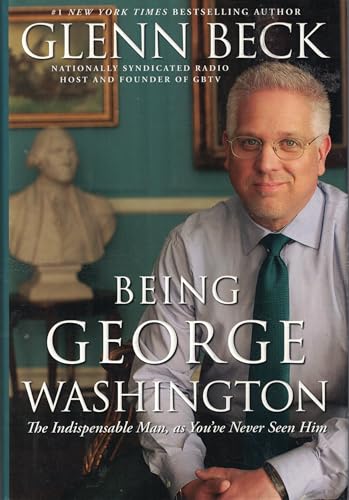
#1 New York Times bestselling author and nationally syndicated radio host Glenn Beck puts his unique spin on the life and legacy of Founding Father George Washington.
IF YOU THINK YOU KNOW GEORGE WASHINGTON, THINK AGAIN.
This is the amazing true story of a real-life superhero who wore no cape and possessed no special powers—yet changed the world forever. It’s a story about a man whose life reads as if it were torn from the pages of an action novel: Bullet holes through his clothing. Horses shot out from under him. Unimaginable hardship. Disease. Heroism. Spies and double-agents. And, of course, the unmistakable hand of Divine Providence that guided it all.
Being George Washington is a whole new way to look at history. You won’t simply read about the awful winter spent at Valley Forge—you’ll live it right alongside Washington. You’ll be on the boat with him crossing the Delaware, in the trenches with him at Yorktown, and standing next to him at the Constitutional Convention as a new republic is finally born.
Through these stories you’ll not only learn our real history (and how it applies to today), you’ll also see how the media and others have distorted our view of it. It’s ironic that the best-known fact about George Washington—that he chopped down a cherry tree—is a complete lie. It’s even more ironic when you consider that a lie was thought necessary to prove he could not tell one.
For all of his heroism and triumphs, Washington’s single greatest accomplishment was the man he created in the process: courageous and principled, fair and just, respectful to all. But he was also something else: flawed.
It’s those flaws that should give us hope for today. After all, if Washington had been perfect, then there would be no way to build another one. That’s why this book is not just about being George Washington in 1776, it’s about the struggle to be him every single day of our lives. Understanding the way he turned himself from an uneducated farmer into the Indispensable (yet imperfect) Man, is the only way to build a new generation of George Washingtons that can take on the extraordinary challenges that America is once again facing.
Die Inhaltsangabe kann sich auf eine andere Ausgabe dieses Titels beziehen.
Über die Autorin bzw. den Autor
Glenn Beck, the nationally syndicated radio host and founder of TheBlaze television network, has written thirteen #1 bestselling books and is one of the few authors in history to have had #1 national bestsellers in the fiction, nonfiction, self-help, and children’s picture book genres. His recent fiction works include the thrillers Agenda 21, The Overton Window, and its sequel, The Eye of Moloch; his many nonfiction titles include Conform, Miracles and Massacres, Control, and Being George Washington. For more information about Glenn Beck, his books, and TheBlaze television network, visit GlennBeck.com and TheBlaze.com.
Auszug. © Genehmigter Nachdruck. Alle Rechte vorbehalten.
Being George Washington
1
Victory or Death
Friday, December 13, 1776
The Widow White’s Tavern
Basking Ridge, New Jersey
It required a very special manner of general to have a tranquil breakfast in the middle of a war in which his own side confronted massive peril.
But Charles Lee was that sort of general—and man.
The torch of freedom, shining so brightly following General William Howe’s evacuation of Boston, was now threatened with darkness. New York City had, in battle after battle, been ingloriously lost. Even the outpost named for Lee himself—New Jersey’s “Fort Lee”—had been abandoned. Philadelphia seemed next. Thousands of rebel soldiers had been lost, either slain in battle or now bound in heavy iron chains. Thousands more had simply vanished and gone home.
It was mid-morning, nearing ten o’clock, yet General Lee sat quietly in his soiled, rumpled cap and dressing gown, here at the widow Mary White’s two-storied, two-chimneyed tavern in Basking Ridge, New Jersey. The slovenly Lee cheerfully munched upon his eggs and hard bread and plentiful portions of bacon and ham, occasionally pausing to fling a scrap or two of what had recently been ambulatory swine to the ravenous pack of faithful hounds who seemingly accompanied this strange man wherever he traveled. Between munches and flings, Lee took quill pen in hand to inscribe a letter to General Horatio Gates furiously raging against their mutual superior, George Washington. “A certain man,” Lee scribbled hurriedly, “is damnably deficient.”
Lee wrote rapidly for a very good reason: All hell was breaking loose. To enjoy this breakfast (and perhaps more of the company of the tavern’s comely ladies), Lee had foolishly separated himself from his troops—troops he had long delayed bringing southward from New York state to reinforce Washington’s woefully depleted forces. Troops that were now busily heading for a semblance of safety across the ice-choked Delaware River in Pennsylvania. Only a handful of guards had accompanied Lee and his aide to the widow White’s tavern.
“You’re surrounded, you traitor, Lee!” came a shout from outside. “Surrender or forfeit your worthless life!” The startled Lee finished writing his last sentence, breaking his quill point as he did, and sprang from his seat. Falling to his knees, he peered out from the bottom of a nearby sill to view a squad of green-jacketed British dragoons, their muskets at the ready.
Lee could not be sure which one had shouted, but that was the least of his problems.
It was, in fact, twenty-two-year-old Cornet Banastre Tarleton, among the most capable and vicious men fighting under the Union Jack. Lee bolted from his table and scurried for safety just as the hard-faced Tarleton’s men unleashed a cascade of fire. Smoke and deafening thunder—and lead shot—filled the air. Several of Lee’s guards fell dead or wounded.
“Hide here!” screamed a barmaid. “Hide in my bed!”
“I’d die first!” shouted Lee, as his hounds growled and barked and ran about the house in panic. “I will fight to the last!”
“I’ll burn the house down! To the ground!” shouted Tarleton. “You have five minutes to surrender!”
Charles Lee’s last came very soon. But it ended with neither death nor victory. Now attired in his old blue coat and battered cock hat, his breeches spattered with grease, he merely shuffled out the tavern’s front door. His captors hustled him upon a horse and sounded a bugle as Charles Lee was led away to a British camp at Brunswick.
December 1776
Trenton, New Jersey
“What’s going on?” Colonel Johann Gottlieb Rall questioned. The gruff, fifty-year-old “Hessian Lion” spoke no English. He spoke only war—and contempt for his Amerikanischen adversaries. Before him, he saw a body carried forward. Another Hessian soldier hobbled past him, assisted by two more grenadiers, blood still seeping freely from the bandages wrapped tightly just above his left knee.
“Another ambush, Colonel Rall. Corporal Schmidt killed. Shot straight through the heart. Private Keller wounded,” answered Lieutenant Andreas von Wiederholdt, who had recently begun to appear much older than his forty-four years. His soldiers could not venture a step outside this miserable village of Trenton without being fired upon by these rebel madmen. Even being within its limits offered little safety. A shot from the woods—blam!—might be fired into the back of an unsuspecting sentry patrolling Trenton’s outskirts. And what could anyone hope to do about it?
Wiederholdt and his men could no longer rest decently at night. They remained on constant alert, fitfully sleeping in their blue-and-black uniforms, ready to spring into action at a moment’s notice and confront a patriot’s musket. The darkening bags under Wiederholdt’s eyes and the disheveled nature of his own once invariably neat, brass-buttoned uniform revealed that.
A column of men appeared on the horizon, on the road leading northward out of the town, but they were too far away to clearly identify. Was it the Americans? Daring to attack us directly? Wiederholdt’s bony face froze in fear. But now he noticed something—shafts of reflected sunlight danced about the head of each figure advancing toward him, emanating from the tall, pointed, polished brass helmet that each Hessian grenadier so proudly wore. It was, Wiederholdt now saw, merely Lieutenant Jakob Piel’s company trudging home from a fourteen-mile march to the British outpost at Princeton. A small, very relieved smile played across his thin lips.
Rall could not but help notice Wiederholdt’s cascading emotions. “Ha!” he joked to his subordinate. “You see Americans everywhere! Are you a soldier or an old woman?”
Wiederholdt silently accepted the insult. Who is Rall bluffing? he thought. He knows what’s going on; that it’s unsafe for messengers—or anyone—out there. These Americans hate us. They see us as invaders—oppressors. That’s why we have to send a hundred troops to guard a single messenger to Princeton!
But Wiederholdt was not about to maintain his silence about everything. “Colonel Rall,” he said deferentially, hoping not to agitate his commandant too much, “perhaps we should now move to fortify Trenton. I know Colonel von Donop has recommended erecting redoubts on both the upper end of town and along the river.”
“Donop!” snapped Rall. “Dummkopf! Let the Americans come! So much the better! If they dare to come we will have at them with our bayonets—and that will be the end of George Washington!”
December 1776
(George Washington’s headquarters)
Outside the farmhouse of Robert Merrick
Ten miles north of Trenton Falls
Bucks County, Pennsylvania
Perhaps it would be the end of George Washington—and of his revolution.
Colonel Rall certainly thought Washington was on the ropes.
General Lee had thought so as well.
And so, though he hated to admit it, did Thomas Paine.
It was no comfortable Philadelphia print shop in which Paine now sat. Patriotism meant more than words to the English-born pamphleteer. At forty, he now wore the short brown jacket and feathered hat of his unit of the...
„Über diesen Titel“ kann sich auf eine andere Ausgabe dieses Titels beziehen.
Suchergebnisse für Being George Washington: The Indispensable Man, As...

Beispielbild für diese ISBN
Being George Washington: The Indispensable Man, as You've Never Seen Him
Anbieter: World of Books (was SecondSale), Montgomery, IL, USA
Verkäuferbewertung 5 von 5 Sternen

Hardback. Zustand: Fair. The #1 New York Times bestselling author and nationally syndicated radio host offers a unique spin on the life and legacy of founding father George Washington. IF YOU THINK YOU KNOW GEORGE WASHINGTON, THINK AGAIN. This is the amazing true story of a real-life superhero who wore no cape and possessed no special powers--yet changed the world forever. His life reads as if it were torn from the pages of an action novel: Bullet holes through his clothing. Horses shot out from under him. Unimaginable hardship. Disease. Spies and double-agents. And while we celebrate his great heroism and character, we discover he was also a flawed man. It's those flaws that should give us hope for today. Understanding the very human way he turned himself from an uneducated farmer into the Indispensable (yet imperfect) Man is the only way to build a new generation of George Washingtons who can take on the extraordinary challenges that America is once again facing. Artikel-Nr. 00106116253
Gebraucht kaufen
EUR 3,88
Versand gratis
Versand innerhalb von USA
Versand innerhalb von USA
Anzahl: 8 verfügbar
Beispielbild für diese ISBN
Being George Washington: The Indispensable Man, as You've Never Seen Him
Anbieter: World of Books (was SecondSale), Montgomery, IL, USA
Verkäuferbewertung 5 von 5 Sternen
Hardback. Zustand: Good. The #1 New York Times bestselling author and nationally syndicated radio host offers a unique spin on the life and legacy of founding father George Washington. IF YOU THINK YOU KNOW GEORGE WASHINGTON, THINK AGAIN. This is the amazing true story of a real-life superhero who wore no cape and possessed no special powers--yet changed the world forever. His life reads as if it were torn from the pages of an action novel: Bullet holes through his clothing. Horses shot out from under him. Unimaginable hardship. Disease. Spies and double-agents. And while we celebrate his great heroism and character, we discover he was also a flawed man. It's those flaws that should give us hope for today. Understanding the very human way he turned himself from an uneducated farmer into the Indispensable (yet imperfect) Man is the only way to build a new generation of George Washingtons who can take on the extraordinary challenges that America is once again facing. Artikel-Nr. 00091656328
Gebraucht kaufen
EUR 3,88
Versand gratis
Versand innerhalb von USA
Versand innerhalb von USA
Anzahl: Mehr als 20 verfügbar
Beispielbild für diese ISBN
Being George Washington: The Indispensable Man, as You've Never Seen Him
Anbieter: World of Books (was SecondSale), Montgomery, IL, USA
Verkäuferbewertung 5 von 5 Sternen
Hardback. Zustand: Very Good. The #1 New York Times bestselling author and nationally syndicated radio host offers a unique spin on the life and legacy of founding father George Washington. IF YOU THINK YOU KNOW GEORGE WASHINGTON, THINK AGAIN. This is the amazing true story of a real-life superhero who wore no cape and possessed no special powers--yet changed the world forever. His life reads as if it were torn from the pages of an action novel: Bullet holes through his clothing. Horses shot out from under him. Unimaginable hardship. Disease. Spies and double-agents. And while we celebrate his great heroism and character, we discover he was also a flawed man. It's those flaws that should give us hope for today. Understanding the very human way he turned himself from an uneducated farmer into the Indispensable (yet imperfect) Man is the only way to build a new generation of George Washingtons who can take on the extraordinary challenges that America is once again facing. Artikel-Nr. 00109446590
Gebraucht kaufen
EUR 3,88
Versand gratis
Versand innerhalb von USA
Versand innerhalb von USA
Anzahl: 11 verfügbar
Beispielbild für diese ISBN
Being George Washington: The Indispensable Man, as You've Never Seen Him
Verlag:
Threshold Editions (edition First Edition), 2011
ISBN 10: 1451659261
ISBN 13: 9781451659269
Gebraucht
Hardcover
Erstausgabe
Anbieter: BooksRun, Philadelphia, PA, USA
Verkäuferbewertung 5 von 5 Sternen
Hardcover. Zustand: Very Good. First Edition. It's a well-cared-for item that has seen limited use. The item may show minor signs of wear. All the text is legible, with all pages included. It may have slight markings and/or highlighting. Artikel-Nr. 1451659261-11-18
Gebraucht kaufen
EUR 5,63
Versand gratis
Versand innerhalb von USA
Versand innerhalb von USA
Anzahl: 1 verfügbar
Beispielbild für diese ISBN
Being George Washington: The Indispensable Man, as You've Never Seen Him
Verlag:
Threshold Editions (edition First Edition), 2011
ISBN 10: 1451659261
ISBN 13: 9781451659269
Gebraucht
Hardcover
Erstausgabe
Anbieter: BooksRun, Philadelphia, PA, USA
Verkäuferbewertung 5 von 5 Sternen
Hardcover. Zustand: Very Good. First Edition. With dust jacket. It's a well-cared-for item that has seen limited use. The item may show minor signs of wear. All the text is legible, with all pages included. It may have slight markings and/or highlighting. Artikel-Nr. 1451659261-11-1-29
Gebraucht kaufen
EUR 5,84
Versand gratis
Versand innerhalb von USA
Versand innerhalb von USA
Anzahl: 4 verfügbar
Beispielbild für diese ISBN
Being George Washington: The Indispensable Man, as You've Never Seen Him
Anbieter: ThriftBooks-Phoenix, Phoenix, AZ, USA
Verkäuferbewertung 5 von 5 Sternen
Hardcover. Zustand: As New. No Jacket. Pages are clean and are not marred by notes or folds of any kind. ~ ThriftBooks: Read More, Spend Less. Artikel-Nr. G1451659261I2N00
Gebraucht kaufen
EUR 5,99
Versand gratis
Versand innerhalb von USA
Versand innerhalb von USA
Anzahl: 1 verfügbar
Beispielbild für diese ISBN
Being George Washington: The Indispensable Man, as You've Never Seen Him
Anbieter: ThriftBooks-Atlanta, AUSTELL, GA, USA
Verkäuferbewertung 5 von 5 Sternen
Hardcover. Zustand: As New. No Jacket. Pages are clean and are not marred by notes or folds of any kind. ~ ThriftBooks: Read More, Spend Less. Artikel-Nr. G1451659261I2N00
Gebraucht kaufen
EUR 5,99
Versand gratis
Versand innerhalb von USA
Versand innerhalb von USA
Anzahl: 2 verfügbar
Beispielbild für diese ISBN
Being George Washington: The Indispensable Man, as You've Never Seen Him
Anbieter: ThriftBooks-Dallas, Dallas, TX, USA
Verkäuferbewertung 5 von 5 Sternen
Hardcover. Zustand: As New. No Jacket. Pages are clean and are not marred by notes or folds of any kind. ~ ThriftBooks: Read More, Spend Less. Artikel-Nr. G1451659261I2N00
Gebraucht kaufen
EUR 5,99
Versand gratis
Versand innerhalb von USA
Versand innerhalb von USA
Anzahl: 2 verfügbar
Beispielbild für diese ISBN
Being George Washington: The Indispensable Man, as You've Never Seen Him
Anbieter: ThriftBooks-Reno, Reno, NV, USA
Verkäuferbewertung 5 von 5 Sternen
Hardcover. Zustand: As New. No Jacket. Pages are clean and are not marred by notes or folds of any kind. ~ ThriftBooks: Read More, Spend Less. Artikel-Nr. G1451659261I2N00
Gebraucht kaufen
EUR 5,99
Versand gratis
Versand innerhalb von USA
Versand innerhalb von USA
Anzahl: 1 verfügbar
Beispielbild für diese ISBN
Being George Washington: The Indispensable Man, as You've Never Seen Him
Anbieter: ThriftBooks-Atlanta, AUSTELL, GA, USA
Verkäuferbewertung 5 von 5 Sternen
Hardcover. Zustand: Good. No Jacket. Pages can have notes/highlighting. Spine may show signs of wear. ~ ThriftBooks: Read More, Spend Less. Artikel-Nr. G1451659261I3N00
Gebraucht kaufen
EUR 5,99
Versand gratis
Versand innerhalb von USA
Versand innerhalb von USA
Anzahl: 1 verfügbar