
Verwandte Artikel zu Mao: The Real Story
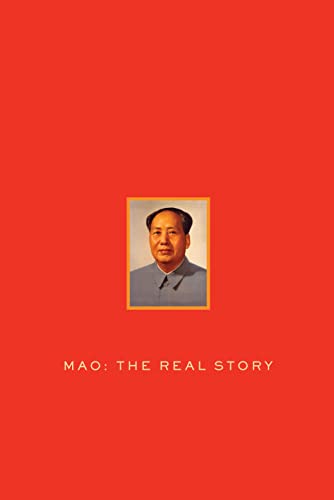
Inhaltsangabe
This major new biography of Mao uses extensive Russian documents previously unavailable to biographers to reveal surprising details about Mao’s rise to power and leadership in China.
This major new biography of Mao uses extensive Russian documents previously unavailable to biographers to reveal surprising details about Mao’s rise to power and his leadership in China.
Mao Zedong was one of the most important figures of the twentieth century, the most important in the history of modern China. A complex figure, he was champion of the poor and brutal tyrant, poet and despot.
Pantsov and Levine show Mao’s relentless drive to succeed, vividly describing his growing role in the nascent Communist Party of China. They disclose startling facts about his personal life, particularly regarding his health and his lifelong serial affairs with young women. They portray him as the loyal Stalinist that he was, who never broke with the Soviet Union until after Stalin’s death.
Mao brought his country from poverty and economic backwardness into the modern age and onto the world stage. But he was also responsible for an unprecedented loss of life. The disastrous Great Leap Forward with its accompanying famine and the bloody Cultural Revolution were Mao’s creations. Internationally Mao began to distance China from the USSR under Khrushchev and shrewdly renewed relations with the U.S. as a counter to the Soviets. He lived and behaved as China’s last emperor.
Die Inhaltsangabe kann sich auf eine andere Ausgabe dieses Titels beziehen.
Über die Autorin bzw. den Autor
Alexander V. Pantsov is a professor of history and holds the Edward and Mary Catherine Gerhold Chair in the Humanities at Capital University in Columbus, Ohio. Born in Moscow, Pantsov graduated from Moscow State University Institute of Asian and African Studies in 1978. He has published more than ten books, among them The Bolsheviks and the Chinese Revolution 1919-1927 and Mao Zedong.
Steven I. Levine is research faculty associate in the department of history at the University of Montana. Levine has published extensively in the fields of modern Chinese politics and foreign policy as well as American-East Asian relations.
Auszug. © Genehmigter Nachdruck. Alle Rechte vorbehalten.
Mao
INTRODUCTION
MYTHS AND REALITIES
Historical figures merit objective biographies. Yet the challenge of writing such biographies is daunting even under the best of circumstances. The biographer must pursue a seemingly endless trail of published and unpublished sources, often in a variety of languages, exhaust the contents of numerous archives, winnow truth and fact from rumor and falsehood, strike the right balance between the public persona and the private person, and judge the wisdom and folly of the subject over the span of a lifetime. Such difficulties are multiplied when the subject of the biography is the leader of a closed society that jealously guards its secrets. This is certainly the case with Mao Zedong, the founder of modern China. But now, more than thirty-five years after his death in 1976, with the release of important new documents from China and exclusive access to major archives in the former Soviet Union, a clearer, more nuanced, more complete portrait of the most important Chinese leader in modern times can be drawn. That is the aim of this biography.
To be sure, Mao has been the subject of numerous biographies in Western languages since the American journalist Edgar Snow first wrote down Mao’s life story just past its midpoint, in July 1936. A year later Snow published that story as the centerpiece of Red Star Over China, an influential book that helped shape history and remains in print to this day. For what it tells about the lineage of Western-language Mao biographies—a lineage from which our own biography significantly departs—it is worth relating why that encounter between the guerrilla commander cum leader of the Chinese Communist Party and the young American reporter took place.
Already a well-known journalist by the mid-1930s, Snow was extremely sympathetic to the Chinese communist movement, although he was not a Marxist. Among the mainstream media for which he wrote, including the New York Herald Tribune, Foreign Affairs, and the Saturday Evening Post, he enjoyed a reputation for being independent-minded, unlike many other leftist reporters in China, who openly paraded their pro-communist views.
It was precisely this reputation that attracted the attention of the leaders of the Chinese Communist Party, including Mao Zedong. They intended to make use of the thirty-one-year-old American to improve their public image and expand their political influence. Snow had his own reasons for seeking out Mao. An ambitious journalist with an instinct for the big story, he jumped at the opportunity for a sensational scoop. Each man intended to use the other for his own purposes. Snow arrived in Baoan, in northern Shaanxi province, on July 13, 1936, just two days after Mao Zedong himself set up camp in that remote and desolate town. Mao was fleeing from Generalissimo Chiang Kai-shek, head of the National Government and the leader of the Nationalist Party (the Guomindang, or GMD), whose forces had inflicted a serious defeat on the Chinese Red Army.
Mao granted Snow’s request for a series of interviews, in which he first spoke at length about his childhood and youth before outlining his career as a communist revolutionary. The communists had made a shrewd choice picking Snow. The impressionable American came to view Mao as a wise philosopher-king, Lincolnesque in appearance, perspicacious, easygoing, and self-confident. “He certainly believed in his own star and destiny to rule,” Snow recalled.1 Transcribing Mao’s monologue into his notebook during long nights in the candlelit cave where they met, Snow was sooner Mao’s amanuensis than a critical journalist. Once his mission was accomplished, Snow returned to Beijing with his precious notes and began working on the manuscript that became Red Star Over China.
Just as Mao and Snow had hoped, Red Star Over China created a sensation, particularly among liberal intellectuals and leftists in the West. Its intimate portrayal of Mao as a romantic revolutionary struck a sympathetic chord with Western readers disillusioned with the austere figure of an increasingly authoritarian Chiang Kai-shek. Snow’s pioneering work set the tone for many subsequent books by authors who were equally or even more sympathetic in their depictions of Mao. There was only one major point on which these later works differed from Snow’s. While Snow viewed Mao as a faithful follower of Soviet Marxism, other writers asserted that as early as the late 1930s, the Chinese Communist Party (CCP) under Mao’s leadership had become autonomous and self-reliant. According to this view, Mao, an independent thinker and actor, had basically distanced himself from Moscow, unlike the dogmatic Chinese Stalinists whom he had bested in intraparty struggles. Mao stood tall; he was his own man, an authentic Chinese revolutionary, not Stalin’s stooge. This was Mao’s main attraction for authors trying to explain the Chinese revolution to American readers.
As early as the late 1940s and early 1950s, leading American China scholars including John King Fairbank, Benjamin I. Schwartz, Conrad Brandt, and Robert North propounded what became the classical formulation about Mao’s “independence,” both with respect to his relations with Stalin and his views of China.2 They wrote that Stalin mistrusted Mao and considered him a “peasant nationalist” rather than a communist. Furthermore, the upsurge of the Chinese revolution in the countryside under the leadership of Mao seemed to disprove the orthodox Marxist view regarding the “historic role” of the working class. China’s “peasant revolution” was the opening act in what promised to be a dramatic era of peasant revolutions throughout the postcolonial world. After the split between the Soviet and Chinese communist parties in the early 1960s, Russian and Chinese authors followed a similar line.
Meanwhile, Mao underwent a permutation from down-to-earth revolutionary commander into what one biographer in the early 1960s called the “emperor of the blue ants,” in reference to the blue clothing all Chinese wore.3 After proclaiming the establishment of the People’s Republic of China (PRC) on October 1, 1949, Mao moved into the Forbidden City in Beijing, the former imperial quarters. As the cult of his personality developed in the following years, he became inaccessible except to his close colleagues and members of his entourage. His public appearances were carefully stage-managed and his interviews and pronouncements assumed an increasingly Delphic character. The Western-language biographies of Mao published during his lifetime, including the best one, by the prominent China scholar Stuart R. Schram in 1967,4 were constructed largely on the basis of published Communist Party documents; Mao’s published writings, speeches, and statements; impressions of foreigners who had been granted audiences with Mao; a few memoirs by political acquaintances and adversaries; and a variety of other scattered sources. The thesis of Mao’s independence and creative adaptation of Marxism to Chinese circumstances continued to occupy center stage.
At first glance, this thesis seems well-founded. Until the end of 1949, Mao never visited Moscow even once, and Stalin did not know him personally. At the same time, negative reports calling Mao “anti-Leninist” and accusing him of the cardinal sin of “Trotskyism” regularly reached the Kremlin from various sources of information inside and outside the Chinese Communist Party. Thus Khrushchev’s assertion that Stalin considered Mao a “cave Marxist” appears logical.5 In the late 1950s, after the Twentieth Congress of the...
„Über diesen Titel“ kann sich auf eine andere Ausgabe dieses Titels beziehen.
Suchergebnisse für Mao: The Real Story

Foto des Verkäufers
Mao: The Real Story
Anbieter: Dream Books Co., Denver, CO, USA
Verkäuferbewertung 5 von 5 Sternen

Zustand: acceptable. This copy has clearly been enjoyedâ"expect noticeable shelf wear and some minor creases to the cover. Binding is strong, and all pages are legible. May contain previous library markings or stamps. Artikel-Nr. DBV.1451654472.A
Gebraucht kaufen
EUR 9,43
Versand gratis
Versand innerhalb von USA
Versand innerhalb von USA
Anzahl: 1 verfügbar
Beispielbild für diese ISBN
Mao: The Real Story
Anbieter: WorldofBooks, Goring-By-Sea, WS, Vereinigtes Königreich
Verkäuferbewertung 5 von 5 Sternen
Paperback. Zustand: Very Good. The book has been read, but is in excellent condition. Pages are intact and not marred by notes or highlighting. The spine remains undamaged. Artikel-Nr. GOR006653267
Gebraucht kaufen
EUR 26,02
EUR 6,65 Versand
Versand von Vereinigtes Königreich nach USA
Versand von Vereinigtes Königreich nach USA
Anzahl: 1 verfügbar
Beispielbild für diese ISBN
Mao: The Real Story
Anbieter: Revaluation Books, Exeter, Vereinigtes Königreich
Verkäuferbewertung 5 von 5 Sternen
Hardcover. Zustand: Brand New. reprint edition. 755 pages. 10.00x6.75x1.75 inches. In Stock. Artikel-Nr. 1451654472
Neu kaufen
EUR 88,59
EUR 17,82 Versand
Versand von Vereinigtes Königreich nach USA
Versand von Vereinigtes Königreich nach USA
Anzahl: 1 verfügbar