
Verwandte Artikel zu The Woman I Wanted to Be
Inhaltsangabe
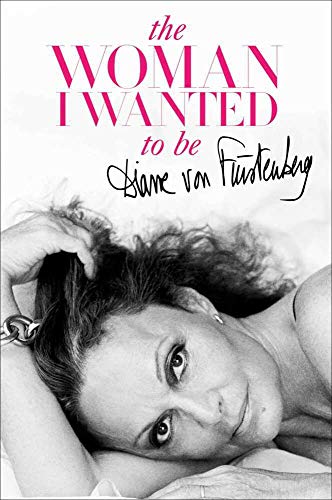
One of the most influential, admired, and innovative women of our time: fashion designer, philanthropist, wife, mother, and grandmother, Diane von Furstenberg offers a book about becoming the woman she wanted to be.
Diane von Furstenberg started out with a suitcase full of jersey dresses and an idea of who she wanted to be—in her words, “the kind of woman who is independent and who doesn’t rely on a man to pay her bills.” She has since become that woman, establishing herself as a global brand and a major force in the fashion industry, all the while raising a family and maintaining “my children are my greatest creation.”
In The Woman I Wanted to Be, von Furstenberg reflects on her extraordinary life—from childhood in Brussels to her days as a young, jet-set princess, to creating the dress that came to symbolize independence and power for an entire generation of women. With remarkable honesty and wisdom, von Furstenberg mines the rich territory of what it means to be a woman. She opens up about her family and career, overcoming cancer, building a global brand, and devoting herself to empowering other women, writing, “I want every woman to know that she can be the woman she wants to be.”
Die Inhaltsangabe kann sich auf eine andere Ausgabe dieses Titels beziehen.
Über die Autorin bzw. den Autor
Diane von Furstenberg entered the fashion world in 1970 and four years later introduced her famous wrap dress. Her luxury fashion brand, DVF, is now available in more than fifty-five countries all over the world. Director of the Diller-von Furstenberg Family Foundation, she is an active philanthropist and supporter of emerging female leaders and social entrepreneurs. In 2015, she was named one of the Time 100 Most Influential People. She is the author of The Woman I Wanted to Be and Diane: A Signature Life.
Auszug. © Genehmigter Nachdruck. Alle Rechte vorbehalten.
The Woman I Wanted to Be
1
ROOTS
There is a large frame on the bookshelf in my bedroom in New York. In it is a page torn from a German magazine of 1952. It is a photo of an elegant woman and her small daughter in the train station of Basel, Switzerland, waiting for the Orient Express. The little girl is nestled in her mother’s tented coat and is eating a brioche. That was the first time, at the age of five, that I had my photo in a magazine. It is a sweet picture. My mother’s older sister, Juliette, gave it to me when I was first married, but it is only recently that I realized its true importance.
On the surface, it is a photograph of a glamorous, apparently wealthy woman en route to a ski holiday with her curly-haired little girl. The woman is not looking into the camera, but there is a hint of a smile as she knows she is being photographed. Her appearance is elegant. Nothing would indicate that only a few years before, she was in another German-speaking railroad station coming back from the Nazi concentration camps where she had been a prisoner for thirteen months, a bunch of bones, close to death from starvation and exhaustion.
How did she feel when the photographer asked her name to be put in the magazine? Proud, I imagine, to be noticed for her style and elegance. Only seven years had passed. She was not a number anymore. She had a name; warm, beautiful, clean clothes; and most of all she had a daughter, a healthy little girl. “God has saved my life so that I can give you life,” she used to write me every New Year on my birthday. “By giving you life, you gave me my life back. You are my torch, my flag of freedom.”
My voice catches each time I speak publicly about my mother, and I do in every speech I make, aware that I wouldn’t be giving that speech if Lily Nahmias had not been my mother. Sometimes it feels odd that I always bring up her story, but somehow I am compelled to. It explains the child I was, the woman I became.
“I want to tell you the story of a young girl who, at twenty-two years old, weighed fifty-nine pounds, barely the weight of her bones,” I say to a seminar at Harvard about girls’ health. “The reason she weighed fifty-nine pounds is that she had just spent thirteen months in the Nazi death camps of Auschwitz and Ravensbrück. It was a true miracle that that young girl didn’t die, though she came very close. When she was liberated and returned to her family in Belgium, her mother fed her like a little bird, every fifteen minutes a tiny bit of food, and then a little bit more, making her feel as if she was being slowly blown up like a balloon. Within a few months her weight was close to normal.”
There are always murmurs in the audience when I get to that point in my mother’s story, perhaps because it is so shocking and unexpected or maybe because I am living history to a young audience that has heard only vaguely about Auschwitz. It must be hard to imagine the high-energy, healthy woman speaking to them having a mother who weighed fifty-nine pounds. Whatever it is, I want and need to honor my mother, her courage and her strength. It is what made me the woman she wanted me to be.
“God has saved my life so that I can give you life.” Her words resonate with me every day of my life. I feel it is my duty to make up for all the suffering she endured, to always celebrate freedom and live fully. My birth was her triumph. She was not supposed to survive; I was not supposed to be born. We proved them wrong. We both won the day I was born.
I repeat a few of the lessons my mother drummed into me that have served me well. “Fear is not an option.” “Don’t dwell on the dark side of things, but look for the light and build around it. If one door closes, look for another one to open.” “Never, ever, blame others for what befalls you, no matter how horrible it might be. Trust you, and only you, to be responsible for your own life.” She lived those lessons. In spite of what she endured, she never wanted others to feel that she was a victim.
I didn’t used to talk nearly as much about my mother. I took her for granted, as children do their mothers. It was not until she died in 2000 that I fully realized what an incredibly huge influence she had been on me and how much I owe her. Like any child, I hadn’t paid much attention. “OK, OK, you told me that already,” I’d brush her off, or even pretend not to hear. I bridled, too, at the unsolicited advice she persisted in giving my friends. In fact, it annoyed me. Now, of course, I feel I have had the experience and earned the wisdom to hand out my own unsolicited advice, and I press every lesson my mother taught me on my children, grandchildren, and anyone I talk to. I have become her.
I didn’t know, as a very little girl in Brussels, why my mother had two lines of blue tattooed numbers on her left arm. I remember thinking they were some sort of decoration and wished I had them, too, so my arms wouldn’t look so plain. I didn’t understand why the housekeeper often told me not to bother her when she was lying down in her bedroom. I instinctively knew my mother needed her rest and I would tiptoe around the house so I wouldn’t disturb her.
Sometimes I’d ignore the housekeeper’s instructions and, gathering my beloved little picture books, I would sneak into her darkened room in the hope she would smile and read them to me. More often than not she did. She loved books and taught me to cherish them. She read my little picture books to me so many times I memorized them. One of my favorite things to do was to fake reading them, carefully turning the pages at the right time and showing off, pretending that I could read.
My mother was very strict. I never doubted that she loved me, but if I said something she didn’t approve of or failed to live up to her expectations, she would give me a severe look or pinch me. I would be sent to the corner, my face to the wall. Sometimes I would go to the corner by myself, knowing I had done wrong. She spent a lot of time with me, sometimes playing, but mostly teaching me anything she could think of. She read me fairy tales and would tease me when I got scared. I remember how she amused herself by telling me that I was an abandoned child she had found in the garbage. I would cry until she took me in her arms, consoling me. She wanted me to be strong and not be afraid. She was very demanding. Before I had learned how to read, she had me memorize and recite the seventeenth-century fables of La Fontaine. As soon as I was old enough to write, she insisted I write stories and letters with perfect spelling and grammar. I remember how proud I was when she praised me.
To train me never to succumb to shyness, she made me give a speech at every family gathering, teaching me to be comfortable speaking in public no matter the audience. Like many children I was scared of the dark, but unlike most mothers, she shut me in a dark closet and waited outside so I would learn for myself that there was nothing to be afraid of. That was just one of the times she’d say “Fear is not an option.”
My mother did not believe in coddling children too much or overprotecting them. She wanted me to be independent and responsible for myself. My earliest memories are of traveling with my parents and being left alone in the hotel room while they went out to dinner. I did not mind nor did I feel lonely. I was so proud that they trusted me to stay alone. I liked entertaining...
„Über diesen Titel“ kann sich auf eine andere Ausgabe dieses Titels beziehen.
Suchergebnisse für The Woman I Wanted to Be

Beispielbild für diese ISBN
The Woman I Wanted to Be
Anbieter: World of Books (was SecondSale), Montgomery, IL, USA
Verkäuferbewertung 5 von 5 Sternen

Hardback. Zustand: Very Good. One of the most influential, admired, and colorful women of our time: fashion designer and philanthropist Diane von Furstenberg tells the most personal stories from her life, about family, love, beauty and business: It's so good, you'll want to take notes (People). Diane von Furstenberg started with a suitcase full of jersey dresses and an idea of who she wanted to be--in her words, the kind of woman who is independent and who doesn't rely on a man to pay her bills. She has since become that woman, establishing herself as a major force in the fashion industry, all the while raising a family, maintaining that my children are my greatest creation. In The Woman I Wanted to Be, an intriguing page-turner filled with revelations (More), von Furstenberg reflects on her extraordinary life--from her childhood in Brussels to her days as a young, jet-set princess, to creating the dress that came to symbolize independence and power for generations of women. With remarkable honesty and wisdom, von Furstenberg mines the rich territory of what it means to be a woman. She opens up about her family and career, overcoming cancer, building a global brand, and devoting herself to empowering other women. This inspiring, compelling, deliciously detailed celebrity autobiography.is as much of a smashing success as the determined, savvy, well-intentioned woman who wrote it (Chicago Tribune). Artikel-Nr. 00100381836
Gebraucht kaufen
EUR 3,76
Versand gratis
Versand innerhalb von USA
Versand innerhalb von USA
Anzahl: 10 verfügbar
Beispielbild für diese ISBN
The Woman I Wanted to Be
Anbieter: World of Books (was SecondSale), Montgomery, IL, USA
Verkäuferbewertung 5 von 5 Sternen
Hardback. Zustand: Good. One of the most influential, admired, and colorful women of our time: fashion designer and philanthropist Diane von Furstenberg tells the most personal stories from her life, about family, love, beauty and business: It's so good, you'll want to take notes (People). Diane von Furstenberg started with a suitcase full of jersey dresses and an idea of who she wanted to be--in her words, the kind of woman who is independent and who doesn't rely on a man to pay her bills. She has since become that woman, establishing herself as a major force in the fashion industry, all the while raising a family, maintaining that my children are my greatest creation. In The Woman I Wanted to Be, an intriguing page-turner filled with revelations (More), von Furstenberg reflects on her extraordinary life--from her childhood in Brussels to her days as a young, jet-set princess, to creating the dress that came to symbolize independence and power for generations of women. With remarkable honesty and wisdom, von Furstenberg mines the rich territory of what it means to be a woman. She opens up about her family and career, overcoming cancer, building a global brand, and devoting herself to empowering other women. This inspiring, compelling, deliciously detailed celebrity autobiography.is as much of a smashing success as the determined, savvy, well-intentioned woman who wrote it (Chicago Tribune). Artikel-Nr. 00104531882
Gebraucht kaufen
EUR 3,76
Versand gratis
Versand innerhalb von USA
Versand innerhalb von USA
Anzahl: 4 verfügbar
Beispielbild für diese ISBN
The Woman I Wanted to Be
Anbieter: World of Books (was SecondSale), Montgomery, IL, USA
Verkäuferbewertung 5 von 5 Sternen
Zustand: Acceptable. Item in acceptable condition! Textbooks may not include supplemental items i.e. CDs, access codes etc. Artikel-Nr. 00097117911
Gebraucht kaufen
EUR 3,76
Versand gratis
Versand innerhalb von USA
Versand innerhalb von USA
Anzahl: 3 verfügbar
Beispielbild für diese ISBN
The Woman I Wanted to Be
Verlag:
Simon & Schuster (edition First Edition), 2014
ISBN 10: 1451651546
ISBN 13: 9781451651546
Gebraucht
Hardcover
Erstausgabe
Anbieter: BooksRun, Philadelphia, PA, USA
Verkäuferbewertung 5 von 5 Sternen
Hardcover. Zustand: Very Good. First Edition. With dust jacket. It's a well-cared-for item that has seen limited use. The item may show minor signs of wear. All the text is legible, with all pages included. It may have slight markings and/or highlighting. Artikel-Nr. 1451651546-11-1-29
Gebraucht kaufen
EUR 4,99
Versand gratis
Versand innerhalb von USA
Versand innerhalb von USA
Anzahl: 1 verfügbar
Beispielbild für diese ISBN
The Woman I Wanted to Be
Anbieter: ThriftBooks-Dallas, Dallas, TX, USA
Verkäuferbewertung 5 von 5 Sternen
Hardcover. Zustand: Very Good. No Jacket. Missing dust jacket; May have limited writing in cover pages. Pages are unmarked. ~ ThriftBooks: Read More, Spend Less. Artikel-Nr. G1451651546I4N01
Gebraucht kaufen
EUR 5,87
Versand gratis
Versand innerhalb von USA
Versand innerhalb von USA
Anzahl: 1 verfügbar
Beispielbild für diese ISBN
The Woman I Wanted to Be
Anbieter: ThriftBooks-Atlanta, AUSTELL, GA, USA
Verkäuferbewertung 5 von 5 Sternen
Hardcover. Zustand: Very Good. No Jacket. Missing dust jacket; May have limited writing in cover pages. Pages are unmarked. ~ ThriftBooks: Read More, Spend Less. Artikel-Nr. G1451651546I4N01
Gebraucht kaufen
EUR 5,87
Versand gratis
Versand innerhalb von USA
Versand innerhalb von USA
Anzahl: 1 verfügbar
Beispielbild für diese ISBN
The Woman I Wanted to Be
Anbieter: ThriftBooks-Phoenix, Phoenix, AZ, USA
Verkäuferbewertung 5 von 5 Sternen
Hardcover. Zustand: Very Good. No Jacket. Missing dust jacket; May have limited writing in cover pages. Pages are unmarked. ~ ThriftBooks: Read More, Spend Less. Artikel-Nr. G1451651546I4N01
Gebraucht kaufen
EUR 5,87
Versand gratis
Versand innerhalb von USA
Versand innerhalb von USA
Anzahl: 1 verfügbar
Beispielbild für diese ISBN
The Woman I Wanted to Be
Anbieter: ThriftBooks-Dallas, Dallas, TX, USA
Verkäuferbewertung 5 von 5 Sternen
Hardcover. Zustand: Very Good. No Jacket. Former library book; Missing dust jacket; May have limited writing in cover pages. Pages are unmarked. ~ ThriftBooks: Read More, Spend Less. Artikel-Nr. G1451651546I4N11
Gebraucht kaufen
EUR 5,87
Versand gratis
Versand innerhalb von USA
Versand innerhalb von USA
Anzahl: 1 verfügbar
Beispielbild für diese ISBN
The Woman I Wanted to Be
Anbieter: Better World Books, Mishawaka, IN, USA
Verkäuferbewertung 5 von 5 Sternen
Zustand: Good. Former library copy. Pages intact with minimal writing/highlighting. The binding may be loose and creased. Dust jackets/supplements are not included. Includes library markings. Stock photo provided. Product includes identifying sticker. Better World Books: Buy Books. Do Good. Artikel-Nr. 4292257-75
Gebraucht kaufen
EUR 6,26
Versand gratis
Versand innerhalb von USA
Versand innerhalb von USA
Anzahl: 3 verfügbar
Beispielbild für diese ISBN
The Woman I Wanted to Be
Anbieter: Better World Books, Mishawaka, IN, USA
Verkäuferbewertung 5 von 5 Sternen
Zustand: Very Good. Former library copy. Pages intact with possible writing/highlighting. Binding strong with minor wear. Dust jackets/supplements may not be included. Includes library markings. Stock photo provided. Product includes identifying sticker. Better World Books: Buy Books. Do Good. Artikel-Nr. 3935548-75
Gebraucht kaufen
EUR 6,26
Versand gratis
Versand innerhalb von USA
Versand innerhalb von USA
Anzahl: 1 verfügbar