
Verwandte Artikel zu The Woman Who Changed Her Brain: And Other Inspiring...
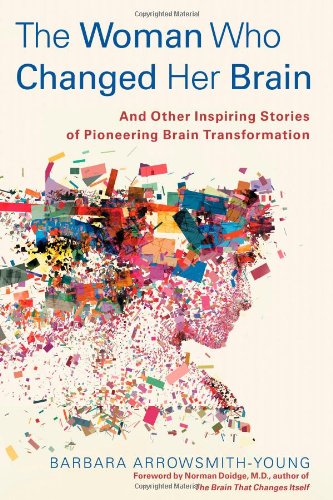
The Woman Who Changed Her Brain: And Other Inspiring Stories of Pioneering Brain Transformation - Hardcover
Inhaltsangabe
The incredible story and miraculous work of a remarkable woman. Though she began life severely learning disabled, built herself a better brain and a brain training program that has helped thousands of others do the same.
Barbara Arrowsmith-Young was born with severe learning disabilities that caused teachers to label her slow, stubborn—or worse. As a child, she read and wrote everything backward, struggled to process concepts in language, continually got lost, and was physically uncoordinated. She could make no sense of an analogue clock. But by relying on her formidable memory and iron will, she made her way to graduate school, where she chanced upon research that inspired her to invent cognitive exercises to “fix” her own brain. The Woman Who Changed Her Brain interweaves her personal tale with riveting case histories from her more than thirty years of working with both children and adults.
Recent discoveries in neuroscience have conclusively demonstrated that, by engaging in certain mental tasks or activities, we actually change the structure of our brains—from the cells themselves to the connections between cells. The capability of nerve cells to change is known as neuroplasticity, and Arrowsmith-Young has been putting it into practice for decades. With great inventiveness, after combining two lines of research, Barbara developed unusual cognitive calisthenics that radically increased the functioning of her weakened brain areas to normal and, in some areas, even above-normal levels. She drew on her intellectual strengths to determine what types of drills were required to target the specific nature of her learning problems, and she managed to conquer her cognitive deficits. Starting in the late 1970s, she has continued to expand and refine these exercises, which have benefited thousands of individuals. Barbara founded Arrowsmith School in Toronto in 1980 and then the Arrowsmith Program to train teachers and to implement this highly effective methodology in schools all over North America. Her work is revealed as one of the first examples of neuroplasticity’s extensive and practical application. The idea that self-improvement can happen in the brain has now caught fire.
The Woman Who Changed Her Brain powerfully and poignantly illustrates how the lives of children and adults struggling with learning disorders can be dramatically transformed. This remarkable book by a brilliant pathbreaker deepens our understanding of how the brain works and of the brain’s profound impact on how we participate in the world. Our brains shape us, but this book offers clear and hopeful evidence of the corollary: we can shape our brains.
Die Inhaltsangabe kann sich auf eine andere Ausgabe dieses Titels beziehen.
Über die Autorin bzw. den Autor
Barbara Arrowsmith Young is the Director of Arrowsmith School and Arrowsmith Program. She holds both a B.A.Sc. in Child Studies from the University of Guelph, and a Master’s degree in School Psychology from the University of Toronto (Ontario Institute for Studies in Education).
Auszug. © Genehmigter Nachdruck. Alle Rechte vorbehalten.
INTRODUCTION
March 2, 1943, Vyazma, Western Russia
On this sunny, almost warm but damp day, the soldiers are chilled, their army-issue felt boots soaked. Lieutenant Lyova Zazetsky, just twenty-three years old, commands a platoon of flame-throwers—part of a contingent pushing back against the German invaders who are dug in atop the steep and rocky banks of the frozen Vorya River.
Comrade Zazetsky looks west, where they will soon be headed. He talks to his men, encouraging them while they all wait impatiently in the stillness, as they have for the past two days. Finally, the order comes to advance, and the only sound he hears now is the clank and screech of armor stirring. In a low crouch, Zazetsky moves across the river ice at a pace between walking and running when the enemy begins to fire. As he hears machine-gun bullets whizzing over his head, he drops down instinctively under the hail of artillery. Then he rises and presses on. Then nothing.
Zazetsky’s next memory is of coming to “in a tent blazing with light. . . . All I can remember is that the doctors and aides were holding me down. . . . I was screaming, gasping for breath. . . . Warm, sticky blood was running down my ears and neck. . . . My mouth and lips had a salty taste.” A bullet has penetrated his helmet, then his skull, and has done massive damage to the left occipito-parietal region of his brain, leading to a prolonged coma and severely affecting his ability to reason. With damage to this area, the world of making connections and understanding relationships is lost. Even after hours of patient explanation, Zazetsky cannot fathom that an elephant is bigger than a fly (he knows that one is big and one small but cannot grasp the relationship between the two; the words bigger and smaller confound him).
Later he is shown photos of variously colored cats and asked to state which is bigger and which smaller. This too is beyond him.
“Since I was wounded,” Zazetsky writes, “I’ve only been able to compare one word with another—one idea. And here there were so many different ideas that I got awfully confused.” Unable to see the relationships between things, he sees the world as separate parts. Even something as simple as connecting the big and little hand on a clock is now impossible. He no longer understands logic, cause and effect, grammar, or dialogue in a film. For Zazetsky, the words in a movie come too quickly. “Before I’ve had a chance to figure out what the actors are saying,” he writes, “a new scene begins.”
Zazetsky, a gifted student with three years of study in a polytechnical institute behind him, takes months to grasp a basic element of geometry, only to have that hard-won knowledge vanish hours later.
The bullet had damaged the part of Zazetsky’s brain that receives and processes input necessary for understanding the world. He could perceive properly with his eyes but could not deploy his brain to link perceptions or ideas, so he lived with disconnected elements. As Zazetsky put it in his diary, “I’m in a kind of fog all the time. . . . All that flashes through my mind are images, hazy visions that suddenly appear and disappear. . . . I simply can’t understand what these mean.”
He nevertheless writes a remarkable 3,000-page journal, gathered over the course of twenty-five painstaking years, in thick oilskin-covered notebooks. On some days, a sentence or two is all he can manage. “My memory’s a blank,” he writes. “I can’t think of a single word. . . . Whatever I do remember is scattered, broken down into disconnected bits and pieces.”
The damage to Zazetsky’s brain is widespread and by no means confined to the area of the wound itself. His memory for information, for example, is severely damaged. Gone are the names of his mother and sisters and his address. He is unable to follow what he hears on the radio and gets lost on walks in the town where he was raised. Six years of studying German and three of English, advanced classes in chemistry: all utterly gone.
He holds a needle and thread in his hands and has a vague idea of their workings, but he can no longer summon the names of these and many other things. He urgently needs a bedpan, but he cannot summon that word. What comes to him instead are the words duck and bird, and he cannot decipher which is which.
Zazetsky has a handsome open face, with a strong nose and rugged black eyebrows, and at first glance he seems unscathed. But looks deceive. He can neither see nor imagine the right side of his body. Although he regains the ability to write (after six months of intensive schooling), the process is tortuous and slow, and he can neither read nor remember what he writes. He can speak, but only with great difficulty.
Worst of all, perhaps, is that Zazetsky is fully aware of his neurological deficits and is powerless to do anything other than to write about them in his own painful yet eloquent way.
“This strange illness I have,” he writes, “is like living without a brain.”
Late May 1943, Moscow
Zazetsky comes under the care of Aleksandr Romanovich Luria, a forty-one-year-old psychologist and a physician not long out of medical school. Luria heads a research team at a Russian army hospital looking at ways to help brain-damaged soldiers compensate for their neurological dysfunctions. In his new doctor, Zazetsky has two bits of good fortune. First, Luria’s special and lifelong interest is aphasia—the difficulty speaking, reading, and writing that sometimes follows stroke or traumatic brain injury. Second, his brilliance is complemented by a rare compassion. Long after Zazetsky leaves the hospital, he and Luria remain close. They stay in touch for thirty years, meeting or speaking almost every week. A black-and-white photo of the two men shows them comfortably close together, each smiling at the other, Luria holding the fingers of Zazetsky’s left hand ever so delicately in his own.
The writing of Zazetsky (a pseudonym) finds its way into a book that Luria writes in 1972, The Man with a Shattered World: The History of a Brain Wound. Zazetsky wants to call his writing I’ll Fight On, and the title is a measure of the fierce resolve of this brain-damaged man to put the thoughts that come to him randomly into cohesive form. Zazetsky’s writing is a desperate search for meaning, undertaken in the hope that his probing will help both himself and others—scientists studying the brain and those in circumstances like his own.
Each man helps the other. Had Zazetsky not crossed paths with Luria and been encouraged by him (the latter called his patient’s writing “a triumph”), it’s almost certain he would never have written his astonishing journal.
Luria is fascinated all his life by the brain (today he is considered a pioneer in neurology and the father of neuropsychology), and Zazetsky furthers his knowledge. Luria writes, “Precise knowledge was rarely to be found in the textbooks, which were filled with vague suppositions and fantastic conjectures that made maps of the brain scarcely more reliable than medieval geographers’ maps of the world.”
“His [Zazetsky’s] description is exceptionally clear and detailed,” writes Luria, and “if we follow him step by step, we may unravel some of the mysteries of the human brain.” Through Zazetsky, Luria learned the geography and function of specific brain areas and made a major contribution to our understanding of the brain. The book you are now reading would never have been written had I not chanced across The...
„Über diesen Titel“ kann sich auf eine andere Ausgabe dieses Titels beziehen.
Suchergebnisse für The Woman Who Changed Her Brain: And Other Inspiring...

Beispielbild für diese ISBN
The Woman Who Changed Her Brain: And Other Inspiring Stories of Pioneering Brain Transformation
Anbieter: World of Books (was SecondSale), Montgomery, IL, USA
Verkäuferbewertung 5 von 5 Sternen

Hardback. Zustand: Good. A bestseller in Canada and Australia, this is the incredible story of a woman who struggled with severe learning disabilities, built herself a better brain, and started a program that has helped thousands of others do the same. Barbara Arrowsmith-Young was born with severe learning disabilities. As a child, she read and wrote everything backward, struggled to comprehend language, and was continually getting lost. But by relying on her formidable memory, she made her way to graduate school, where she chanced upon research that inspired her to invent cognitive exercises to fix her own brain. The Woman Who Changed Her Brain interweaves her personal tale with riveting case histories from more than thirty years of her work with both children and adults. People with learning disorders have long been told that such difficulties are a lifelong condition. In clear and lucid writing, The Woman Who Changed Her Brain refutes that message, demonstrating with fascinating anecdotes that anyone with a learning disability can be radically trans-formed: Arrowsmith-Young is a living example. She founded the Arrowsmith School in Toronto in 1980 and then the Arrowsmith Program to train teachers to implement this effective methodology in schools all over North America. This remarkable book by a brilliant pioneer deepens our understanding of how the brain works. Our brain shapes us, and this book offers clear and hopeful evidence of the corollary: that we can shape our brains. Artikel-Nr. 00103613172
Gebraucht kaufen
EUR 4,27
Versand gratis
Versand innerhalb von USA
Versand innerhalb von USA
Anzahl: 3 verfügbar
Beispielbild für diese ISBN
The Woman Who Changed Her Brain: And Other Inspiring Stories of Pioneering Brain Transformation
Anbieter: World of Books (was SecondSale), Montgomery, IL, USA
Verkäuferbewertung 5 von 5 Sternen
Hardback. Zustand: Fair. A bestseller in Canada and Australia, this is the incredible story of a woman who struggled with severe learning disabilities, built herself a better brain, and started a program that has helped thousands of others do the same. Barbara Arrowsmith-Young was born with severe learning disabilities. As a child, she read and wrote everything backward, struggled to comprehend language, and was continually getting lost. But by relying on her formidable memory, she made her way to graduate school, where she chanced upon research that inspired her to invent cognitive exercises to fix her own brain. The Woman Who Changed Her Brain interweaves her personal tale with riveting case histories from more than thirty years of her work with both children and adults. People with learning disorders have long been told that such difficulties are a lifelong condition. In clear and lucid writing, The Woman Who Changed Her Brain refutes that message, demonstrating with fascinating anecdotes that anyone with a learning disability can be radically trans-formed: Arrowsmith-Young is a living example. She founded the Arrowsmith School in Toronto in 1980 and then the Arrowsmith Program to train teachers to implement this effective methodology in schools all over North America. This remarkable book by a brilliant pioneer deepens our understanding of how the brain works. Our brain shapes us, and this book offers clear and hopeful evidence of the corollary: that we can shape our brains. Artikel-Nr. CIN1451607938A
Gebraucht kaufen
EUR 4,27
Versand gratis
Versand innerhalb von USA
Versand innerhalb von USA
Anzahl: 1 verfügbar
Beispielbild für diese ISBN
The Woman Who Changed Her Brain: And Other Inspiring Stories of Pioneering Brain Transformation
Anbieter: Wonder Book, Frederick, MD, USA
Verkäuferbewertung 5 von 5 Sternen
Zustand: Very Good. Very Good condition. Like New dust jacket. With remainder mark. A copy that may have a few cosmetic defects. May also contain light spine creasing or a few markings such as an owner's name, short gifter's inscription or light stamp. Artikel-Nr. E21A-11705
Gebraucht kaufen
EUR 6,73
Versand gratis
Versand innerhalb von USA
Versand innerhalb von USA
Anzahl: 1 verfügbar
Beispielbild für diese ISBN
The Woman Who Changed Her Brain : And Other Inspiring Stories of Pioneering Brain Transformation
Anbieter: Better World Books, Mishawaka, IN, USA
Verkäuferbewertung 5 von 5 Sternen
Zustand: Good. Pages intact with minimal writing/highlighting. The binding may be loose and creased. Dust jackets/supplements are not included. Stock photo provided. Product includes identifying sticker. Better World Books: Buy Books. Do Good. Artikel-Nr. GRP75967776
Gebraucht kaufen
EUR 7,18
Versand gratis
Versand innerhalb von USA
Versand innerhalb von USA
Anzahl: 2 verfügbar
Beispielbild für diese ISBN
The Woman Who Changed Her Brain : And Other Inspiring Stories of Pioneering Brain Transformation
Anbieter: Better World Books: West, Reno, NV, USA
Verkäuferbewertung 5 von 5 Sternen
Zustand: Good. Former library copy. Pages intact with minimal writing/highlighting. The binding may be loose and creased. Dust jackets/supplements are not included. Includes library markings. Stock photo provided. Product includes identifying sticker. Better World Books: Buy Books. Do Good. Artikel-Nr. GRP101988513
Gebraucht kaufen
EUR 7,18
Versand gratis
Versand innerhalb von USA
Versand innerhalb von USA
Anzahl: 4 verfügbar
Beispielbild für diese ISBN
The Woman Who Changed Her Brain : And Other Inspiring Stories of Pioneering Brain Transformation
Anbieter: Better World Books: West, Reno, NV, USA
Verkäuferbewertung 5 von 5 Sternen
Zustand: Good. Pages intact with minimal writing/highlighting. The binding may be loose and creased. Dust jackets/supplements are not included. Stock photo provided. Product includes identifying sticker. Better World Books: Buy Books. Do Good. Artikel-Nr. GRP75967776
Gebraucht kaufen
EUR 7,18
Versand gratis
Versand innerhalb von USA
Versand innerhalb von USA
Anzahl: 1 verfügbar
Beispielbild für diese ISBN
The Woman Who Changed Her Brain: And Other Inspiring Stories of Pioneering Brain Transformation
Anbieter: WorldofBooks, Goring-By-Sea, WS, Vereinigtes Königreich
Verkäuferbewertung 5 von 5 Sternen
Paperback. Zustand: Very Good. The book has been read, but is in excellent condition. Pages are intact and not marred by notes or highlighting. The spine remains undamaged. Artikel-Nr. GOR005519548
Gebraucht kaufen
EUR 24,47
EUR 6,65 Versand
Versand von Vereinigtes Königreich nach USA
Versand von Vereinigtes Königreich nach USA
Anzahl: 2 verfügbar
Beispielbild für diese ISBN
The Woman Who Changed Her Brain: And Other Inspiring Stories of Pioneering Brain Transformation
Anbieter: Revaluation Books, Exeter, Vereinigtes Königreich
Verkäuferbewertung 5 von 5 Sternen
Hardcover. Zustand: Brand New. 4/15/12 edition. 288 pages. 9.50x6.50x1.25 inches. In Stock. Artikel-Nr. 1451607938
Neu kaufen
EUR 35,23
EUR 11,88 Versand
Versand von Vereinigtes Königreich nach USA
Versand von Vereinigtes Königreich nach USA
Anzahl: 1 verfügbar