
Verwandte Artikel zu How To Develop Story Line Ideas: Jo Ann M. Colton's...
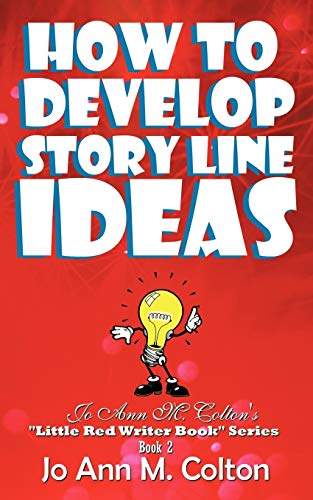
How To Develop Story Line Ideas: Jo Ann M. Colton's "Little Red Writer Book" Series, Book 2 (Little Red Writer Book, 2, Band 2) - Softcover
Inhaltsangabe
How to Develop Story Line Ideas is a stimulant for the imaginative mind. Designed to help new writers seek and recognize a plethora of ideas for books and other pieces, Book 2 of Jo Ann M. Colton's "Little Red Writer Book" Series energizes aspiring writers to follow their literary dreams and aim high for success. Story line ideas are everywhere-often right before our very eyes. Colton discusses what she believes to be the fundamental foundation for developing ideas for writing books, short stories and articles, and then expands upon her theories. This seek-and-you-will-find guide provides innovative tips, information and exercises to increase writers' mental acuity and get their creative juices flowing. From embracing the idea of writing to discovering and gathering story line ideas to getting those ideas down on paper, the book encourages writers to push themselves toward greater accomplishments. As a result, How to Develop Story Line Ideas is an interesting and enjoyable motivational experience for rising writers.
Die Inhaltsangabe kann sich auf eine andere Ausgabe dieses Titels beziehen.
Auszug. © Genehmigter Nachdruck. Alle Rechte vorbehalten.
HOW TO DEVELOP STORY LINE IDEAS
Jo Ann M. Colton's "Little Red Writer Book" Series Book 2By By Jo Ann M. ColtonAuthorHouse
Copyright © 2010 Jo Ann M. ColtonAll right reserved.
ISBN: 978-1-4490-7226-1
Contents
CHAPTER 1 Embracing the "Idea" of Writing....................................1CHAPTER 2 Books Versus Magazine Articles.....................................9CHAPTER 3 Discovering Story Line Ideas.......................................17Start with What You Know.....................................................19Discovering the Writer Within You............................................21Write About What You Like to Read............................................23Story Line Ideas Can Pop Up in the Strangest Places..........................24CHAPTER 4 Focusing Your Mind on the Matter...................................27Mind Games...................................................................27Establishing Your Credibility as a Writer....................................27CHAPTER 5 The Fundamentals of Gathering Story Line Ideas.....................31The Classifieds..............................................................31Pictorial Magazine Advertisements and Photographs............................33Newspaper Headlines..........................................................35Newspaper Articles...........................................................35Creativity in a Bag..........................................................35CHAPTER 6 Steps to Story Line Success........................................39CHAPTER 7 Acknowledging Your Story Line Ideas................................41Committing Your Ideas to Paper...............................................41Choosing Your Story's Literary Voice.........................................42Creating Your Own Style as a Writer..........................................44To Outline or Not to Outline.................................................45Story Line Flow..............................................................45Story Line Details...........................................................45Crafting Your Characters.....................................................47The Name Game................................................................50Story Line Challenges........................................................51Dealing With Loose Ends......................................................51Revisions and Rewrites.......................................................52CHAPTER 8 Summary............................................................53Recap........................................................................53
Chapter One
Embracing the "Idea" of Writing
I have enjoyed writing since I was in grade school. Yet, if I pause to reflect on the matter, I would acknowledge that I have been a serious writer since my teen years. My work skills and management work experiences are diverse, but at the core of all I do and all I have accomplished, I am first and always-a writer.
As a writer, I resignedly subscribe to the same belief extolled by writer W. Somerset Maugham, when he said: "We do not write because we want to; we write because we have to." Likewise, to those individuals who, through the years, have asked me why I chose to write, I always answer, "I have not chosen to write, writing has chosen me." Moreover, I am of the notion that this statement of fact is believed and shared by many writers. Further, while I am of the mind that some things in life are easier to do than other things, I find it rather effortless to put my thoughts and my words on paper. Perhaps I am just partial to the writing craft because it does come easily to me.
Nonetheless, although I personally feel that the actual act of writing, putting the words on paper, is the easiest part of the writing profession, some writers would cite various segments of the writing process as being most difficult for them like: creating believable characters, writing dialogue that flows, and/or writing descriptive narrative. Still, other writers might say that coming up with a good idea as the premise for one's writing project is the real challenge. In reality, writing is not easy, but through your finished book, story, verse, or article, the idea is to make the writing process look easy.
Much of my own writing experience lies in nonfiction writing relating to business topics, as well as subjects related to my passion-writing. The key to developing your own story line ideas lies within your personal comfort zone of knowledge and experience. Story line ideas will flow more easily when you embrace subjects and topics most familiar to you.
When I wrote my first published book, The Entrepreneur's Guide to Business Basics 101, I really didn't set out to write a business book per se. My ulterior motive for writing the book was founded in my desire to expand my horizons as a public speaker. I had held some key positions in the corporate world in which I had to conduct classes and/or make presentations in front of large groups of people. Over time I came to recognize that I really enjoyed those responsibilities, and I wished to take my public speaking to a higher level. As a result, I started to ask myself what knowledge, skills, and/or experience I possessed that I could capitalize on as a means to this end. Specifically, I wondered what I could do to help me further my opportunities to speak in front of people beyond those already available to me through my employment.
The answer was to utilize my "business" knowledge, which is exactly how I came up with the idea to write my book, The Entrepreneur's Guide to Business Basics 101. The book provides the reader with, among other things, an overview of the requirements and responsibilities of business ownership. Moreover, it was a subject in which I had gained firsthand experience. It was a fact that I have been involved in many businesses over the years as a sole proprietor and/or co-owner. It was also true that I had long been conducting various classes in the workplace. Both experiences convinced me that the book would validate my existing role as a public speaker and find success on its own, and that role of public speaker could be expanded upon, as it related to the seminars and workshops I could present based upon the topics within my book. I thought it was a perfect marriage of my writing and public speaking skills and, therefore, I concluded it was a great idea!
Finally, I had found the story line idea I needed for this project. But then I pondered over the matter further and told myself that the story line in, and of, itself was not enough. I had to figure out something more, something that would give me an edge over any other like books that might present competition for my own. It was critical that I find a direction and slant for this book. After thinking about my story line idea for a few weeks, I came up with another idea, one that would encompass a complete alphabet of motivational messages within the book. I decided that I would showcase a motivational message incorporating the letter "A", write a chapter of the book followed by a message using the letter "B" and so on throughout the book. When I came to the letter "I", it was only fitting and proper that my "I" message be entitled: "I is for Idea". I am of the opinion that everything in life begins with an "idea". Hopefully, my idea of what an idea is will prove helpful to you-especially as you read on:
...
„Über diesen Titel“ kann sich auf eine andere Ausgabe dieses Titels beziehen.
Suchergebnisse für How To Develop Story Line Ideas: Jo Ann M. Colton's...

Beispielbild für diese ISBN
How To Develop Story Line Ideas: Jo Ann M. Colton's "Little Red Writer Book" Series, Book 2
Anbieter: Ria Christie Collections, Uxbridge, Vereinigtes Königreich
Verkäuferbewertung 5 von 5 Sternen

Zustand: New. In English. Artikel-Nr. ria9781449072261_new
Neu kaufen
EUR 13,91
EUR 11,03 Versand
Versand von Vereinigtes Königreich nach USA
Versand von Vereinigtes Königreich nach USA
Anzahl: Mehr als 20 verfügbar