
Verwandte Artikel zu Bruce
Inhaltsangabe
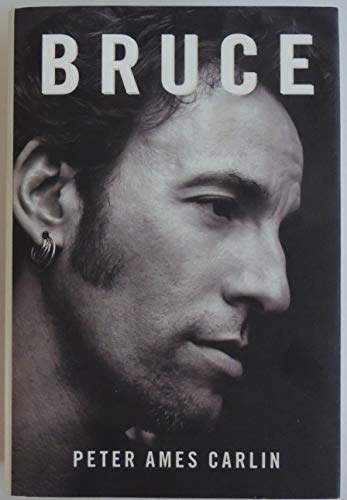
Peter Ames Carlin’s New York Times bestselling biography of one America’s greatest musicians is the first in twenty-five years to be written with the cooperation of Bruce Springsteen himself; “Carlin gets across why Mr. Springsteen has meant so much, for so long, to so many people” (The New York Times).
In Bruce, acclaimed music writer Peter Ames Carlin presents a startlingly intimate and vivid portrait of a rock icon. For more than four decades, Bruce Springsteen has reflected the heart and soul of America with a career that includes twenty Grammy Awards, more than 120 million albums sold, two Golden Globes, and an Academy Award. Peter Ames Carlin masterfully encompasses the breadth of Springsteen’s astonishing career and explores the inner workings of a man who managed to redefine generations of music.
A must read for fans, Bruce is a meticulously researched, compulsively readable biography of a man laden with family tragedy, a tremendous dedication to his artistry, and an all-consuming passion for fame and influence.
Die Inhaltsangabe kann sich auf eine andere Ausgabe dieses Titels beziehen.
Über die Autorin bzw. den Autor
Peter Ames Carlin has been a senior writer for People, a TV critic for The Oregonian newspaper, and is the author of Catch a Wave: The Rise, Fall, and Redemption of the Beach Boys’ Brian Wilson and Paul McCartney: A Life. Carlin lives with his wife and three children in Portland, Oregon. Visit PeterAmesCarlin.com.
Auszug. © Genehmigter Nachdruck. Alle Rechte vorbehalten.
Bruce
ONE
THE PLACE I LOVED THE MOST
THE TRUCK COULDN’T HAVE BEEN moving fast. Not down a sleepy residential street like McLean. If it had just turned in from Route 79—known in Freehold, New Jersey, as South Street—it would have been going even more slowly, since no seven-ton truck could round a 90-degree corner at a fast clip. But the truck had the height and breadth to all but fill the side road and sweep the other cars, bikes, and pedestrians to the side until it grumbled past. Assuming the other folks were paying attention to the road ahead.
The five-year-old girl on the tricycle had other things on her mind. She might have been racing her friend to the Lewis Oil gas station on the corner. Or maybe she was simply a child at play, feeling the spring in the air on a late afternoon in April 1927.
Either way, Virginia Springsteen didn’t see the truck coming. If she heard the driver’s panicked honk when she veered into the road, she didn’t have time to react. The driver stomped hard on the brakes, but by then it didn’t matter. He heard, and felt, a terrible thump. Alerted by the screams of the neighbors, the girl’s parents rushed outside and found their little daughter unconscious but still breathing, They rushed her first to the office of Dr. George G. Reynolds, then to Long Branch Hospital, more than thirty minutes east of Freehold. And that’s where Virginia Springsteen died.
The mourning began immediately. Family members, friends, and neighbors streamed to the little house on Randolph Street to comfort the girl’s parents. Fred Springsteen, a twenty-seven-year-old technician at the Freehold Electrical Shop downtown, kept his hands in his pockets and spoke quietly. But his twenty-eight-year-old wife, Alice, could not contain herself. Hair frazzled and eyes veined by grief, she sat helplessly as her body clutched with sobs. She could barely look at Virginia’s toddler brother, Douglas. The boy’s father couldn’t be much help either, given the pall of his own mourning and the overwhelming needs of his distraught wife. So in the immediate aftermath of the tragedy virtually all of the care and feeding of the twenty-month-old boy fell to Alice’s sisters, Anna and Jane. Eventually the others eased back into their ordinary lives. But the approach and passing of summer did nothing to ease Alice’s grief.
She could take no comfort in the clutching arms of her small son. Nearing his second birthday in August the boy grew dirty and scrawny enough to require an intervention. Alice’s sisters came to gather his clothes, crib, and toys and took the toddler to live with his aunt Jane Cashion and her family until his parents were well enough to care for him again. Two to three years passed before Alice and Fred asked to be reunited with their son. He went home soon afterward, but Virginia’s spirit continued to hover in Alice’s vision. When Alice gazed at her son, she always seemed to be seeing something else; the absence of the one thing she had loved the most and lost so heedlessly.
A semblance of family structure restored, the Springsteen home still ran according to its residents’ imprecise sense of reality. No longer employed by the Freehold Electrical Shop, Fred worked at home, sifting through mountains of abandoned electronics in order to repair or build radios he would later sell to the migrant farmworkers camped on the fringe of town. Alice, who never worked, moved according to her internal currents. If she didn’t feel like getting up in the morning, she didn’t. If Doug didn’t want to go to school in the morning, she let him stay in bed. Cleaning and home repair ceased to be priorities. The walls shed curls of paint. The plastered kitchen ceiling fell off in chunks. With a single kerosene burner to heat the entire house, winters inside were Siberian. For Douglas, whose DNA came richly entwined with darker threads, the peeling wallpaper and crumbling windowsills framed his growing sense of life and the world. No matter where he was, no matter what he was doing, he would always be looking out through the fractured windows of 87 Randolph Street.
• • •
Doug Springsteen grew to be a shy but spirited teenager matriculating at Freehold High School. He loved baseball, especially when he was with his first cousin and best friend, Dave “Dim” Cashion, an ace pitcher and first baseman. Cashion was already considered one of the best players to ever emerge from Freehold. Off the diamond, the cousins passed the hours shooting pool at the small game rooms tucked between the stores, barbershops, and news stores clustering Freehold’s central intersection at South and Main Streets. Cashion, who was seven years Doug’s senior, launched his baseball career just after leaving school in 1936. He spent the next five years working his way from the local amateur and semipro leagues all the way into the major league farm system. He got there just in time for World War II to shutter the leagues and redirect him into the US Army.
Raised by parents for whom education amounted to a long distraction from real life, Doug quit his studies at Freehold Regional after his freshman year ended in 1941, taking an entry-level job as a bottom-rung laborer (his official title was creel boy) in Freehold’s thriving Karagheusian rug mill. He kept that job until June 1943, when his eighteenth birthday made him eligible to join the army. Shipped to Europe in the midst of the war, Doug drove an equipment truck. Back in Freehold following the war’s conclusion in 1945, Doug took it easy and lived off the $20 in veteran’s pay he received from the government each month.
As Fred and Alice made clear, academic and professional ambition were not priorities, if only because of their absolute disinterest in achievement—to say nothing of books, culture, or anything that gestured beyond the here-and-now. So if Doug wanted to live in their house and slouch through his life, that suited them perfectly. He was, after all, his parents’ child.
Doug barely made a gesture toward adult life until his cousin Ann Cashion (Dim’s younger sister) came by offering a night out. She had a friend named Adele Zerilli he might like to meet. So how about a double date? Doug shrugged and said sure. A few nights later the foursome were sitting in a cafe together, making polite talk while Doug snuck glances at the bewitchingly talkative dark-haired girl sitting across the table. “I couldn’t get rid of him after that,” Adele says now. “Then he says he wants to marry me. I said, ‘You don’t have a job!’ He said ‘Well, if you marry me, I’ll get a job.’ ” She shakes her head and laughs.
“Oh, God. What I got into after that.”
Married on February 22, 1947, Douglas and Adele Springsteen rented a small apartment in the Jerseyville neighborhood on the eastern edge of Freehold and experienced the postwar boom along with much of America. True to his word, Doug had landed a job on the factory floor of the Ford auto plant in nearby Edison. Adele already had a full-time job as a secretary for a real estate lawyer. A baby was on the way by the start of 1949, and the boy emerged at 10:50 p.m. on the evening of September 23, taking his first breath in Long Branch Hospital (since renamed Monmouth Medical Center), where his father’s sister had breathed her last twenty-two years earlier. He had brown hair and brown eyes, weighed in at 6.6 pounds, and was declared healthy in...
„Über diesen Titel“ kann sich auf eine andere Ausgabe dieses Titels beziehen.
Suchergebnisse für Bruce

Beispielbild für diese ISBN
Bruce
Anbieter: World of Books (was SecondSale), Montgomery, IL, USA
Verkäuferbewertung 5 von 5 Sternen

Zustand: Acceptable. Item in good condition. Textbooks may not include supplemental items i.e. CDs, access codes etc. Artikel-Nr. 00057653864
Gebraucht kaufen
EUR 3,90
Versand gratis
Versand innerhalb von USA
Versand innerhalb von USA
Anzahl: 1 verfügbar
Beispielbild für diese ISBN
Bruce
Anbieter: World of Books (was SecondSale), Montgomery, IL, USA
Verkäuferbewertung 5 von 5 Sternen
Zustand: Good. Item in good condition. Textbooks may not include supplemental items i.e. CDs, access codes etc. Artikel-Nr. 00094134921
Gebraucht kaufen
EUR 3,93
Versand gratis
Versand innerhalb von USA
Versand innerhalb von USA
Anzahl: 9 verfügbar
Beispielbild für diese ISBN
Bruce
Anbieter: World of Books (was SecondSale), Montgomery, IL, USA
Verkäuferbewertung 5 von 5 Sternen
Zustand: Very Good. Item in very good condition! Textbooks may not include supplemental items i.e. CDs, access codes etc. Artikel-Nr. 00103576013
Gebraucht kaufen
EUR 3,93
Versand gratis
Versand innerhalb von USA
Versand innerhalb von USA
Anzahl: 1 verfügbar
Beispielbild für diese ISBN
Bruce
Anbieter: ThriftBooks-Dallas, Dallas, TX, USA
Verkäuferbewertung 5 von 5 Sternen
Hardcover. Zustand: Very Good. No Jacket. May have limited writing in cover pages. Pages are unmarked. ~ ThriftBooks: Read More, Spend Less. Artikel-Nr. G1439191824I4N00
Gebraucht kaufen
EUR 5,93
Versand gratis
Versand innerhalb von USA
Versand innerhalb von USA
Anzahl: 1 verfügbar
Beispielbild für diese ISBN
Bruce
Anbieter: ThriftBooks-Phoenix, Phoenix, AZ, USA
Verkäuferbewertung 5 von 5 Sternen
Hardcover. Zustand: Very Good. No Jacket. May have limited writing in cover pages. Pages are unmarked. ~ ThriftBooks: Read More, Spend Less. Artikel-Nr. G1439191824I4N00
Gebraucht kaufen
EUR 5,93
Versand gratis
Versand innerhalb von USA
Versand innerhalb von USA
Anzahl: 1 verfügbar
Beispielbild für diese ISBN
Bruce
Anbieter: ThriftBooks-Atlanta, AUSTELL, GA, USA
Verkäuferbewertung 5 von 5 Sternen
Hardcover. Zustand: Very Good. No Jacket. May have limited writing in cover pages. Pages are unmarked. ~ ThriftBooks: Read More, Spend Less. Artikel-Nr. G1439191824I4N00
Gebraucht kaufen
EUR 5,93
Versand gratis
Versand innerhalb von USA
Versand innerhalb von USA
Anzahl: 1 verfügbar
Beispielbild für diese ISBN
Bruce
Anbieter: ThriftBooks-Reno, Reno, NV, USA
Verkäuferbewertung 5 von 5 Sternen
Hardcover. Zustand: Very Good. No Jacket. May have limited writing in cover pages. Pages are unmarked. ~ ThriftBooks: Read More, Spend Less. Artikel-Nr. G1439191824I4N00
Gebraucht kaufen
EUR 5,93
Versand gratis
Versand innerhalb von USA
Versand innerhalb von USA
Anzahl: 1 verfügbar
Beispielbild für diese ISBN
Bruce
Verlag:
Atria Books (edition First Edition), 2012
ISBN 10: 1439191824
ISBN 13: 9781439191828
Gebraucht
Hardcover
Erstausgabe
Anbieter: BooksRun, Philadelphia, PA, USA
Verkäuferbewertung 5 von 5 Sternen
Hardcover. Zustand: Very Good. First Edition. With dust jacket. It's a well-cared-for item that has seen limited use. The item may show minor signs of wear. All the text is legible, with all pages included. It may have slight markings and/or highlighting. Artikel-Nr. 1439191824-11-1-29
Gebraucht kaufen
EUR 6,03
Versand gratis
Versand innerhalb von USA
Versand innerhalb von USA
Anzahl: 2 verfügbar
Beispielbild für diese ISBN
Bruce
Anbieter: Wonder Book, Frederick, MD, USA
Verkäuferbewertung 5 von 5 Sternen
Zustand: Good. Good condition. Very Good dust jacket. A copy that has been read but remains intact. May contain markings such as bookplates, stamps, limited notes and highlighting, or a few light stains. Artikel-Nr. C13C-01265
Gebraucht kaufen
EUR 6,36
Versand gratis
Versand innerhalb von USA
Versand innerhalb von USA
Anzahl: 1 verfügbar
Beispielbild für diese ISBN
Bruce
Anbieter: Wonder Book, Frederick, MD, USA
Verkäuferbewertung 5 von 5 Sternen
Zustand: Very Good. Very Good condition. Very Good dust jacket. A copy that may have a few cosmetic defects. May also contain light spine creasing or a few markings such as an owner's name, short gifter's inscription or light stamp. Artikel-Nr. X01H-00096
Gebraucht kaufen
EUR 6,36
Versand gratis
Versand innerhalb von USA
Versand innerhalb von USA
Anzahl: 1 verfügbar