
Verwandte Artikel zu Memory Wall: Stories
Inhaltsangabe
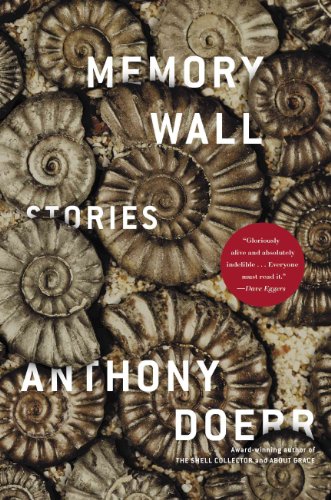
From an award-winning and extraordinarily eloquent author whose "prose dazzles" (The New York Times Book Review) comes a second stunning collection.
Set on four continents, Anthony Doerr's new stories are about memory, the source of meaning and coherence in our lives, the fragile thread that connects us to ourselves and to others. Every hour, says Doerr, all over the globe, an infinite number of memories disappear. Yet at the same time children, surveying territory that is entirely new to them, push back the darkness, form fresh memories, and remake the world.
In the luminous and beautiful title story, a young boy in South Africa comes to possess an old woman's secret, a piece of the past with the power to redeem a life. In "The River Nemunas," a teenage orphan moves from Kansas to Lithuania to live with her grandfather, and discovers a world in which myth becomes real. "Village 113," winner of an O'Henry Prize, is about the building of the Three Gorges Dam and the seed keeper who guards the history of a village soon to be submerged. And in "Afterworld," the radiant, cathartic final story, a woman who escaped the Holocaust is haunted by visions of her childhood friends in Germany, yet finds solace in the tender ministrations of her grandson.
Every story in Memory Wall is a reminder of the grandeur of life--of the mysterious beauty of seeds, of fossils, of sturgeon, of clouds, of radios, of leaves, of the breathtaking fortune of living in this universe. Doerr's language, his witness, his imagination, and his humanity are unparalleled in fiction today.
Die Inhaltsangabe kann sich auf eine andere Ausgabe dieses Titels beziehen.
Über die Autorin bzw. den Autor
Anthony Doerr is the author of the Pulitzer Prize-winning novel All the Light We Cannot See. He is also the author of two story collections Memory Wall and The Shell Collector, the novel About Grace, and the memoir Four Seasons in Rome. He has won four O. Henry Prizes, the Rome Prize, the New York Public Library’s Young Lions Award, the National Magazine Award for fiction, a Guggenheim Fellowship, and the Story Prize. Doerr lives in Boise, Idaho, with his wife and two sons.
Auszug. © Genehmigter Nachdruck. Alle Rechte vorbehalten.
Memory Wall
Memory Wall
TALL MAN IN THE YARD
Seventy-four-year-old Alma Konachek lives in Vredehoek, a suburb above Cape Town: a place of warm rains, big-windowed lofts, and silent, predatory automobiles. Behind her garden, Table Mountain rises huge, green, and corrugated; beyond her kitchen balcony, a thousand city lights wink and gutter behind sheets of fog like candleflames.
One night in November, at three in the morning, Alma wakes to hear the rape gate across her front door rattle open and someone enter her house. Her arms jerk; she spills a glass of water across the nightstand. A floorboard in the living room shrieks. She hears what might be breathing. Water drips onto the floor.
Alma manages a whisper. “Hello?”
A shadow flows across the hall. She hears the scrape of a shoe on the staircase, then nothing. Night air blows into the room—it smells of frangipani and charcoal. Alma presses a fist over her heart.
Beyond the balcony windows, moonlit pieces of clouds drift over the city. Spilled water creeps toward her bedroom door.
“Who’s there? Is someone there?”
The grandfather clock in the living room pounds through the seconds. Alma’s pulse booms in her ears. Her bedroom seems to be rotating very slowly.
“Harold?” Alma remembers that Harold is dead but she cannot help herself. “Harold?”
Another footstep from the second floor, another protest from a floorboard. What might be a minute passes. Maybe she hears someone descend the staircase. It takes her another full minute to summon the courage to shuffle into the living room.
Her front door is wide open. The traffic light at the top of the street flashes yellow, yellow, yellow. The leaves are hushed, the houses dark. She heaves the rape gate shut, slams the door, sets the bolt, and peers out the window lattice. Within twenty seconds she is at the hall table, fumbling with a pen.
A man, she writes. Tall man in the yard.
MEMORY WALL
Alma stands barefoot and wigless in the upstairs bedroom with a flashlight. The clock down in the living room ticks and ticks, winding up the night. A moment ago Alma was, she is certain, doing something very important. Something life-and-death. But now she cannot remember what it was.
The one window is ajar. The guest bed is neatly made, the coverlet smooth. On the nightstand sits a machine the size of a microwave oven, marked Property of Cape Town Memory Research Center. Three cables spiraling off it connect to something that looks vaguely like a bicycle helmet.
The wall in front of Alma is smothered with scraps of paper. Diagrams, maps, ragged sheets swarming with scribbles. Shining among the papers are hundreds of plastic cartridges, each the size of a matchbook, engraved with a four-digit number and pinned to the wall through a single hole.
The beam of Alma’s flashlight settles on a color photograph of a man walking out of the sea. She fingers its edges. The man’s pants are rolled to the knees; his expression is part grimace, part grin. Cold water. Across the photo, in handwriting she knows to be hers, is the name Harold. She knows this man. She can close her eyes and recall the pink flesh of his gums, the folds in his throat, his big-knuckled hands. He was her husband.
Around the photo, the scraps of paper and plastic cartridges build outward in crowded, overlapping layers, anchored with pushpins and chewing gum and penny nails. She sees to-do lists, jottings, drawings of what might be prehistoric beasts or monsters. She reads: You can trust Pheko. And Taking Polly’s Coca-Cola. A flyer says: Porter Properties. There are stranger phrases: dinocephalians, late Permian, massive vertebrate graveyard. Some sheets of paper are blank; others reveal a flurry of cross-outs and erasures. On a half-page ripped from a brochure, one phrase is shakily and repeatedly underlined: Memories are located not inside the cells but in the extracellular space.
Some of the cartridges have her handwriting on them, too, printed below the numbers. Museum. Funeral. Party at Hattie’s.
Alma blinks. She has no memory of writing on little cartridges or tearing out pages of books and tacking things to the wall.
She sits on the floor in her nightgown, legs straight out. A gust rushes through the window and the scraps of paper come alive, dancing, tugging at their pins. Loose pages eddy across the carpet. The cartridges rattle lightly.
Near the center of the wall, her flashlight beam again finds the photograph of a man walking out of the sea. Part grimace, part grin. That’s Harold, she thinks. He was my husband. He died. Years ago. Of course.
Out the window, beyond the crowns of the palms, beyond the city lights, the ocean is washed in moonlight, then shadow. Moonlight, then shadow. A helicopter ticks past. The palms flutter.
Alma looks down. There is slip of paper in her hand. A man, it says. Tall man in the yard.
DR. AMNESTY
Pheko is driving the Mercedes. Apartment towers reflect the morning sun. Sedans purr at stoplights. Six different times Alma squints out at the signs whisking past and asks him where they are going.
“We’re driving to see the doctor, Mrs. Alma.”
The doctor? Alma rubs her eyes, unsure. She tries to fill her lungs. She fidgets with her wig. The tires squeal as the Mercedes climbs the ramps of a parking garage.
Dr. Amnesty’s staircase is stainless steel and bordered with ferns. Here’s the bulletproof door, the street address stenciled in the corner. It’s familiar to Alma in the way a house from childhood would be familiar. As if she has doubled in size in the meantime.
They are buzzed into a waiting room. Pheko drums his fingertips on his knee. Four chairs down, two well-dressed women sit beside a fish tank, one a few decades younger than the other. Both have fat pearls studded through each earlobe. Alma thinks: Pheko is the only black person in the building. For a moment she cannot remember what she is doing here. But this leather on the chair, the blue gravel in the saltwater aquarium—it is the memory clinic. Of course. Dr. Amnesty. In Green Point.
After a few minutes Alma is escorted to a padded chair overlaid with crinkly paper. It’s all familiar now: the cardboard pouch of rubber gloves, the plastic plate for her earrings, two electrodes beneath her blouse. They lift off her wig, rub a cold gel onto her scalp. The television panel shows sand dunes, then dandelions, then bamboo.
Amnesty. A ridiculous surname. What does it mean? A pardon? A reprieve? But more permanent than a reprieve, isn’t it? Amnesty is for wrongdoings. For someone who has done something wrong. She will ask Pheko to look it up when they get home. Or maybe she will remember to look it up herself.
The nurse is talking.
“And the remote stimulator is working well? Do you feel any improvements?”
“Improvements?” She thinks so. Things do seem to be improving. “Things are sharper,” Alma says. She believes this is the sort of thing she is supposed to say. New pathways are being forged. She is remembering how to remember. This is what they want to hear.
The nurse murmurs. Feet whisper across the floor. Invisible machinery hums. Alma can feel, numbly, the rubber caps being twisted out of the ports in her skull and four screws being threaded simultaneously into place. There is a note in her hand: Pheko is in the waiting room. Pheko will drive Mrs. Alma home after...
„Über diesen Titel“ kann sich auf eine andere Ausgabe dieses Titels beziehen.
Suchergebnisse für Memory Wall: Stories

Beispielbild für diese ISBN
Memory Wall
Anbieter: BooksRun, Philadelphia, PA, USA
Verkäuferbewertung 5 von 5 Sternen

Hardcover. Zustand: Very Good. 1. It's a well-cared-for item that has seen limited use. The item may show minor signs of wear. All the text is legible, with all pages included. It may have slight markings and/or highlighting. Artikel-Nr. 1439182809-11-1
Gebraucht kaufen
EUR 5,22
Versand gratis
Versand innerhalb von USA
Versand innerhalb von USA
Anzahl: 1 verfügbar
Beispielbild für diese ISBN
Memory Wall: Stories
Anbieter: World of Books (was SecondSale), Montgomery, IL, USA
Verkäuferbewertung 5 von 5 Sternen
Hardback. Zustand: Fair. Artikel-Nr. 00101508496
Gebraucht kaufen
EUR 5,41
Versand gratis
Versand innerhalb von USA
Versand innerhalb von USA
Anzahl: 1 verfügbar
Beispielbild für diese ISBN
Memory Wall
Anbieter: Better World Books, Mishawaka, IN, USA
Verkäuferbewertung 5 von 5 Sternen
Zustand: Good. Pages intact with minimal writing/highlighting. The binding may be loose and creased. Dust jackets/supplements are not included. Stock photo provided. Product includes identifying sticker. Better World Books: Buy Books. Do Good. Artikel-Nr. 7926221-6
Gebraucht kaufen
EUR 8,31
Versand gratis
Versand innerhalb von USA
Versand innerhalb von USA
Anzahl: 1 verfügbar
Beispielbild für diese ISBN
Memory Wall
Anbieter: Better World Books, Mishawaka, IN, USA
Verkäuferbewertung 5 von 5 Sternen
Zustand: Very Good. Former library copy. Pages intact with possible writing/highlighting. Binding strong with minor wear. Dust jackets/supplements may not be included. Includes library markings. Stock photo provided. Product includes identifying sticker. Better World Books: Buy Books. Do Good. Artikel-Nr. 4637356-20
Gebraucht kaufen
EUR 8,31
Versand gratis
Versand innerhalb von USA
Versand innerhalb von USA
Anzahl: 3 verfügbar
Beispielbild für diese ISBN
Memory Wall
Anbieter: Better World Books, Mishawaka, IN, USA
Verkäuferbewertung 5 von 5 Sternen
Zustand: Good. Former library copy. Pages intact with minimal writing/highlighting. The binding may be loose and creased. Dust jackets/supplements are not included. Includes library markings. Stock photo provided. Product includes identifying sticker. Better World Books: Buy Books. Do Good. Artikel-Nr. 4418134-75
Gebraucht kaufen
EUR 8,31
Versand gratis
Versand innerhalb von USA
Versand innerhalb von USA
Anzahl: 2 verfügbar
Beispielbild für diese ISBN
Memory Wall
Anbieter: Magers and Quinn Booksellers, Minneapolis, MN, USA
Verkäuferbewertung 5 von 5 Sternen
hardcover. Zustand: Like New. Condition: Fine; Dust Jacket Condition: Hardcover in dustjacket. First Edition with number line to 1. Condition is Fine in a Fine dustjacket. Artikel-Nr. 1563914
Gebraucht kaufen
EUR 17,15
EUR 3,55 Versand
Versand innerhalb von USA
Versand innerhalb von USA
Anzahl: 1 verfügbar
Beispielbild für diese ISBN
Memory Wall: Stories
Anbieter: Revaluation Books, Exeter, Vereinigtes Königreich
Verkäuferbewertung 5 von 5 Sternen
Hardcover. Zustand: Brand New. 1st edition. 243 pages. 8.75x6.00x0.75 inches. In Stock. Artikel-Nr. 1439182809
Neu kaufen
EUR 51,18
EUR 11,77 Versand
Versand von Vereinigtes Königreich nach USA
Versand von Vereinigtes Königreich nach USA
Anzahl: 1 verfügbar