
Inhaltsangabe
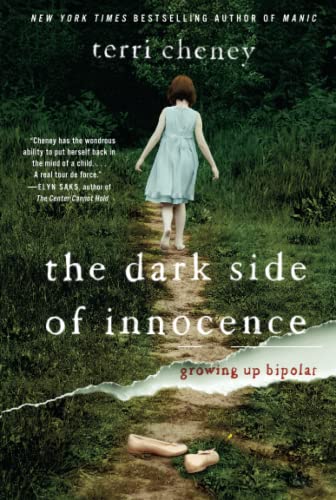
Now in paperback from the New York Times bestselling author of Manic—a gripping and eloquent account of the unfolding of her debilitating bipolar disorder during her childhood.
The New York Times bestselling author blends a pitch-perfect childlike voice with keen adult observation as she shares her heartrending, groundbreaking insider’s look into the fascinating and frightening world of childhood bipolar disorder.
Starting with her first suicide attempt at age seven, Terri Cheney was held hostage by her roller-coaster moods, veering from easy A-pluses to total paralysis, from bouts of obsessive hypersexuality to episodes of alcoholic abandon that nearly cost her her life. On the outside, her world appeared perfect. She was pretty and smart, an academic superstar and popular cheerleader. Yet her inner world was chaos, a well-guarded secret too troubling, too painful to fathom even thirty years later in her bestselling memoir, Manic, which was lauded as “chilling” and “brilliant” by People. In The Dark Side of Innocence, her eye-opening follow-up, Terri shares her poignant and compelling journey from a childhood of disaster and despair to hope and survival, an informative first-person account of a dark beast that preys on a staggering one million children.
Die Inhaltsangabe kann sich auf eine andere Ausgabe dieses Titels beziehen.
Über die Autorin bzw. den Autor
Terri Cheney, once a successful entertainment attorney representing the likes of Michael Jackson and Quincy Jones, now devotes her advocacy skills to the cause of mental illness. On the boards of directors of several mental health organizations, she also facilitates a weekly community support group at UCLA’s Neuropsychiatric Institute. Her writings about bipolar disorder have been featured in the New York Times, the Huffington Post, and countless articles and blogs. She currently resides in Los Angeles.
Auszug. © Genehmigter Nachdruck. Alle Rechte vorbehalten.
1
A little boy died
When he was seven.
He went straight up
To Heaven.
—My version of a nursery rhyme, age seven
Killing yourself at any age is a seriously tricky business. But when I was seven, the odds felt insurmountable. My resources were so limited, after all. We lived in a one-story house, so there was nowhere to jump. The cabinet where the good silver was kept—the one with the knives that could make a nice, clean slice—was locked, and my mother had the key. We did have a swimming pool in our backyard, but who was going to teach me how to drown? I’d only just learned how to dog paddle.
It all started two nights before my seventh birthday, after a fight with my brother, Zach. I was a delicate-looking thing, pale as porcelain, with long red hair that flowed down to the middle of my back. Zach was ten, and big for his age. I didn’t care.
“You’re sitting in my chair,” I said.
Zach didn’t stop eating. “So?” he mumbled.
“Move.”
“You move.”
I could hear my voice growing shrill. “Move.”
“No, you move.”
My mother intervened. “Honey, let Zach sit next to his dad for a change. You come sit next to me.” She patted the empty chair to her right.
Except for fancy occasions like Thanksgiving, we always had our meals at the L-shaped kitchen counter. My father would sit at the head; I’d sit next to him; then my mother; then Zach. I don’t know who had assigned these places, but that was how it had always been.
I felt my hand tighten into a fist. I could just go back to my room. I wasn’t that hungry anyway. But something deep inside me kept me standing there, transfixed. That something was so familiar, so real and omnipotent, I’d given it a name: the Black Beast.
I tried to negotiate.
“Not now,” I argued.
“Now,” the Black Beast insisted.
My fingers clenched tighter, so hard that my nails gouged into my palms.
Daddy hadn’t come home from work yet, so his chair was empty. There was still time to fix this, if indeed it needed fixing. You could never tell with Zach. Of everyone in my family, I felt that he was the only one really keeping track of things. At ten, he could already see straight through me. He knew I was not adorable.
I gave him fair warning. “Zach, I swear, if you don’t move now, you’re gonna be sorry.”
He ignored me and reached for a tortilla chip, his hand passing right in front of me. Big mistake.
I grabbed the nearest fork and stabbed, hard, into his flesh. There was a moment’s bloody satisfaction, like when you bite into a good, rare piece of steak and the juices flood through your mouth. The fork stood up straight from the back of Zach’s hand. I’d skewered him like a bullfighter.
My mother swore and ran to get the first aid kit while Zach screamed. Thank God she was a registered nurse and knew exactly what to do. I don’t remember much of what followed—just that I was sent to my room, where I waited in terror for my father to come home.
It was the night of December 5, 1966. It was a good time to live in suburban Southern California. Building was booming, but you could still drive a mile or two out of town and picnic in orange groves. The smog was bad, but it produced brilliant sunsets. Out in the real world—the grown-up world I only caught whiffs of now and then—trouble was brewing: in four years, words like “Kent State” and “Cambodia” would enter the national consciousness. The Beatles would break up, Janis Joplin and Jimi Hendrix would die.
But in Ontario, the little corner of the world where I lived, some forty-odd miles east of LA, none of that seemed to matter. Euclid Avenue, the eucalyptus-lined main street of town, was named one of the seven most beautiful avenues in the United States, and a good Sunday still consisted of church and a stroll beneath the trees. No one knew then that a blight was about to kill them all off, one after the other. In 1966, all was green and thriving.
Things weren’t exactly perfect at 1555 North Elm Court, but you couldn’t tell from the outside. The garage was freshly painted, the pink geraniums my mother had planted on a whim were blooming, and a brand-new fire-engine red Dodge Comet stood in the driveway, waiting for us to hop in. But come around midnight, and you might hear a different story: voices brittle as icicles, aiming for the heart. I could hear them through my bedroom door, although I couldn’t quite make out the words. Something about money, usually; and sometimes, when the frost was particularly thick, the single word Rebecca. On those nights, I fully expected to wake up and find all the pink geraniums withered and dead. But to my surprise, they continued to bloom, and the neighbors looked on us as a fine family.
And so we were. Zach was tall for his age and strapping, with a shock of red hair even more vibrant than my own. My mother and father were both handsome people, trim and photogenic. In the few pictures I possess of us, we look like a Kodak commercial: smiling, smiling, smiling. I remember hating being photographed as a child, and perhaps that accounts for my awkward grin. But even I could look angelic when I chose.
“There’s something wrong with her.”
My mother’s normally cool, firm voice quavered. She was either on the edge of tears or extremely angry, I couldn’t tell which. I pressed my ear up against the crack in the den door, trying to listen harder.
“There’s nothing wrong with her. She’s only seven. Besides, she’s number one in her class.” My father’s Kansas twang was followed by a crackle; no doubt a page of the Daily Report being turned.
“Put that goddamned paper down and listen to me. You call what she did to Zach tonight normal?”
Another crackle, then silence. “She won’t do anything like that again. I’ll make her give me her word.”
My mother laughed. It was not a pleasant sound. “She’d say anything to get you to forgive her. I mean it, Jack, I’m worried. One minute she’s sweet as pie, the next she’s a little fiend. And all those days she claims she’s sick when she really isn’t—”
“That’s just to stay out of school. All kids do that.”
“Not for weeks at a time. I tell you, something’s wrong with her.”
I heard the sound of a cup or a fist banging down on the table. “Nothing’s wrong with my baby. Christ, she’s number one in her class.”
“You already said that.”
“Well, it’s true, isn’t it?”
There was a moment’s silence, and then my mother began to cry. She rarely cried, except when she was so frustrated she couldn’t find the words to express herself.
“You always take her side,” she said.
“There are no sides here,” my father said, his voice softening. “It’s just us.”
“I don’t know how to handle her anymore. And it’s not fair to Zach.” My mother was openly sobbing now.
“Shhh,” my father said. “If there’s a problem, I’ll fix it. You know I always do.”
I was glad I was only eavesdropping. I couldn’t have stood the sight of my mother’s tears. I crept back to bed, deeply ashamed of whatever was so clearly “wrong” with me.
Wrong with me,...
„Über diesen Titel“ kann sich auf eine andere Ausgabe dieses Titels beziehen.
Weitere beliebte Ausgaben desselben Titels

Suchergebnisse für The Dark Side of Innocence: Growing Up Bipolar

Beispielbild für diese ISBN
The Dark Side of Innocence Gro
Anbieter: World of Books (was SecondSale), Montgomery, IL, USA
Verkäuferbewertung 5 von 5 Sternen

Zustand: Good. Item in good condition. Textbooks may not include supplemental items i.e. CDs, access codes etc. Artikel-Nr. 00101237670
Gebraucht kaufen
EUR 4,41
Versand gratis
Versand innerhalb von USA
Versand innerhalb von USA
Anzahl: 3 verfügbar
Beispielbild für diese ISBN
The Dark Side of Innocence: Growing Up Bipolar
Anbieter: ThriftBooks-Reno, Reno, NV, USA
Verkäuferbewertung 5 von 5 Sternen
Paperback. Zustand: Good. No Jacket. Pages can have notes/highlighting. Spine may show signs of wear. ~ ThriftBooks: Read More, Spend Less. Artikel-Nr. G1439176248I3N00
Gebraucht kaufen
EUR 5,89
Versand gratis
Versand innerhalb von USA
Versand innerhalb von USA
Anzahl: 1 verfügbar
Beispielbild für diese ISBN
The Dark Side of Innocence: Growing Up Bipolar
Anbieter: ThriftBooks-Dallas, Dallas, TX, USA
Verkäuferbewertung 5 von 5 Sternen
Paperback. Zustand: Good. No Jacket. Pages can have notes/highlighting. Spine may show signs of wear. ~ ThriftBooks: Read More, Spend Less. Artikel-Nr. G1439176248I3N00
Gebraucht kaufen
EUR 5,92
Versand gratis
Versand innerhalb von USA
Versand innerhalb von USA
Anzahl: 1 verfügbar
Beispielbild für diese ISBN
The Dark Side of Innocence: Growing Up Bipolar
Anbieter: ThriftBooks-Atlanta, AUSTELL, GA, USA
Verkäuferbewertung 5 von 5 Sternen
Paperback. Zustand: Good. No Jacket. Pages can have notes/highlighting. Spine may show signs of wear. ~ ThriftBooks: Read More, Spend Less. Artikel-Nr. G1439176248I3N00
Gebraucht kaufen
EUR 5,92
Versand gratis
Versand innerhalb von USA
Versand innerhalb von USA
Anzahl: 1 verfügbar
Beispielbild für diese ISBN
The Dark Side of Innocence : Growing up Bipolar
Anbieter: Better World Books, Mishawaka, IN, USA
Verkäuferbewertung 5 von 5 Sternen
Zustand: Very Good. Former library copy. Pages intact with possible writing/highlighting. Binding strong with minor wear. Dust jackets/supplements may not be included. Includes library markings. Stock photo provided. Product includes identifying sticker. Better World Books: Buy Books. Do Good. Artikel-Nr. 11058355-6
Gebraucht kaufen
EUR 6,26
Versand gratis
Versand innerhalb von USA
Versand innerhalb von USA
Anzahl: 1 verfügbar
Beispielbild für diese ISBN
The Dark Side of Innocence: Growing Up Bipolar
Anbieter: Wonder Book, Frederick, MD, USA
Verkäuferbewertung 5 von 5 Sternen
Zustand: Very Good. Very Good condition. A copy that may have a few cosmetic defects. May also contain light spine creasing or a few markings such as an owner's name, short gifter's inscription or light stamp. Artikel-Nr. U14C-04741
Gebraucht kaufen
EUR 6,75
Versand gratis
Versand innerhalb von USA
Versand innerhalb von USA
Anzahl: 1 verfügbar
Beispielbild für diese ISBN
The Dark Side of Innocence: Growing Up Bipolar
Anbieter: WorldofBooks, Goring-By-Sea, WS, Vereinigtes Königreich
Verkäuferbewertung 5 von 5 Sternen
Paperback. Zustand: Very Good. The book has been read, but is in excellent condition. Pages are intact and not marred by notes or highlighting. The spine remains undamaged. Artikel-Nr. GOR008065433
Gebraucht kaufen
EUR 8,49
EUR 6,57 Versand
Versand von Vereinigtes Königreich nach USA
Versand von Vereinigtes Königreich nach USA
Anzahl: 1 verfügbar
Beispielbild für diese ISBN
The Dark Side of Innocence: Growing Up Bipolar
Anbieter: Revaluation Books, Exeter, Vereinigtes Königreich
Verkäuferbewertung 5 von 5 Sternen
Paperback. Zustand: Brand New. reprint edition. 277 pages. 8.50x5.75x1.00 inches. In Stock. Artikel-Nr. x-1439176248
Neu kaufen
EUR 21,17
EUR 11,74 Versand
Versand von Vereinigtes Königreich nach USA
Versand von Vereinigtes Königreich nach USA
Anzahl: 2 verfügbar
Beispielbild für diese ISBN
Dark Side Of Innocence
Anbieter: Kennys Bookstore, Olney, MD, USA
Verkäuferbewertung 5 von 5 Sternen
Zustand: New. Artikel-Nr. V9781439176245
Neu kaufen
EUR 25,37
EUR 9,20 Versand
Versand innerhalb von USA
Versand innerhalb von USA
Anzahl: Mehr als 20 verfügbar
Foto des Verkäufers
The Dark Side of Innocence: Growing Up Bipolar
Anbieter: moluna, Greven, Deutschland
Verkäuferbewertung 5 von 5 Sternen
Kartoniert / Broschiert. Zustand: New. Über den AutorrnrnTerri Cheney, once a successful entertainment attorney, now devotes her advocacy talents to the cause of mental illness. Her writings about bipolar disorder have been featured in countless articles and. Artikel-Nr. 902716649
Neu kaufen
EUR 19,26
EUR 48,99 Versand
Versand von Deutschland nach USA
Versand von Deutschland nach USA
Anzahl: Mehr als 20 verfügbar