
Verwandte Artikel zu Tigerlily's Orchids: A Novel
Inhaltsangabe
INCLUDES AN EXCERPT OF RENDELL’S FINAL NOVEL, DARK CORNERS
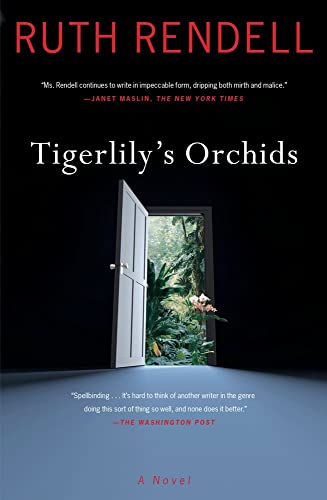
Diamond Dagger Award–winning Ruth Rendell has written a psychologically thrilling novel about the eccentric inhabitants of a London terrace, the secrets they keep, and what they will do to hide them.
Is it dangerous to know too much about your neighbors?
When Stuart Font decides to throw a housewarming party in his new flat, he invites all the people in his building—three flippant young girls, a lonely spinster, a man with a passion for classical history, and a woman determined to drink herself to death. After some deliberation, he even includes the unpleasant caretaker and his wife. He considered inviting a few other friends, but he definitely does not want his girlfriend, Claudia, in attendance, as he would also have to invite her lawyer husband.
As it turns out, the party will be one everyone remembers.
Living in a townhouse opposite Stuart’s building, in reclusive isolation, is a young, beautiful Asian woman known as Tigerlily. As though from some strange urban fairytale, she emerges infrequently to exert a terrible spell.
And Stuart’s parents, always worried about their handsome, hopelessly naive, and undermotivated son, have even more cause for concern.
Darkly humorous, piercingly insightful about human behavior, Ruth Rendell, whom People magazine calls “one of the most remarkable novelists of her generation,” has created an extraordinarily compelling story of our lives and crimes.
Die Inhaltsangabe kann sich auf eine andere Ausgabe dieses Titels beziehen.
Über die Autorin bzw. den Autor
Ruth Rendell (1930–2015) won three Edgar Awards, the highest accolade from Mystery Writers of America, as well as four Gold Daggers and a Diamond Dagger for outstanding contribution to the genre from England’s prestigious Crime Writers’ Association. Her remarkable career spanned a half century, with more than sixty books published. A member of the House of Lords, she was one of the great literary figures of our time.
Auszug. © Genehmigter Nachdruck. Alle Rechte vorbehalten.
1
Olwen was in Wicked Wine, buying gin. She understood from Rupert, whose shop it was, that these days wicked meant “smart” or “cool,” not “evil,” just as gay in some circles was starting to signify bad or nasty. She didn’t much care, though she wondered why a shop which sold beer and spirits and Coca-Cola and orange juice advertised itself as purveying only wine. Rupert said, “That’s the way it is,” as if this explained everything.
She bought three bottles of the cheap kind. Bombay Sapphire came expensive if you consumed as much of it as she did. Gin was her favourite, though she had no objection to vodka. Purely for variety’s sake, she had tried rum, but rum was vile if you drank it neat, and she couldn’t stomach orange juice or, God forbid, black currant.
“Can you manage,” said Rupert, “or do you want me to do you a double bag?”
“Not really.”
“Your neighbour Stuart, is it?—don’t know his other name—was in here this morning stocking up on champers. ‘Having a party?’ I said, and he said it was a housewarming, though he’s been here for months and it’s not till February. He was inviting all the other folk in Lichfield House.”
Olwen nodded but said nothing. Outside it was snowing, and not the kind of snow that becomes a raindrop when it touches the ground. This snow settled and gradually built up. Olwen, in rubber boots, trudged through it along Kenilworth Parade. The council had cleared a passage in the roadway for cars—a passage that was rapidly whitening—but done nothing for pedestrians apart from scattering the ice-coated, slippery pavement with mustard-coloured sand. She passed the furniture shop, the pizza place, the post office, and Mr. Ali’s shop on the corner and turned up into Kenilworth Avenue. Most of the time the place was as dreary as only a London outer suburb can be, but the veiling of snow transformed it into a pretty Christmas card. Small conifers in the front gardens of the block poked their dark green spires through the snow blanket, and the melting icicles dripped water.
Olwen staggered up the steps with her bag of bottles. The automatic doors parted to receive her. In the hallway she encountered Rose Preston-Jones with her dog, McPhee. On the whole Olwen was indifferent to other people or else she disliked them, but Rose she distrusted, much as she distrusted Michael Constantine. If not herself a doctor, Rose, with her acupuncture and dabbling in herbalism, her detoxing and her aromatherapy, was the next best (or worst) thing. Such people were capable of interfering with her habit.
“Is it still snowing?” Rose asked.
“Not really.”
Olwen had long ago discovered that this is a response which may be made with impunity to almost any enquiry, including “Are you well?” and “Are you free on Saturday?” Not that people often asked her anything. She made it plain that she was mostly inaccessible. Rose looked at the carrier bag, or Olwen thought she did. Maybe she just looked down at the dog, looked up again, and said she must get on with McPhee’s walk.
The lift was waiting, its sliding door open. Olwen had just stepped in when Michael Constantine came running through the automatic door. He had the sort of legs which, when possessed by models, are described as so lengthy as to reach up to their neck, and he was six and a half feet tall, so his stride was long. He was the politest of the residents and asked Olwen if she was well.
“Not really.” Olwen forbore to ask him how he was and, though she knew his flat was on the second floor, pressed the button for the third. A peculiarity of the lift was that once this floor had been signalled, the intermediate could not be, so Michael had to go up to the top with her.
He remembered to be a doctor, though he had only recently become one.
“Keep warm. Look after yourself.”
Olwen shrugged, her alternative response. She got out of the lift without a word just as one of the girls came out of the flat she shared with two girls of similar age. None of them had ever been seen dressed otherwise than in jeans with a T-shirt, sweater, or flouncy dress on her top half. One was rather overweight, one thin, and one in between. As well as jeans, this one had a red quilted coat over what seemed like several jumpers. Olwen had been told their names over and over, but she had contrived to forget them. She let herself into Flat 6 and put the transparent bag down on the kitchen counter.
The flat was furnished for comfort, not for beauty. There were no books, no plants, no ornaments, no curtains, and no clocks. A deep, soft, shabby, comfortable sofa occupied one wall of the living room and faced, along with a deep, soft, and comfortable armchair with a detachable footrest, the large flat-screen television set. A window blind was seldom raised or lowered from its present position of halfway up, and beneath it could be seen the solid cupola-topped tower of Sir Robert Smirke’s church and the tops of trees at Kenilworth Green. And of course the snow, now falling in large, feathery flakes. The bedroom was even more sparsely furnished, containing only a king-size bed and, facing it, a row of hooks on the wall.
All but one of the kitchen cupboards were empty. Food, such as there was of it, lived in the fridge. The full cupboard was rather less full than it had been at the beginning of the week, but Olwen replenished her stock by putting her three new bottles on the shelf alongside a full bottle and one that was half-empty. This one she removed and poured from it about three inches of gin into a tumbler. There was no point in waiting until she was sitting down to start on it—there was no point in Olwen’s present life of ever doing anything she didn’t want to do—so she drank about half of it, refilled the glass, and took glass and bottle to the sofa. It was low down near the floor, so no need for a table. Glass and bottle joined the phone on the woodblock floor.
Reclining, her feet up on a cushion, she reflected, as she often did, on having, at the age of sixty, attained her lifelong aim. Through two marriages, both unsatisfactory, seemingly endless full-time work, houses she had disliked, uncongenial stepchildren, and dour relations, she was at last doing what she had always wanted to do but had rigidly, for various reasons, stringently controlled. She was drinking the unlimited amount of alcohol she had longed for. She was, she supposed, but without rancour or regret, drinking herself to death.
The list Stuart Font had made read Ms. Olwen Curtis, Flat 6; girls—don’t know names, Flat 5; Mr. and Mrs. Constantine, Flat 4; Marius something, don’t know other name, Flat 3; Ms. Rose Preston-Jones, Flat 2; me, Flat 1. This last entry he crossed out as it was unnecessary to invite himself to his own housewarming party. The flat he had moved into in October was still unfurnished but for three mirrors, a king-size bed in the bedroom, and a three-seater sofa in the living room. The place looked a bit desolate, but Stuart had noticed a furniture store in Kenilworth Parade, its prices much reduced due to the credit crunch. Remembering to take his key with him—he had twice forgotten his key and had to hunt for and eventually find the porter or caretaker or whatever he called himself—he went out into the foyer to check on names and flat numbers on residents’ pigeonholes.
The girls at Flat 5 appeared to be called Noor Lateef, Molly Flint, and Sophie Longwich, and the man on his own at Flat 3, Marius Potter. That was everyone documented. Stuart, who...
„Über diesen Titel“ kann sich auf eine andere Ausgabe dieses Titels beziehen.
Suchergebnisse für Tigerlily's Orchids: A Novel

Beispielbild für diese ISBN
Tigerlily's Orchids: A Novel
Anbieter: World of Books (was SecondSale), Montgomery, IL, USA
Verkäuferbewertung 5 von 5 Sternen

Zustand: Good. Item in good condition. Textbooks may not include supplemental items i.e. CDs, access codes etc. Artikel-Nr. 00101704278
Gebraucht kaufen
EUR 4,66
Versand gratis
Versand innerhalb von USA
Versand innerhalb von USA
Anzahl: 2 verfügbar
Beispielbild für diese ISBN
Tigerlily's Orchids: A Novel
Verlag:
Scribner (edition Reprint), 2012
ISBN 10: 1439150397
ISBN 13: 9781439150399
Gebraucht
Paperback
Anbieter: BooksRun, Philadelphia, PA, USA
Verkäuferbewertung 5 von 5 Sternen
Paperback. Zustand: Very Good. Reprint. It's a well-cared-for item that has seen limited use. The item may show minor signs of wear. All the text is legible, with all pages included. It may have slight markings and/or highlighting. Artikel-Nr. 1439150397-11-1
Gebraucht kaufen
EUR 4,67
Versand gratis
Versand innerhalb von USA
Versand innerhalb von USA
Anzahl: 1 verfügbar
Beispielbild für diese ISBN
Tigerlily's Orchids
Anbieter: ThriftBooks-Dallas, Dallas, TX, USA
Verkäuferbewertung 5 von 5 Sternen
Paperback. Zustand: Good. No Jacket. Pages can have notes/highlighting. Spine may show signs of wear. ~ ThriftBooks: Read More, Spend Less. Artikel-Nr. G1439150397I3N00
Gebraucht kaufen
EUR 5,96
Versand gratis
Versand innerhalb von USA
Versand innerhalb von USA
Anzahl: 1 verfügbar
Beispielbild für diese ISBN
Tigerlily's Orchids : A Novel
Anbieter: Better World Books, Mishawaka, IN, USA
Verkäuferbewertung 5 von 5 Sternen
Zustand: Very Good. Reprint. Pages intact with possible writing/highlighting. Binding strong with minor wear. Dust jackets/supplements may not be included. Stock photo provided. Product includes identifying sticker. Better World Books: Buy Books. Do Good. Artikel-Nr. 4722454-6
Gebraucht kaufen
EUR 6,18
Versand gratis
Versand innerhalb von USA
Versand innerhalb von USA
Anzahl: 1 verfügbar
Beispielbild für diese ISBN
Tigerlily's Orchids : A Novel
Anbieter: Better World Books, Mishawaka, IN, USA
Verkäuferbewertung 5 von 5 Sternen
Zustand: Good. Reprint. Pages intact with minimal writing/highlighting. The binding may be loose and creased. Dust jackets/supplements are not included. Stock photo provided. Product includes identifying sticker. Better World Books: Buy Books. Do Good. Artikel-Nr. GRP64749191
Gebraucht kaufen
EUR 6,18
Versand gratis
Versand innerhalb von USA
Versand innerhalb von USA
Anzahl: 1 verfügbar
Beispielbild für diese ISBN
Tigerlily's Orchids: A Novel
Anbieter: Wonder Book, Frederick, MD, USA
Verkäuferbewertung 5 von 5 Sternen
Zustand: Very Good. Very Good condition. A copy that may have a few cosmetic defects. May also contain light spine creasing or a few markings such as an owner's name, short gifter's inscription or light stamp. Artikel-Nr. R03C-03638
Gebraucht kaufen
EUR 6,42
Versand gratis
Versand innerhalb von USA
Versand innerhalb von USA
Anzahl: 3 verfügbar
Beispielbild für diese ISBN
Tigerlily's Orchids: A Novel
Anbieter: Magers and Quinn Booksellers, Minneapolis, MN, USA
Verkäuferbewertung 5 von 5 Sternen
paperback. Zustand: Very Good. May have light to moderate shelf wear and/or a remainder mark. Complete. Clean pages. Artikel-Nr. 1110004
Gebraucht kaufen
EUR 5,96
EUR 3,56 Versand
Versand innerhalb von USA
Versand innerhalb von USA
Anzahl: 1 verfügbar
Beispielbild für diese ISBN
Tigerlily's Orchids
Anbieter: Revaluation Books, Exeter, Vereinigtes Königreich
Verkäuferbewertung 5 von 5 Sternen
Paperback. Zustand: Brand New. reprint edition. 257 pages. 9.00x5.75x1.00 inches. In Stock. Artikel-Nr. 1439150397
Neu kaufen
EUR 29,19
EUR 11,84 Versand
Versand von Vereinigtes Königreich nach USA
Versand von Vereinigtes Königreich nach USA
Anzahl: 1 verfügbar
Foto des Verkäufers
Tigerlily's Orchids: A Novel
Anbieter: buchversandmimpf2000, Emtmannsberg, BAYE, Deutschland
Verkäuferbewertung 5 von 5 Sternen
Paperback. Zustand: Gut. Gebraucht - Gut - ungelesen,als Mängelexemplar gekennzeichnet, mit leichten Mängeln an Schnitt oder Einband durch Lager- oder Transportschaden, Cover und paar Seiten geknickt -From one of the most remarkable novelists of her generation ('People') comes a psychologically thrilling novel about the eccentric inhabitants of a London apartment building, the secrets they keep, and how knowing too much about one's neighbors might be deadly.Libri GmbH, Europaallee 1, 36244 Bad Hersfeld 288 pp. Englisch. Artikel-Nr. INF1000422216
Gebraucht kaufen
EUR 11,99
EUR 60,00 Versand
Versand von Deutschland nach USA
Versand von Deutschland nach USA
Anzahl: 1 verfügbar