
Verwandte Artikel zu Relaxation Revolution: The Science and Genetics of...
Inhaltsangabe
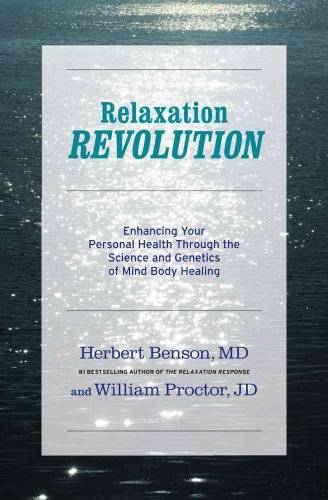
Recent scientific breakthroughs—demonstrating that mind body strategies can actually “switch off” or “switch on” gene activity associated with health and disease—have triggered a mind body revolution in the medical world.
In the 1970s, Dr. Herbert Benson of Harvard Medical School ushered in a new era of understanding in the field of mind body medicine. Coining the term “relaxation response,” Dr. Benson identified the body’s physiologic reaction that is the exact opposite of the stress (fight-or-flight) response. In the four decades since that initial discovery, Benson and his colleagues have established the first effective therapy to counteract the harmful effects of stress. They have explored how the relaxation response, the power of expectation and belief, and other mind body phenomena can produce healing in your own body.
A new era has dawned. Genetic research now shows conclusively that the mind can influence the body down to the genetic level. Your mind has the ability to change the way your body and your genes function.
We now have scientific proof that the mind can heal the body.
In Relaxation Revolution, Dr. Herbert Benson and William Proctor present the latest scientific endings, revealing that we have the ability to self-heal diseases, prevent life-threatening conditions, and supplement established drug and surgical procedures with mind body techniques. In a special “treatment” section, Benson and Proctor describe how these mind body techniques can be applied—and are being applied—to treat a wide variety of conditions, including:
• High blood pressure
• Anxiety and depression
• Infertility
• Insomnia
• Menopausal hot flashes
• Many pains, including backaches and headaches
• Phobias
• And much more
Relaxation Revolution details Dr. Benson’s recent work with colleagues in the field of genetics, which links mind body treatments to the healing of a steadily expanding number of medical conditions. Mind and body have become part of a scientific and medical whole; together they represent a complete approach to healing and maximal well-being. In clear, straightforward language, Benson and Proctor cite the experiences of real people to show how mind body techniques have the potential not only to enhance healing but also to reduce health costs to individuals and to society as a whole. Relaxation Revolution shines a light on the future of medicine.
Die Inhaltsangabe kann sich auf eine andere Ausgabe dieses Titels beziehen.
Über die Autorin bzw. den Autor
Herbert Benson, MD, is the Mind Body Medical Institute Associate Professor of Medicine, Harvard Medical School. He is the author of the mega-bestselling book, The Relaxation Response, as well as ten other trade books. His groundbreaking work established the modern field of mind body medicine. Dr. Benson is the Director Emeritus of the Benson-Henry Institute for Mind Body Medicine at Massachusetts General Hospital.
William Proctor, JD, is a graduate of Harvard College and Harvard Law School and has written or co-written more than 80 books, including Beyond the Relaxation Response with Dr. Benson; The Templeton Touch with Sir John Templeton; and several international bestsellers with the “father of aerobics,” Dr. Kenneth H. Cooper.
Auszug. © Genehmigter Nachdruck. Alle Rechte vorbehalten.
1.
The Making of a Revolution
We now have scientific proof that the mind can heal the body.
This means that you have the innate ability to self-heal diseases, prevent life-threatening conditions, and supplement established drug and surgical procedures with mind body techniques that can improve your physiology, biochemistry, brain functioning, and genetic activity. Furthermore, these benefits have the potential to reduce individual health costs and the broader societal expenses of health care.
How can you take advantage of these revolutionary advances in medical science? The best way to answer this question is for us to introduce you to Caroline, a 47-year-old accountant and mother of three, who started out with some skepticism about mind body medicine. After she became my patient, she soon learned the tremendous personal benefits of this burgeoning field of medical treatment.
How Caroline Conquered Her Back Pain
Caroline, an experienced squash player, considered her forehand her best shot. But as she whipped forward into the ball, she felt something “give” in her lower back. She thought nothing of the discomfort, which subsided as she continued to play. The morning after the match, however, she awoke with lower-back pain that hardly allowed her to stand.
Caroline decided that the pains were somehow related to her habit of bending her back excessively when she was serving. Because she had experienced lower-back pains before—and thought she knew how to deal with them—she immediately reached for an over-the-counter painkiller. Sure enough, after about 20 minutes the pain began to subside. But the discomfort didn’t completely disappear, and she went to bed that night struggling to find a position that would allow her to go to sleep.
The next morning, the pain was still present. Furthermore, when she made a seemingly innocuous movement to turn on the hot water in her bathroom, an excruciating back pain immobilized her. The attack began in the same general area, in the small of her back just above her buttocks, but now seemed to spread across her entire lower back.
After suffering the next day at work and finding she couldn’t concentrate, Caroline decided to make an emergency appointment with her physician. Her doctor, an internist, immediately prescribed a strong prescription painkiller, a narcotic-like opioid. But within a couple of days of taking the medication, Caroline began to experience side effects, including constipation, nausea, and intermittent stomach pains. Although the doctor switched her prescription to another painkiller that had fewer side effects, the new drug continued to upset her digestive system with occasional cramps.
More important, the second medication didn’t help as much with the back pain, which returned in force in a day or so. The fact that Caroline was not improving provided additional stress, triggering the “fight-or-flight response.” This physiologic condition, which comes into play when a person is subjected to stress, caused her body to put out excess adrenaline and noradrenaline, secretions that actually increased her sensitivity to pain. The end result was the creation of a vicious mind body cycle of escalating pain, discomfort, and anxiety.
Furthermore, the pain was spreading, moving down into her right leg. According to her physician-internist, this change might be a sign that she was dealing with sciatica. This tentative diagnosis, he explained, meant that the pains might involve her sciatic nerve, which runs from the lower back into the buttocks and the back of the upper leg.
Now at the end of his medical options, the internist sent Caroline to an orthopedic surgeon who specialized in diseases and health conditions related to the spine and back. The surgeon scheduled a magnetic resonance imaging examination, which required Caroline to undergo a nuclear scan of her spine in an enclosed, tubelike structure. The computerized MRI images revealed some herniation (abnormal bulging) of one of her disks and the beginnings of osteoarthritic bone buildup in her lower spine. (Osteoarthritis is a wear-and-tear form of bone and cartilage deterioration that occurs in all of us to one extent or another as we place stress on our bones and joints during the aging process.) But these findings weren’t necessarily conclusive about the cause of her pain.
“A lot of people have MRIs that look like yours,” the orthopedist explained. “But most aren’t experiencing the kind of pains you’re having. In fact, most aren’t in pain at all. They may have slightly stiff lower backs, but that’s about it.”
He also noted that he could find no tumor or other systemic problem that might be causing the pain. So, unable to identify the source of Caroline’s complaint but well aware of her distress, the orthopedist prescribed an even stronger narcotic painkiller. He also referred her to a physical therapist, who prescribed regular massages and an exercise plan. The new pain medication and the physical therapy helped enough to provide some temporary relief. But side effects from the new drug, including a tendency for Caroline to become drowsy at her desk, forced her to cut down on the dosage. As a result, by the end of the year, Caroline’s back pain had returned.
Another MRI and additional diagnostic procedures suggested some deterioration in the condition of the disk in her lower spine. These findings—along with Caroline’s reports that the time she was able to spend at work had steadily decreased—convinced the orthopedist that she was a candidate for back surgery. As a result, she underwent two operations over a two-year period to relieve pressure that the damaged disk might be exerting on nerves around her lower back.
Unfortunately, the surgeries seemed to make matters worse. During her recovery and afterward, Caroline found that she was rarely able to go in to work because of the pain she experienced while driving her car. When she did make it to the office, she couldn’t sit for any extended period in the chair at her desk. The only place she could operate in reasonable comfort was on a sofa in her office, but that wasn’t a location from which she could project proper authority when advising clients. Finally, Caroline elected to work entirely at home, a decision that effectively placed a cap on her client interactions and on her ability to bring in extra business to her firm—and added markedly to her already high stress levels.
She spent most hours during the day on her bed and found that her normal patterns of enjoyment in life had evaporated. Of course, she was unable to play squash: she had given that up even before the surgeries. But there were other issues. An accomplished cellist, she could no longer sit with the instrument for even a few minutes without being immobilized by pain. Finally, she was unable to interact effectively with her teenage children.
Fortunately, despite all the medical setbacks and the deterioration in her lifestyle, Caroline was not willing to give up on her treatment options. The surgeon had told her that her pains could be idiopathic—that is, they could not be linked to any identifiable cause.
“We’ve done all that’s medically possible for you,” he said. “We’ve operated on your herniated disk, but you still experience pain. That may mean the pain is coming from some other source, some place that we just can’t identify, given our current medical knowledge.”
That conclusion might have been discouraging to some people, but it was actually encouraging to Caroline because she figured, “If he can’t find a cause, that doesn’t mean there...
„Über diesen Titel“ kann sich auf eine andere Ausgabe dieses Titels beziehen.
Suchergebnisse für Relaxation Revolution: The Science and Genetics of...

Beispielbild für diese ISBN
Relaxation Revolution: The Science and Genetics of Mind Body Healing
Anbieter: World of Books (was SecondSale), Montgomery, IL, USA
Verkäuferbewertung 5 von 5 Sternen

Hardback. Zustand: Very Good. Recent scientific breakthroughs--demonstrating that mind body strategies can actually switch off or switch on gene activity associated with health and disease--have triggered a mind body revolution in the medical world. In the 1970s, Dr. Herbert Benson of Harvard Medical School ushered in a new era of understanding in the field of mind body medicine. Coining the term relaxation response, Dr. Benson identified the body's physiologic reaction that is the exact opposite of the stress (fight-or-flight) response. In the four decades since that initial discovery, Benson and his colleagues have established the first effective therapy to counteract the harmful effects of stress. They have explored how the relaxation response, the power of expectation and belief, and other mind body phenomena can produce healing in your own body. A new era has dawned. Genetic research now shows conclusively that the mind can influence the body down to the genetic level. Your mind has the ability to change the way your body and your genes function. We now have scientific proof that the mind can heal the body. In Relaxation Revolution, Dr. Herbert Benson and William Proctor present the latest scientific endings, revealing that we have the ability to self-heal diseases, prevent life-threatening conditions, and supplement established drug and surgical procedures with mind body techniques. In a special treatment section, Benson and Proctor describe how these mind body techniques can be applied--and are being applied--to treat a wide variety of conditions, including: - High blood pressure - Anxiety and depression - Infertility - Insomnia - Menopausal hot flashes - Many pains, including backaches and headaches - Phobias - And much more Relaxation Revolution details Dr. Benson's recent work with colleagues in the field of genetics, which links mind body treatments to the healing of a steadily expanding number of medical conditions. Mind and body have become part of a scientific and medical whole; together they represent a complete approach to healing and maximal well-being. In clear, straightforward language, Benson and Proctor cite the experiences of real people to show how mind body techniques have the potential not only to enhance healing but also to reduce health costs to individuals and to society as a whole. Relaxation Revolution shines a light on the future of medicine. Artikel-Nr. CIN1439148651VG
Gebraucht kaufen
EUR 4,83
Versand gratis
Versand innerhalb von USA
Versand innerhalb von USA
Anzahl: 1 verfügbar
Beispielbild für diese ISBN
Relaxation Revolution: The Science and Genetics of Mind Body Healing
Anbieter: World of Books (was SecondSale), Montgomery, IL, USA
Verkäuferbewertung 5 von 5 Sternen
Hardback. Zustand: Good. Recent scientific breakthroughs--demonstrating that mind body strategies can actually switch off or switch on gene activity associated with health and disease--have triggered a mind body revolution in the medical world. In the 1970s, Dr. Herbert Benson of Harvard Medical School ushered in a new era of understanding in the field of mind body medicine. Coining the term relaxation response, Dr. Benson identified the body's physiologic reaction that is the exact opposite of the stress (fight-or-flight) response. In the four decades since that initial discovery, Benson and his colleagues have established the first effective therapy to counteract the harmful effects of stress. They have explored how the relaxation response, the power of expectation and belief, and other mind body phenomena can produce healing in your own body. A new era has dawned. Genetic research now shows conclusively that the mind can influence the body down to the genetic level. Your mind has the ability to change the way your body and your genes function. We now have scientific proof that the mind can heal the body. In Relaxation Revolution, Dr. Herbert Benson and William Proctor present the latest scientific endings, revealing that we have the ability to self-heal diseases, prevent life-threatening conditions, and supplement established drug and surgical procedures with mind body techniques. In a special treatment section, Benson and Proctor describe how these mind body techniques can be applied--and are being applied--to treat a wide variety of conditions, including: - High blood pressure - Anxiety and depression - Infertility - Insomnia - Menopausal hot flashes - Many pains, including backaches and headaches - Phobias - And much more Relaxation Revolution details Dr. Benson's recent work with colleagues in the field of genetics, which links mind body treatments to the healing of a steadily expanding number of medical conditions. Mind and body have become part of a scientific and medical whole; together they represent a complete approach to healing and maximal well-being. In clear, straightforward language, Benson and Proctor cite the experiences of real people to show how mind body techniques have the potential not only to enhance healing but also to reduce health costs to individuals and to society as a whole. Relaxation Revolution shines a light on the future of medicine. Artikel-Nr. 00105335393
Gebraucht kaufen
EUR 4,83
Versand gratis
Versand innerhalb von USA
Versand innerhalb von USA
Anzahl: 3 verfügbar
Beispielbild für diese ISBN
Relaxation Revolution: The Science and Genetics of Mind Body Healing
Anbieter: BooksRun, Philadelphia, PA, USA
Verkäuferbewertung 5 von 5 Sternen
Hardcover. Zustand: Very Good. 1. With dust jacket. It's a well-cared-for item that has seen limited use. The item may show minor signs of wear. All the text is legible, with all pages included. It may have slight markings and/or highlighting. Artikel-Nr. 1439148651-11-1-29
Gebraucht kaufen
EUR 5,65
Versand gratis
Versand innerhalb von USA
Versand innerhalb von USA
Anzahl: 1 verfügbar
Beispielbild für diese ISBN
Relaxation Revolution : Enhancing Your Personal Health Through the Science and Genetics of Mind Body Healing
Anbieter: Better World Books, Mishawaka, IN, USA
Verkäuferbewertung 5 von 5 Sternen
Zustand: Very Good. 1st Edition. Former library copy. Pages intact with possible writing/highlighting. Binding strong with minor wear. Dust jackets/supplements may not be included. Includes library markings. Stock photo provided. Product includes identifying sticker. Better World Books: Buy Books. Do Good. Artikel-Nr. 4949222-6
Gebraucht kaufen
EUR 6,19
Versand gratis
Versand innerhalb von USA
Versand innerhalb von USA
Anzahl: 1 verfügbar
Beispielbild für diese ISBN
Relaxation Revolution : Enhancing Your Personal Health Through the Science and Genetics of Mind Body Healing
Anbieter: Better World Books, Mishawaka, IN, USA
Verkäuferbewertung 5 von 5 Sternen
Zustand: Fine. 1st Edition. Used book that is in almost brand-new condition. May contain a remainder mark. Better World Books: Buy Books. Do Good. Artikel-Nr. 53199422-6
Gebraucht kaufen
EUR 6,19
Versand gratis
Versand innerhalb von USA
Versand innerhalb von USA
Anzahl: 1 verfügbar
Beispielbild für diese ISBN
Relaxation Revolution: The Science and Genetics of Mind Body Healing
Anbieter: Wonder Book, Frederick, MD, USA
Verkäuferbewertung 5 von 5 Sternen
Zustand: Good. Good condition. Very Good dust jacket. A copy that has been read but remains intact. May contain markings such as bookplates, stamps, limited notes and highlighting, or a few light stains. Bundled media such as CDs, DVDs, floppy disks or access codes may not be included. Artikel-Nr. Q07O-00332
Gebraucht kaufen
EUR 6,43
Versand gratis
Versand innerhalb von USA
Versand innerhalb von USA
Anzahl: 1 verfügbar
Beispielbild für diese ISBN
Relaxation Revolution: The Science and Genetics of Mind Body Healing
Anbieter: Wonder Book, Frederick, MD, USA
Verkäuferbewertung 5 von 5 Sternen
Zustand: Very Good. Very Good condition. Very Good dust jacket. A copy that may have a few cosmetic defects. May also contain light spine creasing or a few markings such as an owner's name, short gifter's inscription or light stamp. Artikel-Nr. T14B-05035
Gebraucht kaufen
EUR 6,43
Versand gratis
Versand innerhalb von USA
Versand innerhalb von USA
Anzahl: 1 verfügbar
Beispielbild für diese ISBN
Relaxation Revolution: The Science and Genetics of Mind Body Healing
Anbieter: ThriftBooks-Atlanta, AUSTELL, GA, USA
Verkäuferbewertung 5 von 5 Sternen
Hardcover. Zustand: Very Good. No Jacket. May have limited writing in cover pages. Pages are unmarked. ~ ThriftBooks: Read More, Spend Less. Artikel-Nr. G1439148651I4N00
Gebraucht kaufen
EUR 7,15
Versand gratis
Versand innerhalb von USA
Versand innerhalb von USA
Anzahl: 1 verfügbar
Beispielbild für diese ISBN
Relaxation Revolution: The Science and Genetics of Mind Body Healing
Anbieter: ThriftBooks-Dallas, Dallas, TX, USA
Verkäuferbewertung 5 von 5 Sternen
Hardcover. Zustand: Very Good. No Jacket. May have limited writing in cover pages. Pages are unmarked. ~ ThriftBooks: Read More, Spend Less. Artikel-Nr. G1439148651I4N00
Gebraucht kaufen
EUR 7,15
Versand gratis
Versand innerhalb von USA
Versand innerhalb von USA
Anzahl: 1 verfügbar
Beispielbild für diese ISBN
Relaxation Revolution: The Science and Genetics of Mind Body Healing
Anbieter: Books From California, Simi Valley, CA, USA
Verkäuferbewertung 4 von 5 Sternen

hardcover. Zustand: Very Good. The pages are lightly tanned. The copy shows minor external wear, but is in otherwise clean condition. Artikel-Nr. mon0004067550
Gebraucht kaufen
EUR 4,15
EUR 4,46 Versand
Versand innerhalb von USA
Versand innerhalb von USA
Anzahl: 1 verfügbar