
Inhaltsangabe
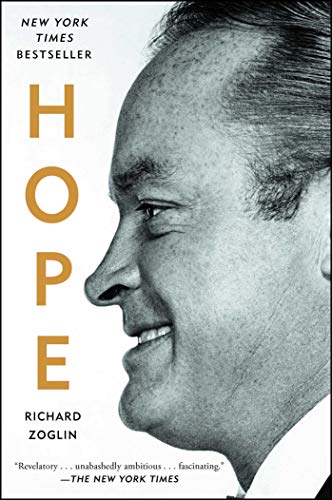
“Revelatory…fascinating” (The New York Times): The first definitive biography of Bob Hope, featuring exclusive and extensive reporting that makes the persuasive case that he was the most important entertainer of the twentieth century.
With his topical jokes and his all-American, brash-but-cowardly screen character, Bob Hope was the only entertainer to achieve top-rated success in every major mass-entertainment medium of the century, from vaudeville in the 1920s all the way to television in the 1950s, 1960s, and 1970s. He virtually invented modern stand-up comedy. Above all, he helped redefine the very notion of what it means to be a star: a savvy businessman, an enterprising builder of his own brand, and a public-spirited entertainer whose Christmas military tours and unflagging work for charity set the standard for public service in Hollywood.
As Richard Zoglin shows in this “entertaining and important book” (The Wall Street Journal), there is still much to be learned about this most public of figures, from his secret first marriage and his stint in reform school, to his indiscriminate womanizing and his ambivalent relationships with Bing Crosby and Johnny Carson. Hope could be cold, self-centered, tight with a buck, and perhaps the least introspective man in Hollywood. But he was also a tireless worker, devoted to his fans, and generous with friends.
“Scrupulously researched, likely definitive, and as entertaining and as important (to an understanding of twentieth- and twenty-first-century pop culture) as its subject once genuinely was” (Vanity Fair), Hope is both a celebration of the entertainer and a complex portrait of a gifted but flawed man. “A wonderful biography,” says Woody Allen. “For me, it’s a feast.”
Die Inhaltsangabe kann sich auf eine andere Ausgabe dieses Titels beziehen.
Über die Autorin bzw. den Autor
Richard Zoglin is a contributor to Time magazine and the author of Hope: Entertainer of the Century, Comedy at the Edge: How Stand-up in the 1970s Changed America, and Elvis in Vegas: How the King Reinvented the Las Vegas Show. A native of Kansas City, Zoglin currently lives in New York City.
Auszug. © Genehmigter Nachdruck. Alle Rechte vorbehalten.
Hope
INTRODUCTION
On a balmy October morning in 2010, one hundred people were gathered on a dock in Battery Park at the foot of Manhattan Island. They were a well-dressed group—the men in jackets and ties, the women in business suits. Many were quite old and needed help climbing into the boat that had been chartered to ferry them across New York Harbor to Ellis Island. Once there, they made their way to the second floor of the cavernous Immigration Museum building, where rows of chairs had been set up in a long, book-lined room, which was about to be dedicated as the Bob Hope Memorial Library.
Linda Hope, the late comedian’s seventy-one-year-old daughter, stepped to the microphone to emcee the ceremony. She introduced the smattering of celebrities on hand—actress Arlene Dahl, baseball legend Yogi Berra, two US congressmen—and several clip reels highlighting Bob’s life and career: his childhood years in England, where he was born in 1903, and Cleveland, Ohio, where he and his family emigrated when he was four and a half; scenes from his movies and TV shows; excerpts from his tours to entertain US troops around the globe. His granddaughter, Miranda, accompanying herself on guitar, sang a folk ballad called “Immigrant Eyes.” Dick Cavett popped up from the audience to tell a couple of impromptu stories about Hope, whom he had befriended in the comedian’s later years. Michael Feinstein, the cabaret singer and musical archivist, closed the event with a wistful solo rendition of Bob’s theme song, “Thanks for the Memory.”
It was another chapter in what has surely been the most determined campaign of legacy building in Hollywood history. A few months before the Ellis Island ceremony, Hope’s family and friends gathered in Washington, DC, to inaugurate a new Hope-centric exhibit on political humor at the Library of Congress, where the comedian’s voluminous letters and papers are stored. A year earlier, the Hope legacy tour made a stop on the deck of the USS Midway in San Diego Harbor to mark the introduction of a postage stamp bearing Hope’s likeness. Memorials to Hope have proliferated across the American landscape. You can walk down streets named for Bob Hope in El Paso, Texas, Miami, Florida, and Branson, Missouri; cross the Cuyahoga River on the Hope Memorial Bridge in Cleveland, Ohio; and bypass the congestion at Los Angeles International by flying into the Bob Hope Airport in Burbank, California. Hope’s name is memorialized on hospitals, theaters, chapels, schools, performing arts centers, and American Legion posts from Miami to Okinawa. The US Air Force named a transport plane for him, and the Navy christened a cargo ship in his honor. Bob Hope Village, in Shalimar, Florida, provides a home for retired members of the Air Force and their surviving spouses. The World Golf Hall of Fame, in St. Augustine, Florida, features an exhibit celebrating Hope’s passion for the game, “Bob Hope: Shanks for the Memory.” A dozen colleges offer scholarships in Hope’s name. Another dozen organizations give out awards in his honor, among them the Air Force’s annual Spirit of Hope Award and the Bob Hope Humanitarian Award, presented by the Academy of Television Arts & Science.
His punchy, two-syllable name, so emblematic of the optimistic American spirit; the unmistakable profile, with its jutting chin and famously ski-slope-shaped nose; the indelible images of Hope performing for throngs of cheering GIs in World War II and Vietnam—it was once impossible to imagine a time when the first question that needed to be answered about the most popular comedian in American history would be: Who was Bob Hope, and why did he matter?
By the time he died—on July 27, 2003, two months after his hundredth birthday—Hope’s reputation was already fading, tarnished, or being actively disparaged. He had, unfortunately, stuck around too long. The comedian of the century, who began his vaudeville career in the 1920s and was still headlining TV specials in the 1990s, continued performing well into his dotage, and a younger generation knew him mainly as a cue-card-reading antique, cracking dated jokes about buxom beauty queens and Gerald Ford’s golf game. “World’s Last Bob Hope Fan Dies of Old Age,” the Onion’s fake headline announced a year before his death. Writer Christopher Hitchens expressed the disaffection of many of the baby-boom generation in an online dismissal of Hope just a few days after his passing: “To be paralyzingly, painfully, hopelessly unfunny is a serious drawback, even lapse, in a comedian. And the late Bob Hope devoted a fantastically successful and well-remunerated lifetime to showing that a truly unfunny man can make it as a comic. There is a laugh here, but it is on us.”
Hope never recovered from the Vietnam years, when his hawkish defense of the war, close ties to President Nixon (who actively courted Hope’s help in selling his Vietnam policies to the American people), and the country-club smugness of his gibes about antiwar protesters and long-haired hippies, all made him a political pariah for the peace-and-love generation. His tours to entertain US troops during World War II had made him a national hero. By the turbulent 1960s, he was a court-approved jester, the Establishment’s comedian—hardly a badge of honor in an era when hipper, more subversive comics, from Mort Sahl and Lenny Bruce to George Carlin and Richard Pryor, were showing that stand-up comedy could be a vehicle for personal expression, social criticism, and political protest. Even before Hope became a doddering relic, he had become an anachronism.
Yet the scope of Hope’s achievement, viewed from the distance of a few years, is almost unimaginable. By nearly any measure, he was the most popular entertainer of the twentieth century, the only one who achieved success—often No. 1–rated success—in every major genre of mass entertainment in the modern era: vaudeville, Broadway, movies, radio, television, popular song, and live concerts. He virtually invented stand-up comedy in the form we know it today. His face, voice, and stage mannerisms (the nose, the lopsided smile, the confident, sashaying walk, and the ever-present golf club) made him more recognizable to more people than any other entertainer since Charlie Chaplin. A tireless stage performer who traveled the country and the world for more than half a century doing live shows for audiences in the thousands, he may well have been seen in person by more people than any other human being in history.
His achievements as an entertainer, however, only hint at the breadth and depth of his impact. For the way he marketed himself, managed his celebrity, cultivated his brand, and converted his show-business fame into a larger, more consequential role for himself on the public stage, Bob Hope was the most important entertainer of the century. Viewed from the largest historical perspective—the way he intersects with the grand themes of the century, from the Greatest Generation’s crusade to preserve democracy in World War II, to the social, political, and cultural upheavals of the 1960s and 1970s—one could argue, without too much exaggeration, that he was the only important entertainer.
His life almost perfectly spanned the century, and to recount his career is to recapitulate the history of modern American show business. He began in vaudeville, first as a song-and-dance man and then as an emcee and comedian, working his way up...
„Über diesen Titel“ kann sich auf eine andere Ausgabe dieses Titels beziehen.
Weitere beliebte Ausgaben desselben Titels

Suchergebnisse für Hope: Entertainer of the Century

Beispielbild für diese ISBN
Hope: Entertainer of the Century
Anbieter: World of Books (was SecondSale), Montgomery, IL, USA
Verkäuferbewertung 5 von 5 Sternen

Zustand: Good. Item in good condition and has highlighting/writing on text. Used texts may not contain supplemental items such as CDs, info-trac etc. Artikel-Nr. 00101485538
Gebraucht kaufen
EUR 3,86
Versand gratis
Versand innerhalb von USA
Versand innerhalb von USA
Anzahl: 1 verfügbar
Beispielbild für diese ISBN
Hope: Entertainer of the Century
Anbieter: World of Books (was SecondSale), Montgomery, IL, USA
Verkäuferbewertung 5 von 5 Sternen
Zustand: Very Good. Item in very good condition! Textbooks may not include supplemental items i.e. CDs, access codes etc. Artikel-Nr. 00101095869
Gebraucht kaufen
EUR 3,86
Versand gratis
Versand innerhalb von USA
Versand innerhalb von USA
Anzahl: 2 verfügbar
Beispielbild für diese ISBN
Hope: Entertainer of the Century
Anbieter: World of Books (was SecondSale), Montgomery, IL, USA
Verkäuferbewertung 5 von 5 Sternen
Zustand: Good. Item in good condition. Textbooks may not include supplemental items i.e. CDs, access codes etc. Artikel-Nr. 00088803119
Gebraucht kaufen
EUR 3,86
Versand gratis
Versand innerhalb von USA
Versand innerhalb von USA
Anzahl: 2 verfügbar
Beispielbild für diese ISBN
Hope : Entertainer of the Century
Anbieter: Better World Books, Mishawaka, IN, USA
Verkäuferbewertung 5 von 5 Sternen
Zustand: Very Good. Reprint. Pages intact with possible writing/highlighting. Binding strong with minor wear. Dust jackets/supplements may not be included. Stock photo provided. Product includes identifying sticker. Better World Books: Buy Books. Do Good. Artikel-Nr. 7953676-6
Gebraucht kaufen
EUR 6,06
Versand gratis
Versand innerhalb von USA
Versand innerhalb von USA
Anzahl: 1 verfügbar
Beispielbild für diese ISBN
Hope : Entertainer of the Century
Anbieter: Better World Books: West, Reno, NV, USA
Verkäuferbewertung 5 von 5 Sternen
Zustand: Good. Reprint. Former library copy. Pages intact with minimal writing/highlighting. The binding may be loose and creased. Dust jackets/supplements are not included. Includes library markings. Stock photo provided. Product includes identifying sticker. Better World Books: Buy Books. Do Good. Artikel-Nr. 8668374-75
Gebraucht kaufen
EUR 6,06
Versand gratis
Versand innerhalb von USA
Versand innerhalb von USA
Anzahl: 1 verfügbar
Beispielbild für diese ISBN
Hope: Entertainer of the Century
Verlag:
Simon & Schuster (edition Reprint), 2015
ISBN 10: 1439140286
ISBN 13: 9781439140284
Gebraucht
Paperback
Anbieter: BooksRun, Philadelphia, PA, USA
Verkäuferbewertung 5 von 5 Sternen
Paperback. Zustand: Good. Reprint. It's a preowned item in good condition and includes all the pages. It may have some general signs of wear and tear, such as markings, highlighting, slight damage to the cover, minimal wear to the binding, etc., but they will not affect the overall reading experience. Artikel-Nr. 1439140286-11-6
Gebraucht kaufen
EUR 6,18
Versand gratis
Versand innerhalb von USA
Versand innerhalb von USA
Anzahl: 1 verfügbar
Beispielbild für diese ISBN
Hope: Entertainer of the Century
Anbieter: ThriftBooks-Atlanta, AUSTELL, GA, USA
Verkäuferbewertung 5 von 5 Sternen
Paperback. Zustand: Very Good. No Jacket. May have limited writing in cover pages. Pages are unmarked. ~ ThriftBooks: Read More, Spend Less. Artikel-Nr. G1439140286I4N00
Gebraucht kaufen
EUR 6,31
Versand gratis
Versand innerhalb von USA
Versand innerhalb von USA
Anzahl: 1 verfügbar
Beispielbild für diese ISBN
Hope: Entertainer of the Century
Anbieter: Wonder Book, Frederick, MD, USA
Verkäuferbewertung 5 von 5 Sternen
Zustand: Very Good. Very Good condition. With remainder mark. A copy that may have a few cosmetic defects. May also contain light spine creasing or a few markings such as an owner's name, short gifter's inscription or light stamp. Bundled media such as CDs, DVDs, floppy disks or access codes may not be included. Artikel-Nr. T05D-01771
Gebraucht kaufen
EUR 6,83
Versand gratis
Versand innerhalb von USA
Versand innerhalb von USA
Anzahl: 2 verfügbar
Beispielbild für diese ISBN
Hope : Entertainer of the Century
Anbieter: Better World Books Ltd, Dunfermline, Vereinigtes Königreich
Verkäuferbewertung 5 von 5 Sternen
Zustand: Very Good. Reprint. Former library copy. Pages intact with possible writing/highlighting. Binding strong with minor wear. Dust jackets/supplements may not be included. Includes library markings. Stock photo provided. Product includes identifying sticker. Better World Books: Buy Books. Do Good. Artikel-Nr. 8971173-20
Gebraucht kaufen
EUR 5,42
EUR 5,73 Versand
Versand von Vereinigtes Königreich nach USA
Versand von Vereinigtes Königreich nach USA
Anzahl: 1 verfügbar
Beispielbild für diese ISBN
Hope : Entertainer of the Century
Anbieter: Better World Books Ltd, Dunfermline, Vereinigtes Königreich
Verkäuferbewertung 5 von 5 Sternen
Zustand: Good. Reprint. Former library copy. Pages intact with minimal writing/highlighting. The binding may be loose and creased. Dust jackets/supplements are not included. Includes library markings. Stock photo provided. Product includes identifying sticker. Better World Books: Buy Books. Do Good. Artikel-Nr. 8668374-75
Gebraucht kaufen
EUR 5,42
EUR 5,73 Versand
Versand von Vereinigtes Königreich nach USA
Versand von Vereinigtes Königreich nach USA
Anzahl: 2 verfügbar