
Verwandte Artikel zu Nora Webster: A Novel
Inhaltsangabe
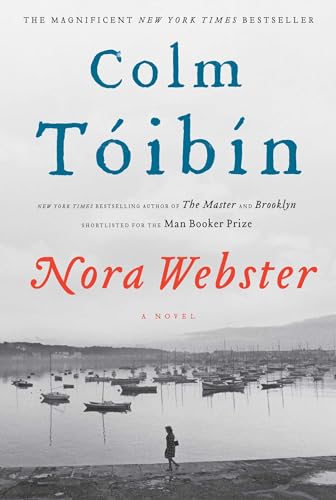
From one of contemporary literature’s bestselling, critically acclaimed and beloved authors, the magnificent, instant New York Times bestselling novel set in Ireland, about a fiercely compelling young widow and mother of four, navigating grief and fear, struggling for hope.
Set in Wexford, Ireland, Colm Tóibín’s superb seventh novel introduces the formidable, memorable and deeply moving Nora Webster. Widowed at forty, with four children and not enough money, Nora has lost the love of her life, Maurice, the man who rescued her from the stifling world to which she was born. And now she fears she may be drawn back into it. Wounded, strong-willed, clinging to secrecy in a tiny community where everyone knows your business, Nora is drowning in her own sorrow and blind to the suffering of her young sons, who have lost their father. Yet she has moments of stunning empathy and kindness, and when she begins to sing again, after decades, she finds solace, engagement, a haven—herself.
Nora Webster is a masterpiece in character study by a writer at the zenith of his career, “beautiful and daring” (The New York Times Book Review) and able to “sneak up on readers and capture their imaginations” (USA TODAY). In Nora Webster, Tóibín has created a character as iconic, engaging and memorable as Madame Bovary or Hedda Gabler.
Die Inhaltsangabe kann sich auf eine andere Ausgabe dieses Titels beziehen.
Über die Autorin bzw. den Autor
Colm Tóibín is the author of ten novels, including The Magician, winner of the Rathbones Folio Prize; The Master, winner of the Los Angeles Times Book Prize; Brooklyn, winner of the Costa Book Award; The Testament of Mary; and Nora Webster, as well as two story collections and several books of criticism. He is the Irene and Sidney B. Silverman Professor of the Humanities at Columbia University and has been named as the Laureate for Irish Fiction for 2022–2024 by the Arts Council of Ireland. Three times shortlisted for the Booker Prize, Tóibín lives in Dublin and New York.
Auszug. © Genehmigter Nachdruck. Alle Rechte vorbehalten.
Nora Webster
CHAPTER ONE
“You must be fed up of them. Will they never stop coming?” Tom O’Connor, her neighbour, stood at his front door and looked at her, waiting for a response.
“I know,” she said.
“Just don’t answer the door. That’s what I’d do.”
Nora closed the garden gate.
“They mean well. People mean well,” she said.
“Night after night,” he said. “I don’t know how you put up with it.”
She wondered if she could get back into the house without having to answer him again. He was using a new tone with her, a tone he would never have tried before. He was speaking as though he had some authority over her.
“People mean well,” she said again, but saying it this time made her feel sad, made her bite her lip to keep the tears back. When she caught Tom O’Connor’s eye, she knew that she must have appeared put down, defeated. She went into the house.
That night a knock came at almost eight o’clock. There was a fire lighting in the back room and the two boys were doing their homework at the table.
“You answer it,” Donal said to Conor.
“No, you do.”
“One of you answer it,” she said.
Conor, the younger one, went out to the hall. She could hear a voice when he opened the door, a woman’s voice, but not one that she recognised. Conor ushered the visitor into the front room.
“It’s the little woman who lives in Court Street,” he whispered to her when he came into the back room.
“Which little woman?” she asked.
“I don’t know.”
May Lacey shook her head sadly when Nora came into the front room.
“Nora, I waited until now. I can’t tell you how sorry I am about Maurice.”
She reached out and held Nora’s hand.
“And he was so young. I knew him when he was a little boy. We knew them all in Friary Street.”
“Take off your coat and come into the back room,” Nora said. “The boys are doing their exercise, but they can move in here and turn on the electric fire. They’ll be going to bed soon anyway.”
May Lacey, wisps of thin grey hair appearing from under her hat, her scarf still around her neck, sat opposite Nora in the back room and began to talk. After a while, the boys went upstairs; Conor, when Nora called him, was too shy to come down and say good night, but soon Donal came and sat in the room with them, carefully studying May Lacey, saying nothing.
It was clear now that no one else would call. Nora was relieved that she would not have to entertain people who did not know each other, or people who did not like each other.
“So anyway,” May Lacey went on, “Tony was in the hospital bed in Brooklyn, and didn’t this man arrive into the bed beside his, and they got talking, and Tony knew he was Irish, and he told him his wife was from the County Wexford.”
She stopped and pursed her lips, as though she was trying to remember something. Suddenly, she began to imitate a man’s voice: “Oh, and that’s where I’m from, the man said, and then Tony said she was from Enniscorthy, oh and that’s where I’m from too, the man said. And he asked Tony what part of Enniscorthy she was from, and Tony said she was from Friary Street.”
May Lacey kept her eyes fixed on Nora’s face, forcing her to express interest and surprise.
“And the man said that’s where I’m from too. Isn’t that extraordinary!”
She stopped, waiting for a reply.
“And he told Tony that before he left the town he made that iron thing—what would you call it?—a grille or a guard on the windowsill there at Gerry Crane’s. And I went down to look at it and it’s there all right. Gerry didn’t know how it got there or when. But the man beside Tony in the bed in Brooklyn, he said that he made it, he was a welder. Isn’t that a coincidence? To happen in Brooklyn.”
Nora made tea as Donal went to bed. She brought it into the back room on a tray with biscuits and cake. When they had fussed over the tea things, May Lacey sipped her tea and began to talk again.
“Of course, all of mine thought the world of Maurice. They always asked for him in their letters. He was friends with Jack before Jack left. And of course Maurice was a great teacher. The boys looked up to him. I always heard that said.”
Looking into the fire, Nora tried to think back, wondering if May Lacey had ever been in this house before. She thought not. She had known her all her life, like so many in the town, to greet and exchange pleasantries with, or to stop and talk to if there was news. She knew the story of her life down to her maiden name and the plot in the graveyard where she would be buried. Nora had heard her singing once at a concert, she remembered her reedy soprano—it was “Home Sweet Home” or “Oft in the Stilly Night,” one of those songs.
She did not think that May Lacey went out much except to the shops, or to mass on Sundays.
They were silent now, and Nora thought that maybe May would go soon.
“It’s nice of you to come up and see me,” she said.
“Oh, Nora, I was very sorry for you, but I felt I’d wait, I didn’t want to be crowding in on you.”
She refused more tea, and when Nora went to the kitchen with the tray she thought that May might stand up and put on her coat, but she did not move from the chair. Nora went upstairs and checked that the boys were asleep. She smiled to herself at the thought of going to bed herself now, falling asleep and leaving May Lacey down below, staring into the fire, waiting for her in vain.
“Where are the girls?” May asked as soon as Nora sat down. “I never see them now, they used to pass up and down all the time.”
“Aine is in school in Bunclody. She’s settling in there now,” Nora said. “And Fiona is doing her teacher training in Dublin.”
“You’d miss them when they go away,” May Lacey said. “I miss them all, I do, but it’s funny, of all of them, it’s Eily I think about most, although I miss Jack too. There was something, I don’t know, I just didn’t want to lose Eily. I thought after Rose died—you know all this, Nora—that she would come home and stay and she’d find some sort of job here, and then one day when she was just back a week or two I noticed her all quiet and it wasn’t like her, and she started to cry at the table, and that’s when we heard the news that her fellow in New York wouldn’t let her come home unless she married him. And she had married him there without telling any of us. ‘Well, that’s that, Eily, then,’ I said. ‘You’ll have to go back to him, so.’ And I couldn’t face her or speak to her, and she sent me photographs of him and her together in New York, but I couldn’t look at them. They were the last thing in the world I wanted to see. But I was always sorry she didn’t stay.”
“Yes, I was sorry to hear that she went back, but maybe she’s happy there,” Nora said and immediately wondered, as May Lacey looked down...
„Über diesen Titel“ kann sich auf eine andere Ausgabe dieses Titels beziehen.
Suchergebnisse für Nora Webster: A Novel

Beispielbild für diese ISBN
Nora Webster
Anbieter: World of Books (was SecondSale), Montgomery, IL, USA
Verkäuferbewertung 5 von 5 Sternen

Zustand: Acceptable. Item in acceptable condition! Textbooks may not include supplemental items i.e. CDs, access codes etc. Artikel-Nr. 00099002288
Gebraucht kaufen
EUR 3,68
Versand gratis
Versand innerhalb von USA
Versand innerhalb von USA
Anzahl: 2 verfügbar
Beispielbild für diese ISBN
Nora Webster
Anbieter: World of Books (was SecondSale), Montgomery, IL, USA
Verkäuferbewertung 5 von 5 Sternen
Zustand: Very Good. Item in very good condition! Textbooks may not include supplemental items i.e. CDs, access codes etc. Artikel-Nr. 00103437017
Gebraucht kaufen
EUR 3,68
Versand gratis
Versand innerhalb von USA
Versand innerhalb von USA
Anzahl: 5 verfügbar
Beispielbild für diese ISBN
Nora Webster
Anbieter: World of Books (was SecondSale), Montgomery, IL, USA
Verkäuferbewertung 5 von 5 Sternen
Zustand: Good. Item in good condition. Textbooks may not include supplemental items i.e. CDs, access codes etc. Artikel-Nr. 00098483607
Gebraucht kaufen
EUR 3,68
Versand gratis
Versand innerhalb von USA
Versand innerhalb von USA
Anzahl: 11 verfügbar
Beispielbild für diese ISBN
Nora Webster: A Novel
Verlag:
Scribner (edition First Edition), 2014
ISBN 10: 1439138338
ISBN 13: 9781439138335
Gebraucht
Hardcover
Erstausgabe
Anbieter: BooksRun, Philadelphia, PA, USA
Verkäuferbewertung 5 von 5 Sternen
Hardcover. Zustand: Very Good. First Edition. With dust jacket. It's a well-cared-for item that has seen limited use. The item may show minor signs of wear. All the text is legible, with all pages included. It may have slight markings and/or highlighting. Artikel-Nr. 1439138338-11-1-29
Gebraucht kaufen
EUR 5,79
Versand gratis
Versand innerhalb von USA
Versand innerhalb von USA
Anzahl: 1 verfügbar
Beispielbild für diese ISBN
Nora Webster
Anbieter: ThriftBooks-Atlanta, AUSTELL, GA, USA
Verkäuferbewertung 5 von 5 Sternen
Hardcover. Zustand: Good. No Jacket. Former library book; Pages can have notes/highlighting. Spine may show signs of wear. ~ ThriftBooks: Read More, Spend Less. Artikel-Nr. G1439138338I3N10
Gebraucht kaufen
EUR 5,95
Versand gratis
Versand innerhalb von USA
Versand innerhalb von USA
Anzahl: 1 verfügbar
Beispielbild für diese ISBN
Nora Webster
Anbieter: ThriftBooks-Atlanta, AUSTELL, GA, USA
Verkäuferbewertung 5 von 5 Sternen
Hardcover. Zustand: Good. No Jacket. Missing dust jacket; Pages can have notes/highlighting. Spine may show signs of wear. ~ ThriftBooks: Read More, Spend Less. Artikel-Nr. G1439138338I3N01
Gebraucht kaufen
EUR 5,95
Versand gratis
Versand innerhalb von USA
Versand innerhalb von USA
Anzahl: 1 verfügbar
Beispielbild für diese ISBN
Nora Webster
Anbieter: ThriftBooks-Atlanta, AUSTELL, GA, USA
Verkäuferbewertung 5 von 5 Sternen
Hardcover. Zustand: Very Good. No Jacket. Former library book; May have limited writing in cover pages. Pages are unmarked. ~ ThriftBooks: Read More, Spend Less. Artikel-Nr. G1439138338I4N10
Gebraucht kaufen
EUR 5,95
Versand gratis
Versand innerhalb von USA
Versand innerhalb von USA
Anzahl: 1 verfügbar
Beispielbild für diese ISBN
Nora Webster
Anbieter: ThriftBooks-Dallas, Dallas, TX, USA
Verkäuferbewertung 5 von 5 Sternen
Hardcover. Zustand: Good. No Jacket. Missing dust jacket; Pages can have notes/highlighting. Spine may show signs of wear. ~ ThriftBooks: Read More, Spend Less. Artikel-Nr. G1439138338I3N01
Gebraucht kaufen
EUR 5,95
Versand gratis
Versand innerhalb von USA
Versand innerhalb von USA
Anzahl: 1 verfügbar
Beispielbild für diese ISBN
Nora Webster: A Novel
Verlag:
Scribner (edition First Edition), 2014
ISBN 10: 1439138338
ISBN 13: 9781439138335
Gebraucht
Hardcover
Erstausgabe
Anbieter: BooksRun, Philadelphia, PA, USA
Verkäuferbewertung 5 von 5 Sternen
Hardcover. Zustand: Very Good. First Edition. With dust jacket. It's a well-cared-for item that has seen limited use. The item may show minor signs of wear. All the text is legible, with all pages included. It may have slight markings and/or highlighting. Artikel-Nr. 1439138338-11-18-29
Gebraucht kaufen
EUR 6,10
Versand gratis
Versand innerhalb von USA
Versand innerhalb von USA
Anzahl: 1 verfügbar
Beispielbild für diese ISBN
Nora Webster : A Novel
Anbieter: Better World Books, Mishawaka, IN, USA
Verkäuferbewertung 5 von 5 Sternen
Zustand: Good. 1st. Pages intact with minimal writing/highlighting. The binding may be loose and creased. Dust jackets/supplements are not included. Stock photo provided. Product includes identifying sticker. Better World Books: Buy Books. Do Good. Artikel-Nr. GRP97444232
Gebraucht kaufen
EUR 6,13
Versand gratis
Versand innerhalb von USA
Versand innerhalb von USA
Anzahl: 6 verfügbar