
Verwandte Artikel zu Sing You Home: A Novel
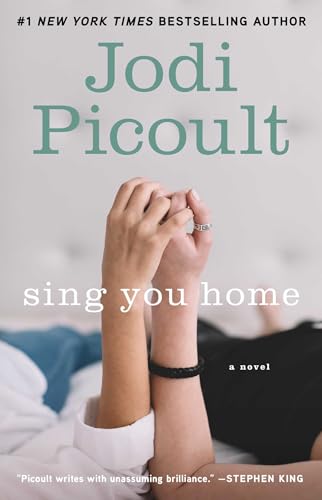
Inhaltsangabe
From the award-winning, #1 New York Times bestselling author whom USA TODAY calls a “master of the page-turner,” comes the spectacular story of a woman’s complex quest to form a family in this moving novel about love, marriage, identity, and parenthood.
Every life has a soundtrack. All you have to do is listen.
Music has set the tone for most of Zoe Baxter’s life. There’s the melody that reminds her of the summer she spent rubbing baby oil on her stomach in pursuit of the perfect tan. A dance beat that makes her think of using a fake ID to slip into a nightclub. A dirge that marked the years she spent trying to get pregnant.
For better or for worse, music is the language of memory. It is also the language of love.
In the aftermath of a series of personal tragedies, Zoe throws herself into her career as a music therapist. When an unexpected friendship slowly blossoms into love, she makes plans for a new life, but to her shock and inevitable rage, some people—even those she loves and trusts most—don’t want that to happen.
Sing You Home is about identity, love, marriage, and parenthood. It’s about fertility, LGBTQ+ rights, same-sex marriage, and people wanting to do the right thing for the greater good, even as they work to fulfill their own personal desires and dreams. And it’s about what happens when the outside world brutally calls into question the very thing closest to our hearts: family.
Die Inhaltsangabe kann sich auf eine andere Ausgabe dieses Titels beziehen.
Über die Autorin bzw. den Autor
Jodi Picoult received an AB in creative writing from Princeton and a master’s degree in education from Harvard. The recipient of the 2003 New England Book Award for her entire body of work, she is the author of twenty-seven novels, including the #1 New York Times bestsellers House Rules, Handle With Care, Change of Heart, and My Sister’s Keeper, for which she received the American Library Association’s Margaret A. Edwards Award. She lives in New Hampshire with her husband and three children. Visit her website at JodiPicoult.com.
Auszug. © Genehmigter Nachdruck. Alle Rechte vorbehalten.
ZOE
One sunny, crisp Saturday in September when I was seven years old, I watched my father drop dead. I was playing with my favorite doll on the stone wall that bordered our driveway while he mowed the lawn. One minute he was mowing, and the next, he was facefirst in the grass as the mower propelled itself in slow motion down the hill of our backyard.
I thought at first he was sleeping, or playing a game. But when I crouched beside him on the lawn, his eyes were still open. Damp cut grass stuck to his forehead.
I don’t remember calling for my mother, but I must have.
When I think about that day, it is in slow motion. The mower, walking alone. The carton of milk my mother was carrying when she ran outside, which dropped to the tarred driveway. The sound of round vowels as my mother screamed into the phone to give our address to the ambulance.
My mother left me at the neighbor’s house while she went to the hospital. The neighbor was an old woman whose couch smelled like pee. She offered me chocolate-covered peppermints that were so old the chocolate had turned white at the edges. When her telephone rang I wandered into the backyard and crawled behind a row of hedges. In the soft mulch, I buried my doll and walked away.
My mother never noticed that it was gone—but then, it barely seemed that she acknowledged my father being gone, either. She never cried. She stood stiff-backed through my father’s funeral. She sat across from me at the kitchen table that I still sometimes set with a third place for my father, as we gradually ate our way through chipped beef casserole and mac-and-cheese-and-franks, sympathy platters from my father’s colleagues and neighbors who hoped food could make up for the fact that they didn’t know what to say. When a robust, healthy forty-two-year-old dies of a massive heart attack, the grieving family is suddenly contagious. Come too close, and you might catch our bad luck.
Six months after my father died, my mother—still stoic—took his suits and shirts out of the closet they shared and brought them to Goodwill. She asked the liquor store for boxes, and she packed away the biography that he had been reading, which had been on the nightstand all this time; and his pipe, and his coin collection. She did not pack away his Abbott and Costello videos, although she always had told my father that she never really understood what made them funny.
My mother carried these boxes to the attic, a place that seemed to trap cluster flies and heat. On her third trip up, she didn’t come back. Instead, what floated downstairs was a silly, fizzy refrain piped through the speakers of an old record player. I could not understand all the words, but it had something to do with a witch doctor telling someone how to win the heart of a girl.
Ooo eee ooo ah ah, ting tang, walla walla, bing bang, I heard. It made a laugh bubble up in my chest, and since I hadn’t laughed all that much lately, I hurried to the source.
When I stepped into the attic, I found my mother weeping. “This record,” she said, playing it over again. “It made him so happy.”
I knew better than to ask why, then, she was sobbing. Instead, I curled up beside her and listened to the song that had finally given my mother permission to cry.
Every life has a soundtrack.
There is a tune that makes me think of the summer I spent rubbing baby oil on my stomach in pursuit of the perfect tan. There’s another that reminds me of tagging along with my father on Sunday mornings to pick up the New York Times. There’s the song that reminds me of using fake ID to get into a nightclub; and the one that brings back my cousin Isobel’s sweet sixteen, where I played Seven Minutes in Heaven with a boy whose breath smelled like tomato soup.
If you ask me, music is the language of memory.
Wanda, the shift nurse at Shady Acres Assisted Living, hands me a visitor pass, although I’ve been coming to the nursing home for the past year to work with various clients. “How is he today?” I ask.
“The usual,” Wanda says. “Swinging from the chandelier and entertaining the masses with a combination of tap dancing and shadow puppets.”
I grin. Mr. Docker is in the final throes of dementia. In the twelve months I’ve been his music therapist, he’s interacted with me twice. Most of the time, he sits in his bed or a wheelchair, staring through me, completely unresponsive.
When I tell people I am a music therapist, they think it means I play guitar for people who are in the hospital—that I’m a performer. Actually, I’m more like a physical therapist, except instead of using treadmills and grab bars as tools, I use music. When I tell people that, they usually dismiss my job as some New Age BS.
In fact, it’s very scientific. In brain scans, music lights up the medial prefrontal cortex and triggers a memory that starts playing in your mind. All of a sudden you can see a place, a person, an incident. The strongest responses to music—the ones that elicit vivid memories—cause the greatest activity on brain scans. It’s for this reason that stroke patients can access lyrics before they remember language, why Alzheimer’s patients can still remember songs from their youth.
And why I haven’t given up on Mr. Docker yet.
“Thanks for the warning,” I tell Wanda, and I pick up my duffel, my guitar, and my djembe.
“Put those down,” she insists. “You’re not supposed to be carrying anything heavy.”
“Then I’d better get rid of this,” I say, touching my belly. In my twenty-eighth week, I’m enormous—and I’m also completely lying. I worked way too hard to have this baby to feel like any part of the pregnancy is a burden. I give Wanda a wave and head down the hall to start today’s session.
Usually my nursing home clients meet in a group setting, but Mr. Docker is a special case. A former CEO of a Fortune 500 company, he now lives in this very chic elder-care facility, and his daughter Mim contracts my services for weekly sessions. He’s just shy of eighty, has a lion’s mane of white hair and gnarled hands that apparently used to play a mean jazz piano.
The last time Mr. Docker gave any indication that he was aware I shared the same physical space as him was two months ago. I’d been playing my guitar, and he smacked his fist against the handle of his wheelchair twice. I am not sure if he wanted to chime in for good measure or was trying to tell me to stop—but he was in rhythm.
I knock and open the door. “Mr. Docker?” I say. “It’s Zoe. Zoe Baxter. You feel like playing a little music?”
Someone on staff has moved him to an armchair, where he sits looking out the window. Or maybe just through it—he’s not focusing on anything. His hands are curled in his lap like lobster claws.
“Right!” I say briskly, trying to maneuver myself around the bed and the television stand and the table with his untouched breakfast. “What should we sing today?” I wait a beat but am not really expecting an answer. “‘You Are My Sunshine’?” I ask. “‘Tennessee Waltz’?” I try to extract my guitar from its case in a small space beside the bed, which is not really big enough for my instrument and my pregnancy. Settling the guitar awkwardly on top of my belly, I start to strum a few chords. Then, on second thought, I put it down.
I rummage through the duffel bag for a maraca—I have all sorts of small instruments in there, for opportunities just...
„Über diesen Titel“ kann sich auf eine andere Ausgabe dieses Titels beziehen.
Suchergebnisse für Sing You Home: A Novel

Beispielbild für diese ISBN
Sing You Home
Anbieter: World of Books (was SecondSale), Montgomery, IL, USA
Verkäuferbewertung 5 von 5 Sternen

Zustand: Acceptable. Item in acceptable condition! Textbooks may not include supplemental items i.e. CDs, access codes etc. Artikel-Nr. 00083690956
Gebraucht kaufen
EUR 3,59
Versand gratis
Versand innerhalb von USA
Versand innerhalb von USA
Anzahl: 12 verfügbar
Beispielbild für diese ISBN
Sing You Home
Anbieter: World of Books (was SecondSale), Montgomery, IL, USA
Verkäuferbewertung 5 von 5 Sternen
Zustand: Very Good. Item in very good condition! Textbooks may not include supplemental items i.e. CDs, access codes etc. Artikel-Nr. 00106219793
Gebraucht kaufen
EUR 3,59
Versand gratis
Versand innerhalb von USA
Versand innerhalb von USA
Anzahl: 8 verfügbar
Beispielbild für diese ISBN
Sing You Home
Anbieter: World of Books (was SecondSale), Montgomery, IL, USA
Verkäuferbewertung 5 von 5 Sternen
Zustand: Good. Item in good condition. Textbooks may not include supplemental items i.e. CDs, access codes etc. Artikel-Nr. 00069566077
Gebraucht kaufen
EUR 3,59
Versand gratis
Versand innerhalb von USA
Versand innerhalb von USA
Anzahl: Mehr als 20 verfügbar
Beispielbild für diese ISBN
Sing You Home
Anbieter: ThriftBooks-Phoenix, Phoenix, AZ, USA
Verkäuferbewertung 5 von 5 Sternen
Paperback. Zustand: Very Good. No Jacket. May have limited writing in cover pages. Pages are unmarked. ~ ThriftBooks: Read More, Spend Less. Artikel-Nr. G1439102732I4N00
Gebraucht kaufen
EUR 5,77
Versand gratis
Versand innerhalb von USA
Versand innerhalb von USA
Anzahl: 4 verfügbar
Beispielbild für diese ISBN
Sing You Home
Anbieter: ThriftBooks-Reno, Reno, NV, USA
Verkäuferbewertung 5 von 5 Sternen
Paperback. Zustand: Very Good. No Jacket. May have limited writing in cover pages. Pages are unmarked. ~ ThriftBooks: Read More, Spend Less. Artikel-Nr. G1439102732I4N00
Gebraucht kaufen
EUR 5,77
Versand gratis
Versand innerhalb von USA
Versand innerhalb von USA
Anzahl: 4 verfügbar
Beispielbild für diese ISBN
Sing You Home
Anbieter: ThriftBooks-Atlanta, AUSTELL, GA, USA
Verkäuferbewertung 5 von 5 Sternen
Paperback. Zustand: Very Good. No Jacket. May have limited writing in cover pages. Pages are unmarked. ~ ThriftBooks: Read More, Spend Less. Artikel-Nr. G1439102732I4N00
Gebraucht kaufen
EUR 5,77
Versand gratis
Versand innerhalb von USA
Versand innerhalb von USA
Anzahl: 4 verfügbar
Beispielbild für diese ISBN
Sing You Home
Anbieter: ThriftBooks-Dallas, Dallas, TX, USA
Verkäuferbewertung 5 von 5 Sternen
Paperback. Zustand: Very Good. No Jacket. May have limited writing in cover pages. Pages are unmarked. ~ ThriftBooks: Read More, Spend Less. Artikel-Nr. G1439102732I4N00
Gebraucht kaufen
EUR 5,77
Versand gratis
Versand innerhalb von USA
Versand innerhalb von USA
Anzahl: 5 verfügbar
Beispielbild für diese ISBN
Sing You Home
Verlag:
Atria Books (edition First Edition), 2011
ISBN 10: 1439102732
ISBN 13: 9781439102732
Gebraucht
Paperback
Erstausgabe
Anbieter: BooksRun, Philadelphia, PA, USA
Verkäuferbewertung 5 von 5 Sternen
Paperback. Zustand: Very Good. First Edition. It's a well-cared-for item that has seen limited use. The item may show minor signs of wear. All the text is legible, with all pages included. It may have slight markings and/or highlighting. Artikel-Nr. 1439102732-11-1
Gebraucht kaufen
EUR 5,81
Versand gratis
Versand innerhalb von USA
Versand innerhalb von USA
Anzahl: 1 verfügbar
Beispielbild für diese ISBN
Sing You Home : A Novel
Verlag:
Atria/Emily Bestler Books, 2011
ISBN 10: 1439102732
ISBN 13: 9781439102732
Gebraucht
Softcover
Anbieter: Better World Books: West, Reno, NV, USA
Verkäuferbewertung 5 von 5 Sternen
Zustand: Good. Reprint. Former library copy. Pages intact with minimal writing/highlighting. The binding may be loose and creased. Dust jackets/supplements are not included. Includes library markings. Stock photo provided. Product includes identifying sticker. Better World Books: Buy Books. Do Good. Artikel-Nr. 4780659-6
Gebraucht kaufen
EUR 5,98
Versand gratis
Versand innerhalb von USA
Versand innerhalb von USA
Anzahl: 6 verfügbar
Beispielbild für diese ISBN
Sing You Home : A Novel
Verlag:
Atria/Emily Bestler Books, 2011
ISBN 10: 1439102732
ISBN 13: 9781439102732
Gebraucht
Softcover
Anbieter: Better World Books: West, Reno, NV, USA
Verkäuferbewertung 5 von 5 Sternen
Zustand: Good. Reprint. Pages intact with minimal writing/highlighting. The binding may be loose and creased. Dust jackets/supplements are not included. Stock photo provided. Product includes identifying sticker. Better World Books: Buy Books. Do Good. Artikel-Nr. GRP76412399
Gebraucht kaufen
EUR 5,98
Versand gratis
Versand innerhalb von USA
Versand innerhalb von USA
Anzahl: 5 verfügbar