
Verwandte Artikel zu The Son of God and the New Creation (Short Studies...
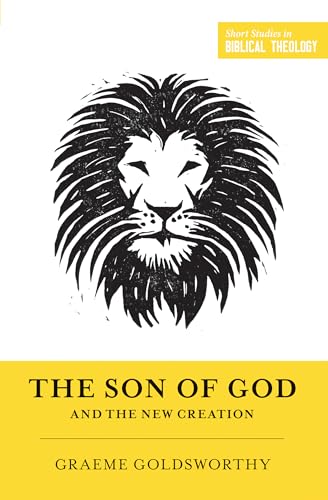
Inhaltsangabe
A renowned Bible scholar traces the theme of divine sonship through both the Old and New Testaments, highlighting Jesus’s identity as the ultimate “Son of God” and his role in launching the new creation.
Die Inhaltsangabe kann sich auf eine andere Ausgabe dieses Titels beziehen.
Über die Autorin bzw. den Autor
Graeme Goldsworthy (PhD, Union Theological Seminary) previously served as a lecturer in biblical theology, Old Testament, and hermeneutics at Moore Theological College in Sydney, Australia. Graeme lives in Brisbane, Australia, with his wife, Miriam. They have four adult children.
Dane C. Ortlund (PhD, Wheaton College) serves as senior pastor of Naperville Presbyterian Church in Naperville, Illinois. He is the author of Gentle and Lowly: The Heart of Christ for Sinners and Sufferers and Deeper: Real Change for Real Sinners. Dane and his wife, Stacey, have five children.
Miles V. Van Pelt (PhD, The Southern Baptist Theological Seminary) is the Alan Belcher Professor of Old Testament and Biblical Languages, academic dean, and director of the Summer Institute for Biblical Languages at Reformed Theological Seminary, Jackson. He also serves on the pastoral staff of Grace Reformed Church in Madison, Mississippi. He and his wife, Laurie, have four children.
Auszug. © Genehmigter Nachdruck. Alle Rechte vorbehalten.
The Son of God And the New Creation
By Graeme GoldsworthyGood News Publishers
Copyright © 2015 Graeme Goldsworthy
All rights reserved.
ISBN: 978-1-4335-5631-9All rights reserved.
Contents
Series Preface,
Introduction,
1 Thematic Studies: A Biblical-Theological Approach,
2 Jesus the Son of God: The New Testament Testimony,
3 Adam the Son of God: The Old Testament Testimony,
4 Son of God and Sons of God,
For Further Reading,
General Index,
Scripture Index,
CHAPTER 1
Thematic Studies
A Biblical-Theological Approach
The Bible begins in Genesis 1 and 2 with creation and ends in Revelation 21 and 22 with the new creation. That is the simple and direct way of describing the two ends of the biblical story. Between these "bookends," in the story from Genesis 3 through to Revelation 20, we have the account of the fall of mankind, the consequent corruption of the universe, and the gracious work of God to redeem the situation.
Alpha and Omega: Christ and Creation
At the heart of this redemptive history is the towering figure of Jesus and his saving work through his birth, life, death, resurrection, and ascension. It is remarkable that one of the last words from the ascended Jesus himself is this self-description:
I, Jesus, have sent my angel to testify to you about these things for the churches. I am the root and the descendant of David, the bright morning star. (Rev. 22:16)
The testimony for the churches in these last days concerns Jesus as the Son of David. Why? After all, Scripture also testifies to the fact that Jesus our Savior is God from all eternity, the second person of the Trinity. Why, then, does Jesus focus on his human lineage as one of his last words in the great narrative of salvation?
A little before this, in Revelation 22:13, he has taken to himself the title of "Alpha and Omega," previously applied to God in Revelation 1:8 and 21:6. Clearly, these two perspectives mean that we cannot avoid the fact that Jesus is true man and true God. Nor can we avoid the fact that we can never separate these two realities: Jesus goes on being identified as the God-man right through the redemptive story and into its eternal conclusion. In this study we will see this truth as it is revealed in the progress of the story from creation to new creation. At the heart of this story is Jesus, who is called the "Son of God." In this study we shall see specifically how the Son of God is the author and mediator of a new creation.
There is a tendency among evangelical Christians to understand new creation in terms of individual regeneration, or new birth, as a purely personal experience relating to our conversion to Christ. If the broader new creation is thought of at all, it is often as something quite separated from our new birth. We think of new birth as a present reality and new creation as a future one. This separation is, I believe, a mistake. We may distinguish the two events, but we should not separate them. This, I trust, will become clearer as we pursue our study of "son of God."
Words and Meanings
"You are the Christ, the Son of the living God" (Matt. 16:16). Peter's confession received commendation from Jesus as having been revealed to him by "my Father who is in heaven" (v. 17).
Many Christians have formed some ideas about the meaning of the title "Christ." It is a Greek translation of the Hebrew word for "messiah," yet for many people it is just a label. But the title "son of God" seems to convey the idea that Jesus has a special relationship to God and that he may even be God himself. What should the title "Son of God" mean to you and me as it is applied to Jesus in the New Testament? What did Peter understand by "the Son of the living God," and what was revealed to him by the Father in heaven? Did he mean by it the same as "son of God"?
The title "Son of God" clearly indicates a special relationship between Jesus and God the Father. At first it might seem reasonable to take this title as an indication of the Son's deity, the more so when we reflect on the fact that another title Jesus frequently applied to himself was "Son of Man." On the surface the latter would seem most obviously to mean simply that he was human, since that is the literal meaning of the term.
But things are not always what they seem to be on first sight. This understandable assigning of meanings to the two titles at least has this to commend it: it seems to provide a way of engaging with the historic confession of the Christian church that Jesus is both truly God and truly man. Yet, for many, this understanding of Jesus having two seemingly incompatible natures is a difficulty and even a stumbling block. It seems to fly in the face of simple, rational logic to say that one and the same person can embrace two such complete but different natures in a way that compromises neither of them. The problem doesn't stop there. A school chaplain was once asked by a student, "If Jesus is God, who looked after things up there while he was down here?" Once we start to investigate the two natures of Jesus, the doctrine of the Trinity also comes into view. In fact, we could say that the gospel drives us toward the confession that God is triune. We confess that God is one, yet the Father is not the Son, and the Son is not the Father. Then we compound the problem by including the Holy Spirit, who is neither the Father nor the Son. Yet we are talking about the one indivisible God.
Investigating the title "son of God," then, may seem to be a straightforward task involving the examination of each occurrence of the phrase in turn. But this would leave any possible synonyms untapped. For example, do the Father's words "this is my Son" as applied to Jesus mean the same as calling him "son of God"? Luke suggests that it does, when he links the baptismal words of heavenly approval with the human genealogy of Jesus that goes back to "Adam, the [Son] of God" (Luke 3:21–38).
Furthermore, sonship is expressed by more than one Greek word in the New Testament, including huios, teknon, and pais. Pais is often translated as "servant," and its application to Jesus does not appear to emphasize sonship but rather his role as obedient servant. The sonship word most frequently used of Jesus is huios. John uses teknon to refer to believers as sons of God, but this is surely not completely identical to the relationship that Jesus has with the Father (John 1:12; 1 John 3:1–2). Yet it certainly raises the question about the link between the sonship of Jesus and our sonship. We will reflect on the nature of our sonship in chapter 4 of this study.
The aim of this volume is to investigate the title "Son of God" and other related sonship titles in order to deepen our appreciation of the person and work of Jesus of Nazareth. We will see that we cannot study these titles of Jesus without becoming deeply and personally involved since we, as believers, are defined by our relationship to Jesus. But there are some pitfalls we must avoid. Studies that take up a particular biblical theme can either help us to focus on the sense of the overall unity of the Bible or, unfortunately, serve to isolate the chosen theme from that unity and thus undermine the very thing we want to understand. This mistake can result from an approach to word studies that suffers from the mistaken belief that a particular word or phrase is always used consistently and uniformly throughout Scripture, so that all we need to do is establish a kind of uniform dictionary definition. Focusing on a...
„Über diesen Titel“ kann sich auf eine andere Ausgabe dieses Titels beziehen.
Suchergebnisse für The Son of God and the New Creation (Short Studies...

Beispielbild für diese ISBN
The Son of God and the New Creation
Anbieter: World of Books (was SecondSale), Montgomery, IL, USA
Verkäuferbewertung 5 von 5 Sternen

Paperback. Zustand: Very Good. A renowned Bible scholar traces the theme of divine sonship through both the Old and New Testaments, highlighting Jesuss identity as the ultimate Son of God and his role in launching the new creation. Artikel-Nr. CIN1433556316VG
Gebraucht kaufen
EUR 8,36
Versand gratis
Versand innerhalb von USA
Versand innerhalb von USA
Anzahl: 3 verfügbar
Beispielbild für diese ISBN
The Son of God and the New Creation (Redesign)
Anbieter: ThriftBooks-Atlanta, AUSTELL, GA, USA
Verkäuferbewertung 5 von 5 Sternen
Paperback. Zustand: Very Good. No Jacket. May have limited writing in cover pages. Pages are unmarked. ~ ThriftBooks: Read More, Spend Less. Artikel-Nr. G1433556316I4N00
Gebraucht kaufen
EUR 9,01
Versand gratis
Versand innerhalb von USA
Versand innerhalb von USA
Anzahl: 1 verfügbar
Beispielbild für diese ISBN
The Son of God and the New Creation
Anbieter: PBShop.store UK, Fairford, GLOS, Vereinigtes Königreich
Verkäuferbewertung 5 von 5 Sternen
PAP. Zustand: New. New Book. Shipped from UK. Established seller since 2000. Artikel-Nr. FW-9781433556319
Neu kaufen
EUR 16,62
EUR 3,95 Versand
Versand von Vereinigtes Königreich nach USA
Versand von Vereinigtes Königreich nach USA
Anzahl: 8 verfügbar
Beispielbild für diese ISBN
The Son of God and the New Creation (Redesign)
Anbieter: Revaluation Books, Exeter, Vereinigtes Königreich
Verkäuferbewertung 5 von 5 Sternen
Paperback. Zustand: Brand New. new edition. 144 pages. 7.90x5.20x0.40 inches. In Stock. Artikel-Nr. __1433556316
Neu kaufen
EUR 15,13
EUR 12,00 Versand
Versand von Vereinigtes Königreich nach USA
Versand von Vereinigtes Königreich nach USA
Anzahl: 2 verfügbar
Beispielbild für diese ISBN
The Son of God and the New Creation (Short Studies in Biblical Theology)
Anbieter: Majestic Books, Hounslow, Vereinigtes Königreich
Verkäuferbewertung 4 von 5 Sternen

Zustand: New. pp. 144. Artikel-Nr. 371213708
Neu kaufen
EUR 21,67
EUR 7,80 Versand
Versand von Vereinigtes Königreich nach USA
Versand von Vereinigtes Königreich nach USA
Anzahl: 3 verfügbar
Beispielbild für diese ISBN
The Son of God and the New Creation (Redesign) (Short Studies in Biblical Theology)
Anbieter: Ria Christie Collections, Uxbridge, Vereinigtes Königreich
Verkäuferbewertung 5 von 5 Sternen
Zustand: New. In English. Artikel-Nr. ria9781433556319_new
Neu kaufen
EUR 19,24
EUR 11,24 Versand
Versand von Vereinigtes Königreich nach USA
Versand von Vereinigtes Königreich nach USA
Anzahl: 8 verfügbar
Beispielbild für diese ISBN
The Son of God and the New Creation
Anbieter: Kennys Bookstore, Olney, MD, USA
Verkäuferbewertung 5 von 5 Sternen
Zustand: New. Series Editor(s): Van Pelt, Miles V.; Ortlund, Dane Calvin. Series: Short Studies in Biblical Theology. Num Pages: 144 pages. BIC Classification: HRCM. Category: (G) General (US: Trade). Dimension: 203 x 133 x 8. Weight in Grams: 166. . 2016. Redesign. Paperback. . . . . Books ship from the US and Ireland. Artikel-Nr. V9781433556319
Neu kaufen
EUR 23,95
EUR 9,41 Versand
Versand innerhalb von USA
Versand innerhalb von USA
Anzahl: 1 verfügbar
Foto des Verkäufers
Son of God and the New Creation
Anbieter: GreatBookPricesUK, Woodford Green, Vereinigtes Königreich
Verkäuferbewertung 5 von 5 Sternen
Zustand: As New. Unread book in perfect condition. Artikel-Nr. 28343101
Gebraucht kaufen
EUR 20,00
EUR 18,00 Versand
Versand von Vereinigtes Königreich nach USA
Versand von Vereinigtes Königreich nach USA
Anzahl: 3 verfügbar
Foto des Verkäufers
The Son of God and the New Creation (Redesign)
Anbieter: AHA-BUCH GmbH, Einbeck, Deutschland
Verkäuferbewertung 5 von 5 Sternen
Taschenbuch. Zustand: Neu. Neuware - The theme of divine sonship stretches across the pages of the Bible: from Adam in the garden of Eden, through the nation of Israel and King David, and ultimately to Jesus Christ in the New Jerusalem--the Son of God par excellence.In this volume, renowned biblical scholar Graeme Goldsworthy shows what Christ's fulfillment of the divine sonship motif means for all who are sons and daughters of God. Artikel-Nr. 9781433556319
Neu kaufen
EUR 27,49
EUR 35,00 Versand
Versand von Deutschland nach USA
Versand von Deutschland nach USA
Anzahl: 2 verfügbar
Foto des Verkäufers
The Son of God and the New Creation (Redesign)
Anbieter: moluna, Greven, Deutschland
Verkäuferbewertung 5 von 5 Sternen
Kartoniert / Broschiert. Zustand: New. KlappentextA renowned Bible scholar traces the theme of divine sonship through both the Old and New Testaments, highlighting Jesus s identity as the ultimate Son of God and his role in launching the new creation. Artikel-Nr. 595806282
Neu kaufen
EUR 20,44
EUR 48,99 Versand
Versand von Deutschland nach USA
Versand von Deutschland nach USA
Anzahl: 5 verfügbar