
Verwandte Artikel zu Overcoming Sin and Temptation: Three Classic Works...
Inhaltsangabe
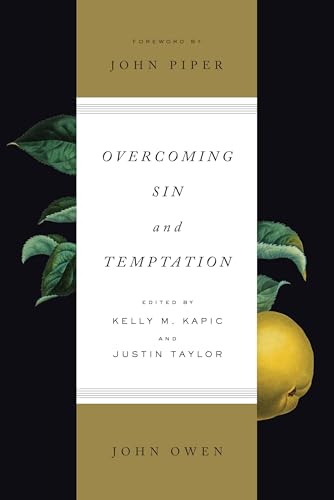
This volume includes three classic works by John Owen on sin, temptation, and repentance in the Christian life. The editors have made this difficult-to-read Puritan accessible for the modern reader without sacrificing Owen’s work.
Die Inhaltsangabe kann sich auf eine andere Ausgabe dieses Titels beziehen.
Über die Autorin bzw. den Autor
John Owen (1616–1683) was vice-chancellor of Oxford University and served as advisor and chaplain to Oliver Cromwell. Among the most learned and active of the Puritans in seventeenth-century England, he was accomplished both in doctrine and practical theology.
Kelly M. Kapic (PhD, King's College, University of London) is professor of theological studies at Covenant College, where he has taught for over fifteen years. Kapic has written and edited over ten books, focusing on the areas of systematic, historical, and practical theology. Kapic has also published articles in various journals and books. Kapic and his wife, Tabitha, live on Lookout Mountain with their two children.
Justin Taylor (PhD, The Southern Baptist Theological Seminary) is the executive vice president of book publishing and book publisher at Crossway. He has edited and contributed to several books, including A God-Entranced Vision of All Things and Reclaiming the Center, and he blogs at Between Two Worlds—hosted by the Gospel Coalition.
Auszug. © Genehmigter Nachdruck. Alle Rechte vorbehalten.
Overcoming Sin and Temptation
By Kelly M. Kapic, Justin TaylorGood News Publishers
Copyright © 2006 Kelly M. Kapic and Justin Taylor
All rights reserved.
ISBN: 978-1-4335-5008-9All rights reserved.
Contents
COPYRIGHT,
FOREWORD John Piper,
PREFACE: Reading John Owen: Why a New Edition? Justin Taylor,
ACKNOWLEDGMENTS,
INTRODUCTION: Life in the Midst of Battle: John Owen's Approach to Sin, Temptation, and the Christian Life Kelly M. Kapic,
OVERVIEW OF JOHN OWEN'S Of the Mortification of Sin in Believers Justin Taylor,
OF THE MORTIFICATION OF SIN IN BELIEVERS,
PREFACE,
PART 1: THE NECESSITY OF MORTIFICATION,
PART 2: THE NATURE OF MORTIFICATION,
PART 3: THE MEANS OF MORTIFICATION,
OVERVIEW OF JOHN OWEN'S Of Temptation: The Nature and Power of It Justin Taylor,
OF TEMPTATION: THE NATURE AND POWER OF IT,
PREFACE,
PART 1: THE NATURE OF TEMPTATION,
PART 2: THE DANGER OF ENTERING TEMPTATION,
PART 3: THE GREAT DUTY OF ALL BELIEVERS,
PART 4: PARTICULAR CASES AND GENERAL DIRECTIONS,
OVERVIEW OF JOHN OWEN'S Indwelling Sin Justin Taylor,
INDWELLING SIN,
PREFACE,
PART 1: THE NATURE OF INDWELLING SIN,
PART 2: THE POWER AND EFFICACY OF INDWELLING SIN,
PART 3: THE EFFECT AND STRENGTH OF INDWELLING SIN,
OUTLINES,
OF THE MORTIFICATION OF SIN IN BELIEVERS,
OF TEMPTATION: THE NATURE AND POWER OF IT,
THE NATURE, POWER, DECEIT, AND PREVALENCY OF INDWELLING SIN,
GLOSSARY,
GENERAL INDEX,
SCRIPTURE INDEX,
CHAPTER 1
PART 1: THE NECESSITY OF MORTIFICATION
[CHAPTER 1]
THE FOUNDATION OF MORTIFICATION: ROMANS 8:13
[So] that what I have of direction to contribute to the carrying on of the work of mortification in believers may receive order and perspicuity, I shall lay the foundation of it in those words of the apostle, "If you through the Spirit do mortify the deeds of the body you shall live" (Rom. 8:13), and reduce the whole to an improvement of the great evangelical truth and mystery contained in them.
The apostle having made a recapitulation of his doctrine of justification by faith, and the blessed estate and condition of them who are made by grace partakers thereof, verses 1-3 of this chapter proceed to improve it to the holiness and consolation of believers.
Among his arguments and motives unto holiness, the verse mentioned contains one from the contrary events and effects of holiness and sin: "If you live after the flesh, you shall die." What it is to "live after the flesh," and what it is to "die," that being not my present aim and business, I shall not otherwise explain than as they will fall in with the sense of the latter words of the verse, as before proposed.
In the words peculiarly designed for the foundation of the ensuing discourse, there is:
1. A duty prescribed: "Mortify the deeds of the body."
2. The persons denoted to whom it is prescribed: "You" — "if you mortify."
3. A promise annexed to that duty: "You shall live."
4. The cause or means of the performance of this duty — the Spirit: "If you through the Spirit."
5. The conditionality of the whole proposition, wherein duty, means, and promise are contained: "If you," etc.
The Conditionality: A Certain Connection
The first thing occurring in the words as they lie in the entire proposition is the conditional note, ei de: "but if." Conditionals in such propositions may denote two things —
The uncertainty of the event or thing promised, in respect of them to whom the duty is prescribed. And this takes place where the condition is absolutely necessary unto the issue, and depends not itself on any determinate cause known to him to whom it is prescribed. So we say, "If we live, we will do such a thing." This cannot be the intention of the conditional expression in this place. Of the persons to whom these words are spoken, it is said (verse 1 of the same chapter), "There is no condemnation to them."
The certainty of the coherence and connection that is between the things spoken of; as we say to a sick man, "If you will take such a potion, or use such a remedy, you will be well." The thing we solely intend to express is the certainty of the connection that is between the potion or remedy and health. And this is the use of it here. The certain connection that is between the mortifying of the deeds of the body and living is intimated in this conditional particle.
Now, the connection and coherence of things being manifold, as of cause and effect, of way and means and the end, this between mortification and life is not of cause and effect properly and strictly — for "eternal life is the gift of God through Jesus Christ" (Rom. 6:23) — but of means and end. God has appointed this means for the attaining of that end, which he has freely promised. Means, though necessary, have a fair subordination to all end of free promise. A gift, and procuring cause in him to whom it is given, are inconsistent. The intention, then, of this proposition as conditional is that there is a certain infallible connection and coherence between true mortification and eternal life: if you use this means, you shall obtain that end; if you do mortify, you shall live. And herein lies the main motive unto and enforcement of the duty prescribed.
The Persons: Believers
The next thing we meet with in the words [of Rom. 8:13] is the persons to whom this duty is prescribed, and that is expressed in the word "you," in the original included in the verb, thanatoute, "if you mortify" — that is, you believers; you to whom "there is no condemnation" (v. 1); you that are "not in the flesh, but in the Spirit" (v. 9); who are "quickened by the Spirit of Christ" (vv. 10-11); to you is this duty prescribed. The pressing of this duty immediately on any other is a notable fruit of that superstition and self-righteousness that the world is full of — the great work and design of devout men ignorant of the gospel (Rom. 10:3-4; John 15:5). Now, this description of the persons, in conjunction with the prescription of the duty, is the main foundation of the ensuing discourse, as it lies in this thesis or proposition:
The choicest believers, who are assuredly freed from the condemning power of sin, ought yet to make it their business all their days to mortify the indwelling power of sin.
The Cause and Means: The Holy Spirit
The principal efficient cause of the performance of this duty is the Spirit: ei de pneumati — "if by the Spirit." The Spirit here is the Spirit mentioned [in Rom. 8] verse 11, the Spirit of Christ, the Spirit of God, that "dwells in us" (v. 9), that "quickens us" (v. 11); "the Holy Ghost" (v. 14); the "Spirit of adoption" (v. 15); the Spirit "that makes intercession for us" (v. 26). All other ways of mortification are vain, all helps leave us helpless; it must be done by the Spirit. Men, as the apostle intimates (Rom. 9:30-32), may attempt this work on other principles, by means and advantages administered on other accounts, as they always have done, and do; but, says he, "This is the work of the Spirit; by him alone is it to be wrought, and by no other power is it to be brought about." Mortification from a self-strength, carried on by ways of self-invention, unto the end of a self-righteousness, is the soul and substance of all false religion in the world. And this is a second principle of my ensuing discourse.
The Duty: Mortify the Deeds...
„Über diesen Titel“ kann sich auf eine andere Ausgabe dieses Titels beziehen.
Suchergebnisse für Overcoming Sin and Temptation: Three Classic Works...

Foto des Verkäufers
Overcoming Sin and Temptation (Redesign): Three Classic Works by John Owen
Anbieter: Dream Books Co., Denver, CO, USA
Verkäuferbewertung 5 von 5 Sternen

Zustand: acceptable. This copy has clearly been enjoyedâ"expect noticeable shelf wear and some minor creases to the cover. Binding is strong, and all pages are legible. May contain previous library markings or stamps. Artikel-Nr. DBV.1433550083.A
Gebraucht kaufen
EUR 14,26
Versand gratis
Versand innerhalb von USA
Versand innerhalb von USA
Anzahl: 1 verfügbar
Beispielbild für diese ISBN
Overcoming Sin and Temptation (Redesign)
Anbieter: Better World Books, Mishawaka, IN, USA
Verkäuferbewertung 5 von 5 Sternen
Zustand: Good. Pages intact with minimal writing/highlighting. The binding may be loose and creased. Dust jackets/supplements are not included. Stock photo provided. Product includes identifying sticker. Better World Books: Buy Books. Do Good. Artikel-Nr. 16532826-6
Gebraucht kaufen
EUR 14,35
Versand gratis
Versand innerhalb von USA
Versand innerhalb von USA
Anzahl: 1 verfügbar
Beispielbild für diese ISBN
Overcoming Sin and Temptation (Redesign)
Anbieter: ThriftBooks-Atlanta, AUSTELL, GA, USA
Verkäuferbewertung 5 von 5 Sternen
Paperback. Zustand: Fair. No Jacket. Readable copy. Pages may have considerable notes/highlighting. ~ ThriftBooks: Read More, Spend Less. Artikel-Nr. G1433550083I5N00
Gebraucht kaufen
EUR 15,54
Versand gratis
Versand innerhalb von USA
Versand innerhalb von USA
Anzahl: 1 verfügbar
Beispielbild für diese ISBN
Overcoming Sin and Temptation (Redesign): Three Classic Works by John Owen
Verlag:
Crossway (edition Redesign), 2015
ISBN 10: 1433550083
ISBN 13: 9781433550089
Gebraucht
Paperback
Anbieter: BooksRun, Philadelphia, PA, USA
Verkäuferbewertung 5 von 5 Sternen
Paperback. Zustand: Very Good. Redesign. It's a well-cared-for item that has seen limited use. The item may show minor signs of wear. All the text is legible, with all pages included. It may have slight markings and/or highlighting. Artikel-Nr. 1433550083-11-1
Gebraucht kaufen
EUR 15,82
Versand gratis
Versand innerhalb von USA
Versand innerhalb von USA
Anzahl: 3 verfügbar
Beispielbild für diese ISBN
Overcoming Sin and Temptation
Anbieter: World of Books (was SecondSale), Montgomery, IL, USA
Verkäuferbewertung 5 von 5 Sternen
Paperback. Zustand: Good. Sin and Temptation helps us recover the concepts of sin and individual responsibility our world has all but destroyed. John Owen, an English theologian of vast learning, has dealt with the nature of sinful humanity as no writer has done as keenly or thoroughly, arguing that sin is always a self-deceiving, blinding folly. Owen embodied the best of Puritan devotion: the awe of God, humility, wisdom, and an awareness of God's grace. J.I. Packer's introductory essay describes how Owen's writings shaped his own spiritual formation. Dr. James Houston, editor of the Classics of Faith and Devotion series, is a highly acclaimed scholar and pioneer int he field of evangelical spirituality. He came to North America from England in 1968 to lead Regent College in Vancouver, Canada, a worldwide center of spiritual formation. Artikel-Nr. CIN1433550083G
Gebraucht kaufen
EUR 17,16
Versand gratis
Versand innerhalb von USA
Versand innerhalb von USA
Anzahl: 1 verfügbar
Beispielbild für diese ISBN
Overcoming Sin and Temptation (Redesign): Three Classic Works by John Owen
Verlag:
Crossway (edition Redesign), 2015
ISBN 10: 1433550083
ISBN 13: 9781433550089
Gebraucht
Paperback
Anbieter: BooksRun, Philadelphia, PA, USA
Verkäuferbewertung 5 von 5 Sternen
Paperback. Zustand: Very Good. Redesign. It's a well-cared-for item that has seen limited use. The item may show minor signs of wear. All the text is legible, with all pages included. It may have slight markings and/or highlighting. Artikel-Nr. 1433550083-8-1
Gebraucht kaufen
EUR 17,88
Versand gratis
Versand innerhalb von USA
Versand innerhalb von USA
Anzahl: 2 verfügbar
Beispielbild für diese ISBN
Overcoming Sin and Temptation
Anbieter: PBShop.store UK, Fairford, GLOS, Vereinigtes Königreich
Verkäuferbewertung 5 von 5 Sternen
PAP. Zustand: New. New Book. Shipped from UK. Established seller since 2000. Artikel-Nr. FW-9781433550089
Neu kaufen
EUR 22,37
EUR 5,95 Versand
Versand von Vereinigtes Königreich nach USA
Versand von Vereinigtes Königreich nach USA
Anzahl: 15 verfügbar
Beispielbild für diese ISBN
Overcoming Sin and Temptation
Anbieter: Kennys Bookstore, Olney, MD, USA
Verkäuferbewertung 5 von 5 Sternen
Zustand: New. Editor(s): Kapic, Kelly M.; Taylor, Justin. Num Pages: 464 pages. BIC Classification: HRAM1. Category: (G) General (US: Trade). Dimension: 157 x 348 x 30. Weight in Grams: 638. . 2015. Redesign. Paperback. . . . . Books ship from the US and Ireland. Artikel-Nr. V9781433550089
Neu kaufen
EUR 30,96
EUR 9,34 Versand
Versand innerhalb von USA
Versand innerhalb von USA
Anzahl: 2 verfügbar
Beispielbild für diese ISBN
Overcoming Sin and Temptation (Redesign): Three Classic Works by John Owen
Anbieter: Ria Christie Collections, Uxbridge, Vereinigtes Königreich
Verkäuferbewertung 5 von 5 Sternen
Zustand: New. In English. Artikel-Nr. ria9781433550089_new
Neu kaufen
EUR 27,14
EUR 13,39 Versand
Versand von Vereinigtes Königreich nach USA
Versand von Vereinigtes Königreich nach USA
Anzahl: Mehr als 20 verfügbar
Beispielbild für diese ISBN
Overcoming Sin and Temptation (Redesign)
Anbieter: Revaluation Books, Exeter, Vereinigtes Königreich
Verkäuferbewertung 5 von 5 Sternen
Paperback. Zustand: Brand New. new edition. 462 pages. 9.00x6.00x1.25 inches. In Stock. Artikel-Nr. __1433550083
Neu kaufen
EUR 25,91
EUR 14,82 Versand
Versand von Vereinigtes Königreich nach USA
Versand von Vereinigtes Königreich nach USA
Anzahl: 2 verfügbar