
Verwandte Artikel zu Letters from Ruby
Inhaltsangabe
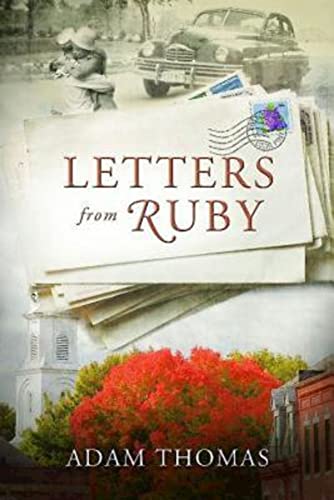
Not everything a young pastor needs to know can be taught in school. Not much triumph remains in Victory, West Virginia, where the loss of the railroad and the housing bust have conspired to send the once vibrant town into decline. Only a few buildings in downtown Victory still have the lights on, including St. John's Episcopal Church, which serves an ever-dwindling population of worshipers. The newly ordained priest Rev. Calvin Harper arrives at the ailing church hoping to help it grow and regain some of its former glory. But Calvin has no idea how much he still has to learn about leadership, about ministry, and about life in general. When the young man's inexperience threatens to divide Calvin from his new church family, Ruby Redding takes him under her wing. Ruby is one of those rare women who is so full of God’s light that it can't help but spill onto the people around her. This light spills onto Calvin from the moment they meet, but he is blind to the new world Ruby hopes to show him. Even Ruby's wisdom and generosity may not be enough to open Calvin's eyes.
Die Inhaltsangabe kann sich auf eine andere Ausgabe dieses Titels beziehen.
Über die Autorin bzw. den Autor
Adam Thomas was ordained to the Episcopal priesthood in 2008 at the age of 25, making him one of the first priests from the millennial generation. His unique voice in the faith community emanates from a combination of his youth, honesty, humor, and tech-savvy nature. Adam is a nerd and a gamer and a preacher and a follower of Christ. He serves God as the pastor of St. Mark's Episcopal Church in Mystic, CT, writes the blog Where the Wind, and lives a hectic but beautiful life with his wife Leah and their one-year-old twins. His Abingdon Press resources include Unusual Gospel for Unusual People Series, Coverage: Who is Jesus, Letters from Ruby, and Digital Disciple.
Auszug. © Genehmigter Nachdruck. Alle Rechte vorbehalten.
Letters from Ruby
By Adam ThomasAbingdon Press
Copyright © 2013 Adam Thomas
All rights reserved.
ISBN: 978-1-4267-4137-1All rights reserved.
CHAPTER 1
Three years earlier
Calvin Harper exchanged the highway for a two-lanecounty road that stumbled down into a valley between twoAppalachian peaks, or what would have been peaks millionsof years ago, but which were now more like exaggerated humpsin the terrain. They were not imposing like the Rockies. Theydidn't pierce the sky like mountains do in pictures from sceniccalendars. Rather, they lay comfortably on the earth, like thelumps a sound sleeper makes under the covers. Evergreensand deciduous trees carpeted both squat mountains, and ahundred shades of high summer green painted on them a kindof contented, venerable majesty that the adolescent Rockieswill not match until wind and time have scrubbed away theirrough edges.
Calvin followed the winding road down into the valley,which fell north to south between the two slopes. Calvin couldsee dozens of houses peeking out from the dense cover of treeson the opposite slope. As he descended, the density of houseson his side of the valley grew thicker until there were enoughof them for a generous person to collect them with the word"neighborhood."
A weathered sign, which had skipped its last three or fourrepainting appointments, greeted Calvin at the spot in thecounty road where the slope gave way to level ground. Hestopped for a traffic light, the first he had encountered sinceleaving the interstate, and read the sign. "Victory—Established1781—B&O Railroad 1842—State Football Champions 1981,1982, 1994." Beneath the sign hung half a dozen plaquesannouncing the local societies: Rotarians, Elks, the VFW, andsome he couldn't read.
Calvin's eyes passed over the rest of the plaques and fellon a rusted metal sign hanging at the bottom. A shield dominatedthe sign: red cross on a white field, a patch of blue inthe northwest corner. The once bold colors were now pastel,and the once bold writing was now faded nearly to illegibility.But Calvin knew what the sign said without reading it: "TheEpiscopal Church Welcomes You."
He smiled at the familiar words, knowing people all overthe country were driving into towns and seeing similar signs.But the smile drooped as he strained to read the particularsbelow the message: "St. John's—across the railroad tracks—twoblocks—on right." Calvin put the car in gear as the lightturned green and ventured into Victory, wondering how truethe cheerful message of welcome was in a small town nestledbetween two demoted mountains.
The car bumped over the railroad tracks, and Calvin lookeddown the row of old buildings for a first glimpse of St. John's.He could tell the downtown area of Victory, which straddledthe tracks, had thrived in years past. There were too manybuildings down the main drag and clustered near it along theside streets for Victory always to have been a small, tired town.
But now many storefronts were shuttered and dark. Calvincouldn't tell if they were out of business or simply closed,though it seemed strange local businesses would be closedin the middle of a weekday. Some locations were obviouslyvacant: windows hid behind hastily hammered plywood,upon which was spray-painted, "4 Sale," and a phone numberto contact someone named Wally.
Three buildings on the block past the railroad trackshad names carved into the stone of their lintels: Town Hall,Firehouse #2, Williams Inn. But the building displaying thewords "Town Hall" also sported a banner announcing it as thelocation for the summer semester of a local community college.Firehouse #2 was a Chinese restaurant named Year of theDragon. Williams Inn had a collection of mailboxes tacked toits grimy brick wall and a small forest of satellite TV antennaesprouting from its patch of front lawn, and Calvin realized itwas no longer a hotel, but what must be tiny apartments.
By no means a ghost town, Victory bore all the hallmarksof being left to its own devices when the town's main industryfled. Calvin didn't know what that industry was exactly,but it was the same story all over the state—plants closing,mines cutting back, aging workforce, young people choosingto live anywhere but there. What saved Victory from falling offthe map entirely, Calvin's bishop had told him, was the elderlypopulation. Fifteen years ago, there had been a single nursinghome in the town. Now there were five, plus another halfdozen assisted- and independent-living facilities for seniors.
"And what comes along with elderly people?" the bishophad asked. Before Calvin could respond, the bishop answeredhis own question. "Doctors. Nurses. Orderlies. Lab techs.Paramedics. Janitors. Estate lawyers. People at the Y who teachwater aerobics." He ticked off each one on a finger. "And thosefolks have families." The bishop picked up a magazine fromhis desk and tossed it to Calvin. "In that issue, the AARP ratesVictory as one of the top ten retirement communities in thecountry. And you're their new priest."
* * *
Calvin parked his car on the street half a block past St.John's. He was surprised and pleased to see the church stoodout from the rest of the buildings on Washington Street. Thesteeple was easily the highest point this side of the railroadtracks, and the bricks of the church's exterior seemed shinierthan those of the surrounding buildings. The mortar inbetween bricks crumbled only here and there, and the bell,visible in the tower above, gleamed in the midafternoon sun.On first glance, the only things Calvin disliked about theexterior of St. John's were the windows. A layer of Plexiglasprotected each window, but the outside panels were so cakedwith the filth of years that Calvin had only a vague impressionthe church owned stained glass at all.
He walked up the three steps to the front door and pulled.It was a massive, iron-studded oak thing that would look moreat home on a castle keep. And it was locked. Calvin lookedat his watch. It was only 2:30 in the afternoon. He lookedleft and right, hoping to see a sign with hours or directionsto the church's office. With no sign in sight, he circled thebuilding and found the door to the office three-quarters of theway around, also up three steps. This door was locked too. Hepeered in the small window set in the door only to see a darkhallway and several more closed doors.
Calvin continued his circuit of the grounds, and as he wasabout to turn back onto the sidewalk, he spied a small door setinto the side of the church. He walked up to it and was surprisedto find the door was much smaller than any door hada right to be. He couldn't possibly understand what this doorwas designed to accomplish, but he tried it anyway. Locked, ofcourse. Or was it? He tugged again and realized the door waslocked only by a crossbar, like the kind you'd find on the doorto the castle keep he had imagined earlier. He stood at the doorfor a few moments, thinking.
Now, in the ensuing minutes, Calvin made three mistakes.First, he decided it was a perfectly good and normal idea toforce open the small door. He cast around for something thinenough to slip through the gap between the door and frameand strong enough to lift the bar without breaking. Therewas nothing in the churchyard but sticks and twigs. Then hesnapped his fingers and ran back to the car. As a going awaypresent, his parents had given him a set of pots and pans alongwith various other cooking implements. Calvin had storedthem in the passenger seat because he had already packed therest of the car. He rummaged for a moment and then pulledout a brand new chef's knife. He jogged back...
„Über diesen Titel“ kann sich auf eine andere Ausgabe dieses Titels beziehen.
Suchergebnisse für Letters from Ruby

Beispielbild für diese ISBN
Letters From Ruby
Anbieter: World of Books (was SecondSale), Montgomery, IL, USA
Verkäuferbewertung 5 von 5 Sternen

Paperback. Zustand: Very Good. When the newly ordained Episcopal priest Rev. Calvin Harper arrives in Victory, West Virginia, to be the pastor at an ailing parish, he has no idea how much he still has to learn about being a priest. Thankfully, Ruby Redding takes the young man under her wing and teaches him everything she has learned throughout her long, storied life. Seminary never taught Calvin that the only true way to be a witness to God's presence in this world is to remain in relationships with people no matter what life throws at them. His studies never taught him that detachment is the bane of ministry. He never learned that deep grief comes only from deep love. But in his first year in Victory, Calvin learns all this and more from Ruby, a woman so full of God's light that it can't help but spill onto the people around her. Artikel-Nr. 00084735713
Gebraucht kaufen
EUR 5,95
Versand gratis
Versand innerhalb von USA
Versand innerhalb von USA
Anzahl: 1 verfügbar
Beispielbild für diese ISBN
Letters From Ruby
Anbieter: World of Books (was SecondSale), Montgomery, IL, USA
Verkäuferbewertung 5 von 5 Sternen
Paperback. Zustand: Good. When the newly ordained Episcopal priest Rev. Calvin Harper arrives in Victory, West Virginia, to be the pastor at an ailing parish, he has no idea how much he still has to learn about being a priest. Thankfully, Ruby Redding takes the young man under her wing and teaches him everything she has learned throughout her long, storied life. Seminary never taught Calvin that the only true way to be a witness to God's presence in this world is to remain in relationships with people no matter what life throws at them. His studies never taught him that detachment is the bane of ministry. He never learned that deep grief comes only from deep love. But in his first year in Victory, Calvin learns all this and more from Ruby, a woman so full of God's light that it can't help but spill onto the people around her. Artikel-Nr. 00097623514
Gebraucht kaufen
EUR 5,95
Versand gratis
Versand innerhalb von USA
Versand innerhalb von USA
Anzahl: 1 verfügbar
Beispielbild für diese ISBN
Letters from Ruby
Anbieter: ThriftBooks-Dallas, Dallas, TX, USA
Verkäuferbewertung 5 von 5 Sternen
Paperback. Zustand: Very Good. No Jacket. May have limited writing in cover pages. Pages are unmarked. ~ ThriftBooks: Read More, Spend Less. Artikel-Nr. G1426741375I4N00
Gebraucht kaufen
EUR 5,96
Versand gratis
Versand innerhalb von USA
Versand innerhalb von USA
Anzahl: 1 verfügbar
Beispielbild für diese ISBN
Letters from Ruby
Anbieter: Better World Books, Mishawaka, IN, USA
Verkäuferbewertung 5 von 5 Sternen
Zustand: Good. Pages intact with minimal writing/highlighting. The binding may be loose and creased. Dust jackets/supplements are not included. Stock photo provided. Product includes identifying sticker. Better World Books: Buy Books. Do Good. Artikel-Nr. 1345977-6
Gebraucht kaufen
EUR 6,56
Versand gratis
Versand innerhalb von USA
Versand innerhalb von USA
Anzahl: 1 verfügbar
Beispielbild für diese ISBN
Letters from Ruby
Anbieter: Better World Books, Mishawaka, IN, USA
Verkäuferbewertung 5 von 5 Sternen
Zustand: Very Good. Pages intact with possible writing/highlighting. Binding strong with minor wear. Dust jackets/supplements may not be included. Stock photo provided. Product includes identifying sticker. Better World Books: Buy Books. Do Good. Artikel-Nr. 1345978-6
Gebraucht kaufen
EUR 6,56
Versand gratis
Versand innerhalb von USA
Versand innerhalb von USA
Anzahl: 1 verfügbar
Beispielbild für diese ISBN
Letters From Ruby
Anbieter: Ria Christie Collections, Uxbridge, Vereinigtes Königreich
Verkäuferbewertung 5 von 5 Sternen
Zustand: New. In English. Artikel-Nr. ria9781426741371_new
Neu kaufen
EUR 19,64
EUR 11,04 Versand
Versand von Vereinigtes Königreich nach USA
Versand von Vereinigtes Königreich nach USA
Anzahl: Mehr als 20 verfügbar
Beispielbild für diese ISBN
Letters from Ruby
Anbieter: Revaluation Books, Exeter, Vereinigtes Königreich
Verkäuferbewertung 5 von 5 Sternen
Paperback. Zustand: Brand New. 304 pages. 8.40x5.50x0.60 inches. In Stock. Artikel-Nr. x-1426741375
Neu kaufen
EUR 19,99
EUR 11,78 Versand
Versand von Vereinigtes Königreich nach USA
Versand von Vereinigtes Königreich nach USA
Anzahl: 2 verfügbar
Foto des Verkäufers
Letters from Ruby
Anbieter: AHA-BUCH GmbH, Einbeck, Deutschland
Verkäuferbewertung 5 von 5 Sternen
Taschenbuch. Zustand: Neu. Neuware - When the newly ordained Episcopal priest Rev. Calvin Harper arrives in Victory, West Virginia, to be the pastor at an ailing parish, he has no idea how much he still has to learn about being a priest. Thankfully, Ruby Redding takes the young man under her wing and teaches him everything she has learned throughout her long, storied life. Seminary never taught Calvin that the only true way to be a witness to God's presence in this world is to remain in relationships with people no matter what life throws at them. His studies never taught him that detachment is the bane of ministry. He never learned that deep grief comes only from deep love. But in his first year in Victory, Calvin learns all this and more from Ruby, a woman so full of God's light that it can't help but spill onto the people around her. Artikel-Nr. 9781426741371
Neu kaufen
EUR 23,87
EUR 35,00 Versand
Versand von Deutschland nach USA
Versand von Deutschland nach USA
Anzahl: 2 verfügbar
Foto des Verkäufers
Letters from Ruby
Anbieter: moluna, Greven, Deutschland
Verkäuferbewertung 5 von 5 Sternen
Zustand: New. KlappentextA young priest, a struggling parish, a search for wisdom and love. Artikel-Nr. 4139484
Neu kaufen
EUR 21,70
EUR 48,99 Versand
Versand von Deutschland nach USA
Versand von Deutschland nach USA
Anzahl: Mehr als 20 verfügbar