
Verwandte Artikel zu Profit at the Bottom of the Ladder: Creating Value...
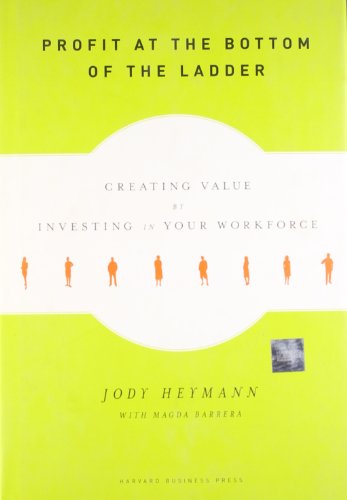
Inhaltsangabe
Most managers assume that surviving, especially in recessions, requires slashing wages, benefits, and other workforce expenses. And lowest-skilled workers are often viewed as the most expendable.
In Profit at the Bottom of the Ladder, Jody Heymann overturns these assumptions. Drawing from thousands of interviews with employees from front line to C-suite at companies around the world, Heymann shows how enterprises have profited more by improving working conditions.
She also demonstrates that lower-skilled employees - in call centers, repair services, product assembly - aren't expendable. They can determine 90 percent of companies' profitability. High performers positively shape customers' perceptions of businesses, driving satisfaction and loyalty.
To attract, train, and retain top-caliber people in these roles, you must enhance working conditions, creating a system in which your company and its employees profit together. Profit at the Bottom of the Ladder shows what works - from stock options for bakers to flexibility for factory workers to career tracks in call centers.
Featuring cases from companies around the globe - including a leading concrete manufacturer in India, a top European pharmaceutical firm operating in China, and successful U.S. manufacturers - this book shows how real organizations are excelling financially by strengthening frontline employees' working conditions.
In Profit at the Bottom of the Ladder, Jody Heymann overturns these assumptions. Drawing from thousands of interviews with employees from front line to C-suite at companies around the world, Heymann shows how enterprises have profited more by improving working conditions.
She also demonstrates that lower-skilled employees - in call centers, repair services, product assembly - aren't expendable. They can determine 90 percent of companies' profitability. High performers positively shape customers' perceptions of businesses, driving satisfaction and loyalty.
To attract, train, and retain top-caliber people in these roles, you must enhance working conditions, creating a system in which your company and its employees profit together. Profit at the Bottom of the Ladder shows what works - from stock options for bakers to flexibility for factory workers to career tracks in call centers.
Featuring cases from companies around the globe - including a leading concrete manufacturer in India, a top European pharmaceutical firm operating in China, and successful U.S. manufacturers - this book shows how real organizations are excelling financially by strengthening frontline employees' working conditions.
Die Inhaltsangabe kann sich auf eine andere Ausgabe dieses Titels beziehen.
Über die Autorin bzw. den Autor
Jody Heymann is Founding Director of the McGill Institute for Health and Social Policy. She was Founding Director of the Project on Global Working Families and chair of the Initiative on Work, Family, and Democracy at Harvard University. She has conducted research in thirty-five countries; examined working conditions in 189 nations; and advised leaders in government, UN agencies, and the private sector.
Von der hinteren Coverseite
“For too long, many corporate officers, boards of directors, and Wall Street analysts have taken it as axiomatic that higher compensation and benefits for ‘elite’ workers would make companies more productive and profitable—but that providing additional compensation and benefits for those at the other end of the economic ladder would be a waste of money. This book repeatedly turns that argument on its head, providing example after example of creative reengineering of work and benefit relationships, incentives, and job design that have made workers better off and—as a direct result—raised company profits at the same time. The book is nothing short of inspirational.”
Herman B. “Dutch” Leonard, Eliot I. Snider and Family Professor of Business Administration, and Faculty Co-Chair, Social Enterprise Initiative, Harvard Business School
“A must-read: Jody Heymann has hammered the last nail into the coffin of the economics of the low road. With her crack research team, Heymann uses a wide array of business case studies to prove that becoming an employer of choice for the traditionally lowest paid can be the best route to high profitability and resilience for the world’s most successful companies.”
Juliet Schor, author of Plenitude: The New Economics of True Wealth
“Here’s a crazy idea for improving our economy: let’s encourage companies to offer incentives, training, flexibility, opportunities for engagement, and profit-sharing to workers in the bottom of the earnings ladder as well as to those at the top. Pie in the sky? This book shows that it is both practical and profitable. The stories Heymann tells of company after company that raised productivity and profits by giving incentives and opportunity to all is a clarion call for moving beyond the Wall Street version of capitalism.”
Richard Freeman, Herbert Ascherman Professor of Economics, Harvard University
“Heymann’s comprehensive look at the provocative issues surrounding the status and stability of lower wage workers is certain to add to the national debate. Documenting how supporting these workers improves business’ bottom line, this book is a remarkable breakthrough!”
Donna Klein, President, Corporate Voices for Working Families
“rigorously researched book” - USA Today
“presents a well-documented lineup of businesses that have flourished in large part because their management practices include respecting and empowering their lowest-paid worker.” - USA Today
Herman B. “Dutch” Leonard, Eliot I. Snider and Family Professor of Business Administration, and Faculty Co-Chair, Social Enterprise Initiative, Harvard Business School
“A must-read: Jody Heymann has hammered the last nail into the coffin of the economics of the low road. With her crack research team, Heymann uses a wide array of business case studies to prove that becoming an employer of choice for the traditionally lowest paid can be the best route to high profitability and resilience for the world’s most successful companies.”
Juliet Schor, author of Plenitude: The New Economics of True Wealth
“Here’s a crazy idea for improving our economy: let’s encourage companies to offer incentives, training, flexibility, opportunities for engagement, and profit-sharing to workers in the bottom of the earnings ladder as well as to those at the top. Pie in the sky? This book shows that it is both practical and profitable. The stories Heymann tells of company after company that raised productivity and profits by giving incentives and opportunity to all is a clarion call for moving beyond the Wall Street version of capitalism.”
Richard Freeman, Herbert Ascherman Professor of Economics, Harvard University
“Heymann’s comprehensive look at the provocative issues surrounding the status and stability of lower wage workers is certain to add to the national debate. Documenting how supporting these workers improves business’ bottom line, this book is a remarkable breakthrough!”
Donna Klein, President, Corporate Voices for Working Families
“rigorously researched book” - USA Today
“presents a well-documented lineup of businesses that have flourished in large part because their management practices include respecting and empowering their lowest-paid worker.” - USA Today
Aus dem Klappentext
“For too long, many corporate officers, boards of directors, and Wall Street analysts have taken it as axiomatic that higher compensation and benefits for ‘elite&; workers would make companies more productive and profitable—but that providing additional compensation and benefits for those at the other end of the economic ladder would be a waste of money. This book repeatedly turns that argument on its head, providing example after example of creative reengineering of work and benefit relationships, incentives, and job design that have made workers better off and—as a direct result—raised company profits at the same time. The book is nothing short of inspirational.&;
Herman B. “Dutch&; Leonard, Eliot I. Snider and Family Professor of Business Administration, and Faculty Co-Chair, Social Enterprise Initiative, Harvard Business School
“A must-read: Jody Heymann has hammered the last nail into the coffin of the economics of the low road. With her crack research team, Heymann uses a wide array of business case studies to prove that becoming an employer of choice for the traditionally lowest paid can be the best route to high profitability and resilience for the world&;s most successful companies.&;
Juliet Schor, author of Plenitude: The New Economics of True Wealth
“Here&;s a crazy idea for improving our economy: let&;s encourage companies to offer incentives, training, flexibility, opportunities for engagement, and profit-sharing to workers in the bottom of the earnings ladder as well as to those at the top. Pie in the sky? This book shows that it is both practical and profitable. The stories Heymann tells of company after company that raised productivity and profits by giving incentives and opportunity to all is a clarion call for moving beyond the Wall Street version of capitalism.&;
Richard Freeman, Herbert Ascherman Professor of Economics, Harvard University
“Heymann&;s comprehensive look at the provocative issues surrounding the status and stability of lower wage workers is certain to add to the national debate. Documenting how supporting these workers improves business&; bottom line, this book is a remarkable breakthrough!&;
Donna Klein, President, Corporate Voices for Working Families
“rigorously researched book&; - USA Today
“presents a well-documented lineup of businesses that have flourished in large part because their management practices include respecting and empowering their lowest-paid worker.&; - USA Today
Herman B. “Dutch&; Leonard, Eliot I. Snider and Family Professor of Business Administration, and Faculty Co-Chair, Social Enterprise Initiative, Harvard Business School
“A must-read: Jody Heymann has hammered the last nail into the coffin of the economics of the low road. With her crack research team, Heymann uses a wide array of business case studies to prove that becoming an employer of choice for the traditionally lowest paid can be the best route to high profitability and resilience for the world&;s most successful companies.&;
Juliet Schor, author of Plenitude: The New Economics of True Wealth
“Here&;s a crazy idea for improving our economy: let&;s encourage companies to offer incentives, training, flexibility, opportunities for engagement, and profit-sharing to workers in the bottom of the earnings ladder as well as to those at the top. Pie in the sky? This book shows that it is both practical and profitable. The stories Heymann tells of company after company that raised productivity and profits by giving incentives and opportunity to all is a clarion call for moving beyond the Wall Street version of capitalism.&;
Richard Freeman, Herbert Ascherman Professor of Economics, Harvard University
“Heymann&;s comprehensive look at the provocative issues surrounding the status and stability of lower wage workers is certain to add to the national debate. Documenting how supporting these workers improves business&; bottom line, this book is a remarkable breakthrough!&;
Donna Klein, President, Corporate Voices for Working Families
“rigorously researched book&; - USA Today
“presents a well-documented lineup of businesses that have flourished in large part because their management practices include respecting and empowering their lowest-paid worker.&; - USA Today
Auszug. © Genehmigter Nachdruck. Alle Rechte vorbehalten.
Raising Productivity and Profitability With Better Working Conditions for the Worst-off
Questions that Converge
Profiting Together answers three fundamental questions. First and foremost, the book answers C-level executives and other senior managers who are asking themselves: Are there additional ways to increase my company’s success? The case studies answer young business leaders who are wondering: Can I spend a career profiting in the private sector while bringing benefits to others? At the same time, this research answers the questions raised by labor representatives and all levels of employees: Isn’t there a way for the company and I to succeed together?
These three questions have long been central to the lives of everyone from senior managers in the largest companies to entry-level employees in the smallest firms. CEOs, CFOs, COOs, and other leaders have always had to worry about profitability. The shareholders and board members to whom they report measure their success in this nearly singular way. Wall Street has frequently evaluated firms’ prospects as rising when leaders cut jobs, wages, and benefits. At the same time, in their personal lives, top managers’ satisfaction has long stemmed from being able to achieve more than profit at the cost of their employees. Moreover, while employees have always cared about companies’ competitiveness because it assures the long-term stability of their jobs, they clearly also care about the quality of their working conditions, compensation, and daily lives.
While these priorities are perennial, the economic crisis, which began in 2008 and 2009, has crystallized the urgency of being able to answer these questions simultaneously. As the meltdown over the AIG bonuses made clear, two crises have been wrapped into one: an economic crisis and a crisis of confidence in corporate America. The questions raised by the economic crisis are clear: When will firms become profitable again? When will we begin to find economic security? Will the United States, Europe, and other advanced economies be able to repair themselves? How long will it take for China, India, and other emerging economies that were dependent on the United States, to rebound? All of these concerns surround economic success. But as demonstrated by political outcry, demonstrations, and rapidly written legislation, the crisis in confidence has been equally critical and has presented a different set of questions: How “greedy” is Wall Street? Are leaders of the private sector just out to ensure their own personal financial success and are they willing to risk the financial security of everyone else in the country? Is there any reason to believe that average Americans will stand to gain by bailing out companies or by ensuring corporate success? All of these questions come down to the fundamental one: Will there be a link between the success experienced by those at the top of the corporate ladder and those on all of the other rungs?
Profiting Together tells the story of companies around the world who have found ways to answer both sets of questions simultaneously. These companies have been profitable for their owners and shareholders not only while being profitable for their employees, but because they have been profitable for their employees.
Working Conditions that Matter
They have been able to do this for a simple reason. How work is structured, how it is rewarded, the ways workplaces encourage employee engagement are all central to the profitability of firms and to the quality of the daily lives of working men and women. Employees determine 90% of most businesses’ profitability.
Often under-recognized is the fact that the most potent impact can come from employees situated at the bottom of the corporate ladder. In call centers, it is the employees answering the phones that determine the quality, pace, and effectiveness of the company’s responses to customers. In maintenance and repair industries, it is the men and women who take the calls and carry out the services who again determine customers’ satisfaction, patronage and loyalty and whether they recommend the company to others. In manufacturing, workers on the factory line leave their fingerprints on the quality of the products and determine the error rate in production. Even in wholesale and resale, success fundamentally relies on the quality of the work carried out in the warehouses and of the interactions between employees and customers.
The caliber of the employees that a company can attract and retain and the quality of their performance are affected by the company’s working conditions, including wages, benefits, work-schedules, flexibility and leave, support for health, and policies surrounding participation in planning and work design. These policies simultaneously have implications for the company’s bottom line in terms of costs and benefits. For years, in evaluating publicly traded companies, Wall Street has focused nearly exclusively on the costs of the provision of decent working conditions. CEOs have been pressured to cut compensations, with little consideration being given to the long-term consequences of doing so.
Just as the quality of a firm’s jobs is essential to a firm’s success, it also plays a fundamental role in determining the quality of the lives of working men and women. Working conditions’ influence includes the fairly pragmatic—determining if a worker loses his job when he has to take time off after a heart attack; if a father loses pay when he stays home to care for a sick child; if a daughter loses wages when she misses work to care for an aging parent—to the more ephemeral, but equally fundamental—determining if employees find their work meaningful and are eager to do their best at their jobs.
While the question of how much to invest in employees and what kind of investment to make has long been essential to companies, they are particularly critical given the economic conditions in 2009. As the economy spirals downwards, firms are particularly concerned about finding ways to cut costs in light of declining consumer spending and revenues. It is natural for them to wonder whether they can cut costs by lowering wages, decreasing health and other benefits, and limiting support for pensions. As companies restructure in response to economic threats, it is not surprising that employee engagement is sometimes the last thing on their minds. Yet, the role of employees is more important than ever in ensuring companies’ success in surviving the downturn. Companies are dependent on employees to be particularly flexible as they restructure, to cover for laid-off employees, and to find new ways to cut costs and increase productivity. At the same time, in the face of the bursting housing bubble and the dramatic drops in the stock market in 2008 and early 2009, the declines in employees’ savings have often been even greater than the declines in companies’ assets. This has made it all the more important to employees to have a secure job with a living wage and adequate benefits that prevent income-loss due to illness or the birth of a child.
This book addresses the fundamental question: is it truly financially beneficial for companies to cut wages and benefits and limit provisions for flexibility, or is there a path forward from which companies can profit financially alongside their employees?
Our Research Program
For over a decade and a half, I have led a research program, first at Harvard and then also at McGill, examining working conditions around the world. For the first decade of this program, my research focused on understanding the working conditions faced by working men and women globally, and how these working conditions varied across political, social, and economic contexts. While...
Questions that Converge
Profiting Together answers three fundamental questions. First and foremost, the book answers C-level executives and other senior managers who are asking themselves: Are there additional ways to increase my company’s success? The case studies answer young business leaders who are wondering: Can I spend a career profiting in the private sector while bringing benefits to others? At the same time, this research answers the questions raised by labor representatives and all levels of employees: Isn’t there a way for the company and I to succeed together?
These three questions have long been central to the lives of everyone from senior managers in the largest companies to entry-level employees in the smallest firms. CEOs, CFOs, COOs, and other leaders have always had to worry about profitability. The shareholders and board members to whom they report measure their success in this nearly singular way. Wall Street has frequently evaluated firms’ prospects as rising when leaders cut jobs, wages, and benefits. At the same time, in their personal lives, top managers’ satisfaction has long stemmed from being able to achieve more than profit at the cost of their employees. Moreover, while employees have always cared about companies’ competitiveness because it assures the long-term stability of their jobs, they clearly also care about the quality of their working conditions, compensation, and daily lives.
While these priorities are perennial, the economic crisis, which began in 2008 and 2009, has crystallized the urgency of being able to answer these questions simultaneously. As the meltdown over the AIG bonuses made clear, two crises have been wrapped into one: an economic crisis and a crisis of confidence in corporate America. The questions raised by the economic crisis are clear: When will firms become profitable again? When will we begin to find economic security? Will the United States, Europe, and other advanced economies be able to repair themselves? How long will it take for China, India, and other emerging economies that were dependent on the United States, to rebound? All of these concerns surround economic success. But as demonstrated by political outcry, demonstrations, and rapidly written legislation, the crisis in confidence has been equally critical and has presented a different set of questions: How “greedy” is Wall Street? Are leaders of the private sector just out to ensure their own personal financial success and are they willing to risk the financial security of everyone else in the country? Is there any reason to believe that average Americans will stand to gain by bailing out companies or by ensuring corporate success? All of these questions come down to the fundamental one: Will there be a link between the success experienced by those at the top of the corporate ladder and those on all of the other rungs?
Profiting Together tells the story of companies around the world who have found ways to answer both sets of questions simultaneously. These companies have been profitable for their owners and shareholders not only while being profitable for their employees, but because they have been profitable for their employees.
Working Conditions that Matter
They have been able to do this for a simple reason. How work is structured, how it is rewarded, the ways workplaces encourage employee engagement are all central to the profitability of firms and to the quality of the daily lives of working men and women. Employees determine 90% of most businesses’ profitability.
Often under-recognized is the fact that the most potent impact can come from employees situated at the bottom of the corporate ladder. In call centers, it is the employees answering the phones that determine the quality, pace, and effectiveness of the company’s responses to customers. In maintenance and repair industries, it is the men and women who take the calls and carry out the services who again determine customers’ satisfaction, patronage and loyalty and whether they recommend the company to others. In manufacturing, workers on the factory line leave their fingerprints on the quality of the products and determine the error rate in production. Even in wholesale and resale, success fundamentally relies on the quality of the work carried out in the warehouses and of the interactions between employees and customers.
The caliber of the employees that a company can attract and retain and the quality of their performance are affected by the company’s working conditions, including wages, benefits, work-schedules, flexibility and leave, support for health, and policies surrounding participation in planning and work design. These policies simultaneously have implications for the company’s bottom line in terms of costs and benefits. For years, in evaluating publicly traded companies, Wall Street has focused nearly exclusively on the costs of the provision of decent working conditions. CEOs have been pressured to cut compensations, with little consideration being given to the long-term consequences of doing so.
Just as the quality of a firm’s jobs is essential to a firm’s success, it also plays a fundamental role in determining the quality of the lives of working men and women. Working conditions’ influence includes the fairly pragmatic—determining if a worker loses his job when he has to take time off after a heart attack; if a father loses pay when he stays home to care for a sick child; if a daughter loses wages when she misses work to care for an aging parent—to the more ephemeral, but equally fundamental—determining if employees find their work meaningful and are eager to do their best at their jobs.
While the question of how much to invest in employees and what kind of investment to make has long been essential to companies, they are particularly critical given the economic conditions in 2009. As the economy spirals downwards, firms are particularly concerned about finding ways to cut costs in light of declining consumer spending and revenues. It is natural for them to wonder whether they can cut costs by lowering wages, decreasing health and other benefits, and limiting support for pensions. As companies restructure in response to economic threats, it is not surprising that employee engagement is sometimes the last thing on their minds. Yet, the role of employees is more important than ever in ensuring companies’ success in surviving the downturn. Companies are dependent on employees to be particularly flexible as they restructure, to cover for laid-off employees, and to find new ways to cut costs and increase productivity. At the same time, in the face of the bursting housing bubble and the dramatic drops in the stock market in 2008 and early 2009, the declines in employees’ savings have often been even greater than the declines in companies’ assets. This has made it all the more important to employees to have a secure job with a living wage and adequate benefits that prevent income-loss due to illness or the birth of a child.
This book addresses the fundamental question: is it truly financially beneficial for companies to cut wages and benefits and limit provisions for flexibility, or is there a path forward from which companies can profit financially alongside their employees?
Our Research Program
For over a decade and a half, I have led a research program, first at Harvard and then also at McGill, examining working conditions around the world. For the first decade of this program, my research focused on understanding the working conditions faced by working men and women globally, and how these working conditions varied across political, social, and economic contexts. While...
„Über diesen Titel“ kann sich auf eine andere Ausgabe dieses Titels beziehen.
Suchergebnisse für Profit at the Bottom of the Ladder: Creating Value...

Beispielbild für diese ISBN
Profit at the Bottom of the Ladder : Creating Value by Investing in Your Workforce
Verlag:
Harvard Business Review Press, 2010
ISBN 10: 1422123111
ISBN 13: 9781422123119
Gebraucht
Hardcover
Anbieter: Better World Books, Mishawaka, IN, USA
Verkäuferbewertung 5 von 5 Sternen

Zustand: Very Good. Former library copy. Pages intact with possible writing/highlighting. Binding strong with minor wear. Dust jackets/supplements may not be included. Includes library markings. Stock photo provided. Product includes identifying sticker. Better World Books: Buy Books. Do Good. Artikel-Nr. 1337919-75
Gebraucht kaufen
EUR 9,64
Versand gratis
Versand innerhalb von USA
Versand innerhalb von USA
Anzahl: 1 verfügbar
Beispielbild für diese ISBN
Profit at the Bottom of the Ladder : Creating Value by Investing in Your Workforce
Verlag:
Harvard Business Review Press, 2010
ISBN 10: 1422123111
ISBN 13: 9781422123119
Gebraucht
Hardcover
Anbieter: Better World Books: West, Reno, NV, USA
Verkäuferbewertung 5 von 5 Sternen
Zustand: Very Good. Former library copy. Pages intact with possible writing/highlighting. Binding strong with minor wear. Dust jackets/supplements may not be included. Includes library markings. Stock photo provided. Product includes identifying sticker. Better World Books: Buy Books. Do Good. Artikel-Nr. 1337919-75
Gebraucht kaufen
EUR 9,64
Versand gratis
Versand innerhalb von USA
Versand innerhalb von USA
Anzahl: 1 verfügbar
Beispielbild für diese ISBN
Profit at the Bottom of the Ladder: Creating Value by Investing in Your Workforce
Verlag:
Harvard Business Review Press (edition First Edition), 2010
ISBN 10: 1422123111
ISBN 13: 9781422123119
Gebraucht
Hardcover
Erstausgabe
Anbieter: BooksRun, Philadelphia, PA, USA
Verkäuferbewertung 5 von 5 Sternen
Hardcover. Zustand: Very Good. First Edition. With dust jacket. It's a well-cared-for item that has seen limited use. The item may show minor signs of wear. All the text is legible, with all pages included. It may have slight markings and/or highlighting. Artikel-Nr. 1422123111-11-18-29
Gebraucht kaufen
EUR 9,68
Versand gratis
Versand innerhalb von USA
Versand innerhalb von USA
Anzahl: 1 verfügbar
Beispielbild für diese ISBN
Profit at the Bottom of the Ladder: Creating Value by Investing in Your Workforce
Verlag:
Harvard Business Review Press, 2010
ISBN 10: 1422123111
ISBN 13: 9781422123119
Gebraucht
Hardcover
Anbieter: ThriftBooks-Dallas, Dallas, TX, USA
Verkäuferbewertung 5 von 5 Sternen
Hardcover. Zustand: As New. No Jacket. Pages are clean and are not marred by notes or folds of any kind. ~ ThriftBooks: Read More, Spend Less. Artikel-Nr. G1422123111I2N00
Gebraucht kaufen
EUR 11,73
Versand gratis
Versand innerhalb von USA
Versand innerhalb von USA
Anzahl: 1 verfügbar
Beispielbild für diese ISBN
Profit at the Bottom of the Ladder : Creating Value by Investing in Your Workforce
Verlag:
Harvard Business Review Press, 2010
ISBN 10: 1422123111
ISBN 13: 9781422123119
Gebraucht
Hardcover
Anbieter: Better World Books Ltd, Dunfermline, Vereinigtes Königreich
Verkäuferbewertung 5 von 5 Sternen
Zustand: Very Good. Pages intact with possible writing/highlighting. Binding strong with minor wear. Dust jackets/supplements may not be included. Stock photo provided. Product includes identifying sticker. Better World Books: Buy Books. Do Good. Artikel-Nr. 13520529-6
Gebraucht kaufen
EUR 13,75
EUR 5,83 Versand
Versand von Vereinigtes Königreich nach USA
Versand von Vereinigtes Königreich nach USA
Anzahl: 1 verfügbar