
Verwandte Artikel zu ChiRunning: A Revolutionary Approach to Effortless,...
Inhaltsangabe
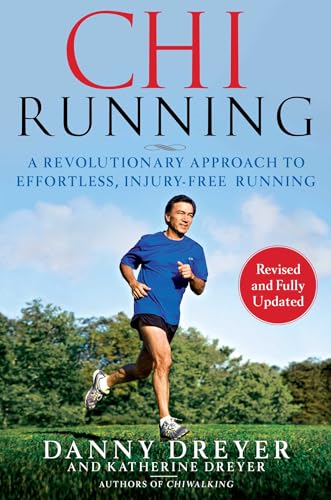
The revised edition of the bestselling ChiRunning, a groundbreaking program from ultra-marathoner and nationally-known coach Danny Dreyer, that teaches you how to run faster and farther with less effort, and to prevent and heal injuries for runners of any age or fitness level.
In ChiRunning, Danny and Katherine Dreyer, well-known walking and running coaches, provide powerful insight that transforms running from a high-injury sport to a body-friendly, injury-free fitness phenomenon. ChiRunning employs the deep power reserves in the core muscles, an approach found in disciplines such as yoga, Pilates, and T’ai Chi.
ChiRunning enables you to develop a personalized exercise program by blending running with the powerful mind-body principles of T’ai Chi:
-Get aligned: Develop great posture and reduce your potential for injury while running, and make knee pain and shin splints a thing of the past.
-Engage your core: Shift the workload from your leg muscles to your core muscles, for efficiency and speed.
-Add relaxation to your running: Learn to focus your mind and relax your body to increase speed and distance.
-Make it a Mindful Practice: Maintain high performance and make running a mindful, enjoyable life-long practice.
It’s easy to learn. Transform your running with the ten-step ChiRunning training program.
Die Inhaltsangabe kann sich auf eine andere Ausgabe dieses Titels beziehen.
Über die Autorinnen und Autoren
Danny Dreyer, an esteemed walking and running coach, is a nationally ranked ultramarathon runner. He conducts workshops nationwide and lectures frequently at races and events. He is the coauthor, with Katherine Dreyer, of ChiRunning.
Katherine Dreyer has more than thirty years of experience in the health, personal growth, and fitness fields. She partners with Danny to coordinate the international ChiRunning, ChiWalking, and ChiLiving programs.
Auszug. © Genehmigter Nachdruck. Alle Rechte vorbehalten.
Introduction: Running Lessons from a T'ai Chi Master
Not long ago, I was running past a grade school. It was a warm, late-spring day, and the kids were out on recess. They were busy playing tag and chasing balls and just doing what kids do best -- running around. I stopped to take a swig of water from my bottle, and as I watched the flurry of little legs, I was reminded once again why I love to watch kids run. Every one of them had perfect running form: a nice lean, a great stride opening up behind them, heels high in the air, relaxed arm swing and shoulders. They had it all! One of my biggest desires as a coach is to help adults learn to run like they did as kids. It's such a natural movement when kids do it. It looks so effortless and joyful. Many books about running tell you to just go out and run like you did as a kid. There's just one problem with that suggestion: You don't have the same body today that you did back then. If you do, I'd like you to be my teacher.
So why don't adults run like kids, with that same ease and joyfulness? After running for thirty years and working with thousands of runners, I'd have to say that the two biggest factors are stress and tension. I can speak for myself, and maybe you can relate. Since I left the sixth grade, I have put my body through a wide range of physical and emotional stresses, such as tightening my shoulders when I'm worried, slouching all day at my desk, holding tension in my neck while driving -- the list is endless. Individually, these might not sound like a big deal, but when you add them all up over a lifetime, they have a major cumulative effect on how you move. I've also done a few radical things that have taken a bit more of a toll on my body, like skiing off cliffs and doing face plants while skateboarding. As Carolyn Myss, author of Anatomy of the Spirit, would say, "Your biography becomes your biology." With all of this abuse stored in my body, I'd be hard-pressed to run like I did as a kid. The good news is that for anyone with a little patience and perseverance, it is possible to get back to that state.
There are over 24 million runners in the United States alone. But get this. It is estimated that 65% of all runners incur at least one injury a year that interrupts their training. That means that 15.6 million people will get injured this year from running. No wonder people have a love/hate relationship with running. It's one of the most accessible and inexpensive ways to stay in shape, yet it poses a danger that is cautioned in articles, books, and doctors' offices everywhere. Most people treat injury as part of the sport and learn to accept that it will happen sooner or later: "I'll deal with it when it happens." It's the same line I get when I ask people in the San Francisco Bay area if they worry about earthquakes.
The conclusion I've come to after teaching countless runners is that running does not hurt your body. Let me repeat that -- and you can read my lips -- running does not hurt your body. It's the way you run that does the damage and causes pain.
When Adriane, 42, came to me, she was caught in a back-and-forth cycle of training hard to get into good condition, then getting injured and having to lay off for a couple of weeks, then starting all over again. She thought it was the right thing to constantly train fast and strength-train to improve her times in the marathon. But she was not making any forward progress because of the nagging injuries and her own internal pressure to keep increasing her weekly race-training schedule. With the ChiRunning technique, she learned how to relax while running and, more important, in the other areas of her life. She realized that she was not only a driven runner, she was a driven person. Without all the tension in her body, she stopped injuring herself while running, and her training took on a new level of consistency.
Jerry, a 59-year-old runner, was just about to give up running when he came to his first ChiRunning class. He had been a runner for forty years, and after having knee surgery, he had begun to feel the same old aches and pains creeping into his runs that had prompted the
surgery. He was afraid that if he continued running, he would ruin his knees and live in pain for the rest of his life. It has now been two years since his first class, and he is running regularly -- including an hour and a half on steep trails once a week -- and looking forward to many more years of pleasurable running. In fact, he wrote to me recently, thrilled that he had finished first in his age group in a local race, something he had never dreamed of even before his surgery.
Carmen, 35, was a beginning runner and insecure about her ability to do anything well physically. After taking a series of three ChiRunning classes, she happened to call as my wife, Katherine, and I were reviewing her class on video. Katherine remarked on how good Carmen looked in the film and asked her how she liked the class. "Oh, it simply changed my life" was the reply. "For the first time in my life, I feel like I can be good at a sport."
From beginners to competitors to the forty-plus crowd who are afraid of injuring themselves as they get older, ChiRunning is meeting the needs of runners with an approach that builds a healthy body instead of breaking it down from misuse or overuse.
ChiRunning Versus Power Running
The current paradigm of running form and injury prevention is founded in muscle strength. It is basically built around three principles: (1) If you want to run faster, you need to build stronger leg muscles. (2) If you want to run longer, you need to build stronger leg muscles. (3) If you want to avoid or recover from injuries, you need to build stronger leg muscles. Do you see a theme developing here? It's all dependent on muscles to get the job done, and the leg muscles are given the bulk of the responsibility to make it all happen. That's a lot of responsibility and, according to T'ai Chi principles, a very unbalanced way to move your body. The problem with strength training is that it doesn't get to the root of the most common cause of injury: poor running form. Most runners want to run either longer or faster at some point in their running career, but without good running form, added distance will only lengthen the time you are running improperly and increase your odds of getting hurt. If you try to add speed with improper running form, you are magnifying the poor biomechanical habits that could cause injury. So, the best place to build a good foundation is in getting your running motion smooth, relaxed, and efficient. Then you can add distance or speed without risking injury.
This book presents an alternative to what we call power running. ChiRunning is based on the centuries-old principle from T'ai Chi that states, Less is more. Getting back to that childhood way of running doesn't come from building bigger muscles, it comes from relaxing muscles, opening tight joints, and using gravity to do the work instead of pushing and forcing your body to move in ways that can do it harm. Most runners, especially those over 35, will tell you that running can keep you in good shape but it's hard on your body. I developed ChiRunning because I really didn't believe that pounding and injury should be a part of running. I just didn't buy it.
I've never considered myself a great runner. I liked to run as a kid, but I shied away from it in high school because, to tell you the truth, I was intimidated by the caliber of our track-team members, most of whom could run a hundred-yard dash in under 10 seconds and a quarter mile in under a minute. In an inner-city high school with 3,600 students, the coaches could basically pick from the cream of the crop, and I hardly considered myself even potential cream. So I joined the ski club and partied...
„Über diesen Titel“ kann sich auf eine andere Ausgabe dieses Titels beziehen.
Suchergebnisse für ChiRunning: A Revolutionary Approach to Effortless,...

Beispielbild für diese ISBN
Chirunning A Revolutionary App
Anbieter: World of Books (was SecondSale), Montgomery, IL, USA
Verkäuferbewertung 5 von 5 Sternen

Zustand: Acceptable. Item in good condition. Textbooks may not include supplemental items i.e. CDs, access codes etc. Artikel-Nr. 00060633810
Gebraucht kaufen
EUR 3,56
Versand gratis
Versand innerhalb von USA
Versand innerhalb von USA
Anzahl: 7 verfügbar
Beispielbild für diese ISBN
Chirunning: A Revolutionary Approach to Effortless, Injury-Free Running
Anbieter: World of Books (was SecondSale), Montgomery, IL, USA
Verkäuferbewertung 5 von 5 Sternen
Paperback. Zustand: Very Good. The revised edition of the bestselling ChiRunning, a groundbreaking program from ultra-marathoner and nationally-known coach Danny Dreyer, that teaches you how to run faster and farther with less effort, and to prevent and heal injuries for runners. Artikel-Nr. 00107723133
Gebraucht kaufen
EUR 3,82
Versand gratis
Versand innerhalb von USA
Versand innerhalb von USA
Anzahl: 14 verfügbar
Beispielbild für diese ISBN
Chirunning: A Revolutionary Approach to Effortless, Injury-Free Running
Anbieter: World of Books (was SecondSale), Montgomery, IL, USA
Verkäuferbewertung 5 von 5 Sternen
Paperback. Zustand: Good. The revised edition of the bestselling ChiRunning, a groundbreaking program from ultra-marathoner and nationally-known coach Danny Dreyer, that teaches you how to run faster and farther with less effort, and to prevent and heal injuries for runners. Artikel-Nr. 00086664392
Gebraucht kaufen
EUR 3,82
Versand gratis
Versand innerhalb von USA
Versand innerhalb von USA
Anzahl: Mehr als 20 verfügbar
Beispielbild für diese ISBN
Chirunning: A Revolutionary Approach to Effortless, Injury-Free Running
Anbieter: ThriftBooks-Atlanta, AUSTELL, GA, USA
Verkäuferbewertung 5 von 5 Sternen
Paperback. Zustand: Very Good. No Jacket. May have limited writing in cover pages. Pages are unmarked. ~ ThriftBooks: Read More, Spend Less. Artikel-Nr. G1416549447I4N00
Gebraucht kaufen
EUR 5,94
Versand gratis
Versand innerhalb von USA
Versand innerhalb von USA
Anzahl: 2 verfügbar
Beispielbild für diese ISBN
Chirunning: A Revolutionary Approach to Effortless, Injury-Free Running
Anbieter: ThriftBooks-Reno, Reno, NV, USA
Verkäuferbewertung 5 von 5 Sternen
Paperback. Zustand: Very Good. No Jacket. May have limited writing in cover pages. Pages are unmarked. ~ ThriftBooks: Read More, Spend Less. Artikel-Nr. G1416549447I4N00
Gebraucht kaufen
EUR 5,94
Versand gratis
Versand innerhalb von USA
Versand innerhalb von USA
Anzahl: 1 verfügbar
Beispielbild für diese ISBN
Chirunning: A Revolutionary Approach to Effortless, Injury-Free Running
Anbieter: ThriftBooks-Dallas, Dallas, TX, USA
Verkäuferbewertung 5 von 5 Sternen
Paperback. Zustand: Very Good. No Jacket. May have limited writing in cover pages. Pages are unmarked. ~ ThriftBooks: Read More, Spend Less. Artikel-Nr. G1416549447I4N00
Gebraucht kaufen
EUR 5,94
Versand gratis
Versand innerhalb von USA
Versand innerhalb von USA
Anzahl: 2 verfügbar
Beispielbild für diese ISBN
Chirunning: A Revolutionary Approach to Effortless, Injury-Free Running
Anbieter: ThriftBooks-Dallas, Dallas, TX, USA
Verkäuferbewertung 5 von 5 Sternen
Paperback. Zustand: Very Good. No Jacket. Former library book; May have limited writing in cover pages. Pages are unmarked. ~ ThriftBooks: Read More, Spend Less. Artikel-Nr. G1416549447I4N10
Gebraucht kaufen
EUR 5,94
Versand gratis
Versand innerhalb von USA
Versand innerhalb von USA
Anzahl: 1 verfügbar
Beispielbild für diese ISBN
Chirunning: A Revolutionary Approach to Effortless, Injury-Free Running
Anbieter: ThriftBooks-Phoenix, Phoenix, AZ, USA
Verkäuferbewertung 5 von 5 Sternen
Paperback. Zustand: Very Good. No Jacket. May have limited writing in cover pages. Pages are unmarked. ~ ThriftBooks: Read More, Spend Less. Artikel-Nr. G1416549447I4N00
Gebraucht kaufen
EUR 5,94
Versand gratis
Versand innerhalb von USA
Versand innerhalb von USA
Anzahl: 1 verfügbar
Beispielbild für diese ISBN
ChiRunning : A Revolutionary Approach to Effortless, Injury-Free Running
Anbieter: Better World Books, Mishawaka, IN, USA
Verkäuferbewertung 5 von 5 Sternen
Zustand: Very Good. Revised. Pages intact with possible writing/highlighting. Binding strong with minor wear. Dust jackets/supplements may not be included. Stock photo provided. Product includes identifying sticker. Better World Books: Buy Books. Do Good. Artikel-Nr. 3951696-6
Gebraucht kaufen
EUR 6,16
Versand gratis
Versand innerhalb von USA
Versand innerhalb von USA
Anzahl: 5 verfügbar
Beispielbild für diese ISBN
ChiRunning : A Revolutionary Approach to Effortless, Injury-Free Running
Anbieter: Better World Books, Mishawaka, IN, USA
Verkäuferbewertung 5 von 5 Sternen
Zustand: Very Good. Revised. Former library copy. Pages intact with possible writing/highlighting. Binding strong with minor wear. Dust jackets/supplements may not be included. Includes library markings. Stock photo provided. Product includes identifying sticker. Better World Books: Buy Books. Do Good. Artikel-Nr. GRP89916234
Gebraucht kaufen
EUR 6,16
Versand gratis
Versand innerhalb von USA
Versand innerhalb von USA
Anzahl: 1 verfügbar