
Verwandte Artikel zu Ecological Impacts of Non-Native Invertebrates and...
Inhaltsangabe
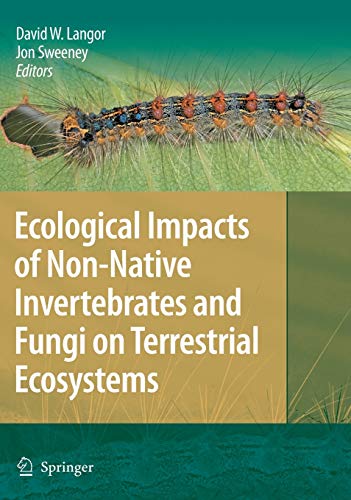
Since the arrival of Europeans about 500 years ago, an estimated 50,000 non-native species have been introduced to North America (including Hawaii). Non-native species figure prominently in our lives, often as ornamentals, sources of food or pests. Although many introduced species are beneficial, there is increasing awareness of the enormous economic costs associated with non-native pests. In contrast, the ecological impacts of non-native species have received much less public and scientific attention, despite the fact that invasion by exotic species ranks second to habitat destruction as a cause of species loss. In particular, there is little information about the ecological impacts of hyper-diverse groups such as terrestrial fungi and invertebrates.
A science symposium, Ecological impacts of non-native invertebrates and fungi on terrestrial ecosystems, held in 2006, brought together scientists from the USA and Canada to review the state of knowledge in this field of work. Additional reviews were solicited following the symposium. The resulting set of review/synthesis papers and case studies represents a cross-section of work on ecological impacts of non-native terrestrial invertebrates and fungi. Although there is a strong focus on Canadian work, there is also significant presentation of work in the northern USA and Europe.
Die Inhaltsangabe kann sich auf eine andere Ausgabe dieses Titels beziehen.
Von der hinteren Coverseite
Since the arrival of Europeans about 500 years ago, an estimated 50,000 non-native species have been introduced to North America (including Hawaii). Non-native species figure prominently in our lives, often as ornamentals, sources of food or pests. Although many introduced species are beneficial, there is increasing awareness of the enormous economic costs associated with non-native pests. In contrast, the ecological impacts of non-native species have received much less public and scientific attention, despite the fact that invasion by exotic species ranks second to habitat destruction as a cause of species loss. In particular, there is little information about the ecological impacts of hyper-diverse groups such as terrestrial fungi and invertebrates. A science symposium, Ecological impacts of non-native invertebrates and fungi on terrestrial ecosystems, held in 2006, brought together scientists from the USA and Canada to review the state of knowledge in this field of work. Additional reviews were solicited following the symposium. The resulting set of review/synthesis papers and case studies represents a cross-section of work on ecological impacts of non-native terrestrial invertebrates and fungi. Although there is a strong focus on Canadian work, there is also significant presentation of work in the northern USA and Europe.
„Über diesen Titel“ kann sich auf eine andere Ausgabe dieses Titels beziehen.
Suchergebnisse für Ecological Impacts of Non-Native Invertebrates and...

Beispielbild für diese ISBN
Ecological Impacts of Non-Native Invertebrates and Fungi on Terrestrial Ecosystems
Anbieter: Ria Christie Collections, Uxbridge, Vereinigtes Königreich
Verkäuferbewertung 5 von 5 Sternen

Zustand: New. In English. Artikel-Nr. ria9781402096792_new
Neu kaufen
EUR 129,85
EUR 13,34 Versand
Versand von Vereinigtes Königreich nach USA
Versand von Vereinigtes Königreich nach USA
Anzahl: Mehr als 20 verfügbar
Beispielbild für diese ISBN
Ecological Impacts of Non-Native Invertebrates and Fungi on Terrestrial Ecosystems
Anbieter: Buchpark, Trebbin, Deutschland
Verkäuferbewertung 5 von 5 Sternen
Zustand: Sehr gut. Zustand: Sehr gut | Sprache: Englisch | Produktart: Bücher | Since the arrival of Europeans about 500 years ago, an estimated 50,000 non-native species have been introduced to North America (including Hawaii). Non-native species figure prominently in our lives, often as ornamentals, sources of food or pests. Although many introduced species are beneficial, there is increasing awareness of the enormous economic costs associated with non-native pests. In contrast, the ecological impacts of non-native species have received much less public and scientific attention, despite the fact that invasion by exotic species ranks second to habitat destruction as a cause of species loss. In particular, there is little information about the ecological impacts of hyper-diverse groups such as terrestrial fungi and invertebrates.A science symposium, Ecological impacts of non-native invertebrates and fungi on terrestrial ecosystems, held in 2006, brought together scientists from the USA and Canada to review the state of knowledge in this field of work. Additional reviews were solicited following the symposium. The resulting set of review/synthesis papers and case studies represents a cross-section of work on ecological impacts of non-native terrestrial invertebrates and fungi. Although there is a strong focus on Canadian work, there is also significant presentation of work in the northern USA and Europe. Artikel-Nr. 4947447/12
Gebraucht kaufen
EUR 52,15
EUR 105,00 Versand
Versand von Deutschland nach USA
Versand von Deutschland nach USA
Anzahl: 1 verfügbar
Foto des Verkäufers
Ecological Impacts of Non-Native Invertebrates and Fungi on Terrestrial Ecosystems
Anbieter: AHA-BUCH GmbH, Einbeck, Deutschland
Verkäuferbewertung 5 von 5 Sternen
Buch. Zustand: Neu. Druck auf Anfrage Neuware - Printed after ordering - Since the arrival of Europeans about 500 years ago, an estimated 50,000 non-native species have been introduced to North America (including Hawaii). Non-native species figure prominently in our lives, often as ornamentals, sources of food or pests. Although many introduced species are beneficial, there is increasing awareness of the enormous economic costs associated with non-native pests. In contrast, the ecological impacts of non-native species have received much less public and scientific attention, despite the fact that invasion by exotic species ranks second to habitat destruction as a cause of species loss. In particular, there is little information about the ecological impacts of hyper-diverse groups such as terrestrial fungi and invertebrates.A science symposium, Ecological impacts of non-native invertebrates and fungi on terrestrial ecosystems, held in 2006, brought together scientists from the USA and Canada to review the state of knowledge in this field of work. Additional reviews were solicited following the symposium. The resulting set of review/synthesis papers and case studies represents a cross-section of work on ecological impacts of non-native terrestrial invertebrates and fungi. Although there is a strong focus on Canadian work, there is also significant presentation of work in the northern USA and Europe. Artikel-Nr. 9781402096792
Neu kaufen
EUR 122,94
EUR 35,00 Versand
Versand von Deutschland nach USA
Versand von Deutschland nach USA
Anzahl: 1 verfügbar
Beispielbild für diese ISBN
Ecological Impacts of Non-native Invertebrates and Fungi on Terrestrial Ecosystems
Anbieter: Revaluation Books, Exeter, Vereinigtes Königreich
Verkäuferbewertung 5 von 5 Sternen
Hardcover. Zustand: Brand New. 1st edition. 158 pages. 10.50x7.75x0.50 inches. In Stock. Artikel-Nr. x-1402096798
Neu kaufen
EUR 159,56
EUR 14,77 Versand
Versand von Vereinigtes Königreich nach USA
Versand von Vereinigtes Königreich nach USA
Anzahl: 2 verfügbar