
Verwandte Artikel zu Atlas of Human Chromosome Heteromorphisms
Inhaltsangabe
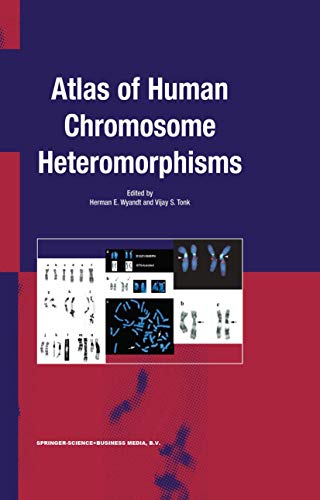
Critical to the accurate diagnosis of human illness is the need to distinguish clinical features that fall within the normal range from those that do not. That distinction is often challenging and not infrequently requires considerable experience at the bedside. It is not surprising that accurate cytogenetic diagnosis is also often a challenge, especially when chromosome study reveals morphologic findings that raise the question of normality. Given the realization that modern human cytogenetics is just over five decades old, it is noteworthy that thorough documentation of normal chromosome var- tion has not yet been accomplished. One key diagnostic consequence of the inability to distinguish a “normal” variation in chromosome structure from a pathologic change is a missed or inaccurate diagnosis. Clinical cytogeneticists have not, however, been idle. Rather, progressive biotechnological advances coupled with virtual completion of the human genome project have yielded increasingly better microscopic resolution of chromosome structure. Witness the progress from the early short condensed chromosomes to the later visualization of chromosomes through banding techniques, hi- resolution analysis in prophase, and more recently to analysis by fluorescent in situ hybridization (FISH).
Die Inhaltsangabe kann sich auf eine andere Ausgabe dieses Titels beziehen.
Von der hinteren Coverseite
Critical to the accurate diagnosis of human illness is the need to distinguish clinical features that fall within the normal range from those that do not. That distinction is often challenging and not infrequently requires considerable experience at the bedside. It is not surprising that accurate cytogenetic diagnosis is also often a challenge, especially when chromosome study reveals morphologic findings that raise the question of normality. Given the realization that modern human cytogenetics is just over five decades old, it is noteworthy that thorough documentation of normal chromosome var- tion has not yet been accomplished. One key diagnostic consequence of the inability to distinguish a ¿normal¿ variation in chromosome structure from a pathologic change is a missed or inaccurate diagnosis. Clinical cytogeneticists have not, however, been idle. Rather, progressive biotechnological advances coupled with virtual completion of the human genome project have yielded increasingly better microscopic resolution of chromosome structure. Witness the progress from the early short condensed chromosomes to the later visualization of chromosomes through banding techniques, hi- resolution analysis in prophase, and more recently to analysis by fluorescent in situ hybridization (FISH).
„Über diesen Titel“ kann sich auf eine andere Ausgabe dieses Titels beziehen.
Suchergebnisse für Atlas of Human Chromosome Heteromorphisms

Foto des Verkäufers
Atlas of Human Chromosome Heteromorphisms
Verlag:
Springer-Verlag Publishing, 2003
ISBN 10: 1402013035
ISBN 13: 9781402013034
Gebraucht
Hardcover
Anbieter: Salish Sea Books, Bellingham, WA, USA
Verkäuferbewertung 5 von 5 Sternen

Zustand: Good. Good; Hardcover; Covers are clean and glossy with "straight" edge-corners; Name written to the top and bottom textblock edges; The endpapers and text pages are all clean and unmarked; The binding is excellent with a straight spine; This book will be shipped in a sturdy cardboard box with foam padding; Medium Format (8.5" - 9.75" tall); 1.2 lbs; Purple and red covers with title in white lettering; 2003, Springer-Verlag Publishing; 279 pages; "Atlas of Human Chromosome Heteromorphisms," by H.E. Wyandt & Vijay S. Tonk. Artikel-Nr. SKU-0055AD07610116
Gebraucht kaufen
EUR 137,81
EUR 4,53 Versand
Versand innerhalb von USA
Versand innerhalb von USA
Anzahl: 1 verfügbar
Beispielbild für diese ISBN
Atlas of Human Chromosome Heteromorphisms
Anbieter: Ria Christie Collections, Uxbridge, Vereinigtes Königreich
Verkäuferbewertung 5 von 5 Sternen
Zustand: New. In English. Artikel-Nr. ria9781402013034_new
Neu kaufen
EUR 354,61
EUR 13,44 Versand
Versand von Vereinigtes Königreich nach USA
Versand von Vereinigtes Königreich nach USA
Anzahl: Mehr als 20 verfügbar
Foto des Verkäufers
Atlas of Human Chromosome Heteromorphisms
Verlag:
Kluwer Academic Publishers, US, 2003
ISBN 10: 1402013035
ISBN 13: 9781402013034
Neu
Hardcover
Anbieter: Rarewaves.com USA, London, LONDO, Vereinigtes Königreich
Verkäuferbewertung 5 von 5 Sternen
Hardback. Zustand: New. 2004 ed. Critical to the accurate diagnosis of human illness is the need to distinguish clinical features that fall within the normal range from those that do not. That distinction is often challenging and not infrequently requires considerable experience at the bedside. It is not surprising that accurate cytogenetic diagnosis is also often a challenge, especially when chromosome study reveals morphologic findings that raise the question of normality. Given the realization that modern human cytogenetics is just over five decades old, it is noteworthy that thorough documentation of normal chromosome var- tion has not yet been accomplished. One key diagnostic consequence of the inability to distinguish a "normal" variation in chromosome structure from a pathologic change is a missed or inaccurate diagnosis. Clinical cytogeneticists have not, however, been idle. Rather, progressive biotechnological advances coupled with virtual completion of the human genome project have yielded increasingly better microscopic resolution of chromosome structure. Witness the progress from the early short condensed chromosomes to the later visualization of chromosomes through banding techniques, hi- resolution analysis in prophase, and more recently to analysis by fluorescent in situ hybridization (FISH). Artikel-Nr. LU-9781402013034
Neu kaufen
EUR 388,29
Versand gratis
Versand von Vereinigtes Königreich nach USA
Versand von Vereinigtes Königreich nach USA
Anzahl: Mehr als 20 verfügbar
Beispielbild für diese ISBN
Atlas of Human Chromosome Heteromorphisms
Anbieter: Kennys Bookshop and Art Galleries Ltd., Galway, GY, Irland
Verkäuferbewertung 5 von 5 Sternen
Zustand: New. Provides a comprehensive view of human chromosome heteromorphisms, their applications, and their often speculated roles in aberrant chromosome behaviour relating to abnormal phenotype, pregnancy loss and cancer. This book is a pictorial atlas for common and unusual heteromorphisms and euchromatic variants. Editor(s): Wyandt, Herman E.; Tonk, Vijay S. Num Pages: 299 pages, biography. BIC Classification: MFN; PSAK; PSX. Category: (P) Professional & Vocational; (UP) Postgraduate, Research & Scholarly; (UU) Undergraduate. Dimension: 234 x 156 x 17. Weight in Grams: 597. . 2003. Hardback. . . . . Artikel-Nr. V9781402013034
Neu kaufen
EUR 411,15
EUR 9,50 Versand
Versand von Irland nach USA
Versand von Irland nach USA
Anzahl: 15 verfügbar
Foto des Verkäufers
Atlas of Human Chromosome Heteromorphisms
Anbieter: AHA-BUCH GmbH, Einbeck, Deutschland
Verkäuferbewertung 5 von 5 Sternen
Buch. Zustand: Neu. Druck auf Anfrage Neuware - Printed after ordering - Critical to the accurate diagnosis of human illness is the need to distinguish clinical features that fall within the normal range from those that do not. That distinction is often challenging and not infrequently requires considerable experience at the bedside. It is not surprising that accurate cytogenetic diagnosis is also often a challenge, especially when chromosome study reveals morphologic findings that raise the question of normality. Given the realization that modern human cytogenetics is just over five decades old, it is noteworthy that thorough documentation of normal chromosome var- tion has not yet been accomplished. One key diagnostic consequence of the inability to distinguish a 'normal' variation in chromosome structure from a pathologic change is a missed or inaccurate diagnosis. Clinical cytogeneticists have not, however, been idle. Rather, progressive biotechnological advances coupled with virtual completion of the human genome project have yielded increasingly better microscopic resolution of chromosome structure. Witness the progress from the early short condensed chromosomes to the later visualization of chromosomes through banding techniques, hi- resolution analysis in prophase, and more recently to analysis by fluorescent in situ hybridization (FISH). Artikel-Nr. 9781402013034
Neu kaufen
EUR 394,58
EUR 35,00 Versand
Versand von Deutschland nach USA
Versand von Deutschland nach USA
Anzahl: 1 verfügbar
Foto des Verkäufers
Atlas of Human Chromosome Heteromorphisms
Verlag:
Kluwer Academic Publishers, US, 2003
ISBN 10: 1402013035
ISBN 13: 9781402013034
Neu
Hardcover
Anbieter: Rarewaves.com UK, London, Vereinigtes Königreich
Verkäuferbewertung 5 von 5 Sternen
Hardback. Zustand: New. 2004 ed. Critical to the accurate diagnosis of human illness is the need to distinguish clinical features that fall within the normal range from those that do not. That distinction is often challenging and not infrequently requires considerable experience at the bedside. It is not surprising that accurate cytogenetic diagnosis is also often a challenge, especially when chromosome study reveals morphologic findings that raise the question of normality. Given the realization that modern human cytogenetics is just over five decades old, it is noteworthy that thorough documentation of normal chromosome var- tion has not yet been accomplished. One key diagnostic consequence of the inability to distinguish a "normal" variation in chromosome structure from a pathologic change is a missed or inaccurate diagnosis. Clinical cytogeneticists have not, however, been idle. Rather, progressive biotechnological advances coupled with virtual completion of the human genome project have yielded increasingly better microscopic resolution of chromosome structure. Witness the progress from the early short condensed chromosomes to the later visualization of chromosomes through banding techniques, hi- resolution analysis in prophase, and more recently to analysis by fluorescent in situ hybridization (FISH). Artikel-Nr. LU-9781402013034
Neu kaufen
EUR 373,46
EUR 77,92 Versand
Versand von Vereinigtes Königreich nach USA
Versand von Vereinigtes Königreich nach USA
Anzahl: Mehr als 20 verfügbar
Beispielbild für diese ISBN
Atlas of Human Chromosome Heteromorphisms
Anbieter: Kennys Bookstore, Olney, MD, USA
Verkäuferbewertung 4 von 5 Sternen

Zustand: New. Provides a comprehensive view of human chromosome heteromorphisms, their applications, and their often speculated roles in aberrant chromosome behaviour relating to abnormal phenotype, pregnancy loss and cancer. This book is a pictorial atlas for common and unusual heteromorphisms and euchromatic variants. Editor(s): Wyandt, Herman E.; Tonk, Vijay S. Num Pages: 299 pages, biography. BIC Classification: MFN; PSAK; PSX. Category: (P) Professional & Vocational; (UP) Postgraduate, Research & Scholarly; (UU) Undergraduate. Dimension: 234 x 156 x 17. Weight in Grams: 597. . 2003. Hardback. . . . . Books ship from the US and Ireland. Artikel-Nr. V9781402013034
Neu kaufen
EUR 541,94
EUR 9,52 Versand
Versand innerhalb von USA
Versand innerhalb von USA
Anzahl: 15 verfügbar