
Inhaltsangabe
From the acclaimed author of The Palace of Illusions, nine strangers are forced to connect in the wake of a natural disaster in this emotionally thrilling novel.
"Powerful and beautifully written." —Lisa See, author of Shanghai Girls
Late afternoon sun sneaks through the windows of a passport and visa office in an unnamed American city. Most customers and even most office workers have come and gone, but nine people remain. A punky teenager with an unexpected gift. An upper-class Caucasian couple whose relationship is disintegrating. A young Muslim-American man struggling with the fallout of 9/11. A graduate student haunted by a question about love. An African-American ex-soldier searching for redemption. A Chinese grandmother with a secret past. And two visa office workers on the verge of an adulterous affair.
When an earthquake rips through the afternoon lull, trapping these nine characters together, their focus first jolts to their collective struggle to survive. There's little food. The office begins to flood. Then, at a moment when the psychological and emotional stress seems nearly too much for them to bear, the young graduate student suggests that each tell a personal tale, "one amazing thing" from their lives, which they have never told anyone before. And as their surprising stories of romance, marriage, family, political upheaval, and self-discovery unfold against the urgency of their life-or-death circumstances, the novel proves the transcendent power of stories and the meaningfulness of human expression itself.
One Amazing Thing is a passionate creation about survival—and what makes life worth fighting for.
Die Inhaltsangabe kann sich auf eine andere Ausgabe dieses Titels beziehen.
Über die Autorin bzw. den Autor
Chitra Divakaruni is an award-winning and bestselling novelist and poet. She is the author of fourteen books in all, including the short story collection The Unknown Errors of Our Lives and the novels Sister of My Heart, The Mistress of Spices, Queen of Dreams, and The Palace of Illusions. Two of her novels have been made into movies. Her writings have appeared in more than fifty magazines, including the Atlantic Monthly and the New Yorker. She has also become a frequently sought-after op-ed and NPR commentator regarding how the West perceives Southeast Asia.
Auszug. © Genehmigter Nachdruck. Alle Rechte vorbehalten.
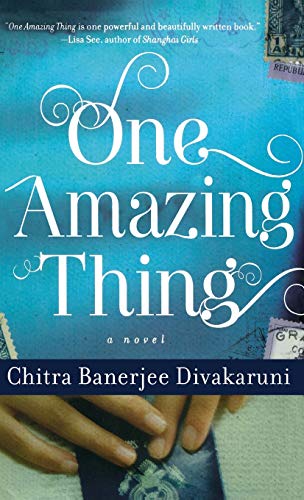
One Amazing Thing
By Chitra Banerjee DivakaruniHyperion
Copyright © 2009 Chitra Banerjee DivakaruniAll right reserved.
ISBN: 978-1-4013-4099-5
Chapter One
When the first rumble came, no one in the visa office, down in the basement of the Indian consulate, thought anything of it. Immersed in regret or hope or trepidation (as is usual for persons planning a major journey), they took it to be a passing cable car. Or perhaps the repair crew that had draped the pavement outside with neon-orange netting, making entry into the building a feat that required significant gymnastic skill, had resumed drilling. Uma Sinha watched a flake of plaster float from the ceiling in a lazy dance until it disappeared into the implausibly green foliage of the plant that stood at attention in the corner. She watched, but she didn't really see it, for she was mulling over a question that had troubled her for the last several weeks: Did her boyfriend, Ramon (who didn't know where she was right now), love her more than she loved him, and (should her suspicion that he did so prove correct) was that a good thing?Uma snapped shut her copy of Chaucer, which she had brought with her to compensate for the Medieval Lit class she was missing at the university. In the last few hours she had managed to progress only a page and a half into "The Wife of Bath's Tale"-despite the fact that the bawdy, cheerful Wife was one of her favorite characters. Now she surrendered to reality: the lobby of the visa office, with all its comings and goings, its calling out of the names of individuals more fortunate than herself, was not a place suited to erudite endeavors. She surrendered with ill grace-it was a belief of hers that people ought to rise above the challenges of circumstance-and glared at the woman stationed behind the glassed-in customer-service window. The woman was dressed in a blue sari of an electrifying hue. Her hair was gathered into a tight bun at the nape of her neck, and she wore a daunting red dot in the center of her forehead. She ignored Uma superbly, as people do when faced with those whose abject destinies they control.
Uma did not trust this woman. When she had arrived this morning, assured of a nine a.m. appointment, she found several people swirling around the lobby, and more crowding behind, who had been similarly assured. When questioned, the woman had shrugged, pointing to the pile upon which Uma was to place her paperwork. Clients, she told Uma, would be called according to the order of arrival for their interview with the visa officer. Here she nodded reverently toward the office to the side of the lobby. Its closed door bore the name Mr. V.K.S. Mangalam stenciled in flowery letters on the nubby, opaque glass. Craning her neck, Uma saw that there was a second door to the office, a blank wooden slab that opened into the sequestered employees area: the customer-service window and, behind it, desks at which two women sorted piles of official-looking documents into other piles and occasionally stamped them. The woman at the counter pursed her lips at Uma's curiosity and frostily advised her to take a seat while there was one still available.
Uma sat. What else could she do? But she resolved to keep an eye on the woman, who looked entirely capable of shuffling the visa applications around out of bored caprice when no one was watching.
* * *
NOW IT WAS THREE P.M. A FEW MINUTES EARLIER, THE WOMEN at the desks had left on their midafternoon break. They had asked the woman in the blue sari if she wanted to accompany them, and when she had declined, stating that she would take her break later, they had dissolved into giggles and whispers, which she chose to disregard. There remained four sets of people in the room, apart from Urea. In the distant corner was an old Chinese woman dressed in a traditional tunic, accompanied by a fidgety, sullen girl of thirteen or fourteen who should surely have been in school. The teenager wore her hair in spikes and sported an eyebrow ring. Her lipstick was black and so were her clothes. Did they allow students to attend school dressed like that nowadays? Uma wondered. Then she felt old-fashioned. From time to time, grandmother and granddaughter fought in fiery whispers, words that Uma longed to decipher. She had always been this way: interested-quite unnecessarily, some would say-in the secrets of strangers. When flying, she always chose a window seat so that when the plane took off or landed, she could look down on the tiny houses and imagine the lives of the people who inhabited them. Now she made up the dialogue she could not understand.
I missed a big test today because of your stupid appointment. If I fail Algebra, just remember it was your fault-because you were too scared to ride the bus here by yourself
Whose fault was it that you overslept six times this month and didn't get to school for your morning classes, Missy? And your poor parents, slaving at their jobs, thinking you were hard at work! Maybe I should tell them what really goes on at home while they're killing themselves to provide for you....
"But sweetie, all that has changed. It's a different India now, India Shining!"
And perhaps it was, for hadn't her parents glided effortlessly into their new life, renting an air-conditioned terrace-top flat and hiring a retinue of servants to take care of every possible chore? ("I haven't washed a single dish since I moved here!" her mother rhapsodized on the phone.) A chauffeured car whisked her father to his office each morning. ("I work only from ten to four," he added proudly from the other phone.) It returned to take her mother shopping, or to see childhood friends, or to get a pedicure, or (before Uma could chide her for being totally frivolous) to volunteer with an agency that educated slum children. In the evenings her parents attended Rabindra Sangeet concerts together, or watched movies on gigantic screens in theaters that resembled palaces, or walked hand in hand (such things were accepted in India Shining) by the same lake where they had met secretly as college students, or went to the club for drinks and a game of bridge. They were invited out every weekend and sometimes on weeknights as well. They vacationed in Kulu Manali in the summer and Goa in the winter.
Uma was happy for her parents, though secretly she disapproved of their newly hedonistic lifestyle. (Yet how could she object when it was so much better than what she often saw around her: couples losing interest in each other, living in wooden togetherness or even breaking up?) Was it partly that she felt excluded? Or was it that by contrast her university life, which she had been so proud of, with its angst-filled film festivals, its cards where heated intellectual discussions raged late into the night, its cavernous libraries where one might, at any moment, bump into a Nobel laureate, suddenly appeared lackluster? She said nothing, waiting in a stew of anxiety and anticipation for this honeymoon with India to be over, for disillusion and dyspepsia to set in. A year passed. Her mother continued as blithe as ever, though surely she must have faced problems. Who doesn't? (Why then did she conceal them from Uma?) Now and then she urged Uma to visit. "We'll go to Agra and see the Taj Mahal together-we're saving it for you," she would say. Or "I know the best ayurvedic spa. They give sesame oil massages like you wouldn't believe." In a recent conversation, she'd said, twice, "We miss you. Why don't you come visit? We'll send you a ticket."
There had been something plaintive about her voice...
„Über diesen Titel“ kann sich auf eine andere Ausgabe dieses Titels beziehen.
Weitere beliebte Ausgaben desselben Titels

Suchergebnisse für One Amazing Thing

Beispielbild für diese ISBN
One Amazing Thing
Verlag:
Grand Central Publishing, 2010
ISBN 10: 1401340997
ISBN 13: 9781401340995
Gebraucht
Softcover
Erstausgabe
Anbieter: Better World Books: West, Reno, NV, USA
Verkäuferbewertung 5 von 5 Sternen

Zustand: Very Good. 1st Edition. Pages intact with possible writing/highlighting. Binding strong with minor wear. Dust jackets/supplements may not be included. Stock photo provided. Product includes identifying sticker. Better World Books: Buy Books. Do Good. Artikel-Nr. 11133394-75
Gebraucht kaufen
EUR 6,88
Versand gratis
Versand innerhalb von USA
Versand innerhalb von USA
Anzahl: 1 verfügbar
Beispielbild für diese ISBN
One Amazing Thing
Verlag:
Grand Central Publishing, 2010
ISBN 10: 1401340997
ISBN 13: 9781401340995
Gebraucht
Softcover
Erstausgabe
Anbieter: Better World Books: West, Reno, NV, USA
Verkäuferbewertung 5 von 5 Sternen
Zustand: Good. 1st Edition. Former library copy. Pages intact with minimal writing/highlighting. The binding may be loose and creased. Dust jackets/supplements are not included. Includes library markings. Stock photo provided. Product includes identifying sticker. Better World Books: Buy Books. Do Good. Artikel-Nr. GRP102375607
Gebraucht kaufen
EUR 6,88
Versand gratis
Versand innerhalb von USA
Versand innerhalb von USA
Anzahl: 2 verfügbar
Beispielbild für diese ISBN
One Amazing Thing
Verlag:
Grand Central Publishing, 2010
ISBN 10: 1401340997
ISBN 13: 9781401340995
Gebraucht
Softcover
Anbieter: World of Books (was SecondSale), Montgomery, IL, USA
Verkäuferbewertung 5 von 5 Sternen
Zustand: Good. Item in good condition. Textbooks may not include supplemental items i.e. CDs, access codes etc. Artikel-Nr. 00103303552
Gebraucht kaufen
EUR 6,96
Versand gratis
Versand innerhalb von USA
Versand innerhalb von USA
Anzahl: 2 verfügbar
Beispielbild für diese ISBN
One Amazing Thing
Verlag:
Grand Central Publishing, 2010
ISBN 10: 1401340997
ISBN 13: 9781401340995
Gebraucht
Softcover
Anbieter: World of Books (was SecondSale), Montgomery, IL, USA
Verkäuferbewertung 5 von 5 Sternen
Zustand: Very Good. Item in very good condition! Textbooks may not include supplemental items i.e. CDs, access codes etc. Artikel-Nr. 00081025702
Gebraucht kaufen
EUR 6,96
Versand gratis
Versand innerhalb von USA
Versand innerhalb von USA
Anzahl: 3 verfügbar
Beispielbild für diese ISBN
One Amazing Thing
Anbieter: ThriftBooks-Dallas, Dallas, TX, USA
Verkäuferbewertung 5 von 5 Sternen
Hardcover. Zustand: Very Good. No Jacket. May have limited writing in cover pages. Pages are unmarked. ~ ThriftBooks: Read More, Spend Less. Artikel-Nr. G1401340997I4N00
Gebraucht kaufen
EUR 8,91
Versand gratis
Versand innerhalb von USA
Versand innerhalb von USA
Anzahl: 1 verfügbar
Beispielbild für diese ISBN
One Amazing Thing
Anbieter: ThriftBooks-Dallas, Dallas, TX, USA
Verkäuferbewertung 5 von 5 Sternen
Hardcover. Zustand: As New. No Jacket. Pages are clean and are not marred by notes or folds of any kind. ~ ThriftBooks: Read More, Spend Less. Artikel-Nr. G1401340997I2N00
Gebraucht kaufen
EUR 8,91
Versand gratis
Versand innerhalb von USA
Versand innerhalb von USA
Anzahl: 1 verfügbar
Beispielbild für diese ISBN
One Amazing Thing
Verlag:
Hachette Books, 2010
ISBN 10: 1401340997
ISBN 13: 9781401340995
Gebraucht
Paperback
Erstausgabe
Signiert
Anbieter: Books From California, Simi Valley, CA, USA
Verkäuferbewertung 4 von 5 Sternen

Paperback. Zustand: Very Good. Signed. First Edition. First edition/ Signed edition. Artikel-Nr. mon0004041757
Gebraucht kaufen
EUR 6,66
EUR 4,33 Versand
Versand innerhalb von USA
Versand innerhalb von USA
Anzahl: 1 verfügbar
Beispielbild für diese ISBN
One Amazing Thing
Verlag:
Grand Central Publishing, 2010
ISBN 10: 1401340997
ISBN 13: 9781401340995
Gebraucht
Softcover
Erstausgabe
Anbieter: Better World Books Ltd, Dunfermline, Vereinigtes Königreich
Verkäuferbewertung 5 von 5 Sternen
Zustand: Very Good. 1st Edition. Pages intact with possible writing/highlighting. Binding strong with minor wear. Dust jackets/supplements may not be included. Stock photo provided. Product includes identifying sticker. Better World Books: Buy Books. Do Good. Artikel-Nr. 11133394-75
Gebraucht kaufen
EUR 5,60
EUR 5,79 Versand
Versand von Vereinigtes Königreich nach USA
Versand von Vereinigtes Königreich nach USA
Anzahl: 1 verfügbar
Beispielbild für diese ISBN
One Amazing Thing
Verlag:
Hachette Books, 2010
ISBN 10: 1401340997
ISBN 13: 9781401340995
Gebraucht
Paperback
Signiert
Anbieter: Books From California, Simi Valley, CA, USA
Verkäuferbewertung 4 von 5 Sternen
Paperback. Zustand: Good. Signed. SIGNED by author on title page. Some shelf wear. Pages/boards/jacket clean. Artikel-Nr. mon0003431802
Gebraucht kaufen
EUR 7,15
EUR 4,33 Versand
Versand innerhalb von USA
Versand innerhalb von USA
Anzahl: 1 verfügbar
Foto des Verkäufers
One Amazing Thing, First Edition, Advance Reading Copy, New
Verlag:
Hachette Books, 2010
ISBN 10: 1401340997
ISBN 13: 9781401340995
Gebraucht
Soft cover
Erstausgabe
Anbieter: Park & Read Books, Herndon, VA, USA
Verkäuferbewertung 5 von 5 Sternen
Soft cover. Zustand: As New. 1st Edition. Softcover, Condition: As New, trade paperback format, 8" x 6", 220 pages, Advance Reading Copy as printed on front & back covers, Condition: As New only due to a very small bump to bottom at spine edge otherwise book is New, Unread, Spine Not Broken, First Edition as stated, First Printing, Full # print line 10 9 8 7 6 5 4 3 2 1 as printed on copyright page, Novels by Chitra Banerjee Divakaruni: * The Mistress of Spices (1997) Sister of My Heart (1999) The Vine of Desire (2002) Neela: Victory Song (2002) Queen of Dreams (2004) The Palace of Illusions (2008) One Amazing Thing (2010) Oleander Girl (2013) Before We Visit the Goddess (2016) The Forest of Enchantments (2019) The Last Queen (2021) Independence (2023). Artikel-Nr. ABE-1679520178137
Gebraucht kaufen
EUR 18,77
EUR 4,34 Versand
Versand innerhalb von USA
Versand innerhalb von USA
Anzahl: 1 verfügbar