
Verwandte Artikel zu The Burgess Boys: A Novel
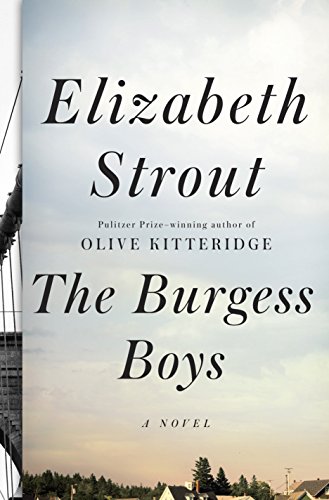
Inhaltsangabe
NEW YORK TIMES BESTSELLER • “What truly makes Strout exceptional . . . is the perfect balance she achieves between the tides of story and depths of feeling.”—Chicago Tribune
NAMED ONE OF THE BEST BOOKS OF THE YEAR BY The Washington Post • NPR • Good Housekeeping
Haunted by the freak accident that killed their father when they were children, Jim and Bob Burgess escaped from their Maine hometown of Shirley Falls for New York City as soon as they possibly could. Jim, a sleek, successful corporate lawyer, has belittled his bighearted brother their whole lives, and Bob, a Legal Aid attorney who idolizes Jim, has always taken it in stride. But their long-standing dynamic is upended when their sister, Susan—the Burgess sibling who stayed behind—urgently calls them home. Her lonely teenage son, Zach, has gotten himself into a world of trouble, and Susan desperately needs their help. And so the Burgess brothers return to the landscape of their childhood, where the long-buried tensions that have shaped and shadowed their relationship begin to surface in unexpected ways that will change them forever.
With a rare combination of brilliant storytelling, exquisite prose, and remarkable insight into character, Elizabeth Strout has brought to life two deeply human protagonists whose struggles and triumphs will resonate with readers long after they turn the final page. Tender, tough-minded, loving, and deeply illuminating about the ties that bind us to family and home, The Burgess Boys is perhaps Elizabeth Strout’s most astonishing work of literary art.
Die Inhaltsangabe kann sich auf eine andere Ausgabe dieses Titels beziehen.
Über die Autorin bzw. den Autor
Elizabeth Strout is the #1 New York Times bestselling author of Olive Kitteridge, winner of the Pulitzer Prize; Olive, Again, an Oprah’s Book Club pick; Anything Is Possible, winner of the Story Prize; My Name is Lucy Barton, longlisted for the Man Booker Prize; The Burgess Boys, named one of the best books of the year by The Washington Post and NPR; Abide with Me, a national bestseller; and Amy and Isabelle, winner of the Los Angeles Times Art Seidenbaum Award for First Fiction and the Chicago Tribune Heartland Prize. She has also been a finalist for the National Book Critics Circle Award, the PEN/Faulkner Award for Fiction, the International Dublin Literary Award, and the Orange Prize. Her short stories have been published in a number of magazines, including The New Yorker and O: The Oprah Magazine. Elizabeth Strout lives in New York City.
Auszug. © Genehmigter Nachdruck. Alle Rechte vorbehalten.
1
On a breezy October afternoon in the Park Slope neighborhood of Brooklyn, New York, Helen Farber Burgess was packing for vacation. A big blue suitcase lay open on the bed, and clothes her husband had chosen the night before were folded and stacked on the lounge chair nearby. Sunlight kept springing into the room from the shifting clouds outside, making the brass knobs on the bed shine brightly and the suitcase become very blue. Helen was walking back and forth between the dressing room—with its enormous mirrors and white horsehair wallpaper, the dark woodwork around the long window—walking between that and the bedroom, which had French doors that were closed right now, but in warmer weather opened onto a deck that looked out over the garden. Helen was experiencing a kind of mental paralysis that occurred when she packed for a trip, so the abrupt ringing of the telephone brought relief. When she saw the word private, she knew it was either the wife of one of her husband’s law partners—they were a prestigious firm of famous lawyers—or else her brother-in-law, Bob, who’d had an unlisted number for years but was not, and never would be, famous at all.
“I’m glad it’s you,” she said, pulling a colorful scarf from the bureau drawer, holding it up, dropping it on the bed.
“You are?” Bob’s voice sounded surprised.
“I was afraid it would be Dorothy.” Walking to the window, Helen peered out at the garden. The plum tree was bending in the wind, and yellow leaves from the bittersweet swirled across the ground.
“Why didn’t you want it to be Dorothy?”
“She tires me right now,” said Helen.
“You’re about to go away with them for a week.”
“Ten days. I know.”
A short pause, and then Bob said, “Yeah,” his voice dropping into an understanding so quick and entire—it was his strong point, Helen thought, his odd ability to fall feetfirst into the little pocket of someone else’s world for those few seconds. It should have made him a good husband but apparently it hadn’t: Bob’s wife had left him years ago.
“We’ve gone away with them before,” Helen reminded him. “It’ll be fine. Alan’s an awfully nice fellow. Dull.”
“And managing partner of the firm,” Bob said.
“That too.” Helen sang the words playfully. “A little difficult to say, ‘Oh, we’d rather go alone on this trip.’ Jim says their older girl is really messing up right now—she’s in high school—and the family therapist suggested that Dorothy and Alan get away. I don’t know why you ‘get away’ if your kid’s messing up, but there we are.”
“I don’t know either,” Bob said sincerely. Then: “Helen, this thing just happened.”
She listened, folding a pair of linen slacks. “Come on over,” she interrupted. “We’ll go across the street for dinner when Jim gets home.”
After that she was able to pack with authority. The colorful scarf was included with three white linen blouses and black ballet flats and the coral necklace Jim had bought her last year. Over a whiskey sour with Dorothy on the terrace, while they waited for the men to shower from golf, Helen would say, “Bob’s an interesting fellow.” She might even mention the accident—how it was Bob, four years old, who’d been playing with the gears that caused the car to roll over their father and kill him; the man had walked down the hill of the driveway to fix something about the mailbox, leaving all three young kids in the car. A perfectly awful thing. And never mentioned. Jim had told her once in thirty years. But Bob was an anxious man, Helen liked to watch out for him.
“You’re rather a saint,” Dorothy might say, sitting back, her eyes blocked by huge sunglasses.
Helen would shake her head. “Just a person who needs to be needed. And with the children grown—” No, she’d not mention the children. Not if the Anglins’ daughter was flunking courses, staying out until dawn. How would they spend ten days together and not mention the children? She’d ask Jim.
Helen went downstairs, stepped into the kitchen. “Ana,” she said to her housekeeper, who was scrubbing sweet potatoes with a vegetable brush. “Ana, we’re going to eat out tonight. You can go home.”
The autumn clouds, magnificent in their variegated darkness, were being spread apart by the wind, and great streaks of sunshine splashed down on the buildings on Seventh Avenue. This is where the Chinese restaurants were, the card shops, the jewelry shops, the grocers with the fruits and vegetables and rows of cut flowers. Bob Burgess walked past all these, up the sidewalk in the direction of his brother’s house.
Bob was a tall man, fifty-one years old, and here was the thing about Bob: He was a likeable fellow. To be with Bob made people feel as if they were inside a small circle of us-ness. If Bob had known this about himself his life might have been different. But he didn’t know it, and his heart was often touched by an undefined fear. Also, he wasn’t consistent. Friends agreed that you could have a great time with him and then you’d see him again and he’d be vacant. This part Bob knew, because his former wife had told him. Pam said he went away in his head.
“Jim gets like that too,” Bob had offered.
“We’re not talking about Jim.”
Waiting at the curb for the light to change, Bob felt a swell of gratitude toward his sister-in-law, who’d said, “We’ll go across the street for dinner when Jim gets home.” It was Jim he wanted to see. What Bob had watched earlier, sitting by the window in his fourth-floor apartment, what he had heard in the apartment down below—it had shaken him, and crossing the street now, passing a coffee shop where young people sat on couches in cavernous gloom with faces mesmerized by laptop screens, Bob felt removed from the familiarity of all he walked by. As though he had not lived half his life in New York and loved it as one would a person, as though he had never left the wide expanses of wild grass, never known or wanted anything but bleak New England skies.
“Your sister just called,” said Helen as she let Bob in through the grated door beneath the brownstone’s stoop. “Wanted Jim and sounded grim.” Helen turned from hanging Bob’s coat in the closet, adding, “I know. It’s just the way she sounds. But I still say, Susan smiled at me once.” Helen sat on the couch, tucking her legs in their black tights beneath her. “I was trying to copy a Maine accent.”
Bob sat in the rocking chair. His knees pumped up and down.
“No one should try and copy a Maine accent to a Mainer,” Helen continued. “I don’t know why the Southerners are so much nicer about it, but they are. If you say ‘Hi, y’all’ to a Southerner, you don’t feel like they’re smirking at you. Bobby, you’re all jumpy.” She leaned forward, patting the air. “It’s all right. You can be jumpy as long as you’re okay. Are you okay?”
All his life, kindness had weakened Bob, and he felt now the physicality of this, a sort of fluidity moving through his chest. “Not really,” he admitted. “But you’re right about the accent stuff. When people say,...
„Über diesen Titel“ kann sich auf eine andere Ausgabe dieses Titels beziehen.
Suchergebnisse für The Burgess Boys: A Novel

Beispielbild für diese ISBN
The Burgess Boys: A Novel
Anbieter: World of Books (was SecondSale), Montgomery, IL, USA
Verkäuferbewertung 5 von 5 Sternen

Hardback. Zustand: Fair. NEW YORK TIMES BESTSELLER - Includes Elizabeth Strout's never-before-published essay about the origins of The Burgess BoysNAMED ONE OF THE BEST BOOKS OF THE YEAR BY The Washington Post - NPR - Good Housekeeping Elizabeth Strout animates the ordinary with an astonishing force, wrote The New Yorker on the publication of her Pulitzer Prize-winning Olive Kitteridge. The San Francisco Chronicle praised Strout's magnificent gift for humanizing characters. Now the acclaimed author returns with a stunning novel as powerful and moving as any work in contemporary literature. Haunted by the freak accident that killed their father when they were children, Jim and Bob Burgess escaped from their Maine hometown of Shirley Falls for New York City as soon as they possibly could. Jim, a sleek, successful corporate lawyer, has belittled his bighearted brother their whole lives, and Bob, a Legal Aid attorney who idolizes Jim, has always taken it in stride. But their long-standing dynamic is upended when their sister, Susan--the Burgess sibling who stayed behind--urgently calls them home. Her lonely teenage son, Zach, has gotten himself into a world of trouble, and Susan desperately needs their help. And so the Burgess brothers return to the landscape of their childhood, where the long-buried tensions that have shaped and shadowed their relationship begin to surface in unexpected ways that will change them forever. With a rare combination of brilliant storytelling, exquisite prose, and remarkable insight into character, Elizabeth Strout has brought to life two deeply human protagonists whose struggles and triumphs will resonate with readers long after they turn the final page. Tender, tough-minded, loving, and deeply illuminating about the ties that bind us to family and home, The Burgess Boys is Elizabeth Strout's newest and perhaps most astonishing work of literary art. Look for special features inside. Join the Random House Reader's Circle for author chats and more.What truly makes Strout exceptional . . . is the perfect balance she achieves between the tides of story and depths of feeling.--Chicago Tribune Strout's prose propels the story forward with moments of startlingly poetic clarity.--The New Yorker Elizabeth Strout's first two books, Abide with Me and Amy and Isabelle, were highly thought of, and her third, Olive Kitteridge, won the Pulitzer Prize in fiction. But The Burgess Boys, her most recent novel, is her best yet.--The Boston Globe A portrait of an American community in turmoil that's as ambitious as Philip Roth's American Pastoral but more intimate in tone.--Time Strout's] extraordinary narrative gifts are evident again. . . . At times The Burgess Boys is] almost effortlessly fluid, with superbly rendered dialogue, sudden and unexpected bolts of humor and . . . startling riffs of gripping emotion.--Associated Press Strout] is at her masterful best when conjuring the two Burgess boys. . . . Scenes between them ring so true.--San Francisco Chronicle. Artikel-Nr. 00094155665
Gebraucht kaufen
EUR 3,84
Versand gratis
Versand innerhalb von USA
Versand innerhalb von USA
Anzahl: 4 verfügbar
Beispielbild für diese ISBN
The Burgess Boys: A Novel
Anbieter: World of Books (was SecondSale), Montgomery, IL, USA
Verkäuferbewertung 5 von 5 Sternen
Hardback. Zustand: Good. NEW YORK TIMES BESTSELLER - Includes Elizabeth Strout's never-before-published essay about the origins of The Burgess BoysNAMED ONE OF THE BEST BOOKS OF THE YEAR BY The Washington Post - NPR - Good Housekeeping Elizabeth Strout animates the ordinary with an astonishing force, wrote The New Yorker on the publication of her Pulitzer Prize-winning Olive Kitteridge. The San Francisco Chronicle praised Strout's magnificent gift for humanizing characters. Now the acclaimed author returns with a stunning novel as powerful and moving as any work in contemporary literature. Haunted by the freak accident that killed their father when they were children, Jim and Bob Burgess escaped from their Maine hometown of Shirley Falls for New York City as soon as they possibly could. Jim, a sleek, successful corporate lawyer, has belittled his bighearted brother their whole lives, and Bob, a Legal Aid attorney who idolizes Jim, has always taken it in stride. But their long-standing dynamic is upended when their sister, Susan--the Burgess sibling who stayed behind--urgently calls them home. Her lonely teenage son, Zach, has gotten himself into a world of trouble, and Susan desperately needs their help. And so the Burgess brothers return to the landscape of their childhood, where the long-buried tensions that have shaped and shadowed their relationship begin to surface in unexpected ways that will change them forever. With a rare combination of brilliant storytelling, exquisite prose, and remarkable insight into character, Elizabeth Strout has brought to life two deeply human protagonists whose struggles and triumphs will resonate with readers long after they turn the final page. Tender, tough-minded, loving, and deeply illuminating about the ties that bind us to family and home, The Burgess Boys is Elizabeth Strout's newest and perhaps most astonishing work of literary art. Look for special features inside. Join the Random House Reader's Circle for author chats and more.What truly makes Strout exceptional . . . is the perfect balance she achieves between the tides of story and depths of feeling.--Chicago Tribune Strout's prose propels the story forward with moments of startlingly poetic clarity.--The New Yorker Elizabeth Strout's first two books, Abide with Me and Amy and Isabelle, were highly thought of, and her third, Olive Kitteridge, won the Pulitzer Prize in fiction. But The Burgess Boys, her most recent novel, is her best yet.--The Boston Globe A portrait of an American community in turmoil that's as ambitious as Philip Roth's American Pastoral but more intimate in tone.--Time Strout's] extraordinary narrative gifts are evident again. . . . At times The Burgess Boys is] almost effortlessly fluid, with superbly rendered dialogue, sudden and unexpected bolts of humor and . . . startling riffs of gripping emotion.--Associated Press Strout] is at her masterful best when conjuring the two Burgess boys. . . . Scenes between them ring so true.--San Francisco Chronicle. Artikel-Nr. 00099072809
Gebraucht kaufen
EUR 3,84
Versand gratis
Versand innerhalb von USA
Versand innerhalb von USA
Anzahl: Mehr als 20 verfügbar
Foto des Verkäufers
The Burgess Boys: A Novel
Anbieter: Dream Books Co., Denver, CO, USA
Verkäuferbewertung 5 von 5 Sternen
Zustand: good. Gently used with minimal wear on the corners and cover. A few pages may contain light highlighting or writing, but the text remains fully legible. Dust jacket may be missing, and supplemental materials like CDs or codes may not be included. May be ex-library with library markings. Ships promptly! Artikel-Nr. DBV.1400067685.G
Gebraucht kaufen
EUR 3,85
Versand gratis
Versand innerhalb von USA
Versand innerhalb von USA
Anzahl: 1 verfügbar
Beispielbild für diese ISBN
The Burgess Boys
Anbieter: ThriftBooks-Reno, Reno, NV, USA
Verkäuferbewertung 5 von 5 Sternen
Hardcover. Zustand: Good. No Jacket. Missing dust jacket; Pages can have notes/highlighting. Spine may show signs of wear. ~ ThriftBooks: Read More, Spend Less. Artikel-Nr. G1400067685I3N01
Gebraucht kaufen
EUR 5,90
Versand gratis
Versand innerhalb von USA
Versand innerhalb von USA
Anzahl: 1 verfügbar
Beispielbild für diese ISBN
The Burgess Boys
Anbieter: ThriftBooks-Reno, Reno, NV, USA
Verkäuferbewertung 5 von 5 Sternen
Hardcover. Zustand: Good. No Jacket. Former library book; Pages can have notes/highlighting. Spine may show signs of wear. ~ ThriftBooks: Read More, Spend Less. Artikel-Nr. G1400067685I3N10
Gebraucht kaufen
EUR 5,90
Versand gratis
Versand innerhalb von USA
Versand innerhalb von USA
Anzahl: 1 verfügbar
Beispielbild für diese ISBN
The Burgess Boys
Anbieter: ThriftBooks-Phoenix, Phoenix, AZ, USA
Verkäuferbewertung 5 von 5 Sternen
Hardcover. Zustand: Good. No Jacket. Former library book; Pages can have notes/highlighting. Spine may show signs of wear. ~ ThriftBooks: Read More, Spend Less. Artikel-Nr. G1400067685I3N10
Gebraucht kaufen
EUR 5,90
Versand gratis
Versand innerhalb von USA
Versand innerhalb von USA
Anzahl: 1 verfügbar
Beispielbild für diese ISBN
The Burgess Boys
Anbieter: ThriftBooks-Dallas, Dallas, TX, USA
Verkäuferbewertung 5 von 5 Sternen
Hardcover. Zustand: Good. No Jacket. Pages can have notes/highlighting. Spine may show signs of wear. ~ ThriftBooks: Read More, Spend Less. Artikel-Nr. G1400067685I3N00
Gebraucht kaufen
EUR 5,92
Versand gratis
Versand innerhalb von USA
Versand innerhalb von USA
Anzahl: 1 verfügbar
Beispielbild für diese ISBN
The Burgess Boys
Anbieter: ThriftBooks-Atlanta, AUSTELL, GA, USA
Verkäuferbewertung 5 von 5 Sternen
Hardcover. Zustand: Good. No Jacket. Missing dust jacket; Pages can have notes/highlighting. Spine may show signs of wear. ~ ThriftBooks: Read More, Spend Less. Artikel-Nr. G1400067685I3N01
Gebraucht kaufen
EUR 5,92
Versand gratis
Versand innerhalb von USA
Versand innerhalb von USA
Anzahl: 1 verfügbar
Beispielbild für diese ISBN
The Burgess Boys
Anbieter: ThriftBooks-Dallas, Dallas, TX, USA
Verkäuferbewertung 5 von 5 Sternen
Hardcover. Zustand: Good. No Jacket. Missing dust jacket; Pages can have notes/highlighting. Spine may show signs of wear. ~ ThriftBooks: Read More, Spend Less. Artikel-Nr. G1400067685I3N01
Gebraucht kaufen
EUR 5,92
Versand gratis
Versand innerhalb von USA
Versand innerhalb von USA
Anzahl: 1 verfügbar
Beispielbild für diese ISBN
The Burgess Boys
Anbieter: ThriftBooks-Atlanta, AUSTELL, GA, USA
Verkäuferbewertung 5 von 5 Sternen
Hardcover. Zustand: Good. No Jacket. Former library book; Pages can have notes/highlighting. Spine may show signs of wear. ~ ThriftBooks: Read More, Spend Less. Artikel-Nr. G1400067685I3N10
Gebraucht kaufen
EUR 5,92
Versand gratis
Versand innerhalb von USA
Versand innerhalb von USA
Anzahl: 1 verfügbar