
Verwandte Artikel zu The Worm at the Core: On the Role of Death in Life
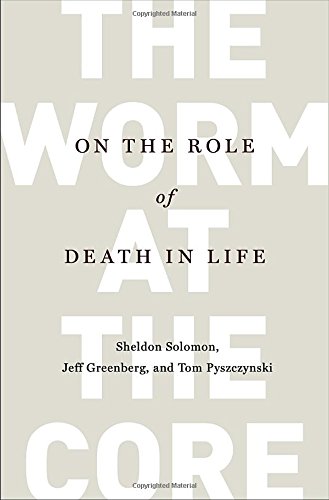
Inhaltsangabe
A transformative, fascinating theory—based on robust and groundbreaking experimental research—reveals how our unconscious fear of death powers almost everything we do, shining a light on the hidden motives that drive human behavior
More than one hundred years ago, the American philosopher William James dubbed the knowledge that we must die “the worm at the core” of the human condition. In 1974, cultural anthropologist Ernest Becker won the Pulitzer Prize for his book The Denial of Death, arguing that the terror of death has a pervasive effect on human affairs. Now authors Sheldon Solomon, Jeff Greenberg, and Tom Pyszczynski clarify with wide-ranging evidence the many ways the worm at the core guides our thoughts and actions, from the great art we create to the devastating wars we wage.
The Worm at the Core is the product of twenty-five years of in-depth research. Drawing from innovative experiments conducted around the globe, Solomon, Greenberg, and Pyszczynski show conclusively that the fear of death and the desire to transcend it inspire us to buy expensive cars, crave fame, put our health at risk, and disguise our animal nature. The fear of death can also prompt judges to dole out harsher punishments, make children react negatively to people different from themselves, and inflame intolerance and violence.
But the worm at the core need not consume us. Emerging from their research is a unique and compelling approach to these deeply existential issues: terror management theory. TMT proposes that human culture infuses our lives with order, stability, significance, and purpose, and these anchors enable us to function moment to moment without becoming overwhelmed by the knowledge of our ultimate fate. The authors immerse us in a new way of understanding human evolution, child development, history, religion, art, science, mental health, war, and politics in the twenty-first century. In so doing, they also reveal how we can better come to terms with death and learn to lead lives of courage, creativity, and compassion.
Written in an accessible, jargon-free style, The Worm at the Core offers a compelling new paradigm for understanding the choices we make in life—and a pathway toward divesting ourselves of the cultural and personal illusions that keep us from accepting the end that awaits us all.
Praise for The Worm at the Core
“The idea that nearly all human individual and cultural activity is a response to death sounds far-fetched. But the evidence the authors present is compelling and does a great deal to address many otherwise intractable mysteries of human behaviour. This is an important, superbly readable and potentially life-changing book.”—The Guardian (U.K.)
“A neat fusion of ideas borrowed from sociology, anthropology, existential philosophy and psychoanalysis.”—The Herald (U.K.)
“Deep, important, and beautifully written, The Worm at the Core describes a brilliant and utterly original program of scientific research on a force so powerful that it drives our lives.”—Daniel Gilbert, Edgar Pierce Professor of Psychology, Harvard University, and author of Stumbling on Happiness
“As psychology becomes increasingly trivial, devolving into the promotion of positive-thinking platitudes, The Worm at the Core bucks the trend. The authors present—and provide robust evidence for—a psychological thesis with disturbing personal as well as political implications.”—John Horgan, author of The End of War and director of the Center for Science Writings, Stevens Institute of Technology
Die Inhaltsangabe kann sich auf eine andere Ausgabe dieses Titels beziehen.
Über die Autorin bzw. den Autor
Sheldon Solomon, Jeff Greenberg, and Tom Pyszczynski are professors of psychology at Skidmore College, the University of Arizona, and the University of Colorado, Colorado Springs, respectively. They have been collaborating on research and writing projects for more than thirty years. Their award-winning and National Science Foundation–funded work has infused existential thought into modern psychological science, using state-of-the-art methods to explore terrain long thought to be beyond the scope of scientific scrutiny. This integration of different approaches has led to new ways of thinking about culture, self-esteem, and the factors that steer people toward their most noble and ignoble actions.
Auszug. © Genehmigter Nachdruck. Alle Rechte vorbehalten.
Chapter 1
Managing the Terror of Death
The cradle rocks above an abyss, and common sense tells us that our existence is but a brief crack of light between two eternities of darkness.
—Vladimir Nabokov, Speak, Memory: A Memoir
On Christmas Eve 1971, seventeen-year-old Juliane Koepcke and her mother, Maria, a German ornithologist, were flying from Lima, Peru, in a plane with ninety other passengers over the Amazon jungle. They were on their way to celebrate Christmas with Juliane’s father, the brilliant zoologist Hans-Wilhelm Koepcke, in the city of Pucallpa. Suddenly, a bolt of lightning hit the airliner’s fuel tank. The entire plane broke apart in smoke, fuselage, and cinders, two miles above the gigantic, sparsely inhabited rain forest.
Swept from the plane, Juliane found herself flying into the open sky. All was silent. Strapped into her seat, she felt herself tumbling through the air and saw the jungle canopy spinning toward her as she hurtled earthward toward what seemed like her certain death. Her fall was broken by the thick foliage. She fainted.
When she came to, she unbuckled herself from the still attached seat and felt around. One shoe was missing, as were her glasses. She felt her collarbone; it was broken. She discovered a deep gash in her leg and a wound in her arm. One of her nearsighted eyes had been swollen shut; the other was just a slit. She was dizzy from a bad concussion. But because she was in shock, she felt no pain. She called, and called, and called for her mother. No response. She found that she could walk. And so she walked.
For eleven days, Juliane stumbled through the Amazon jungle—home to caimans, tarantulas, poisonous frogs, electric eels, and freshwater stingrays. She endured torrential downpours, sucking mud, brutal heat, and the constant onslaughts of swarming, stinging insects. Eventually, she found a small creek. Remembering what her father had taught her—that most people tend to live near waterways—she followed the stream to a larger river. She waded into the piranha- and stingray-infested water and began slowly swimming and floating downstream.
Her state of shock saved her. She wasn’t really hungry, and felt as if she’d been psychologically “muffled in cotton.” But the clouds of biting, stinging insects tortured her. She tried to rest under the trees, but sleep was nearly impossible. Maggots took up residence in her wounds. Her insect bites became badly infected. She got so sunburned from floating on the river under the Amazonian sun that she bled. But she pressed numbly on.
Finally, she came upon a motorboat. She had the presence of mind to pour gasoline from a small tank on the maggots, killing many of them. After a few days, the owners of the boat found her near their small hut and took her to the nearest town, seven hours away.
She was the only survivor of the crash.
We’ve all heard amazing tales of people who defy death against all odds: the survivors of the Donner Party and the Titanic, those who lived through the bombings of Dresden, Hiroshima, and Nagasaki. Such stories reflect the fact that all living beings are born with biological systems oriented toward self-preservation. Over billions of years, a vast array of complex life-forms have evolved, each distinctively adapted to survive long enough to reproduce and pass their genes on to future generations. Fish have gills; rosebushes have thorns; squirrels bury acorns and retrieve them months later; termites eat wood. There seems to be no limit to the marvelous variety of ways creatures of all species adhere to the fundamental biological imperative: staying alive.
If you discover a bat flittering around in your closet and you enter the dark space with a tennis racket to kill it, you’ll be in for a battle royal, because that creature will fight to survive. Even earthworms strenuously avoid death, as anyone who’s tried to bait a hook can attest. You split them in two; they persist. You try to get them on the hook; they struggle mightily. Once impaled, they defecate on your hand.
Unlike bats and worms, however, we humans know that no matter what we do, sooner or later we will lose the battle against death. This is a profoundly unnerving thought. We may think we are afraid to die because our bodies will rot, stink, and turn to dust, because we will leave our loved ones behind, because we’ve left important things unaccomplished, or because we have the sneaking suspicion that no loving God awaits us, ready to enfold us in his arms. But underlying all these concerns is that fundamental biological imperative. As Juliane Koepcke and other survivors have discovered, we will do just about anything to stay alive. Yet we live with the knowledge that this desire will inevitably be thwarted.
How did we get into this predicament? Although we humans inherited the basic imperative to survive, we are different from all other forms of life in several crucial ways. We are not terribly impressive from a purely physical perspective. We are not especially large, nor are our senses particularly keen. We move more slowly than cheetahs, wolves, and horses. Our claws are no more than fragile, dull fingernails; our teeth aren’t constructed for tearing into anything much tougher than an overdone steak.
But the small band of African hominids from which we all descended were highly social, and, thanks to the evolution of their progeny’s cerebral cortices, our species eventually became extremely intelligent. These developments fostered cooperation and the division of labor, and they ultimately led our forebears to invent tools, agriculture, cooking, houses, and a host of other useful things. We, their progeny, multiplied and thrived; our civilizations took root around the world.
The evolution of the human brain led to two particularly important human intellectual capacities: a high degree of self-awareness, and the capacity to think in terms of past, present, and future. Only we humans are, as far as anyone knows, aware of ourselves as existing in a particular time and place. This is an important distinction. Unlike geese, monkeys, and wombats, we can carefully consider our current situation, together with both the past and the future, before choosing a course of action.
This awareness of our own existence gives us a high degree of behavioral flexibility that helps us stay alive. Simpler life-forms respond immediately and invariably to their surroundings. Moths, for example, invariably fly toward light. Although the moth’s behavior is generally useful for navigation and avoiding predators, it can be deadly when the source of illumination is a candle or campfire. Unlike moths, we humans can shift attention away from the ongoing flow of our sensory experience. We aren’t inevitably sucked toward the flame; we can choose to act in a number of different ways, depending not only on our instincts, but on our capacity to learn and think as well. We can ponder alternative responses to situations and their potential consequences and imagine new possibilities.
Self-awareness has generally served us well. It has increased our ability to survive, reproduce, and pass our genes on to future generations. It also feels good. We can reflect on the fact that each of us is, in Otto Rank’s lovely words, a “temporal representative of the cosmic primal force.” We are all directly descended from, and consequently related to, the first living organism, as well as to every earth-dwelling creature that has ever been alive or will live in the future. What a joy it is for us to be alive, and at the same moment know it!
However, because we humans are aware that we exist, we also know that someday we...
„Über diesen Titel“ kann sich auf eine andere Ausgabe dieses Titels beziehen.
Suchergebnisse für The Worm at the Core: On the Role of Death in Life

Beispielbild für diese ISBN
The Worm at the Core: On the Role of Death in Life
Anbieter: World of Books (was SecondSale), Montgomery, IL, USA
Verkäuferbewertung 5 von 5 Sternen

Hardback. Zustand: Good. A transformative, fascinating theory--based on robust and groundbreaking experimental research--reveals how our unconscious fear of death powers almost everything we do, shining a light on the hidden motives that drive human behavior More than one hundred years ago, the American philosopher William James dubbed the knowledge that we must die the worm at the core of the human condition. In 1974, cultural anthropologist Ernest Becker won the Pulitzer Prize for his book The Denial of Death, arguing that the terror of death has a pervasive effect on human affairs. Now authors Sheldon Solomon, Jeff Greenberg, and Tom Pyszczynski clarify with wide-ranging evidence the many ways the worm at the core guides our thoughts and actions, from the great art we create to the devastating wars we wage. The Worm at the Core is the product of twenty-five years of in-depth research. Drawing from innovative experiments conducted around the globe, Solomon, Greenberg, and Pyszczynski show conclusively that the fear of death and the desire to transcend it inspire us to buy expensive cars, crave fame, put our health at risk, and disguise our animal nature. The fear of death can also prompt judges to dole out harsher punishments, make children react negatively to people different from themselves, and inflame intolerance and violence. But the worm at the core need not consume us. Emerging from their research is a unique and compelling approach to these deeply existential issues: terror management theory. TMT proposes that human culture infuses our lives with order, stability, significance, and purpose, and these anchors enable us to function moment to moment without becoming overwhelmed by the knowledge of our ultimate fate. The authors immerse us in a new way of understanding human evolution, child development, history, religion, art, science, mental health, war, and politics in the twenty-first century. In so doing, they also reveal how we can better come to terms with death and learn to lead lives of courage, creativity, and compassion. Written in an accessible, jargon-free style, The Worm at the Core offers a compelling new paradigm for understanding the choices we make in life--and a pathway toward divesting ourselves of the cultural and personal illusions that keep us from accepting the end that awaits us all. Praise for The Worm at the Core The idea that nearly all human individual and cultural activity is a response to death sounds far-fetched. But the evidence the authors present is compelling and does a great deal to address many otherwise intractable mysteries of human behaviour. This is an important, superbly readable and potentially life-changing book.--The Guardian (U.K.) A neat fusion of ideas borrowed from sociology, anthropology, existential philosophy and psychoanalysis.--The Herald (U.K.) Deep, important, and beautifully written, The Worm at the Core describes a brilliant and utterly original program of scientific research on a force so powerful that it drives our lives.--Daniel Gilbert, Edgar Pierce Professor of Psychology, Harvard University, and author of Stumbling on Happiness As psychology becomes increasingly trivial, devolving into the promotion of positive-thinking platitudes, The Worm at the Core bucks the trend. The authors present--and provide robust evidence for--a psychological thesis with disturbing personal as well as political implications.--John Horgan, author of The End of War and director of the Center for Science Writings, Stevens Institute of Technology. Artikel-Nr. 00108845869
Gebraucht kaufen
EUR 12,77
Versand gratis
Versand innerhalb von USA
Versand innerhalb von USA
Anzahl: 1 verfügbar
Beispielbild für diese ISBN
The Worm at the Core: On the Role of Death in Life
Anbieter: ThriftBooks-Dallas, Dallas, TX, USA
Verkäuferbewertung 5 von 5 Sternen
Hardcover. Zustand: Good. No Jacket. Missing dust jacket; Pages can have notes/highlighting. Spine may show signs of wear. ~ ThriftBooks: Read More, Spend Less. Artikel-Nr. G1400067472I3N01
Gebraucht kaufen
EUR 16,44
Versand gratis
Versand innerhalb von USA
Versand innerhalb von USA
Anzahl: 1 verfügbar
Foto des Verkäufers
The Worm At the Core On the Role of Death in Life
Verlag:
Random House, 2015
ISBN 10: 1400067472
ISBN 13: 9781400067473
Gebraucht
Hardcover
Erstausgabe
Anbieter: True Oak Books, Highland, NY, USA
Verkäuferbewertung 5 von 5 Sternen
Hardcover. Zustand: Good. Zustand des Schutzumschlags: No Dust Jacket. First Edition; First Printing. 6.4 X 1.1 X 9.4 inches; 288 pages; Stain to edge of pages due to a spill. Stains also present to covers. Otherwise in good condition. No writing or major blemishes. ; - We're committed to your satisfaction. We offer free returns and respond promptly to all inquiries. Your item will be carefully wrapped in bubble wrap and securely boxed. All orders ship on the same or next business day. Buy with confidence. Artikel-Nr. TOB217-33029-A-0.50
Gebraucht kaufen
EUR 45,97
Versand gratis
Versand innerhalb von USA
Versand innerhalb von USA
Anzahl: 1 verfügbar
Beispielbild für diese ISBN
The Worm at the Core: On the Role of Death in Life
Anbieter: Revaluation Books, Exeter, Vereinigtes Königreich
Verkäuferbewertung 5 von 5 Sternen
Hardcover. Zustand: Brand New. 208 pages. 10.00x6.75x1.25 inches. In Stock. Artikel-Nr. 1400067472
Neu kaufen
EUR 78,21
EUR 14,77 Versand
Versand von Vereinigtes Königreich nach USA
Versand von Vereinigtes Königreich nach USA
Anzahl: 1 verfügbar