
Verwandte Artikel zu Lucky Us
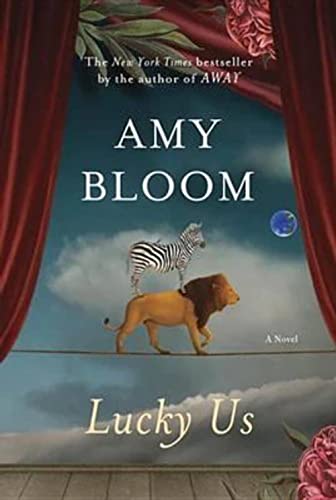
Inhaltsangabe
NEW YORK TIMES BESTSELLER • NAMED ONE OF THE BEST BOOKS OF THE YEAR BY THE WASHINGTON POST AND O: THE OPRAH MAGAZINE
“My father’s wife died. My mother said we should drive down to his place and see what might be in it for us.”
So begins this remarkable novel by Amy Bloom, whose critically acclaimed Away was called “a literary triumph” (The New York Times). Lucky Us is a brilliantly written, deeply moving, fantastically funny novel of love, heartbreak, and luck.
Disappointed by their families, Iris, the hopeful star and Eva the sidekick, journey through 1940s America in search of fame and fortune. Iris’s ambitions take the pair across the America of Reinvention in a stolen station wagon, from small-town Ohio to an unexpected and sensuous Hollywood, and to the jazz clubs and golden mansions of Long Island.
With their friends in high and low places, Iris and Eva stumble and shine though a landscape of big dreams, scandals, betrayals, and war. Filled with gorgeous writing, memorable characters, and surprising events, Lucky Us is a thrilling and resonant novel about success and failure, good luck and bad, the creation of a family, and the pleasures and inevitable perils of family life, conventional and otherwise. From Brooklyn’s beauty parlors to London’s West End, a group of unforgettable people love, lie, cheat and survive in this story of our fragile, absurd, heroic species.
Praise for Lucky Us
“Lucky Us is a remarkable accomplishment. One waits a long time for a novel of this scope and dimension, replete with surgically drawn characters, a mix of comedy and tragedy that borders on the miraculous, and sentences that should be in a sentence museum. Amy Bloom is a treasure.”—Michael Cunningham
“Exquisite . . . a short, vibrant book about all kinds of people creating all kinds of serial, improvisatory lives.”—The New York Times
“Bighearted, rambunctious . . . a bustling tale of American reinvention . . . If America has a Victor Hugo, it is Amy Bloom, whose picaresque novels roam the world, plumb the human heart and send characters into wild roulettes of kismet and calamity.”—The Washington Post
“Bloom’s crisp, delicious prose gives [Lucky Us] the feel of sprawling, brawling life itself. . . . Lucky Us is a sister act, which means a double dose of sauce and naughtiness from the brilliant Amy Bloom.”—The Oregonian
“A tasty summer read that will leave you smiling . . . Broken hearts [are] held together by lipstick, wisecracks and the enduring love of sisters.”—USA Today
“Exquisitely imagined . . . [a] grand adventure.”—O: The Oprah Magazine
“Marvelous picaresque entertainment . . . a festival of joy and terror and lust and amazement that resolves itself here, warts and all, in a kind of crystalline Mozartean clarity of vision.”—Elle
Die Inhaltsangabe kann sich auf eine andere Ausgabe dieses Titels beziehen.
Über die Autorin bzw. den Autor
Amy Bloom is the author of Come to Me, a National Book Award finalist; A Blind Man Can See How Much I Love You, nominated for the National Book Critics Circle Award; Love Invents Us; Normal; Away, a New York Times bestseller; and Where the God of Love Hangs Out. Her stories have appeared in The Best American Short Stories, O. Henry Prize Short Stories, The Scribner Anthology of Contemporary Short Fiction, and many other anthologies here and abroad. She has written for The New Yorker, The New York Times Magazine, The Atlantic Monthly, Vogue, Slate, and Salon, among other publications, and has won a National Magazine Award. She teaches creative writing at Wesleyan University.
Auszug. © Genehmigter Nachdruck. Alle Rechte vorbehalten.
1
I’d Know You Anywhere
My father’s wife died. My mother said we should drive down to his place and see what might be in it for us.
She tapped my nose with her grapefruit spoon. “It’s like this,” she said. “Your father loves us more, but he’s got another family, a wife, and a girl a little older than you. Her family had all the money. Wipe your face.”
There was no one like my mother, for straight talk. She washed my neck and ears until they shone. We helped each other dress: her lilac dress, with the underarm zipper, my pink one with the tricky buttons. My mother did my braids so tight, my eyes pulled up. She took her violet cloche and her best gloves and she ran across the road to borrow Mr. Portman’s car. I was glad to be going and I thought I could get to be glad about having a sister. I wasn’t sorry my father’s other wife was dead.
•••
We’d waited for him for weeks. My mother sat by the window in the morning and smoked through supper every night. When she came home from work at Hobson’s, she was in a bad mood, even after I rubbed her feet. I hung around the house all July, playing with Mr. Portman’s poodle, waiting for my father to drive up. When he came, he usually came by two o’clock, in case there was a Fireside Chat that day. We listened to all the Fireside Chats together. We loved President Roosevelt. On Sundays, when my father came, he brought a pack of Lucky Strikes for my mother and a Hershey bar for me. After supper, my mother sat in my father’s lap and I sat right on his slippers and if there was a Fireside Chat, my father did his FDR imitation. Good evening, friends, he said, and he stuck a straw in his mouth like a cigarette holder. Good evening, ladies and gentlemen. He bowed to my mother and said, Eleanor, my dear, how ’bout a waltz? They danced to the radio for a while and then it was my bedtime. My mother put a few bobby pins in my hair for curls and my father carried me to bed, singing, “I wish I could shimmy like my sister Kate.” Then he tucked me in and shimmied out the door. Monday mornings, he was gone and I waited until Thursday, and sometimes, until next Sunday.
My mother parked the car and redid her lipstick. My father’s house was two stories of red stone and tall windows, with fringed lace curtains behind and wide brown steps stacked like boxes in front of the shining wood door. Your father does like to have things nice, while he’s away, she said. It sure is nice, I said. We ought to live here.
My mother smiled at me and ran her tongue over her teeth. Could be, she said—you never know. She’d already told me she was tired of Abingdon, where we’d been since I was born. It was no kind of real town and she was fed up to here hostessing at Hobson’s. We talked a lot about finding ourselves a better life in Chicago. Chicago, Chicago, that toddlin’ town . . . I saw a man, he danced with his wife. I sang as we got out of the car and I did a few dance steps like in the movies. My mother said, You are the bee’s knees, kiddo, and she grabbed the back of my dress. She licked her palm and pressed it to my bangs, so they wouldn’t fly up. She straightened her skirt and told me to check her seams. Straight as arrows, I said, and we went up the stairs hand in hand.
My mother knocked and my father answered the door in the blue vest he wore at our house during the president’s speeches. My father hugged me and my parents whispered to each other while I stood there, trying to see more of the parlor, which was as big as our whole apartment and filled with flowers. (Maybe my father said, What the hell are you doing here? Maybe my mother cursed him for staying away, but I doubt it. My father had played the gentleman his whole life and my mother must have said to me a hundred times that men needed to be handled right and a woman who couldn’t handle her man had only herself to blame. “When I say men are dogs,” she’d say, “I’m not being insulting. I like dogs.”) Behind my father, I saw a tall girl.
“My daughter Iris,” my father said. I could hear my mother breathe in.
“Iris,” he said, “this is my friend Mrs. Logan and her daughter, her lovely daughter, Eva.”
I knew, standing in their foyer, that this girl had a ton of things I didn’t have. Flowers in crystal vases the size of buckets. Pretty, light-brown curls. My father’s hand on her shoulder. She wore a baby-blue sweater and a white blouse with a bluebird pin on the collar. I think she wore stockings. Iris was sixteen and she looked like a grown woman to me. She looked like a movie star. My father pushed us to the stairs and told Iris to entertain me in her room while he and my mother had a chat.
“Picture this,” Iris said. She lay on her bed and I sat on the braided rug next to it. She gave me a couple of gumdrops and I was happy to sit there. She was a great talker and a perfect mimic. “The whole college came to my mother’s funeral. My grandfather used to be president of the college, but he had a stroke last year, so he’s different now. There was this one girl, red hair, really awful. Redheads. Like they didn’t cook long enough or something.”
“I think Paulette Goddard’s a redhead,” I said. I’d read this in Photoplay last week.
“How old are you, ten? Who the hell wants to be Paulette Goddard? Anyway, this redheaded girl comes back to our house. She’s just bawling to beat the band. So this lady, our neighbor, Mrs. Drysdale, says to her, ‘Were you very close to dear Mrs. Acton?’ ”
The way Iris said this, I could just see Mrs. Drysdale, sticking her nose in, keeping her spotted veil out of her mouth while she ate, her wet hankie stuffed into her big bosom, which my mother told me was a disgusting thing to do.
“I’m twelve,” I said.
Iris said, “My mother was like a saint—everybody says so. She was nice to everyone, but I don’t want people thinking my mother wasted her time on this stupid girl, so I turn around and say that none of us even know who she is and she runs into the powder room downstairs—this is the funny part—the door gets stuck, and she can’t get out. She’s banging on the door and two professors have to jimmy it open. It was funny.”
Iris told me that the whole college (I didn’t know my father taught at a college; if you had asked me, I would have said that he read books for a living) came to the chapel to grieve for her mother, to offer sympathy to her and her father. She said that all of their family friends were there, which was her way of telling me that my mother could not really be a friend of her father’s.
We heard the voices downstairs and then a door shutting and then the piano, playing “My Angel Put the Devil in Me.” I didn’t know my father played the piano. Iris and I stood at her bedroom door, leaning into the hall. We heard the toilet flush, which was embarrassing but reassuring and then my father started playing the “Moonlight Sonata” and then we heard a car’s engine. Iris and I ran downstairs. My mother’d left the front door open and just slipped into Mr. Portman’s car. She’d set a brown tweed suitcase on the front porch. I stood on the porch holding the suitcase, looking at the road. My father sat down in the rocker and pulled me onto his lap, which he’d stopped doing last year. He asked me if I thought my mother was coming back and I asked him, Do you think my mother is coming back? My father asked me if I had...
„Über diesen Titel“ kann sich auf eine andere Ausgabe dieses Titels beziehen.
Suchergebnisse für Lucky Us

Beispielbild für diese ISBN
Lucky Us
Anbieter: World of Books (was SecondSale), Montgomery, IL, USA
Verkäuferbewertung 5 von 5 Sternen

Hardback. Zustand: Very Good. NEW YORK TIMES BESTSELLER - NAMED ONE OF THE BEST BOOKS OF THE YEAR BY THE WASHINGTON POST AND O: THE OPRAH MAGAZINE - Look for special features inside. Join the Random House Reader's Circle for author chats and more. My father's wife died. My mother said we should drive down to his place and see what might be in it for us. So begins this remarkable novel by Amy Bloom, whose critically acclaimed Away was called a literary triumph (The New York Times). Lucky Us is a brilliantly written, deeply moving, fantastically funny novel of love, heartbreak, and luck. Disappointed by their families, Iris, the hopeful star and Eva the sidekick, journey through 1940s America in search of fame and fortune. Iris's ambitions take the pair across the America of Reinvention in a stolen station wagon, from small-town Ohio to an unexpected and sensuous Hollywood, and to the jazz clubs and golden mansions of Long Island. With their friends in high and low places, Iris and Eva stumble and shine though a landscape of big dreams, scandals, betrayals, and war. Filled with gorgeous writing, memorable characters, and surprising events, Lucky Us is a thrilling and resonant novel about success and failure, good luck and bad, the creation of a family, and the pleasures and inevitable perils of family life, conventional and otherwise. From Brooklyn's beauty parlors to London's West End, a group of unforgettable people love, lie, cheat and survive in this story of our fragile, absurd, heroic species. Praise for Lucky Us Lucky Us is a remarkable accomplishment. One waits a long time for a novel of this scope and dimension, replete with surgically drawn characters, a mix of comedy and tragedy that borders on the miraculous, and sentences that should be in a sentence museum. Amy Bloom is a treasure.--Michael Cunningham Exquisite . . . a short, vibrant book about all kinds of people creating all kinds of serial, improvisatory lives.--The New York Times Bighearted, rambunctious . . . a bustling tale of American reinvention . . . If America has a Victor Hugo, it is Amy Bloom, whose picaresque novels roam the world, plumb the human heart and send characters into wild roulettes of kismet and calamity.--The Washington Post Bloom's crisp, delicious prose gives Lucky Us] the feel of sprawling, brawling life itself. . . . Lucky Us is a sister act, which means a double dose of sauce and naughtiness from the brilliant Amy Bloom.--The Oregonian A tasty summer read that will leave you smiling . . . Broken hearts are] held together by lipstick, wisecracks and the enduring love of sisters.--USA Today Exquisitely imagined . . . a] grand adventure.--O: The Oprah Magazine Marvelous picaresque entertainment . . . a festival of joy and terror and lust and amazement that resolves itself here, warts and all, in a kind of crystalline Mozartean clarity of vision.--Elle. Artikel-Nr. 00088955099
Gebraucht kaufen
EUR 4,37
Versand gratis
Versand innerhalb von USA
Versand innerhalb von USA
Anzahl: 2 verfügbar
Beispielbild für diese ISBN
Lucky Us
Anbieter: World of Books (was SecondSale), Montgomery, IL, USA
Verkäuferbewertung 5 von 5 Sternen
Hardback. Zustand: Good. NEW YORK TIMES BESTSELLER - NAMED ONE OF THE BEST BOOKS OF THE YEAR BY THE WASHINGTON POST AND O: THE OPRAH MAGAZINE - Look for special features inside. Join the Random House Reader's Circle for author chats and more. My father's wife died. My mother said we should drive down to his place and see what might be in it for us. So begins this remarkable novel by Amy Bloom, whose critically acclaimed Away was called a literary triumph (The New York Times). Lucky Us is a brilliantly written, deeply moving, fantastically funny novel of love, heartbreak, and luck. Disappointed by their families, Iris, the hopeful star and Eva the sidekick, journey through 1940s America in search of fame and fortune. Iris's ambitions take the pair across the America of Reinvention in a stolen station wagon, from small-town Ohio to an unexpected and sensuous Hollywood, and to the jazz clubs and golden mansions of Long Island. With their friends in high and low places, Iris and Eva stumble and shine though a landscape of big dreams, scandals, betrayals, and war. Filled with gorgeous writing, memorable characters, and surprising events, Lucky Us is a thrilling and resonant novel about success and failure, good luck and bad, the creation of a family, and the pleasures and inevitable perils of family life, conventional and otherwise. From Brooklyn's beauty parlors to London's West End, a group of unforgettable people love, lie, cheat and survive in this story of our fragile, absurd, heroic species. Praise for Lucky Us Lucky Us is a remarkable accomplishment. One waits a long time for a novel of this scope and dimension, replete with surgically drawn characters, a mix of comedy and tragedy that borders on the miraculous, and sentences that should be in a sentence museum. Amy Bloom is a treasure.--Michael Cunningham Exquisite . . . a short, vibrant book about all kinds of people creating all kinds of serial, improvisatory lives.--The New York Times Bighearted, rambunctious . . . a bustling tale of American reinvention . . . If America has a Victor Hugo, it is Amy Bloom, whose picaresque novels roam the world, plumb the human heart and send characters into wild roulettes of kismet and calamity.--The Washington Post Bloom's crisp, delicious prose gives Lucky Us] the feel of sprawling, brawling life itself. . . . Lucky Us is a sister act, which means a double dose of sauce and naughtiness from the brilliant Amy Bloom.--The Oregonian A tasty summer read that will leave you smiling . . . Broken hearts are] held together by lipstick, wisecracks and the enduring love of sisters.--USA Today Exquisitely imagined . . . a] grand adventure.--O: The Oprah Magazine Marvelous picaresque entertainment . . . a festival of joy and terror and lust and amazement that resolves itself here, warts and all, in a kind of crystalline Mozartean clarity of vision.--Elle. Artikel-Nr. 00083248956
Gebraucht kaufen
EUR 4,37
Versand gratis
Versand innerhalb von USA
Versand innerhalb von USA
Anzahl: 13 verfügbar
Beispielbild für diese ISBN
Lucky Us: A Novel
Anbieter: Wonder Book, Frederick, MD, USA
Verkäuferbewertung 5 von 5 Sternen
Zustand: Very Good. . Good dust jacket. Artikel-Nr. Q10E-00223
Gebraucht kaufen
EUR 4,86
Versand gratis
Versand innerhalb von USA
Versand innerhalb von USA
Anzahl: 1 verfügbar
Beispielbild für diese ISBN
Lucky Us: A Novel
Verlag:
Random House (edition First Edition), 2014
ISBN 10: 1400067243
ISBN 13: 9781400067244
Gebraucht
Hardcover
Erstausgabe
Anbieter: BooksRun, Philadelphia, PA, USA
Verkäuferbewertung 5 von 5 Sternen
Hardcover. Zustand: Very Good. First Edition. With dust jacket. It's a well-cared-for item that has seen limited use. The item may show minor signs of wear. All the text is legible, with all pages included. It may have slight markings and/or highlighting. Artikel-Nr. 1400067243-8-18-29
Gebraucht kaufen
EUR 5,43
Versand gratis
Versand innerhalb von USA
Versand innerhalb von USA
Anzahl: 1 verfügbar
Beispielbild für diese ISBN
Lucky Us: A Novel
Anbieter: ThriftBooks-Dallas, Dallas, TX, USA
Verkäuferbewertung 5 von 5 Sternen
Hardcover. Zustand: Very Good. No Jacket. Former library book; May have limited writing in cover pages. Pages are unmarked. ~ ThriftBooks: Read More, Spend Less. Artikel-Nr. G1400067243I4N10
Gebraucht kaufen
EUR 5,96
Versand gratis
Versand innerhalb von USA
Versand innerhalb von USA
Anzahl: 1 verfügbar
Beispielbild für diese ISBN
Lucky Us: A Novel
Anbieter: Wonder Book, Frederick, MD, USA
Verkäuferbewertung 5 von 5 Sternen
Zustand: Very Good. Very Good condition. Very Good dust jacket. A copy that may have a few cosmetic defects. May also contain light spine creasing or a few markings such as an owner's name, short gifter's inscription or light stamp. Bundled media such as CDs, DVDs, floppy disks or access codes may not be included. Artikel-Nr. Y08J-00693
Gebraucht kaufen
EUR 6,42
Versand gratis
Versand innerhalb von USA
Versand innerhalb von USA
Anzahl: 1 verfügbar
Beispielbild für diese ISBN
Lucky Us: A Novel
Anbieter: Wonder Book, Frederick, MD, USA
Verkäuferbewertung 5 von 5 Sternen
Zustand: As New. Like New condition. Very Good dust jacket. A near perfect copy that may have very minor cosmetic defects. Artikel-Nr. K06X-01019
Gebraucht kaufen
EUR 6,42
Versand gratis
Versand innerhalb von USA
Versand innerhalb von USA
Anzahl: 1 verfügbar
Beispielbild für diese ISBN
Lucky Us
Verlag:
Random House Publishing Group, 2014
ISBN 10: 1400067243
ISBN 13: 9781400067244
Gebraucht
Hardcover
Erstausgabe
Anbieter: Better World Books, Mishawaka, IN, USA
Verkäuferbewertung 5 von 5 Sternen
Zustand: Very Good. First Edition. Former library copy. Pages intact with possible writing/highlighting. Binding strong with minor wear. Dust jackets/supplements may not be included. Includes library markings. Stock photo provided. Product includes identifying sticker. Better World Books: Buy Books. Do Good. Artikel-Nr. GRP94193071
Gebraucht kaufen
EUR 6,74
Versand gratis
Versand innerhalb von USA
Versand innerhalb von USA
Anzahl: 2 verfügbar
Beispielbild für diese ISBN
Lucky Us
Verlag:
Random House Publishing Group, 2014
ISBN 10: 1400067243
ISBN 13: 9781400067244
Gebraucht
Hardcover
Erstausgabe
Anbieter: Better World Books, Mishawaka, IN, USA
Verkäuferbewertung 5 von 5 Sternen
Zustand: Good. First Edition. Former library copy. Pages intact with minimal writing/highlighting. The binding may be loose and creased. Dust jackets/supplements are not included. Includes library markings. Stock photo provided. Product includes identifying sticker. Better World Books: Buy Books. Do Good. Artikel-Nr. GRP98410112
Gebraucht kaufen
EUR 6,74
Versand gratis
Versand innerhalb von USA
Versand innerhalb von USA
Anzahl: 1 verfügbar
Beispielbild für diese ISBN
Lucky Us
Verlag:
Random House Publishing Group, 2014
ISBN 10: 1400067243
ISBN 13: 9781400067244
Gebraucht
Hardcover
Erstausgabe
Anbieter: Better World Books: West, Reno, NV, USA
Verkäuferbewertung 5 von 5 Sternen
Zustand: Good. First Edition. Pages intact with minimal writing/highlighting. The binding may be loose and creased. Dust jackets/supplements are not included. Stock photo provided. Product includes identifying sticker. Better World Books: Buy Books. Do Good. Artikel-Nr. 4286016-6
Gebraucht kaufen
EUR 6,74
Versand gratis
Versand innerhalb von USA
Versand innerhalb von USA
Anzahl: 1 verfügbar