
Verwandte Artikel zu The Making of a Writer, Volume 2: Journals, 1963-1969
Inhaltsangabe
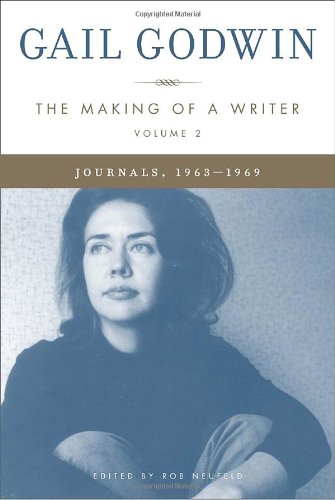
A second half to a volume of journal writings by the three-time National Book Award finalist discusses how, after establishing her purpose as an author, she published her first stories and novels and made insightful observations about the literary world. By the author of Evensong.
Die Inhaltsangabe kann sich auf eine andere Ausgabe dieses Titels beziehen.
Über die Autorin bzw. den Autor
Gail Godwin is a three-time National Book Award finalist and the bestselling author of twelve critically acclaimed novels, including A Mother and Two Daughters, Violet Clay, Father Melancholy’s Daughter, Evensong, The Good Husband, Queen of the Underworld, and Unfinished Desires. She is also the author of The Making of a Writer: Journals, 1961–1963, the first of these two volumes, edited by Rob Neufeld. She has received a Guggenheim Fellowship, National Endowment for the Arts grants for both fiction and libretto writing, and the Award in Literature from the American Academy of Arts and Letters. She has written libretti for ten musical works with the composer Robert Starer. Gail Godwin lives in Woodstock, New York.
Auszug. © Genehmigter Nachdruck. Alle Rechte vorbehalten.
In the summer of 1961, twenty-four-year-old Gail Godwin dispatched herself to Europe to become a writer. Having shed both a marriage and a journalism career, she hung her financial well-being on the promise of a job with a soon-to-open U.S. Travel Service office in London.
For two years, Gail negotiated foreign cultures and demanding relationships while hungrily educating herself and recording her emotional and intellectual progress. The first volume of Gail's journals (published in 2006) revealed how she'd found her voice and purpose, distinguishing herself from her influences. The second volume now shows how she built on that self-confidence to publish her first stories and novels.
Fittingly, Volume 2 opens with Gail parked at her desk in her familiar Chelsea boardinghouse, reading her previous journals. "I have only to reread them to pick out the inconsistencies and to recognize the few true aspirations that thread through page after page," she writes.
Using herself as a laboratory of introspection, and her relationships as opportunities to understand others, Gail follows the model of one of her heroes, Carl Jung, whose Memories, Dreams, Reflections recorded his inward explorations. What Gail comes up with is distinctive, and is encapsulated in the title of this journal part, "The Dramatic Self."
The dramatic self is, in one sense, the posing self, the one that is on stage in society. In another sense, it is the self that experiences the most essential dramas-meaningful interactions based on one's natural agenda. Finally, there's the dramatic self that is separate from the person and belongs in the world of literature, the one that is re-formed to sound true in stories.
Reading about Gail's adventures and misadventures shows how her literary sphere of existence was as prominent as her social one. While her coworkers, fellow tenants, and boyfriends provide community, they stand in opposition to her aloneness and imagination.
Through it all, the psychology, politics, and nuances of male-female relations preoccupy Gail. Although any subject would do for a writer striving to develop her art, gender relations were particularly pertinent at the time. Gail was in the thick of the matter. "I want to . . . exploit, define, name, place this ever-shifting contest between men and women," she wrote on August 13.
The dilemma for Gail was how to have her enlightened perspective correspond to happiness in personal relationships, in which egos often foiled idealism. On August 13, Gail wrote that she wanted to convey, among other things, "the feeling you get while living through a happy
moment-when you refer back to the past when you had anticipated this moment, and when you look toward the future when you won't have it any longer." She wanted anticipation and reflection to be part of the moment-yearning, experience, and loss, all one.
july 23, 1963
More and more I believe in these journals. They are my "thinking out" grounds where I can record and measure my deviations. I have only to reread them to pick out the inconsistencies and to recognize the few true aspirations that thread through page after page. It is difficult to label oneself "faithful" when, upon rereading two years' worth of self-reflection, one finds agonizings over B., Niels, Antonio, James, Jim Jensen, Henry, and Gordon! On the credit side, I know for certain that this urge to understand/write is no fly-by-night whim. I know how Gordon feels when people say: "Oh, Bisley! Yes, I'm a pretty good marksman myself. I'll have to come out with you one Sunday and shoot a few bull's-eyes!"1 I feel the same impatience with people who say: "Oh, yes, writing. I'd like to write if I only had the time. My life would make one hell of a story."
Pat Farmer wrote her après-honeymoon letter to Doreen2 "and everybody" from Mexico City. She obligingly described the wedding-sending clippings-and the honeymoon, showing a color photo of herself among Mayan ruins. Mr. Miller couldn't wait to read the letter. He always liked her. "Well! Is that from you-know-who? She finally made it. See, there's hope for you girls yet!" Pat wrote about how she and Pepe went skin diving and horseback riding. Then she put in the paragraph about how happy they were, adding that it was somewhat of an adjustment, etc., etc., but that it was surprising how much you could get out of a situation where you worked very hard to make the other person happy, etc., etc. She then mentioned that she was trying to get a job with USTS-Mexico. Doreen read the letter and then expounded upon how ecstatic Pat must be.
After Doreen left, Dorothea3 observed: "I think it's interesting that she wants to work again." Then we both exchanged knowing looks, and she said: "My God, by the time we're thirty-five we're going to be goddam sages." So the balance is restored in the office, or should I simply say the dialectic has swung? Dorothea admits taking refuge from the realization of a bad marriage through hard labor. "By the time I've prepared a meal and cleaned the house and washed up and ironed, I don't have time to think about myself. I'm too tired. Of course I realize that there might be a lifetime of this."
After spending the better part of the past three days with Gordon on the shooting range at Bisley, sailing in Henley,4 drinking in various pubs, and then last night at the horse show, I have come to the conclusion that I still love him, but in a modified way. I think I will value him for the efforts I am making to win him! We passed two people in the White City Stadium5 and he said: "Were those men or women?" I said, sort of off the cuff: "Why, the one that looks like a man is a woman; the one that looks like a woman is a man." "What makes you say that?" he asked. "Well, you should always know that things are the opposite of what they appear." (Canting unforgivably!) "Smart girl." Did he really think so? I also learned about his experiences on the convoy going to the U.S. during the war. He said he even made himself a survival kit. There was something in this story about the calm, almost detached way he went about things. I saw the war from a little boy's eyes. And the way he'd watch the laggers-behind get sunk by the German U-boats. All this-the years in Canada and Trinidad- shaped him, too. But I think he was born with this dogged, plodding, stubborn way of doing things.
But, today in Gill's bookstore, several incidents combined and made me see the kind of man that is possible: I saw a book I wanted, [the latest volume of] Simone de Beauvoir's autobiography,6 about her writing and her life with Jean-Paul Sartre. And I thought, Wouldn't it be nice if someone knew me so well they would know this is the book I want and bring it home? I know that I am capable of such consideration toward someone else. Then I thought of the possibility of, say, Gordon bringing me that book. It was impossible. (1) He doesn't go into bookstores. (2) He doesn't know who Simone de Beauvoir is. (3) He doesn't know what I read, in spite of the fact he's always inspecting book titles. Somehow I remember Doug7 and me in the bookstore in Detroit one evening while we were killing time before seeing Spartacus. I was in heaven-thousands and thousands of glossy new books, two floors of them, and some strange new symphony playing. I asked Doug if he would buy me Jacob's Room & The Waves by Virginia Woolf, a $1.75 paperback, and he grudgingly assented. The music grew on me. I went up to the man at the desk and asked him what it was. "Oh, that's Beethoven's Pastoral, I think," he said. And when we were back in Florida I bought it and began playing it more and more to assert my aesthetic independence from Doug.
july 27-28 After midnight
I read an article by Marya Mannes8 today. I'm one of those women whose composition is balanced peculiarly between woman-ness and...
„Über diesen Titel“ kann sich auf eine andere Ausgabe dieses Titels beziehen.
Suchergebnisse für The Making of a Writer, Volume 2: Journals, 1963-1969

Beispielbild für diese ISBN
The Making of a Writer, Volume 2: Journals, 1963-1969
Anbieter: World of Books (was SecondSale), Montgomery, IL, USA
Verkäuferbewertung 5 von 5 Sternen

Hardback. Zustand: Fair. Artikel-Nr. 00101930678
Gebraucht kaufen
EUR 5,85
Versand gratis
Versand innerhalb von USA
Versand innerhalb von USA
Anzahl: 1 verfügbar
Beispielbild für diese ISBN
The Making of a Writer, Volume 2: Journals, 1963-1969
Anbieter: World of Books (was SecondSale), Montgomery, IL, USA
Verkäuferbewertung 5 von 5 Sternen
Hardback. Zustand: Very Good. Artikel-Nr. 00101930759
Gebraucht kaufen
EUR 5,85
Versand gratis
Versand innerhalb von USA
Versand innerhalb von USA
Anzahl: 5 verfügbar
Beispielbild für diese ISBN
The Making of a Writer Vol. 2 : Journals, 1963-1969
Verlag:
Random House Publishing Group, 2011
ISBN 10: 1400064333
ISBN 13: 9781400064335
Gebraucht
Hardcover
Anbieter: Better World Books, Mishawaka, IN, USA
Verkäuferbewertung 5 von 5 Sternen
Zustand: Good. Former library copy. Pages intact with minimal writing/highlighting. The binding may be loose and creased. Dust jackets/supplements are not included. Includes library markings. Stock photo provided. Product includes identifying sticker. Better World Books: Buy Books. Do Good. Artikel-Nr. 5683298-6
Gebraucht kaufen
EUR 6,35
Versand gratis
Versand innerhalb von USA
Versand innerhalb von USA
Anzahl: 1 verfügbar
Beispielbild für diese ISBN
The Making of a Writer Vol. 2 : Journals, 1963-1969
Verlag:
Random House Publishing Group, 2011
ISBN 10: 1400064333
ISBN 13: 9781400064335
Gebraucht
Hardcover
Anbieter: Better World Books: West, Reno, NV, USA
Verkäuferbewertung 5 von 5 Sternen
Zustand: Very Good. Pages intact with possible writing/highlighting. Binding strong with minor wear. Dust jackets/supplements may not be included. Stock photo provided. Product includes identifying sticker. Better World Books: Buy Books. Do Good. Artikel-Nr. 4446023-6
Gebraucht kaufen
EUR 6,35
Versand gratis
Versand innerhalb von USA
Versand innerhalb von USA
Anzahl: 1 verfügbar
Beispielbild für diese ISBN
The Making of a Writer Vol. 2 : Journals, 1963-1969
Verlag:
Random House Publishing Group, 2011
ISBN 10: 1400064333
ISBN 13: 9781400064335
Gebraucht
Hardcover
Anbieter: Better World Books, Mishawaka, IN, USA
Verkäuferbewertung 5 von 5 Sternen
Zustand: Very Good. Former library copy. Pages intact with possible writing/highlighting. Binding strong with minor wear. Dust jackets/supplements may not be included. Includes library markings. Stock photo provided. Product includes identifying sticker. Better World Books: Buy Books. Do Good. Artikel-Nr. GRP65376873
Gebraucht kaufen
EUR 6,35
Versand gratis
Versand innerhalb von USA
Versand innerhalb von USA
Anzahl: 1 verfügbar
Beispielbild für diese ISBN
The Making of a Writer, Volume 2: Journals, 1963-1969
Anbieter: ThriftBooks-Atlanta, AUSTELL, GA, USA
Verkäuferbewertung 5 von 5 Sternen
Hardcover. Zustand: Good. No Jacket. Pages can have notes/highlighting. Spine may show signs of wear. ~ ThriftBooks: Read More, Spend Less. Artikel-Nr. G1400064333I3N00
Gebraucht kaufen
EUR 6,37
Versand gratis
Versand innerhalb von USA
Versand innerhalb von USA
Anzahl: 1 verfügbar
Beispielbild für diese ISBN
The Making of a Writer, Volume 2: Journals, 1963-1969
Anbieter: ThriftBooks-Dallas, Dallas, TX, USA
Verkäuferbewertung 5 von 5 Sternen
Hardcover. Zustand: Very Good. No Jacket. Former library book; May have limited writing in cover pages. Pages are unmarked. ~ ThriftBooks: Read More, Spend Less. Artikel-Nr. G1400064333I4N10
Gebraucht kaufen
EUR 6,37
Versand gratis
Versand innerhalb von USA
Versand innerhalb von USA
Anzahl: 1 verfügbar
Beispielbild für diese ISBN
The Making of a Writer, Volume 2: Journals, 1963-1969
Anbieter: ThriftBooks-Dallas, Dallas, TX, USA
Verkäuferbewertung 5 von 5 Sternen
Hardcover. Zustand: Good. No Jacket. Former library book; Pages can have notes/highlighting. Spine may show signs of wear. ~ ThriftBooks: Read More, Spend Less. Artikel-Nr. G1400064333I3N10
Gebraucht kaufen
EUR 6,37
Versand gratis
Versand innerhalb von USA
Versand innerhalb von USA
Anzahl: 1 verfügbar
Beispielbild für diese ISBN
The Making of a Writer, Volume 2: Journals, 1963-1969
Anbieter: Powell's Bookstores Chicago, ABAA, Chicago, IL, USA
Verkäuferbewertung 5 von 5 Sternen
hardcover. Zustand: Used-Very Good. Zustand des Schutzumschlags: dj. Cloth, dj. Minor shelf-wear. Artikel-Nr. 1737305
Gebraucht kaufen
EUR 11,02
EUR 4,46 Versand
Versand innerhalb von USA
Versand innerhalb von USA
Anzahl: 1 verfügbar
Foto des Verkäufers
The Making of a Writer, Volume 2 Journals, 1963-1969
Verlag:
Random House, New York, NY, 2011
ISBN 10: 1400064333
ISBN 13: 9781400064335
Gebraucht
Hardcover
Erstausgabe
Anbieter: True Oak Books, Highland, NY, USA
Verkäuferbewertung 5 von 5 Sternen
Hardcover. Zustand: Very Good. Zustand des Schutzumschlags: Very Good. Stated First Edition; First Printing. 319 pages; Yellowing (light) to pages. Very Good overall condition otherwise. No other noteworthy defects. No markings.; - We offer free returns for any reason and respond promptly to all inquiries. Your order will be packaged with care and ship on the same or next business day. Buy with confidence. Artikel-Nr. HVD-36409-A-0
Gebraucht kaufen
EUR 18,36
Versand gratis
Versand innerhalb von USA
Versand innerhalb von USA
Anzahl: 1 verfügbar