
Verwandte Artikel zu Adaptations: From Short Story to Big Screen: 35 Great...
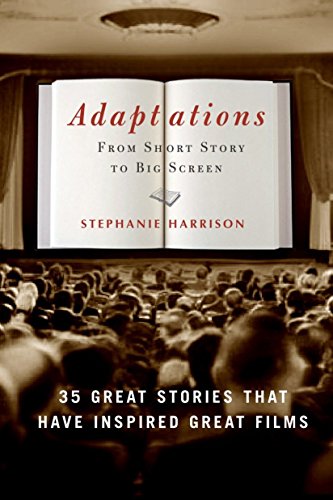
Adaptations: From Short Story to Big Screen: 35 Great Stories That Have Inspired Great Films - Softcover
Inhaltsangabe
An Eclectic Collection of Fiction That Inspired Film
Memento, All About Eve, Rear Window, Rashomon, and 2001: A Space Odyssey are all well-known and much-loved movies, but what is perhaps a lesser-known fact is that all of them began their lives as short stories. Adaptations gathers together 35 pieces that have been the basis for films, many from giants of American literature (Hemingway, Fitzgerald) and many that have not been in print for decades (the stories that inspired Bringing Up Baby, Meet John Doe, and All About Eve).
Categorized by genre, and featuring movies by master directors such as Steven Spielberg, Stanley Kubrick, Robert Altman, Frank Capra, and John Ford, as well as relative newcomers such as Chris Eyre and Christopher Nolan, Adaptations offers insight into the process of turning a short story into a screenplay, one that, when successful, doesn’t take drastic liberties with the text upon which it is based, but doesn’t mirror its source material too closely either. The stories and movies featured in Adaptations include:
•Philip K. Dick’s “The Minority Report,” which became the 2002 blockbuster directed by Steven Spielberg and starring Tom Cruise
•“The Harvey Pekar Name Story” by reclusive graphic artist Harvey Pekar, whose life was the inspiration for American Splendor, winner of the 2003 Sundance Grand Jury Prize
•Hagar Wilde’s “Bringing Up Baby,” the basis of the classic film Bringing Up Baby, anthologized here for the first time ever
•“The Swimmer” by John Cheever, an example of a highly regarded story that many feared might prove unadaptable
•The predecessor to the beloved holiday classic A Christmas Story, “Red Ryder Nails the Hammond Kid” by Jean Shepherd
Whether you’re a fiction reader or a film buff, Adaptations is your behind-the-scenes look at the sometimes difficult, sometimes brilliantly successful process from the printed page to the big screen.
Die Inhaltsangabe kann sich auf eine andere Ausgabe dieses Titels beziehen.
Über die Autorin bzw. den Autor
Stephanie Harrison teaches in the state university system of Florida.
Von der hinteren Coverseite
An Eclectic Collection of Fiction That Inspired Film
"Memento, "All About Eve, "Rear Window, "Rashomon, and "2001: A Space Odyssey are all well-known and much-loved movies, but what is perhaps a lesser-known fact is that all of them began their lives as short stories. "Adaptations gathers together 35 pieces that have been the basis for films, many from giants of American literature (Hemingway, Fitzgerald) and many that have not been in print for decades (the stories that inspired "Bringing Up Baby, "Meet John Doe, and "All About Eve).
Categorized by genre, and featuring movies by master directors such as Steven Spielberg, Stanley Kubrick, Robert Altman, Frank Capra, and John Ford, as well as relative newcomers such as Chris Eyre and Christopher Nolan, "Adaptations offers insight into the process of turning a short story into a screenplay, one that, when successful, doesn't take drastic liberties with the text upon which it is based, but doesn't mirror its source material too closely either. The stories and movies featured in" Adaptations include:
-Philip K. Dick's "The Minority Report," which became the 2002 blockbuster directed by Steven Spielberg and starring Tom Cruise
-"The Harvey Pekar Name Story" by reclusive graphic artist Harvey Pekar, whose life was the inspiration for" American Splendor, winner of the 2003 Sundance Grand Jury Prize
-Hagar Wilde's "Bringing Up Baby," the basis of the classic film "Bringing Up Baby, anthologized here for the first time ever
-"The Swimmer" by John Cheever, an example of a highly regarded story that many feared might prove unadaptable
-The predecessor to the beloved holiday classic "A Christmas Story, "Red Ryder Nailsthe Hammond Kid" by Jean Shepherd
Whether you're a fiction reader or a film buff, "Adaptations is your behind-the-scenes look at the sometimes difficult, sometimes brilliantly successful process from the printed page to the big screen.
Auszug. © Genehmigter Nachdruck. Alle Rechte vorbehalten.
Chapter One
THE DIRECTORS:TRANSLATORS,MAGICIANS, COLLABORATORS,AND THIEVES
“Jerry and Molly and Sam”
by Raymond Carver
—Short Cuts, directed by Robert Altman, 1993
“Blow-Up”
by Julio Cortázar
—Blow-Up, directed by Michelangelo Antonioni, 1966
“Your Arkansas Traveler”
by Budd Schulberg
—A Face in the Crowd, directed by Elia Kazan, 1957
“It Had to Be Murder”
by Cornell Woolrich
—Rear Window, directed by Alfred Hitchcock, 1954
Movies have to be about something. They can dazzle us with special effects, wow us with an eight-minute tracking shot, or intrigue us with a cartoonlike color palette. But we still expect a story. A story visually told, perhaps—but a story nonetheless.
And that’s why “film feeds off literature like sharks off a marlin,” as film theorist George Bluestone once said. Director Stanley Kubrick was a compulsive reader, sometimes tearing through a book a day in his constant search for new material. Alfred Hitchcock told of imagining the shape of a film, then having to search for a story to fit his visualization. Howard Hawks claimed that the hardest part of making a movie was finding a good story, then figuring out how to tell it. Steven Spielberg agrees. Even Michelangelo Antonioni was a reader, although he claimed the best way to approach a book was to read it, then forget it. Directors, especially those of the auteur ilk, get a lot of credit for their successes and a lot of blame for their failures. But, like prominent CEOs, they depend a great deal on others. Unless directors write their own material, they will have to go to the source: writers. And there are as many approaches to this as there are directorial personalities.
The Translator: Altman and Short Cuts
In 1990, while flying home from Italy, Robert Altman read a book of short stories by Raymond Carver. “I was so moved by the way he told stories,” he later said, “what he told and what he didn’t tell and how he made a story out of the slightest little incident. I was just amazed by it and I thought this is what we should do in film.”
For just over a decade, from the early 1970s through the mid-’80s, Carver led the return to realistic fiction that revels in the quotidian. His stories feature hard-drinking, unhappily married, working-class folk who live, as Tess Gallagher, Carver’s second wife, puts it, “with no safety net and no imagination of a safety net.” The residents of “Carver Country” drift through life—often in an alcoholic haze—and end in a place very close to where they started. The epiphanies, if you can call them that, are small and internal. As his friend Tobias Wolff has said, Carver “is not a particularly quotable writer. That’s one of his virtues, that he never tried to achieve a beautiful line. It’s the steadiness and quietness of the prose that creates his sense of reality.” And it’s reality Carver was after: “As far as I’m concerned,” he told an interviewer, “the best art has its reference points in real life.”
There is an autobiographical element to his work. Like many of his characters, Carver grew up working class and was, for most of his adult life, a dedicated alcoholic. Throughout his first marriage he was plagued by financial concerns that kept him from his writing. Of his work, he said, “I’m just bearing witness to something I know something about. Most things in the world I don’t know anything at all about. . . . I’m bearing witness to what I can.” Because of his concern with small moments in the lives of ordinary people, Carver is often compared to Chekhov, and his declarative prose style invites comparison to Hemingway. Yet his sensibility is unquestionably reflective of his own generation. His pared-down realism, tinged with a dash of hopelessness, suited the period following Watergate, and by the time of his death from lung cancer in 1988, Carver was arguably the most influential literary writer in the country.
Enter Altman. If ever a director was poised to exploit the contemporary short story—now so firmly associated with Carver—Altman was that director. By the time he discovered Carver’s stories, Altman had already directed twenty-five feature films (including M*A*S*H, McCabe and Mrs. Miller, The Long Goodbye, and Thieves Like Us), not to mention countless television episodes. He’d honed a signature directorial style consisting of overlapping dialogue, improbably large casts, mock-documentary realism, improvisation, and the use of nonprofessional actors. Most important, though, he’d already made Nashville, a rambling narrative that loosely weaves the story lines of twenty-four characters, without, as Pauline Kael put it, the “clanking of plot.” Arguably one of the best films ever made—it appears on countless top-100 lists—Nashville’s lack of narrative thrust baffled many. When asked about his reputation as a “problem director,” Altman stated, “I’m not difficult. My work may be difficult, but if in fact it is difficult, it just further enforces what I have to say: that all I make films about is what I see and the way things appear to me.”
So why wouldn’t Altman admire Carver’s stories? There’s an obvious link between a writer who is “just bearing witness” and a filmmaker who is making films about “the way things appear to me.” Between a writer who eschews quotable lines and a director who uses untrained actors. Between a writer who strives for realistic-sounding dialogue through the use of stammers, pauses, and repeated lines and a director who strives for the same through the use of overlapping sound. Between a writer who resists neatly tied-up endings and a director who has said, “Many people, I guess, want to know exactly what it is they’re supposed to think. . . . Well, my message is that I am not going to do their work for them.” Beyond all this, though, there are deeper affinities. They both look upon their characters with an unflinching but surprisingly nonjudgmental eye. They are both interested in the hyperreality of small moments. And they both balance intuitiveness with painstaking craftsmanship. And yet, it’s one thing for Altman to have admired Carver’s stories; it’s quite another that he knew how to translate them well for film. Only someone with Altman’s résumé could have seen the possibilities in a random selection of nine unconnected, unplotted stories. And, of course, one poem.
In the case of Short Cuts, the role of translator is one Altman wears gracefully, but not naturally. His relationship with writers has often been rocky, the writers forced to watch as their words are reduced to rubble. Brian McKay, who wrote the screenplays for several of Altman’s films, including McCabe and Mrs. Miller, says, “If you want me to get in line with the rest of the angry writers, I will. But it’s more complicated than that. I think what Bob really wants is the European credit: ‘A Film by Robert Altman.’ And, often, he deserves it.” Yet when he is impressed with a work, Altman has been known to gush. He loved Edward Anderson’s novel Thieves Like Us, and wanted to make as few changes as possible. And then there’s Carver. Still, Altman lets it be known that Short Cuts is his.* “I read all of Ray’s writings,...
„Über diesen Titel“ kann sich auf eine andere Ausgabe dieses Titels beziehen.
Suchergebnisse für Adaptations: From Short Story to Big Screen: 35 Great...

Beispielbild für diese ISBN
Adaptations From Short Story t
Anbieter: World of Books (was SecondSale), Montgomery, IL, USA
Verkäuferbewertung 5 von 5 Sternen

Zustand: Acceptable. Item in acceptable condition! Textbooks may not include supplemental items i.e. CDs, access codes etc. Artikel-Nr. 00104676379
Gebraucht kaufen
EUR 4,31
Versand gratis
Versand innerhalb von USA
Versand innerhalb von USA
Anzahl: 2 verfügbar
Beispielbild für diese ISBN
Adaptations From Short Story t
Anbieter: World of Books (was SecondSale), Montgomery, IL, USA
Verkäuferbewertung 5 von 5 Sternen
Zustand: Good. Good condition ex-library book with usual library markings and stickers. Artikel-Nr. 00106930039
Gebraucht kaufen
EUR 5,53
Versand gratis
Versand innerhalb von USA
Versand innerhalb von USA
Anzahl: 1 verfügbar
Beispielbild für diese ISBN
Adaptations : From Short Story to Big Screen: 35 Great Stories That Have Inspired Great Films
Verlag:
Crown Publishing Group, The, 2005
ISBN 10: 1400053145
ISBN 13: 9781400053148
Gebraucht
Softcover
Anbieter: Better World Books, Mishawaka, IN, USA
Verkäuferbewertung 5 von 5 Sternen
Zustand: Very Good. Pages intact with possible writing/highlighting. Binding strong with minor wear. Dust jackets/supplements may not be included. Stock photo provided. Product includes identifying sticker. Better World Books: Buy Books. Do Good. Artikel-Nr. 4253942-6
Gebraucht kaufen
EUR 7,32
Versand gratis
Versand innerhalb von USA
Versand innerhalb von USA
Anzahl: 1 verfügbar
Beispielbild für diese ISBN
Adaptations : From Short Story to Big Screen: 35 Great Stories That Have Inspired Great Films
Verlag:
Crown Publishing Group, The, 2005
ISBN 10: 1400053145
ISBN 13: 9781400053148
Gebraucht
Softcover
Anbieter: Better World Books, Mishawaka, IN, USA
Verkäuferbewertung 5 von 5 Sternen
Zustand: Good. Pages intact with minimal writing/highlighting. The binding may be loose and creased. Dust jackets/supplements are not included. Stock photo provided. Product includes identifying sticker. Better World Books: Buy Books. Do Good. Artikel-Nr. 4788999-6
Gebraucht kaufen
EUR 7,32
Versand gratis
Versand innerhalb von USA
Versand innerhalb von USA
Anzahl: 3 verfügbar
Beispielbild für diese ISBN
Adaptations : From Short Story to Big Screen: 35 Great Stories That Have Inspired Great Films
Verlag:
Crown Publishing Group, The, 2005
ISBN 10: 1400053145
ISBN 13: 9781400053148
Gebraucht
Softcover
Anbieter: Better World Books: West, Reno, NV, USA
Verkäuferbewertung 5 von 5 Sternen
Zustand: Good. Pages intact with minimal writing/highlighting. The binding may be loose and creased. Dust jackets/supplements are not included. Stock photo provided. Product includes identifying sticker. Better World Books: Buy Books. Do Good. Artikel-Nr. 4788999-6
Gebraucht kaufen
EUR 7,32
Versand gratis
Versand innerhalb von USA
Versand innerhalb von USA
Anzahl: 1 verfügbar
Beispielbild für diese ISBN
Adaptations: From Short Story to Big Screen: 35 Great Stories That Have Inspired Great Films
Verlag:
Crown Publishing Group (NY), 2005
ISBN 10: 1400053145
ISBN 13: 9781400053148
Gebraucht
Paperback
Anbieter: ThriftBooks-Dallas, Dallas, TX, USA
Verkäuferbewertung 5 von 5 Sternen
Paperback. Zustand: Good. No Jacket. Pages can have notes/highlighting. Spine may show signs of wear. ~ ThriftBooks: Read More, Spend Less. Artikel-Nr. G1400053145I3N00
Gebraucht kaufen
EUR 7,97
Versand gratis
Versand innerhalb von USA
Versand innerhalb von USA
Anzahl: 1 verfügbar
Beispielbild für diese ISBN
Adaptations: From Short Story to Big Screen: 35 Great Stories That Have Inspired Great Films
Verlag:
Crown Publishing Group (NY), 2005
ISBN 10: 1400053145
ISBN 13: 9781400053148
Gebraucht
Paperback
Anbieter: ThriftBooks-Reno, Reno, NV, USA
Verkäuferbewertung 5 von 5 Sternen
Paperback. Zustand: Good. No Jacket. Pages can have notes/highlighting. Spine may show signs of wear. ~ ThriftBooks: Read More, Spend Less. Artikel-Nr. G1400053145I3N00
Gebraucht kaufen
EUR 7,97
Versand gratis
Versand innerhalb von USA
Versand innerhalb von USA
Anzahl: 1 verfügbar
Beispielbild für diese ISBN
Adaptations: From Short Story to Big Screen: 35 Great Stories That Have Inspired Great Films
Verlag:
Crown Publishing Group (NY), 2005
ISBN 10: 1400053145
ISBN 13: 9781400053148
Gebraucht
Paperback
Anbieter: ThriftBooks-Atlanta, AUSTELL, GA, USA
Verkäuferbewertung 5 von 5 Sternen
Paperback. Zustand: Good. No Jacket. Pages can have notes/highlighting. Spine may show signs of wear. ~ ThriftBooks: Read More, Spend Less. Artikel-Nr. G1400053145I3N00
Gebraucht kaufen
EUR 7,97
Versand gratis
Versand innerhalb von USA
Versand innerhalb von USA
Anzahl: 1 verfügbar
Beispielbild für diese ISBN
Adaptations: From Short Story to Big Screen: 35 Great Stories That Have Inspired Great Films
Verlag:
Crown Publishing Group (NY), 2005
ISBN 10: 1400053145
ISBN 13: 9781400053148
Gebraucht
Paperback
Anbieter: ThriftBooks-Dallas, Dallas, TX, USA
Verkäuferbewertung 5 von 5 Sternen
Paperback. Zustand: Fair. No Jacket. Readable copy. Pages may have considerable notes/highlighting. ~ ThriftBooks: Read More, Spend Less. Artikel-Nr. G1400053145I5N00
Gebraucht kaufen
EUR 7,97
Versand gratis
Versand innerhalb von USA
Versand innerhalb von USA
Anzahl: 1 verfügbar
Beispielbild für diese ISBN
Adaptations: From Short Story to Big Screen: 35 Great Stories That Have Inspired Great Films
Anbieter: Wonder Book, Frederick, MD, USA
Verkäuferbewertung 5 von 5 Sternen
Zustand: Very Good. Very Good condition. A copy that may have a few cosmetic defects. May also contain light spine creasing or a few markings such as an owner's name, short gifter's inscription or light stamp. Artikel-Nr. K08U-00376
Gebraucht kaufen
EUR 8,66
Versand gratis
Versand innerhalb von USA
Versand innerhalb von USA
Anzahl: 1 verfügbar