
Verwandte Artikel zu Tom Patire's Personal Protection Handbook: Absolutely...
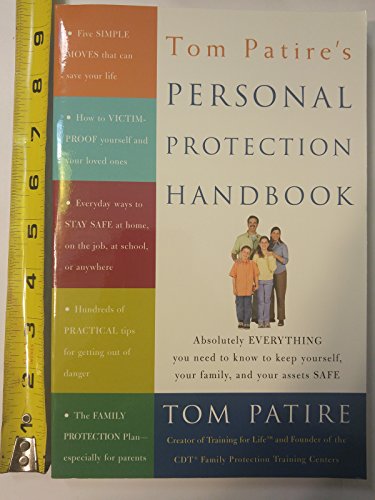
Tom Patire's Personal Protection Handbook: Absolutely Everything You Need to Know to Keep Yourself, Your Family, and Your Assets Safe - Softcover
Inhaltsangabe
A leading American personal protection expert offers a comprehensive and practical guide on how to keep safe in any situation, describing real-life scenarios in which a crime can occur and a variety of effective, preventive measures to take to avoid becoming a target or defend oneself in an attack. Original. 35,000 first printing.
Die Inhaltsangabe kann sich auf eine andere Ausgabe dieses Titels beziehen.
Über die Autorin bzw. den Autor
TOM PATIRE has more than 20 years of experience in providing security to celebrities, diplomats, and corporate executives, and has trained federal law enforcement professionals in protection techniques. He is the creator of CDT® and the CDT® Family Protection Training Centers, with more than 1,000 locations around the country, as well as the Training for Life program and video series. His work has been profiled in dozens of media venues, from Good Morning America to the Wall Street Journal. He lives with his family in New Jersey. Visit Tom s website at www.tompatire.com for more information.
Aus dem Klappentext
Staying Safe It s in Your Hands
There are countless reasons why bad things robberies, assaults, accidents happen to good people. There are also powerful and effective methods for reducing the risk that you or a loved one will become a victim, and you ll find them all right here in this comprehensive bible of personal safety. Tom Patire s Personal Protection Handbook is designed to let you become your own best defense, when something or someone goes wrong.
Developed by the country s leading personal protection expert, here are hundreds of invaluable safety tips, as well as simple, physical moves that can be mastered by just about anybody, regardless of physical strength. Tom Patire offers methods for protecting yourself, your family, and your personal property in nearly any situation.
AT HOME: Burglarproo?ng your property, including how to take action if your house is being broken into, plus tips for avoiding common household accidents
ON THE JOB: What to do if you re working late, why you should never ignore the office fire drill, and how to handle the threatening stranger who follows you onto the elevator
WITH THE KIDS: Searching for a lost child, school and playground safety, protecting your child from predators, and Tom s Family Protection Plan
ON THE ROAD: How to react if your car is being followed, navigating airport security, traveling or walking in an unfamiliar area, and hotel safety
Here is commonsense advice on dozens of topics, ranging from physical confrontations with bad guys to preventing identity theft, topped off with Tom s easy-to-learn, nonviolent tactics, clearly illustrated. Whether you re a single woman, a parent of young children, or just a concerned citizen at a time when everyday safety has become a necessity, Tom Patire s Personal Protection Handbook is a vital reference from a trusted expert that will empower and inform you.
Auszug. © Genehmigter Nachdruck. Alle Rechte vorbehalten.
DON’T BE A VICTIM
A well-dressed woman shopping at a local mall one afternoon was quietly being targeted by a savvy pair of thieves who, having identified her as a person of means, were following her on her rounds, trailing her from one shop to the next.
When her hands were full of shopping bags as she returned to her car, which was parked in the enclosed garage, they saw the opportunity to make their move. They waited until she was backing out of her space and bumped her car with their van, just hard enough to cause her to stop and get out to inspect the damage. At that point they grabbed her, put a knife to her throat, and threw her into the back of the van, where they robbed her of more than $1,000 in purchases, $500 in cash, and all the jewelry she was wearing, including her wedding ring.
And then, because she made the foolish mistake of talking back to them instead of keeping quiet, they had the last word by pouring a cup of cold coffee over her head and forcing her to lie on the floor of the garage while they made their getaway. When the police arrived, the first thing she did was to berate them for not being there when she needed them.
Later that evening she called me in to track down the robbers, which turned out to be virtually impossible, since she was unable to furnish any identifying information about either her assailants or the van.
mmm
There are several lessons to be learned from this cautionary tale. The first and probably the most important is that no one should ever consider himself or herself immune from this kind of attack. My client, as she told me, had felt she was “safe” because she was relatively affluent and wasn’t traveling in the kind of neighborhood where she’d expect a robbery to take place. Her misapprehension is all too common, but my answer is simply this: If you were to think about robbing someone, would you do it in a place where your victim was unlikely to have much money, or would you go someplace where you’d be more likely to find a person carrying cash and wearing valuable jewelry?
Second, when you’re out shopping, wherever it is, dress unobtrusively, don’t wear flashy jewelry, and be aware of your surroundings. Had this woman been more vigilant, she might well have spotted her would-be assailants before they had the chance to accost her in the garage. Had she not been so clearly a person with money—as signaled by her jewelry and clothing, not to mention the amount of money she was obviously spending—they might have chosen someone else. And had she sent them a message through her body language that she was alert to what was going on around her, she might have made herself a less attractive target.
Finally, if you do have the misfortune to be the victim of a robbery, keep your eyes open and your mouth shut. There’s nothing really to be gained from verbally “dissing” your attackers, and, as was the case with this woman, you might just get them angry enough to want to humiliate or harm you further. In any dangerous situation, your main goal should be to escape unharmed, not giving the bad guys a piece of your mind. And, as my client later confessed, she was silly enough to be more concerned about preserving her freshly manicured nails than about memorizing a description of the thieves or their van, thus rendering herself totally useless as a source of information, to either the police who responded to her call or to me.
CHECKLIST FOR CONFRONTATION
• Concentrate on the positive. Think about what you can do, not what might be done to you. Remaining proactive might just prevent you from suffering even further harm. Feeling sorry for yourself or falling prey to self-doubt isn’t going to help you. Instead, listen, follow directions, and watch what you say as well as how you say it. All situations, no matter how desperate, provide a window of opportunity for survival or escape. You need to buy yourself time and be alert to that opportunity when it comes.
• Focus on the moment. The danger is that fear will prevent you from thinking clearly. Physiologically, fear causes the nervous system to send adrenaline rushing to the brain, putting us into panic, or what is commonly known as fight-or-flight mode. The resulting neuro- logical changes can affect our vision, our hearing, and our ability to think clearly.
• Review the situation in your mind. You need to be prepared to assess all your options quickly, to ensure that your response will be the one most likely to get you out of the situation unharmed.
• Act, don’t react. This goes along with remaining proactive and taking the initiative, rather than allowing the criminal to be the one who “calls the shots.” Expect the unexpected by being aware and prepared.
• When in doubt, ease your way out. My philosophy has always been that there’s no point in being a hero if you’re going to be a dead hero. And there’s no shame in making self-protection your number-one goal—even if that means letting the bad guys get away. There’s nothing more valuable than life itself. In any potentially life-threatening situation, preserving your material possessions must come second to preserving your life.
• Whenever possible, use verbal rather than physical skills. Unless you’re extremely well trained, extremely skilled, and absolutely certain you can come out of the situation unscathed, getting physical with an attacker can really get you hurt. That doesn’t mean, however, that you should taunt your attacker, thereby adding fuel to his fire; your words should be aimed at dousing the flames, not inflaming his anger.
How to Talk to a Bad Guy
• Tone of voice can make all the difference. Keep it calm and consistent.
• Never talk down to the bad guy, and don’t attempt the approach that suggests you try to make him your ally by convincing him you “want to help.” He won’t buy it. Would you?
• Listen carefully and respond directly to questions. For example, if he asks, “Where is the cash?,” don’t reply, “The jewelry is in my top drawer.”
• Stay focused and attentive at all times. Keep your wits about you.
• Don’t make statements that could make the situation worse. For example, “I don’t want any problems; I am not going to give you a hard time” is okay. But saying “I’ll do whatever you want” could lead from a robbery to a rape.
• Pay attention, speak only when spoken to, and be attentive to his movements.
• Make sure you stress that you don’t want to create a problem.
Tom’s Tip
• Trust in yourself and follow your instincts. Again, this goes along with keeping your mind focused and responding rather than reacting. We all have an internal alarm system; when yours goes off, trust your gut and do what it’s telling you to do.
• Remember that trained movement is almost always more effective than irrational behavior. That’s what this book is all about. It will give you the edge you need to survive in any situation that threatens you or your family.
In the chapters that follow, I’ll be providing you with the specific tools you’ll need to begin your own Training for Life, which means training not only your body but also your mind so that you’ll be prepared to use the eight steps above in order to give yourself a chance to survive in any confrontation.
WHO IS THE MOST LIKELY VICTIM?
In researching this book, I spoke with many different people— victims and victimizers alike—and I discovered that there were, in fact, patterns of behavior...
„Über diesen Titel“ kann sich auf eine andere Ausgabe dieses Titels beziehen.
Suchergebnisse für Tom Patire's Personal Protection Handbook: Absolutely...

Beispielbild für diese ISBN
Tom Patire's Personal Protection Handbook: Absolutely Everything You Need to Know to Keep Yourself, Your Family, and Your Assets Safe
Anbieter: World of Books (was SecondSale), Montgomery, IL, USA
Verkäuferbewertung 5 von 5 Sternen

Zustand: Good. Item in good condition. Textbooks may not include supplemental items i.e. CDs, access codes etc. Artikel-Nr. 00097989214
Gebraucht kaufen
EUR 4,50
Versand gratis
Versand innerhalb von USA
Versand innerhalb von USA
Anzahl: 1 verfügbar
Beispielbild für diese ISBN
Tom Patire's Personal Protection Handbook: Absolutely Everything You Need to Know to Keep Yourself, Your Family, and Your Assets Safe
Verlag:
Three Rivers Press (edition 1), 2003
ISBN 10: 1400049075
ISBN 13: 9781400049073
Gebraucht
Paperback
Anbieter: BooksRun, Philadelphia, PA, USA
Verkäuferbewertung 5 von 5 Sternen
Paperback. Zustand: Very Good. 1. It's a well-cared-for item that has seen limited use. The item may show minor signs of wear. All the text is legible, with all pages included. It may have slight markings and/or highlighting. Artikel-Nr. 1400049075-11-1
Gebraucht kaufen
EUR 5,25
Versand gratis
Versand innerhalb von USA
Versand innerhalb von USA
Anzahl: 1 verfügbar
Beispielbild für diese ISBN
Tom Patire's Personal Protection Handbook: Absolutely Everything You Need to Know to Keep Yourself, Your Family, and Your Assets Safe
Anbieter: Wonder Book, Frederick, MD, USA
Verkäuferbewertung 5 von 5 Sternen
Zustand: Very Good. Very Good condition. A copy that may have a few cosmetic defects. May also contain light spine creasing or a few markings such as an owner's name, short gifter's inscription or light stamp. Bundled media such as CDs, DVDs, floppy disks or access codes may not be included. Artikel-Nr. O11D-02621
Gebraucht kaufen
EUR 6,41
Versand gratis
Versand innerhalb von USA
Versand innerhalb von USA
Anzahl: 1 verfügbar
Beispielbild für diese ISBN
Tom Patire's Personal Protection Handbook : Absolutely Everything You Need to Know to Keep Yourself, Your Family, and Your Assets Safe
Verlag:
Crown Publishing Group, The, 2003
ISBN 10: 1400049075
ISBN 13: 9781400049073
Gebraucht
Softcover
Anbieter: Better World Books, Mishawaka, IN, USA
Verkäuferbewertung 5 von 5 Sternen
Zustand: Good. Pages intact with minimal writing/highlighting. The binding may be loose and creased. Dust jackets/supplements are not included. Stock photo provided. Product includes identifying sticker. Better World Books: Buy Books. Do Good. Artikel-Nr. 1294551-6
Gebraucht kaufen
EUR 6,55
Versand gratis
Versand innerhalb von USA
Versand innerhalb von USA
Anzahl: 1 verfügbar
Beispielbild für diese ISBN
Tom Patire's Personal Protection Handbook : Absolutely Everything You Need to Know to Keep Yourself, Your Family, and Your Assets Safe
Verlag:
Crown Publishing Group, The, 2003
ISBN 10: 1400049075
ISBN 13: 9781400049073
Gebraucht
Softcover
Anbieter: Better World Books, Mishawaka, IN, USA
Verkäuferbewertung 5 von 5 Sternen
Zustand: Very Good. Former library copy. Pages intact with possible writing/highlighting. Binding strong with minor wear. Dust jackets/supplements may not be included. Includes library markings. Stock photo provided. Product includes identifying sticker. Better World Books: Buy Books. Do Good. Artikel-Nr. GRP83340286
Gebraucht kaufen
EUR 6,55
Versand gratis
Versand innerhalb von USA
Versand innerhalb von USA
Anzahl: 1 verfügbar