
Verwandte Artikel zu Cheever: A Life
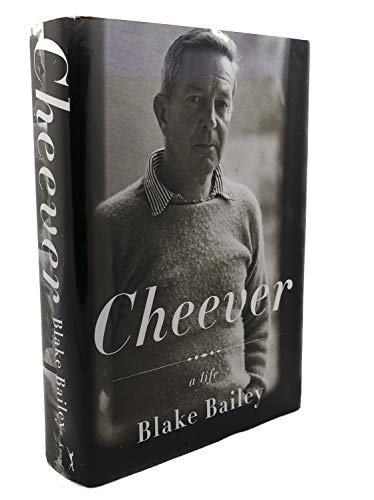
Inhaltsangabe
From the acclaimed author of A Tragic Honesty: The Life and Work of Richard Yates comes the unforgettable life of John Cheever (1912–1982), a man who spent much of his career impersonating a perfect suburban gentleman, the better to become one of the foremost chroniclers of postwar America. “I was born into no true class,” Cheever mused in his journal, “and it was my decision, early in life, to insinuate myself into the middle class, like a spy, so that I would have an advantageous position of attack, but I seem now and then to have forgotten my mission and to have taken my disguises too seriously.” Written with unprecedented access to essential sources—including Cheever’s massive journal, only a fraction of which has ever been published—Blake Bailey’s biography reveals the troubled but strangely lovable man behind the disguises, an artist who delighted in the everyday radiance of the world while yearning, above all, “to be illustrious.”
Cheever’s was a soul in conflict: he was a proud Yankee who flaunted his lineage while deploring the provincialism of his Quincy, Massachusetts, family circle; a high-school dropout who published his first story at eighteen; a pioneer of suburban realist fiction who continually pushed the boundaries of realism; a dire alcoholic who recovered to write the great novel Falconer; a secret bisexual who struggled with his longings and his fierce homophobia in a revolving door of self-loathing and hedonism. We see a man who concealed his anxieties behind the mask of a genial Westchester squire—a paterfamilias in Brooks Brothers clothes whose world was peopled by legendary writers and beautiful women (Malcolm Cowley, Saul Bellow, William Maxwell, Hope Lange, and John Updike, among them); whose groundbreaking work landed him on the covers of Time and Newsweek; a man whose demons and desperation were never quite vanquished by the joy he found in his work.
Blake Bailey has written a luminous biography, a revelation of a writer of timeless fiction and of the man behind the page.
Die Inhaltsangabe kann sich auf eine andere Ausgabe dieses Titels beziehen.
Über die Autorin bzw. den Autor
Blake Bailey is the editor of a two-volume edition of Cheever’s work, published in 2009 by The Library of America. His last book, A Tragic Honesty, was a finalist for the National Book Critics Circle Award. He received a Guggenheim fellowship in 2005, and his articles and reviews have appeared in Slate, The New York Times, the New York Observer, and elsewhere. He lives in Virginia with his wife and daughter.
Auszug. © Genehmigter Nachdruck. Alle Rechte vorbehalten.
Chapter One
1637–1912
Many skeletons in family closet,” Leander Wapshot wrote in his diary. “Dark secrets, mostly carnal.” Even at the height of his success, Cheever never quite lost the fear that he’d “end up cold, alone, dishonored, forgotten by [his] children, an old man approaching death without a companion.” This, he sensed, was the fate of his “accursed” family—or at least of its men, who for three generations (at least) had seemed “bound to a drunken and tragic destiny.” There was his paternal grandfather, Aaron, rumored to have committed suicide in a bleak furnished room on Charles Street in Boston, a disgrace too awful to mention. One night, as a young man, Cheever had sat by a fire drinking whiskey with his father, Frederick, while a nor’easter raged outside. “We were swapping dirty stories,” he recalled; “the feeling was intimate, and I felt that this was the time when I could bring up the subject. ‘Father, would you tell me something about your father?’ ‘No!’ And that was that.” By then Cheever’s father was also poor and forsaken, living alone in an old family farmhouse on the South Shore, his only friend “a half-wit who lived up the road.” As for Cheever’s brother, he too would become drunken and poor, spending his last days in a subsidized retirement village in Scituate. No wonder Cheever sometimes felt an affinity to characters in Ibsen’s Ghosts.
Despite such ignominy, Cheever took pride in his fine old family name, and when he wasn’t making light of the matter, he took pains to impress this on his children. “Remember you are a Cheever,” he’d tell his younger son, whenever the boy showed signs of an unseemly fragility. Some allusion was implicit, perhaps, to the first Cheever in America, Ezekiel, headmaster of the Boston Latin School from 1671 to 1708 and author of Accidence: A Short Introduction to the Latin Tongue, the standard text in American schools for a century or more. New England’s greatest schoolmaster, Ezekiel Cheever was even more renowned for his piety—“his untiring abjuration of the Devil,” as Cotton Mather put it in his eulogy. One aspect of Ezekiel’s piety was a stern distaste for periwigs, which he was known to yank from foppish heads and fling out windows. “The welfare of the commonwealth was always upon the conscience of Ezekiel Cheever,” said Judge Sewall, “and he abominated periwigs.” John Cheever was fond of pointing out that the abomination of periwigs “is in the nature of literature,” and it seems he was taught to emulate such virtue on his father’s knee. “Old Zeke C.,” Frederick wrote his son in 1943, “didn’t fuss about painted walls—open plumbing, or electric lights, had no ping pong etc. Turned out sturdy men and women, who knew their three R’s, and the fear of God.” John paid tribute to his eminent forebear by giving the name Ezekiel to one of his black Labradors (to this day a bronze of the dog’s head sits beside the Cheever fireplace), as well as to the protagonist of Falconer. However, when an old friend mentioned seeing a plaque that commemorated Ezekiel’s house in Charlestown, Cheever replied, “Why tell me? I’m in no way even collaterally related to Ezekiel Cheever.”
Cheever named his first son after his great-grandfather Benjamin Hale Cheever, a “celebrated ship’s master” who sailed out of Newburyport to Canton and Calcutta for the lucrative China trade. Visitors to Cheever’s home in Ossining (particularly journalists) were often shown such maritime souvenirs as a set of Canton china and a framed Chinese fan—this while Cheever remarked in passing that his great-grandfather’s boots were on display in the Peabody Essex Museum, filled with authentic tea from the Boston Tea Party. In fact, it is Lot Cheever of Danvers (no known relation) whose tea-filled boots ended up at the museum; as for Benjamin, he was all of three years old when that particular bit of tea was plundered aboard the Dartmouth on December 16, 1773. Also, there’s some question whether Benjamin Hale (Sr.) was actually a ship’s captain: though he appears in the Newbury Vital Records as “Master” Cheever, there’s no mention of him in any of the maritime records; a “Mr. Benjamin Cheever” is mentioned, however, as the teacher of one Henry Pettingell (born 1793) at the Newbury North School, and “Master” might as well have meant schoolmaster. Unless there were two Benjamin Cheevers in the greater Newbury area at the time (both roughly the same age), this would appear to be John’s great-grandfather.
The ill-fated Aaron was the youngest of Benjamin’s twelve children, and it was actually he who had (“presumably”) brought back that ivory-laced fan from the Orient: “It has lain, broken, in the sewing box for as long as I can remember,” Cheever wrote in 1966, when he finally had the thing repaired and mounted under glass.
My reaction to the framed fan is violently contradictory. Ah yes, I say, my grandfather got it in China, this authenticating my glamorous New England background. My impulse, at the same time, is to smash and destroy the memento. The power a scrap of paper and a little ivory have over my heart. It is the familiar clash between my passionate wish to be honest and my passionate wish to possess a traditional past. I can, it seems, have both but not without a galling sense of conflict.
To be sure, it’s possible that Aaron had sailed to China and retrieved that fan—as his son Frederick pointed out, most young men of the era went out on at least one voyage “to make them grow”—but his future did not lie with the China trade, which was effectively killed by Jefferson’s Embargo Act and the War of 1812. By the time Aaron reached manhood, in the mid-nineteenth century, the New England economy was dominated by textile industries, and Aaron had moved his family to Lynn, Massachusetts, where he worked as a shoemaker. But he was not meant to prosper even in so humble a station, and may well have been among the twenty thousand shoe workers who lost their jobs in the Great Strike of 1860. In any event, the family returned to Newburyport a few years later and eventually sailed to Boston aboard the Harold Currier: “This, according to my father,” said Cheever, “was the last sailing ship to be made in the Newburyport yards and was towed to Boston to be outfitted. I don’t suppose that they had the money to get to Boston by any other means.”
Frederick Lincoln Cheever was born on January 16, 1865, the younger (by eleven years) of Aaron and Sarah’s two sons. One of Frederick’s last memories of his father was “playing dominoes with old gent” during the Great Boston Fire of 1872; the two watched a mob of looters, the merchants fleeing their stores. The financial panic of 1873 followed, in the midst of which Aaron—driven by poverty and whatever other devils—apparently decided his family was better off without him. (“Mother, saintly old woman,” writes Leander Wapshot. “God bless her! Never one to admit unhappiness or pain . . . Asked me to sit down. ‘Your father has abandoned us,’ she said. ‘He left me a note. I burned it in the fire.’ ”) After Aaron’s departure, his wife seems to have run a boarding house to support her children, or so his grandson suspected (“If this were so I think I wouldn’t have been told”), though Aaron’s...
„Über diesen Titel“ kann sich auf eine andere Ausgabe dieses Titels beziehen.
Suchergebnisse für Cheever: A Life

Beispielbild für diese ISBN
Cheever: a Life
Anbieter: World of Books (was SecondSale), Montgomery, IL, USA
Verkäuferbewertung 5 von 5 Sternen

Hardback. Zustand: Good. This luminous biography reveals, for the first time, the full and unforgettable life of a writer of timeless fiction. Drawing on unprecedented access to essential sources, Blake Bailey shows us a soul in conflict: a high-school dropout who published his first story at eighteen; a proud Yankee who flaunted his lineage while deploring the provincialism of his Quincy, Massachusetts, family circle; a pioneer of suburban-realist fiction who continually pushed the boundaries of realism; a dire alcoholic who recovered to write the great novel Falconer; a secret bisexual who struggled with a revolving door of self-loathing and hedonism. Concealing his anxieties behind the mask of the genial Westchester squire, Cheever earned fame and glamorous company with his groundbreaking work, yet the joy of creation could never wholly offset his desperate loneliness. Artikel-Nr. 00108484829
Gebraucht kaufen
EUR 5,38
Versand gratis
Versand innerhalb von USA
Versand innerhalb von USA
Anzahl: 3 verfügbar
Beispielbild für diese ISBN
Cheever: A Life
Anbieter: World of Books (was SecondSale), Montgomery, IL, USA
Verkäuferbewertung 5 von 5 Sternen
Zustand: Acceptable. Item in acceptable condition! Textbooks may not include supplemental items i.e. CDs, access codes etc. Artikel-Nr. 00109250270
Gebraucht kaufen
EUR 5,38
Versand gratis
Versand innerhalb von USA
Versand innerhalb von USA
Anzahl: 1 verfügbar
Beispielbild für diese ISBN
Cheever: A Life
Anbieter: ThriftBooks-Dallas, Dallas, TX, USA
Verkäuferbewertung 5 von 5 Sternen
Hardcover. Zustand: Good. No Jacket. Pages can have notes/highlighting. Spine may show signs of wear. ~ ThriftBooks: Read More, Spend Less. Artikel-Nr. G1400043948I3N00
Gebraucht kaufen
EUR 6,07
Versand gratis
Versand innerhalb von USA
Versand innerhalb von USA
Anzahl: 1 verfügbar
Beispielbild für diese ISBN
Cheever: A Life
Anbieter: ThriftBooks-Atlanta, AUSTELL, GA, USA
Verkäuferbewertung 5 von 5 Sternen
Hardcover. Zustand: Good. No Jacket. Pages can have notes/highlighting. Spine may show signs of wear. ~ ThriftBooks: Read More, Spend Less. Artikel-Nr. G1400043948I3N00
Gebraucht kaufen
EUR 6,07
Versand gratis
Versand innerhalb von USA
Versand innerhalb von USA
Anzahl: 1 verfügbar
Beispielbild für diese ISBN
Cheever: A Life
Anbieter: ThriftBooks-Atlanta, AUSTELL, GA, USA
Verkäuferbewertung 5 von 5 Sternen
Hardcover. Zustand: Good. No Jacket. Missing dust jacket; Pages can have notes/highlighting. Spine may show signs of wear. ~ ThriftBooks: Read More, Spend Less. Artikel-Nr. G1400043948I3N01
Gebraucht kaufen
EUR 6,07
Versand gratis
Versand innerhalb von USA
Versand innerhalb von USA
Anzahl: 1 verfügbar
Beispielbild für diese ISBN
Cheever: A Life
Anbieter: ThriftBooks-Reno, Reno, NV, USA
Verkäuferbewertung 5 von 5 Sternen
Hardcover. Zustand: Good. No Jacket. Pages can have notes/highlighting. Spine may show signs of wear. ~ ThriftBooks: Read More, Spend Less. Artikel-Nr. G1400043948I3N00
Gebraucht kaufen
EUR 6,07
Versand gratis
Versand innerhalb von USA
Versand innerhalb von USA
Anzahl: 1 verfügbar
Beispielbild für diese ISBN
Cheever : A Life
Verlag:
Knopf Doubleday Publishing Group, 2009
ISBN 10: 1400043948
ISBN 13: 9781400043941
Gebraucht
Hardcover
Erstausgabe
Anbieter: Better World Books, Mishawaka, IN, USA
Verkäuferbewertung 5 von 5 Sternen
Zustand: Good. First Edition. Former library copy. Pages intact with minimal writing/highlighting. The binding may be loose and creased. Dust jackets/supplements are not included. Includes library markings. Stock photo provided. Product includes identifying sticker. Better World Books: Buy Books. Do Good. Artikel-Nr. 3966279-75
Gebraucht kaufen
EUR 6,83
Versand gratis
Versand innerhalb von USA
Versand innerhalb von USA
Anzahl: 1 verfügbar
Beispielbild für diese ISBN
Cheever : A Life
Verlag:
Knopf Doubleday Publishing Group, 2009
ISBN 10: 1400043948
ISBN 13: 9781400043941
Gebraucht
Hardcover
Erstausgabe
Anbieter: Better World Books, Mishawaka, IN, USA
Verkäuferbewertung 5 von 5 Sternen
Zustand: Good. First Edition. Pages intact with minimal writing/highlighting. The binding may be loose and creased. Dust jackets/supplements are not included. Stock photo provided. Product includes identifying sticker. Better World Books: Buy Books. Do Good. Artikel-Nr. 3679720-6
Gebraucht kaufen
EUR 6,83
Versand gratis
Versand innerhalb von USA
Versand innerhalb von USA
Anzahl: 2 verfügbar
Beispielbild für diese ISBN
Cheever: A Life
Anbieter: Wonder Book, Frederick, MD, USA
Verkäuferbewertung 5 von 5 Sternen
Zustand: Good. Good condition. Good dust jacket. A copy that has been read but remains intact. May contain markings such as bookplates, stamps, limited notes and highlighting, or a few light stains. Artikel-Nr. M04E-01646
Gebraucht kaufen
EUR 7,56
Versand gratis
Versand innerhalb von USA
Versand innerhalb von USA
Anzahl: 1 verfügbar
Beispielbild für diese ISBN
CHEEVER : A LIFE
Anbieter: Magers and Quinn Booksellers, Minneapolis, MN, USA
Verkäuferbewertung 5 von 5 Sternen
hardcover. Zustand: Very Good. May have light to moderate shelf wear and/or a remainder mark. Complete. Clean pages. hardcover. Artikel-Nr. 858447
Gebraucht kaufen
EUR 6,87
EUR 3,56 Versand
Versand innerhalb von USA
Versand innerhalb von USA
Anzahl: 1 verfügbar