
Verwandte Artikel zu A Future of Faith
Inhaltsangabe
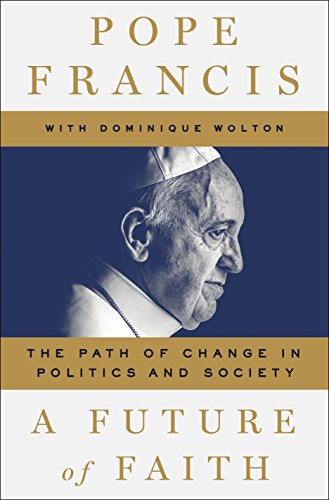
Pope Francis met with French reporter and sociologist Dominique Wolton for an unprecedented series of twelve fascinating and timely conversations―open dialogues revolving around the political, cultural, and religious issues dominating communication and conflict around the world―now published in A Future of Faith: The Path of Change in Politics and Society.
Inspiring and insightful, Pope Francis’s views on immigration, poverty, diversity, globalization, and more are borne from his Christian faith and basic humanity. Meeting the challenges of the twenty-first century requires compassion for those in need, a willingness to work towards common goals without domineering other cultures, and the ability to negotiate with trust, respect, and dignity. And for the first time, Pope Francis shares insights into his own personality, and the formation of his faith, including his experience with psychotherapy, and some of the most important women in his upbringing.
Controversial, bold, personal, and illuminating― A Future of Faith will serve to be essential reading for not only Catholics, but those who want to see how the “people’s pope” confronts the social injustices of the world with the foresight to create positive change.
Die Inhaltsangabe kann sich auf eine andere Ausgabe dieses Titels beziehen.
Über die Autorinnen und Autoren
Jorge Mario Bergoglio, cardinal-archbishop of Buenos Aires, was elected pope under the name of Francis on March 13, 2013. He is the first Jesuit and Latin American pope in the history of the Catholic Church.
Dominique Wolton is a research director at the CNRS. He is the founder and director of the international journal Hermès (CNRS Éditions) since 1988. He is interested in the connections between people and politics and technology and the economy. In addition to A Future of Faith, he is the author of thirty books, translated into twenty languages.
Auszug. © Genehmigter Nachdruck. Alle Rechte vorbehalten.
A Future of Faith
The Path of Change in Politics and Society
By Pope Francis, Dominique WoltonSt. Martin's Press
Copyright © 2018 Éditions de l'Observatoire/Humensis and Libreria Editrice Vaticana
All rights reserved.
ISBN: 978-1-250-20056-3All rights reserved.
Contents
Title Page,
Copyright Notice,
Epigraphs,
Introduction,
1. PEACE AND WAR,
2. RELIGIONS AND POLITICS,
3. EUROPE AND CULTURAL DIVERSITY,
4. CULTURE AND COMMUNICATION,
5. OTHERNESS, TIME AND JOY,
6. "MERCY IS A JOURNEY FROM THE HEART TO THE HAND.",
7. "TRADITION IS A MOVEMENT.",
8. A DESTINY,
Acknowledgments,
Some Quotes from Pope Francis,
Biography of Pope Francis,
Select Bibliography of Pope Francis,
Bibliography of Dominique Wolton,
Notes,
About the Authors,
Copyright,
CHAPTER 1
PEACE AND WAR
First Interview — February 2016
I have never met Pope Francis. With the translator, Father Louis de Romanet, a friend, I step inside the modest residence at Saint Martha's House,just beside Saint Peter's Basilica. We are made to wait in a small, chilly room. Silence. A certain anxiety. All of a sudden, he comes in, warmly. Immediately, there is that deep and gentle gaze. We introduce ourselves. The discussions begin. Everything gradually becomes natural and direct. Something is happening. He replies seriously, the dialogue gets going, punctuated by laughter, which is very frequent throughout the twelve conversations. Humor, connivance, unfinished phrases and natural communication beyond words, in looks and gestures. No time limit. After an hour and a half he asks to stop because he has to go and see his confessor. I tell him he needs to. We laugh. We agree on a new date. He opens the door and leaves as simply as he came in. The intense emotion of seeing that white-clad silhouette disappearing. Obvious frailty, and the huge power of symbols. We talked about serious matters, peace and war, the place of the Church in globalization and history.
POPE FRANCIS: You go first.
DOMINIQUE WOLTON: In January 2016 in Lesbos you said something strange and beautiful: "We are all migrants, and we are all refugees." At a time when the European and Western powers are closing their doors, what can we say, apart from this magnificent phrase? What can we do?
POPE FRANCIS: There is something I said — and migrant children wore it on their T-shirts: "I'm not a danger, I am in danger." Our theology is a theology of migrants. Because we all are, since the call to Abraham, with all the migrations of the people of Israel, and Jesus himself was a refugee, an immigrant, and existentially, by virtue of our faith, we are migrants. Human dignity necessarily implies "being on one's way." When a man or a woman is not on their way, they are a mummy, they are a museum piece. The individual is not alive.
It isn't just a matter of "being" on the way, but of "making" one's way. You make your way. There is a Spanish poem that says: "you make your path by walking." And to walk is to communicate with others; when you walk, you meet people. Walking is perhaps at the root of the culture of meeting: people meet, they communicate, whether well, through friendship, or badly, through war, which is one extreme. Great friendship, and war too, are forms of communication, a communication of aggression of which mankind is capable. When I say man, I mean man and woman. When human individuals decide to stop walking, they fail. They fail in their human vocation. Walking, always being on the way, means always communicating. You may be on the wrong path, you may fall — as in the story of the thread of Ariadne, like Ariadne and Theseus, you may find yourself in a maze — but you walk, you walk, perhaps in the wrong direction, but you walk, you communicate. We have trouble communicating, but we communicate nonetheless. I say that because people who are "on their way" must not be rejected, because that would amount to a rejection of communication.
DOMINIQUE WOLTON: But migrants are being rejected and driven out of Europe?
POPE FRANCIS: If Europeans want to keep themselves to themselves, they'll have to have children! I think the French government launched actual plans, laws to give assistance to large families, but other countries didn't: they prefer the idea of not having children. For different reasons, using different methods.
DOMINIQUE WOLTON: In the spring of 2016, Europe signed a crazy agreement to close the border between Europe and Turkey.
POPE FRANCIS: That's why I keep coming back to the walking man. Man is fundamentally a communicating creature. A person who is mute, in the sense that he doesn't know how to communicate, is a person who cannot "walk," who cannot "travel ..."
DOMINIQUE WOLTON: A year and a half after those words that you said in Lesbos, the situation has got worse. A lot of people admired what you said, but afterward there was no follow-up. What would you say a year later?
POPE FRANCIS: The problem begins in the countries that the refugees come from. Why do they leave their home? Because of a lack of work, or because of war. Those are the two main reasons. Lack of work, because they have been exploited — I'm thinking of the Africans. Europe has exploited Africa ... I don't know if one can say that! But some examples of European colonization ... yes, they exploited Africa. I read that, with his first act of parliament, one African head of state proposed a law of reforestation for his country — and it was passed. The global economic powers had cut down all the trees. Reforestation. The land is dry from having been over-exploited, and there is no work. The first thing that needs to be done — and I said this when I spoke to the United Nations, to the Council of Europe, everywhere — is to find the sources of new jobs, and invest in them. It's also true that Europe needs to invest at home. Because there's an unemployment problem here too. The other reason for migration is war. If you invest, people will find jobs and won't need to leave, but if there is war, they will have to flee anyway. And who's making war? Who's giving them weapons? We are.
DOMINIQUE WOLTON: Not least the French ...
POPE FRANCIS: Really? Other nations too; I know they're involved with arms dealing on a bigger or smaller scale, with all those things. We supply them with weapons so that they destroy themselves. People complain that migrants are coming to destroy us. But we're the ones who are sending them the weapons! Look at the Middle East. It's the same thing. Who's supplying the weapons? To Daesh, to those who support Assad in Syria, to the anti-Assad rebels? Who's supplying the weapons? When I say "we," I mean the West. I'm not accusing any country in particular. The West — and some non-Western countries also sell weapons. We're the ones who supply the weapons. We cause chaos, people flee, and what do we do? We say: "Come on, sort yourselves out!" I don't want to express myself too harshly, but we have no right not to help the people who arrive here. They are human beings. A politician said to me, "The one thing that overrules all agreements is human rights." And there you have a European leader with a clear vision of the problem.
DOMINIQUE WOLTON: This attitude of rejection can also encourage hatred, because today, with the globalization of the image, the internet, television, the whole world can see...
„Über diesen Titel“ kann sich auf eine andere Ausgabe dieses Titels beziehen.
Suchergebnisse für A Future of Faith

Beispielbild für diese ISBN
A Future of Faith The Path of
Verlag:
St. Martin's Essentials, 2018
ISBN 10: 1250200563
ISBN 13: 9781250200563
Gebraucht
Hardcover
Anbieter: World of Books (was SecondSale), Montgomery, IL, USA
Verkäuferbewertung 5 von 5 Sternen

Zustand: Good. Item in good condition. Textbooks may not include supplemental items i.e. CDs, access codes etc. Artikel-Nr. 00107966686
Gebraucht kaufen
EUR 5,67
Versand gratis
Versand innerhalb von USA
Versand innerhalb von USA
Anzahl: 2 verfügbar
Beispielbild für diese ISBN
A Future of Faith The Path of
Verlag:
St. Martin's Essentials, 2018
ISBN 10: 1250200563
ISBN 13: 9781250200563
Gebraucht
Hardcover
Anbieter: World of Books (was SecondSale), Montgomery, IL, USA
Verkäuferbewertung 5 von 5 Sternen
Zustand: Very Good. Item in very good condition! Textbooks may not include supplemental items i.e. CDs, access codes etc. Artikel-Nr. 00109035133
Gebraucht kaufen
EUR 5,67
Versand gratis
Versand innerhalb von USA
Versand innerhalb von USA
Anzahl: 2 verfügbar
Beispielbild für diese ISBN
A Future of Faith: The Path of Change in Politics and Society
Verlag:
St. Martin's Essentials, 2018
ISBN 10: 1250200563
ISBN 13: 9781250200563
Gebraucht
Hardcover
Anbieter: ThriftBooks-Dallas, Dallas, TX, USA
Verkäuferbewertung 5 von 5 Sternen
Hardcover. Zustand: Very Good. No Jacket. May have limited writing in cover pages. Pages are unmarked. ~ ThriftBooks: Read More, Spend Less. Artikel-Nr. G1250200563I4N00
Gebraucht kaufen
EUR 5,91
Versand gratis
Versand innerhalb von USA
Versand innerhalb von USA
Anzahl: 1 verfügbar
Beispielbild für diese ISBN
A Future of Faith: The Path of Change in Politics and Society
Verlag:
St. Martin's Essentials, 2018
ISBN 10: 1250200563
ISBN 13: 9781250200563
Gebraucht
Hardcover
Anbieter: ThriftBooks-Atlanta, AUSTELL, GA, USA
Verkäuferbewertung 5 von 5 Sternen
Hardcover. Zustand: Very Good. No Jacket. May have limited writing in cover pages. Pages are unmarked. ~ ThriftBooks: Read More, Spend Less. Artikel-Nr. G1250200563I4N00
Gebraucht kaufen
EUR 5,91
Versand gratis
Versand innerhalb von USA
Versand innerhalb von USA
Anzahl: 1 verfügbar
Beispielbild für diese ISBN
A Future of Faith: The Path of Change in Politics and Society
Verlag:
St. Martin's Essentials (edition First Edition), 2018
ISBN 10: 1250200563
ISBN 13: 9781250200563
Gebraucht
Hardcover
Erstausgabe
Anbieter: BooksRun, Philadelphia, PA, USA
Verkäuferbewertung 5 von 5 Sternen
Hardcover. Zustand: Very Good. First Edition. With dust jacket. It's a well-cared-for item that has seen limited use. The item may show minor signs of wear. All the text is legible, with all pages included. It may have slight markings and/or highlighting. Artikel-Nr. 1250200563-8-18-29
Gebraucht kaufen
EUR 6,62
Versand gratis
Versand innerhalb von USA
Versand innerhalb von USA
Anzahl: 1 verfügbar
Beispielbild für diese ISBN
A Future of Faith : The Path of Change in Politics and Society
Anbieter: Better World Books, Mishawaka, IN, USA
Verkäuferbewertung 5 von 5 Sternen
Zustand: Good. Pages intact with minimal writing/highlighting. The binding may be loose and creased. Dust jackets/supplements are not included. Stock photo provided. Product includes identifying sticker. Better World Books: Buy Books. Do Good. Artikel-Nr. 17367025-6
Gebraucht kaufen
EUR 6,67
Versand gratis
Versand innerhalb von USA
Versand innerhalb von USA
Anzahl: 2 verfügbar
Beispielbild für diese ISBN
A Future of Faith: The Path of Change in Politics and Society
Verlag:
St. Martin's Essentials, 2018
ISBN 10: 1250200563
ISBN 13: 9781250200563
Gebraucht
Hardcover
Anbieter: Wonder Book, Frederick, MD, USA
Verkäuferbewertung 5 von 5 Sternen
Zustand: Very Good. Very Good condition. Very Good dust jacket. With remainder mark. A copy that may have a few cosmetic defects. May also contain light spine creasing or a few markings such as an owner's name, short gifter's inscription or light stamp. Artikel-Nr. Q05O-01477
Gebraucht kaufen
EUR 7,06
Versand gratis
Versand innerhalb von USA
Versand innerhalb von USA
Anzahl: 2 verfügbar
Beispielbild für diese ISBN
A Future of Faith: The Path of Change in Politics and Society
Verlag:
St. Martin's Essentials, 2018
ISBN 10: 1250200563
ISBN 13: 9781250200563
Gebraucht
Hardcover
Anbieter: Wonder Book, Frederick, MD, USA
Verkäuferbewertung 5 von 5 Sternen
Zustand: Very Good. Very Good condition. Good dust jacket. A copy that may have a few cosmetic defects. May also contain light spine creasing or a few markings such as an owner's name, short gifter's inscription or light stamp. Artikel-Nr. T13O-00308
Gebraucht kaufen
EUR 7,06
Versand gratis
Versand innerhalb von USA
Versand innerhalb von USA
Anzahl: 2 verfügbar
Beispielbild für diese ISBN
Future of Faith: The Path of Change in Politics and Society
Verlag:
St. Martin's Essentials, 2018
ISBN 10: 1250200563
ISBN 13: 9781250200563
Gebraucht
Hardcover
Anbieter: Books End Bookshop, Syracuse, NY, USA
Verkäuferbewertung 4 von 5 Sternen

Hardcover. Zustand: Very Good. Zustand des Schutzumschlags: Good. Scuffing, smudges to DJ with tear at head. Book is age toned with remainder dot on head fmc2%262D. Artikel-Nr. 1051953
Gebraucht kaufen
EUR 4,09
EUR 5,29 Versand
Versand innerhalb von USA
Versand innerhalb von USA
Anzahl: 1 verfügbar
Beispielbild für diese ISBN
A Future of Faith: The Path of Change in Politics and Society
Anbieter: AwesomeBooks, Wallingford, Vereinigtes Königreich
Verkäuferbewertung 5 von 5 Sternen
Hardcover. Zustand: Very Good. A Future of Faith: The Path of Change in Politics and Society This book is in very good condition and will be shipped within 24 hours of ordering. The cover may have some limited signs of wear but the pages are clean, intact and the spine remains undamaged. This book has clearly been well maintained and looked after thus far. Money back guarantee if you are not satisfied. See all our books here, order more than 1 book and get discounted shipping. Artikel-Nr. 7719-9781250200563
Gebraucht kaufen
EUR 5,44
EUR 4,81 Versand
Versand von Vereinigtes Königreich nach USA
Versand von Vereinigtes Königreich nach USA
Anzahl: 2 verfügbar