
Verwandte Artikel zu The Mayakovsky Tapes
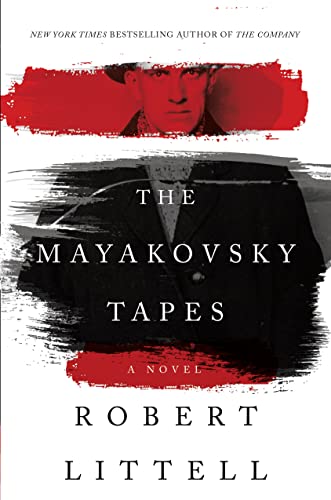
Inhaltsangabe
In March 1953, four women meet in Room 408 of Moscow’s deluxe Hotel Metropol. They have gathered to reminisce about Vladimir Mayakovsky, the poet who in death had become a national idol of Soviet Russia. In life, however, he was a much more complicated figure.
The ladies, each of whom could claim to have been a muse to the poet, loved or loathed Mayakovsky in the course of his life, and as they piece together their conflicting memories of him, a portrait of the artist as a young idealist emerges. From his early years as a leader of the Futurist movement to his work as a propagandist for the Revolution and on to the censorship battles that turned him against the state (and, more ominously, the state against him), their recollections reveal Mayakovsky as a passionate, complex, sexually obsessed creature trapped in the epicenter of history, struggling to hold onto his ideals in the face of a revolution betrayed.
Written by Robert Littell, whom The Washington Post called “one of the most talented, most original voices in American fiction today, period,” The Mayakovsky Tapes is an ambitious, impressive novel that brings to life the tumultuous Stalinist era and the predicament of the artists ensnared in it.
Die Inhaltsangabe kann sich auf eine andere Ausgabe dieses Titels beziehen.
Über die Autorin bzw. den Autor
ROBERT LITTELL is the author of eighteen previous novels, most recently A Nasty Piece of Work and the nonfiction book For the Future of Israel, written with Shimon Peres, former president of Israel. He has been awarded both the English Gold Dagger and the Los Angeles Times Book Prize for his fiction. His novel The Company was a New York Times bestseller and was adapted into a television miniseries, and his novel Legends has been adapted into a television series. He lives in France.
Auszug. © Genehmigter Nachdruck. Alle Rechte vorbehalten.
The Mayakovsky Tapes
A Novel
By Robert Littell, R. LitzkySt. Martin's Press
Copyright © 2016 Robert Littell
All rights reserved.
ISBN: 978-1-250-10056-6All rights reserved.
CHAPTER 1
FIRST SESSION
Revolution is not for the weak of heart....
Nora: I'll start the ball rolling if you like. I take my cue from those two unambiguous words they throw onto the silver screen moments before the houselights come up: The end. That's where I'll begin —
Tatiana: Are you seriously suggesting the end of a story is more instructive than the beginning?
Nora: Don't be thickheaded, Tanik! I'm suggesting that the end is discernible from the beginning. And in that sense the end and the beginning are more often than not indistinguishable from each other.
So: You know what he can do with his pompous Comrade Government, ensure a decent life for them. The son of a bitch can shove it up his delicate poetic asshole is what he can do. The cunt! The prick! Hang on, I'm one jump ahead of you, ladies. You will want to know how is it possible to be both cunt and prick simultaneously. I grant you it defies logic, it defies common sense, it defies conventional wisdom about male versus female anatomy, for all I know it defies gravity, but what the fuck, he managed it. The Poet was both cunt and prick when he did what he did to us. Christ, when he did what he did to me!
Lilya: As for me, I'm more comfortable starting at the start:
In the years before the Revolution, our lifelines had crossed now and then, here and there — the occasional literary soiree in the airless cellar of the Stray Dog, the notorious poetry reading in the Polytechnical Museum that turned into a free-for-all (punches were exchanged, chairs broken, the police had to be summoned), a cabaret performance of Georgian folk dances by the teenage prodigy Georgi Balanchivadze, impromptu picnics on the Moskva River when Mayakovsky was courting my gorgeous younger sister, Elsa, ah, yes, I mustn't forget that deliciously furtive Bolshevik district committee meeting in the Kotov Textile Factory outside of Moscow — but I never paid much attention to him, perhaps because he never paid much attention to me, perhaps because he basked in attention and took it as his due, and I never give the male of the species his due if the withholding of it can make him uncomfortable. Truth is Vladimir Vladimirovich seemed to be more interested in my husband, Osip Maksimovich. The two of them had been drafted in 1916 and served in the same Petrograd motor brigade. Neither ever heard a shot fired in anger. Their job was to meet the trains coming up from the great military base at Mogilev in Byelorussia and ferry majors and colonels and generals, all of them weighted down with colorful medals, to the city's grand hotels for a night of passion with their mistresses. The way Osip told it, the two chauffeurs spent the nights stretched out on the backseats of French Renaults waiting for their charges to emerge from this or that hotel deluxe, with Osip reading, by flashlight, all twelve novels and twenty-nine short stories of Leon Tolstoy and Mayakovsky whiling away the endless hours writing verse in his Day Book. God knows how but Osip managed to get himself promoted to the rank of Commissar, an event the two motor brigade drivers promptly celebrated by going on a binge in a Petrograd whorehouse. My Osip and Volodya kept in sporadic touch after their less than glorious military careers came to an end. More recently Osip had arranged, at his own expense, to get several of the Poet's poems printed in journals and was trying to organize the publication of a collection of Mayakovsky's verse in pamphlet form, an undertaking worthy of Sisyphus given the rationing of paper due to the Great War.
This absence of personal chemistry between us changed the night Osip and I showed up at the Poet's Café on the Arbat in Moscow for what had been billed as a mano a mano: the two young titans of Russian poesy would be facing off on the future of Futurism. I can still conjure the scene in the café's main room. It was jam-packed with what my Osip (who, like most intellectual snobs, instantly recognizes other intellectual snobs when he is obliged to rub elbows with them) called the Great Tongue-Tied: highbrows bound into the intellectual's straightjacket of grammatical correctness and casual incivility. The air was thick with cigarette smoke, the floorboards were littered with a carpet of cigarette ends and reeked of stale beer, which is what the Tongue-Tied drink when they manage to pocket an advance against royalties for something they might or might not actually write. From time to time slivers of soundless lightning, evidence of a distant thunderstorm, turned the café's art nouveau stained glass windows opaque for a fraction of a second. Several of the Tongue-Tied, seeing the bursts of light, speculated that revolution, expected any day, might have begun. Alas, they were mistaken by several months and had to be laughed down by individuals with umbrellas who recognized inclement weather when they saw it. In the back, under the storm-illuminated windows, stood a gaggle of factors gesticulating with their hands and fingers as if they were deaf and dumb. Osip supposed them to be selling tsarist bonds to finance a new stretch of the Trans-Siberian rail line. He was dead wrong. They turned out to be betters laying odds on who would emerge the winner from the poetic confrontation.
The wooden chairs in the large square room had been arranged as if two primitive tribes were facing off against each other. Set slightly forward from their respective camps were two bar stools for the principals. In the one corner, at twenty-six, lean, long-jawed with deep-set burning eyes, sat Boris Pasternak, only just arrived in Moscow on a sledge from the Urals, still wearing a long coat covered with dust kicked up by the troika of horses. In the other corner, Vladimir Mayakovsky, the enfant terrible of Russian poetry who carried a chip on his shoulder and wore his anger on his sleeve, and somehow managed to look as if he had just come away from a street brawl. Several years younger and half a head taller than his rival, he was dressed in a threadbare city suit with one of his signature radishes jammed into the buttonhole — Mayakovsky, you see, had a dark side, he claimed a metaphorical affinity for people and plants that grew into the ground. Oh, he certainly stood out in the crowd with that yellow bow tie fastened to a dirty cardboard collar, the hem of his long coat weighted down with dried mud, his mop of thick uncombed (and presumably unwashed) black hair awry, a scruffy stubble of a beard on his pasty cheeks. Rocking agitatedly on his bar stool, he fetched a small notebook from an inside pocket of his long coat, moistened a thick thumb on his thick tongue and flicked through the pages to the one he wanted. He studied it for a long moment, then closed the notebook and, squinting sightlessly over the heads of the Tongue-Tied, clearing his throat as if he needed to cough up an obstruction in it, he began declaiming his poem, in turns ranting, whispering, raging, mumbling, mocking, whining, winnowing, all the while gasping for breath when he ran short of it. (I run short of breath just remembering it.) I had heard poetry read out before but never like this. He seemed to be trying to startle his audience into the poem, to detonate cultural revolution with words forced out of context, with metaphors that defied common sense. It was a revelation of what poetry could be when it wasn't hostage...
„Über diesen Titel“ kann sich auf eine andere Ausgabe dieses Titels beziehen.
Suchergebnisse für The Mayakovsky Tapes

Beispielbild für diese ISBN
The Mayakovsky Tapes: A Novel
Anbieter: World of Books (was SecondSale), Montgomery, IL, USA
Verkäuferbewertung 5 von 5 Sternen

Zustand: Good. Item in good condition. Textbooks may not include supplemental items i.e. CDs, access codes etc. Artikel-Nr. 00104475530
Gebraucht kaufen
EUR 7,14
Versand gratis
Versand innerhalb von USA
Versand innerhalb von USA
Anzahl: 2 verfügbar
Beispielbild für diese ISBN
The Mayakovsky Tapes : A Novel
Anbieter: Better World Books, Mishawaka, IN, USA
Verkäuferbewertung 5 von 5 Sternen
Zustand: Very Good. Former library copy. Pages intact with possible writing/highlighting. Binding strong with minor wear. Dust jackets/supplements may not be included. Includes library markings. Stock photo provided. Product includes identifying sticker. Better World Books: Buy Books. Do Good. Artikel-Nr. 13156524-75
Gebraucht kaufen
EUR 7,19
Versand gratis
Versand innerhalb von USA
Versand innerhalb von USA
Anzahl: 2 verfügbar
Beispielbild für diese ISBN
The Mayakovsky Tapes : A Novel
Anbieter: Better World Books: West, Reno, NV, USA
Verkäuferbewertung 5 von 5 Sternen
Zustand: Good. Pages intact with minimal writing/highlighting. The binding may be loose and creased. Dust jackets/supplements are not included. Stock photo provided. Product includes identifying sticker. Better World Books: Buy Books. Do Good. Artikel-Nr. 15057276-6
Gebraucht kaufen
EUR 7,19
Versand gratis
Versand innerhalb von USA
Versand innerhalb von USA
Anzahl: 1 verfügbar
Foto des Verkäufers
The Mayakovsky Tapes
Verlag:
Thomas Dunne Books, 2016
ISBN 10: 1250100569
ISBN 13: 9781250100566
Gebraucht
Hardcover
Erstausgabe
Signiert
Anbieter: ThriftBooksVintage, Tukwila, WA, USA
Verkäuferbewertung 5 von 5 Sternen
Hardcover. Zustand: Very Good. Zustand des Schutzumschlags: Good. First Edition. Dust jacket in good condition. First edition, first printing. SIGNED by the author. Minor shelf and handling wear, overall a clean solid copy with minimal signs of use. Boards and dust jacket show slight signs of wear. All pages are intact, binding is sound. Clean and unmarked. Secure packaging for safe delivery. signed by author. Artikel-Nr. 1866177911
Gebraucht kaufen
EUR 21,23
Versand gratis
Versand innerhalb von USA
Versand innerhalb von USA
Anzahl: 1 verfügbar
Foto des Verkäufers
The Mayakovsky Tapes
Verlag:
Thomas Dunne Books, 2016
ISBN 10: 1250100569
ISBN 13: 9781250100566
Gebraucht
Hardcover
Erstausgabe
Signiert
Anbieter: ThriftBooksVintage, Tukwila, WA, USA
Verkäuferbewertung 5 von 5 Sternen
Hardcover. Zustand: Very Good. Zustand des Schutzumschlags: Good. First Edition. Dust jacket in good condition. First edition, first printing. SIGNED by the author. Minor shelf and handling wear, overall a clean solid copy with minimal signs of use. Boards and dust jacket show slight signs of wear. All pages are intact, binding is sound. Clean and unmarked. Secure packaging for safe delivery. signed by author. Artikel-Nr. 1866177910
Gebraucht kaufen
EUR 21,23
Versand gratis
Versand innerhalb von USA
Versand innerhalb von USA
Anzahl: 1 verfügbar
Foto des Verkäufers
The Mayakovsky Tapes
Verlag:
Thomas Dunne Books, 2016
ISBN 10: 1250100569
ISBN 13: 9781250100566
Gebraucht
Hardcover
Erstausgabe
Signiert
Anbieter: ThriftBooksVintage, Tukwila, WA, USA
Verkäuferbewertung 5 von 5 Sternen
Hardcover. Zustand: Very Good. Zustand des Schutzumschlags: Very Good. First Edition. Dust jacket in very good condition. First edition, first printing. SIGNED by the author. Minor shelf and handling wear, overall a clean solid copy with minimal signs of use. Covers show slight wear and scuffing. All pages intact, binding is sound. Clean and unmarked. Secure packaging for safe delivery. signed by author. Artikel-Nr. 1866177850
Gebraucht kaufen
EUR 21,23
Versand gratis
Versand innerhalb von USA
Versand innerhalb von USA
Anzahl: 1 verfügbar
Foto des Verkäufers
The Mayakovsky Tapes
Anbieter: WeBuyBooks, Rossendale, LANCS, Vereinigtes Königreich
Verkäuferbewertung 5 von 5 Sternen
hardcover. Zustand: Very Good. Most items will be dispatched the same or the next working day. A copy that has been read, but is in excellent condition. Pages are intact and not marred by notes or highlighting. The spine remains undamaged. Artikel-Nr. rev5083497323
Gebraucht kaufen
EUR 16,88
EUR 6,85 Versand
Versand von Vereinigtes Königreich nach USA
Versand von Vereinigtes Königreich nach USA
Anzahl: 1 verfügbar
Foto des Verkäufers
The Mayakovsky Tapes
Verlag:
St. Martin's Publishing Group Nov 2016, 2016
ISBN 10: 1250100569
ISBN 13: 9781250100566
Neu
Hardcover
Anbieter: AHA-BUCH GmbH, Einbeck, Deutschland
Verkäuferbewertung 5 von 5 Sternen
Buch. Zustand: Neu. Neuware - In March 1953, four women meet in Room 408 of Moscow's deluxe Hotel Metropol. They have gathered to reminisce about Vladimir Mayakovsky, the poet who in death had become a national idol of Soviet Russia. In life, however, he was a much more complicated figure.The ladies, each of whom could claim to have been a muse to the poet, loved or loathed Mayakovsky in the course of his life, and as they piece together their conflicting memories of him, a portrait of the artist as a young idealist emerges. From his early years as a leader of the Futurist movement to his work as a propagandist for the Revolution and on to the censorship battles that turned him against the state (and, more ominously, the state against him), their recollections reveal Mayakovsky as a passionate, complex, sexually obsessed creature trapped in the epicenter of history, struggling to hold onto his ideals in the face of a revolution betrayed.Written by Robert Littell, whom The Washington Post called 'one of the most talented, most original voices in American fiction today, period,' The Mayakovsky Tapes is an ambitious, impressive novel that brings to life the tumultuous Stalinist era and the predicament of the artists ensnared in it. Artikel-Nr. 9781250100566
Neu kaufen
EUR 36,00
EUR 35,00 Versand
Versand von Deutschland nach USA
Versand von Deutschland nach USA
Anzahl: 1 verfügbar
Foto des Verkäufers
The Mayakovsky Tapes
Anbieter: moluna, Greven, Deutschland
Verkäuferbewertung 5 von 5 Sternen
Zustand: New. Über den AutorrnrnRobert LittellKlappentextIn March 1953, four women meet in Room 408 of Moscow s deluxe Hotel Metropol. They have gathered to reminisce about Vladimir Mayakovsky, the poet who in death had bec. Artikel-Nr. 891056475
Neu kaufen
EUR 29,78
EUR 48,99 Versand
Versand von Deutschland nach USA
Versand von Deutschland nach USA
Anzahl: Mehr als 20 verfügbar