
Verwandte Artikel zu Life Without Envy: Ego Management for Creative People
Inhaltsangabe
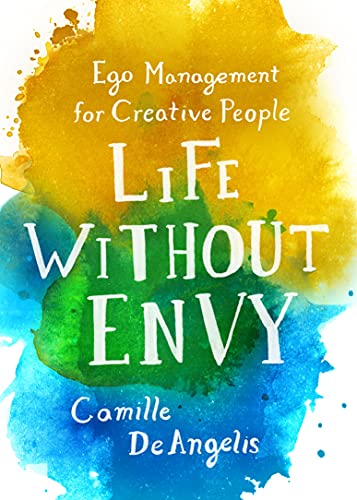
From one artist to another, a helpful guide and a meditation on the nature of the ego and its toxic effects on the creative process
Life Without Envy by Camille DeAngelis is a game-changer for artists of all stripes: a practical guide for navigating the feelings of jealousy, frustration, and inadequacy we all experience to create a happy life regardless of how your career is (or isn't) going.
In these pages you'll find strategies for escaping the negative feedback loop you get stuck in whenever you compare yourself to your fellow artists. You'll begin to resolve your hunger for recognition, shifting your mindset from "proving yourself" to making a contribution and becoming part of a supportive creative community. Best of all, you'll come to understand that your worth-as an artist and a human being-has nothing to do with how your work is received in the wider world.
Life Without Envy offers a blueprint for real and lasting contentment no matter what setback you're weathering in your creative life.
Die Inhaltsangabe kann sich auf eine andere Ausgabe dieses Titels beziehen.
Über die Autorin bzw. den Autor
Camille DeAngelis
Auszug. © Genehmigter Nachdruck. Alle Rechte vorbehalten.
Life Without Envy
Ego Management for Creative People
By Camille DeAngelisSt. Martin's Press
Copyright © 2016 Camille DeAngelis
All rights reserved.
ISBN: 978-1-250-09934-1All rights reserved.
Contents
TITLE PAGE,
COPYRIGHT NOTICE,
DEDICATION,
Introduction,
A PINCHY SPOT,
THIS BOOK IS FOR YOU,
A NASTY PLACE TO LIVE,
STRUGGLE IS OPTIONAL,
THE LAUGHTER OF SANITY,
A CASE IN POINT,
WHAT IS EGO, ANYWAY?,
THREE VIGNETTES ON THE NATURE OF THE EGO,
Part I: Common Misapprehensions,
PERSONAL AGENCY? YOU'D LIKE TO THINK SO!,
SWEET LITTLE BLOBS OF TEMPORARY PERSONHOOD,
FUTURE SCIENCE,
HURRY UP AND BE SOMEBODY,
ANOTHER PERNICIOUS FANTASY,
MANIFESTING THE AWESOME,
FEAR NO ENVY, COURT NO PRAISE,
THE CORPSE IN THE ATTIC,
WHEN FAILURE ISN'T FAILURE,
FACE THE UGLY,
ALL THIS MONEY CAN'T BUY ME A TIME MACHINE,
WHAT YOU DESERVE?,
Part II: Strategies and Inspiration,
TIPTOEING TOWARD OBJECTIVITY,
YOUR FANCY DIPLOMA IN A NEW FRAME,
MY, WHAT LOVELY PROBLEMS I HAVE!,
BANDWIDTH AND SNUBBERY,
A MERRY HEART DOETH GOOD LIKE A MEDICINE,
BE YOUR OWN MAMA,
WWJCD?,
LOVE YOUR FATE, PART 1,
LOVE YOUR FATE, PART 2,
MAKE YOUR OWN ECSTASY,
HOW TO LET GO,
THE JOLLY GREAT TRUTH,
MAKE YOURSELF USEFUL,
CHANGING THE CULTURE,
CALM AND CLEAR AND BRIGHT,
MORE WORDS TO INSPIRE YOU,
NOTES,
ACKNOWLEDGMENTS,
ALSO BY CAMILLE DEANGELIS,
ABOUT THE AUTHOR,
COPYRIGHT,
CHAPTER 1
PART I
Common Misapprehensions
Let's make sure our ideas of success are our own, that we are truly the authors of our own ambitions.
— ALAIN DE BOTTON
PERSONAL AGENCY? YOU'D LIKE TO THINK SO!
Misapprehension #1:My thoughts are entirely my own. The way I think about the world, and my place in it, is completely unique to me.
CAPITALISTS DESIGNED THE AMERICAN PUBLIC EDUCATION SYSTEM TO TURN CHILDREN INTO OBEDIENT WORKERS.
I know this sounds like the musings of a conspiracy theorist, but let's examine the facts: in 1843 US Congressman Horace Mann traveled to Prussia, where this civic-minded educational system was already in place, and when he got back to America he lobbied to emulate it. Educational historians laud Horace Mann as the champion of free public schooling to help children grow into educated voters, but there is a dark side to this system: his efforts opened classrooms to those kids besides boys from wealthy families, but in doing so Mann advocated for an orderly society at the expense of the individual. His educational vision implied that the "common" child — one not born into privilege — should learn to follow rules and directions rather than inventing his own, and for that Mann is remembered as the "Father of the Common School." It is not much of a generalization to say that in a traditional school environment, conformity is valued over innovation. Sir Ken Robinson makes this argument in his 2006 TED Talk, "Do Schools Kill Creativity?," and it's the most-watched TED video of all time because we know how right he is.
When you actually stop to consider it — which probably isn't often — you can see how we are brought up to be good little workers, good little consumers. How many of your childhood desires — for toys, pets, junk food, Halloween costumes — were influenced by advertisements and commercials? Did you ever ask a parent or teacher why something was done in a particular way, only to be shut down with a variation of "because I said so"? How many times did the hunger for approval win out over curiosity and imagination?
You might begin to suspect that even your most cherished and private ambitions are double agents in the service of that destiny. It makes sense, right? We are made to feel that we must always be striving for more. A bigger house, more money, more success, because if you feel complete just as you are, then you're no longer a cog in the system. You are insuggestible and therefore unprofitable. Corporations need you to feel inadequate. They need you to want all the things. They're selling you an idea of individuality that they've created, and selling you the products that will keep you believing in this illusion. It's in their interest to let you think you have personal agency, that you're making all your own decisions. There's a reason why The Matrix was such a successful movie.
Train yourself to think more critically about what you truly believe and want, what actually makes you happy. What are your favorite foods? Your favorite films and music? What did you want to be when you grew up and why, and how did you come to do what you're doing now? What appeals to you and what disgusts you, and why? If you keep looking you'll begin to see your biases and your assumptions, and how you came to hold them in the first place.
If you think that as a creative individual you are above all this shallow materialism and mindless conformity, that it doesn't apply to you, think again. Artists have their own carnival of bullshit to contend with, and it might be even more insidious. We've convinced ourselves we're striving not for our own glory but for the benefit of art, of literature, of culture, but we still "need" the MacBook Pro to write our screenplay. We "need" the diploma from a "prestigious" school if we wish to be taken seriously in our chosen field. We "need" the top-of-the-line art supplies and music equipment and lessons with the most respected teacher in our echelon. I'm not saying we can't legitimately benefit from these resources — just that we shouldn't identify with the trappings.
If you want to slough off this culturally imposed bullshit, you have to go and sit in a very quiet place where no one can possibly interrupt you. Ask yourself, "How much of this is actually mine?"
Do you even want what you think you want?
Don't let anyone tell you, ever, that this is a zero-sum game. Your genius does not threaten me. It delights and inspires me.
— SEANAN McGUIRE
CHAPTER 2SWEET LITTLE BLOBS OF TEMPORARY PERSONHOOD
Misapprehension #2:We are isolated and competitive individuals, forever jostling with strangers for a seat on the bus at the end of a long day.
In fourth grade I got to duck out of some of the regular subjects each week to attend "Challenge" classes. Only two students in the whole grade could say they were in "Challenge Everything" — literature, math, art, and music — and I was one of them. You can tell by the way I'm recounting this that I was a bit too proud of it. A classmate, who would become one of the stars on the high school basketball team, once told me (half wistfully, half resentfully) that if there were only a "Challenge Gym," well then, he'd be in it. Looking back on it now, I understand why that kid didn't like me.
As children we are told that no two snowflakes are precisely alike, that each of us is "special" and "unique," but even when we are small we can sniff the poop under the platitude. We may be too young yet to articulate this, but we understand on an instinctive level that if everyone is special — if every watercolor in the middle school art show gets a ribbon — then there's no real value to the word. So, through the preferential treatment of our parents and teachers, we come to believe that some of us are more special...
„Über diesen Titel“ kann sich auf eine andere Ausgabe dieses Titels beziehen.
Suchergebnisse für Life Without Envy: Ego Management for Creative People

Beispielbild für diese ISBN
Life Without Envy : Ego Management for Creative People
Anbieter: Better World Books, Mishawaka, IN, USA
Verkäuferbewertung 5 von 5 Sternen

Zustand: Very Good. Pages intact with possible writing/highlighting. Binding strong with minor wear. Dust jackets/supplements may not be included. Stock photo provided. Product includes identifying sticker. Better World Books: Buy Books. Do Good. Artikel-Nr. 11847026-6
Gebraucht kaufen
EUR 6,16
Versand gratis
Versand innerhalb von USA
Versand innerhalb von USA
Anzahl: 1 verfügbar
Beispielbild für diese ISBN
Life Without Envy : Ego Management for Creative People
Anbieter: Better World Books, Mishawaka, IN, USA
Verkäuferbewertung 5 von 5 Sternen
Zustand: Very Good. Former library copy. Pages intact with possible writing/highlighting. Binding strong with minor wear. Dust jackets/supplements may not be included. Includes library markings. Stock photo provided. Product includes identifying sticker. Better World Books: Buy Books. Do Good. Artikel-Nr. 14328960-75
Gebraucht kaufen
EUR 6,16
Versand gratis
Versand innerhalb von USA
Versand innerhalb von USA
Anzahl: 2 verfügbar
Beispielbild für diese ISBN
Life Without Envy: Ego Management for Creative People
Anbieter: BookOutlet, Jefferson City, TN, USA
Verkäuferbewertung 5 von 5 Sternen
Paperback. Zustand: New. Paperback. Publisher overstock, may contain remainder mark on edge. Artikel-Nr. 9781250099341B
Beispielbild für diese ISBN
Life Without Envy: Ego Management for Creative People
Anbieter: ThriftBooks-Atlanta, AUSTELL, GA, USA
Verkäuferbewertung 5 von 5 Sternen
Paperback. Zustand: Good. No Jacket. Pages can have notes/highlighting. Spine may show signs of wear. ~ ThriftBooks: Read More, Spend Less. Artikel-Nr. G125009934XI3N00
Gebraucht kaufen
EUR 6,69
Versand gratis
Versand innerhalb von USA
Versand innerhalb von USA
Anzahl: 1 verfügbar
Foto des Verkäufers
Life Without Envy: Ego Management for Creative People
Anbieter: WeBuyBooks, Rossendale, LANCS, Vereinigtes Königreich
Verkäuferbewertung 5 von 5 Sternen
paperback. Zustand: Very Good. Most items will be dispatched the same or the next working day. A copy that has been read, but is in excellent condition. Pages are intact and not marred by notes or highlighting. The spine remains undamaged. Artikel-Nr. rev1643716523
Gebraucht kaufen
EUR 1,40
EUR 5,53 Versand
Versand von Vereinigtes Königreich nach USA
Versand von Vereinigtes Königreich nach USA
Anzahl: 1 verfügbar
Beispielbild für diese ISBN
Life Without Envy: Ego Management for Creative People
Anbieter: AwesomeBooks, Wallingford, Vereinigtes Königreich
Verkäuferbewertung 5 von 5 Sternen
paperback. Zustand: Very Good. Life Without Envy: Ego Management for Creative People This book is in very good condition and will be shipped within 24 hours of ordering. The cover may have some limited signs of wear but the pages are clean, intact and the spine remains undamaged. This book has clearly been well maintained and looked after thus far. Money back guarantee if you are not satisfied. See all our books here, order more than 1 book and get discounted shipping. Artikel-Nr. 7719-9781250099341
Gebraucht kaufen
EUR 4,13
EUR 4,83 Versand
Versand von Vereinigtes Königreich nach USA
Versand von Vereinigtes Königreich nach USA
Anzahl: 2 verfügbar
Beispielbild für diese ISBN
Life Without Envy : Ego Management for Creative People
Anbieter: Better World Books Ltd, Dunfermline, Vereinigtes Königreich
Verkäuferbewertung 5 von 5 Sternen
Zustand: Good. Pages intact with minimal writing/highlighting. The binding may be loose and creased. Dust jackets/supplements are not included. Stock photo provided. Product includes identifying sticker. Better World Books: Buy Books. Do Good. Artikel-Nr. 15331153-6
Gebraucht kaufen
EUR 5,70
EUR 5,87 Versand
Versand von Vereinigtes Königreich nach USA
Versand von Vereinigtes Königreich nach USA
Anzahl: 1 verfügbar
Beispielbild für diese ISBN
Life Without Envy: Ego Management for Creative People
Anbieter: Books From California, Simi Valley, CA, USA
Verkäuferbewertung 4 von 5 Sternen

paperback. Zustand: Very Good. Artikel-Nr. mon0003760632
Gebraucht kaufen
EUR 9,96
EUR 4,44 Versand
Versand innerhalb von USA
Versand innerhalb von USA
Anzahl: 1 verfügbar
Beispielbild für diese ISBN
Life Without Envy: Ego Management for Creative People
Verlag:
St. Martins Press-3PL -, 2016
ISBN 10: 125009934X
ISBN 13: 9781250099341
Gebraucht
paperback
Anbieter: Bahamut Media, Reading, Vereinigtes Königreich
Verkäuferbewertung 4 von 5 Sternen
paperback. Zustand: Very Good. Shipped within 24 hours from our UK warehouse. Clean, undamaged book with no damage to pages and minimal wear to the cover. Spine still tight, in very good condition. Remember if you are not happy, you are covered by our 100% money back guarantee. Artikel-Nr. 6545-9781250099341
Gebraucht kaufen
EUR 11,53
EUR 8,19 Versand
Versand von Vereinigtes Königreich nach USA
Versand von Vereinigtes Königreich nach USA
Anzahl: 1 verfügbar
Beispielbild für diese ISBN
Life Without Envy: Ego Management for Creative People
Anbieter: Revaluation Books, Exeter, Vereinigtes Königreich
Verkäuferbewertung 5 von 5 Sternen
Paperback. Zustand: Brand New. 288 pages. 7.25x5.00x0.75 inches. In Stock. Artikel-Nr. x-125009934X
Neu kaufen
EUR 19,56
EUR 11,73 Versand
Versand von Vereinigtes Königreich nach USA
Versand von Vereinigtes Königreich nach USA
Anzahl: 2 verfügbar