
Verwandte Artikel zu Poet of the Invisible World: A Novel
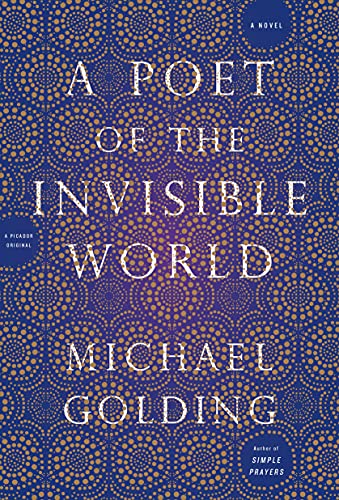
Inhaltsangabe
A FINALIST FOR THE LAMBDA LITERARY AWARD
In the tradition of Hermann Hesse's Siddhartha comes a new spiritual novel that is a stunning feat of storytelling and imagination.
A Poet of the Invisible World follows Nouri, a boy born in thirteenth-century Persia with four ears instead of two. Orphaned as an infant, he's taken into a Sufi order, where he meets an assortment of dervishes and embarks on a path toward spiritual awakening.
Along the way, Nouri will find himself in the sumptuous court of a sultan, a barren farm in the hills of Spain, a bustling city on the north coast of Africa, and a monastery perched high in the mountains. He will fall in love-and encounter
an adversary who will try to destroy that love.
As Nouri stumbles from one experience to the next, he grows into manhood. Each trial he endures will shatter another obstacle within-and lead him toward transcendence.
Michael Golding's previous work has been described as "brilliant" (The Cleveland Plain Dealer) and "so lavish and so colorful, it's like a meal in the open air, laid out on brocade" (Los Angeles Times). With this new novel, seven years in the writing, he has created a gripping tale that deals with many of life's deepest questions. A Poet of the Invisible World will astonish readers as it awakens them to the poetry inside themselves.
Die Inhaltsangabe kann sich auf eine andere Ausgabe dieses Titels beziehen.
Über die Autorin bzw. den Autor
Michael Golding is the author of Simple Prayers and Benjamin's Gift. He has also enjoyed success as an actor and screenwriter; his adaptation of the international best-seller Silk starred Keira Knightly and Alfred Molina. He lives in the foothills of the Sierra Nevadas in Northern California.
Auszug. © Genehmigter Nachdruck. Alle Rechte vorbehalten.
A Poet of the Invisible World
By Michael GoldingPicador
Copyright © 2015 Michael Golding
All rights reserved.
ISBN: 978-1-250-07128-6All rights reserved.
CHAPTER 1
No matter how tired they were from the week's labors, no matter how dull from too much baghali polo the night before, no matter how eager to praise God or make tea or milk the cow, there was no one in the tiny village of AlKashir who was not stunned by the news that early that morning, in the slantroofed shed behind the mud-walled house, Maleeh al-Morad had given birth to a bright-faced, screaming boy with two sets of ears. The midwife was so startled when the head popped out that she simply stood there, dumbstruck, as Bina Mardavi, the fourteen-year-old daughter of Maleeh al-Morad's neighbor, stepped in to assist with the birth. A quick-witted girl with dark eyes and large feet, Bina was not afraid when she saw the second set of ears. On the contrary, she was eager for the child to come all the way out so she could see if it was equipped with two of everything. When it finally sprang free, however, the girl was disappointed. For with the exception of the ears — which were placed side by side, like pairs of matched seashells — the flush-faced infant seemed perfectly normal. As she reached for the sewing shears to sever the umbilical cord, she considered giving a quick snip to either side of the head. What use could four ears possibly be to the child? When he was old enough to speak, he would surely thank her. But since she did not possess the knowledge to stop the blood she assumed would gush forth, she decided to leave him as Allah, in His great wisdom, had made him.
As soon as Bina Mardavi returned home and told her father about the ears, the news spread like wildfire. The fat jelly maker left a bowl of sliced apples to turn brown in the sun as he dashed through the fields to tell the ironsmith's wife; the ironsmith's wife left a large pot of lamb stew to scorch on the hearth as she hurried next door to tell the soap and cheese maker; the soap and cheese maker left his goats to go hungry as he raced through the streets to tell the village schoolteacher, who was instructing the children about prime numbers. By the time the children ran home and told their parents, their parents already knew: Maleeh al-Morad — who had lost her husband only three months before — who had eyes so green they caused people to stare — who made the best poppy seed cake anyone in the village had ever tasted — had given birth to a monster. A reptile. A freak.
"Maybe they'll fall off," said Shakiba Benoud. "My sister's first child was born with two sets of eyebrows. But on the third day, the extra set fell off."
"Maybe she can sell him," said Sepantem Verdat. "My cousin told me that a baby with two heads was born in her village and the Caliph bought him for sixty denars."
"Maybe it's a sign that we should stop talking so much," said Abbas Rashad, "and try to start listening better."
Only Maleeh al-Morad seemed unfazed by the fact of her newborn son's ears. Only she thought the infant a paragon of beauty. A newly crowned prince in her arms. At first she just gazed at him, thrilled by the instant bond between them, lost in the wild love that poured from his eyes. But eventually she reached out her hand and touched the ears. They were perfectly shaped and soft beyond belief. So she began tracing gentle figure eights around their edges — the sign of infinity — delighted at how this made the child coo.
In truth, Maleeh al-Morad had known, long before her child was born, that he would be different from the rest. For on the night before the wheel of her husband's oxcart splintered and he went sailing over the edge of the cliff to his death, Mahsoud al-Morad had awakened from a dream.
"What is it?" asked Maleeh al-Morad, as the large man lay there panting.
"The baby —"
"What about him?"
Mahsoud al-Morad searched the darkness for what he'd seen.
"Tell me!" cried Maleeh al-Morad.
"I can't remember. But I have a feeling we may have to keep him indoors."
At these words, Mahsoud al-Morad rolled over and returned to the last slumber he would ever know. But as the sorrowful weeks passed by, Maleeh al-Morad felt sure that what he'd said was true: the child inside her was somehow marked and she would only know in what manner when it was born. As the moment drew near, she imagined her baby with a pig's snout, a dog's tail, covered in thick fur. So when Bina Mardavi lowered the infant into her arms and she saw the ears, she felt a wave of relief. At least he would hear her when she called.
She realized, as she held him, that she had to give him a name. She considered Farzad, which meant "a splendid birth," but it seemed too boastful. She considered Niyusha, which meant "a good listener," but it seemed too obvious. So instead she chose Nouri, which meant "light," followed by Ahmad, which meant "praiseworthy," and then she threw in Mohammad, figuring how could it hurt. This was followed by the nasab, ibn Mahsoud, to denote his father, and the nisbah, al-Morad, to denote his tribe. Nouri Ahmad Mohammad ibn Mahsoud al-Morad. Regardless of how many ears the child had, it was a lovely name.
At first, Maleeh al-Morad took the villagers' reactions to her baby in stride. Latifeh Rashad, who was pregnant, had her husband, Azim, scatter garlic across their threshold to prevent her from catching whatever had caused Maleeh al-Morad's baby to be disfigured. Farid ben Ismael fell to the ground and shouted verses from the Qur'an whenever he passed their house. But Maleeh al-Morad simply lay in the grass, threading daisies around her baby's ears and singing songs to delight him:
There once was a child with a gift so rare–
O hear! O hear! O hear! O hear!
That the moon and the stars could not compare–
O hear! O hear! O hear!
It was only when she saw the fear in people's eyes when she ventured out to buy cheese or headed off to the mosque that she began to sense he was in danger. It was only when she was reminded of the village baby who'd been born without a tongue and been set on fire that she began to grow alarmed. And it was only when the double-edged dagger came flying through the kitchen window, piercing the sack of lentils that hung above the hearth, that she knew she would have to remove her child from the tiny village of Al-Kashir before it was too late.
* * *
THE CITY OF TAN-ARZHAN WAS LIKE a jewel in the headdress of an Arabian prince. Famed for its great mosque, the Darni Sunim, which had risen to splendor nearly a century before, it had everything a modern city should have: a town square, a public bath, a counting house, a grand bazaar, a public garden (with a running fountain), and three schools, one for each level of education. The layout was square, with four main corridors running from the central axis, and though the northeast quadrant was primarily for the wealthy and the southwest quadrant was primarily for the poor, there was a surprising absence of strife between the classes. Whatever one's lot, life was better in Tan-Arzhan than almost anywhere else. Even the rats felt lucky to roam its colorful streets.
Habbib al-Adib had lived his entire life in Tan-Arzhan. Born in a tiny hovel to an elderly baker and his wife, he'd grown up in the streets, his only education the chores he learned from his father, the prayers he learned from his mother, and the lessons he culled from the twists and turns of the day. He was a happy child, possessed of a sweet, gentle nature. He expected nothing and — with...
„Über diesen Titel“ kann sich auf eine andere Ausgabe dieses Titels beziehen.
Suchergebnisse für Poet of the Invisible World: A Novel

Beispielbild für diese ISBN
A Poet of the Invisible World
Anbieter: World of Books (was SecondSale), Montgomery, IL, USA
Verkäuferbewertung 5 von 5 Sternen

Paperback. Zustand: Fair. A Poet of the Invisible World is the story of a boy born in thirteenth-century Persia with four ears instead of two. Orphaned as an infant, he's taken into a Sufi order, where he meets an assortment of dervishes and is placed upon a path towards spiritual awakening. He studies the Koran and the principles of Sufism. He meets his first love, a handsome youth named Vishpar. When marauders attack the lodge, however, he's swept off to a series of gruelling adventures and an assortment of shifting roles: tea boy in the court of a Spanish sultan, shepherd on a barren farm in the mountains, sybarite in a bustling city on the north coast of Africa. As he stumbles from one painful experience to the next, he grows into manhood. And when fate leads him to a Sufi order perched high in the mountains, he's ready to begin the true work of spiritual development. Now the tests are more subtle: the animosity of a fellow Sufi who has dogged him since childhood, a love affair with an acolyte who's been brought under his wing. But each trial shatters another obstacle within-and leads him on toward transcendence. Artikel-Nr. 00031311610
Gebraucht kaufen
EUR 6,74
Versand gratis
Versand innerhalb von USA
Versand innerhalb von USA
Anzahl: 1 verfügbar
Beispielbild für diese ISBN
A Poet of the Invisible World
Anbieter: World of Books (was SecondSale), Montgomery, IL, USA
Verkäuferbewertung 5 von 5 Sternen
Paperback. Zustand: Good. A Poet of the Invisible World is the story of a boy born in thirteenth-century Persia with four ears instead of two. Orphaned as an infant, he's taken into a Sufi order, where he meets an assortment of dervishes and is placed upon a path towards spiritual awakening. He studies the Koran and the principles of Sufism. He meets his first love, a handsome youth named Vishpar. When marauders attack the lodge, however, he's swept off to a series of gruelling adventures and an assortment of shifting roles: tea boy in the court of a Spanish sultan, shepherd on a barren farm in the mountains, sybarite in a bustling city on the north coast of Africa. As he stumbles from one painful experience to the next, he grows into manhood. And when fate leads him to a Sufi order perched high in the mountains, he's ready to begin the true work of spiritual development. Now the tests are more subtle: the animosity of a fellow Sufi who has dogged him since childhood, a love affair with an acolyte who's been brought under his wing. But each trial shatters another obstacle within-and leads him on toward transcendence. Artikel-Nr. 00110235092
Gebraucht kaufen
EUR 6,74
Versand gratis
Versand innerhalb von USA
Versand innerhalb von USA
Anzahl: 2 verfügbar
Beispielbild für diese ISBN
A Poet of the Invisible World
Anbieter: ThriftBooks-Dallas, Dallas, TX, USA
Verkäuferbewertung 5 von 5 Sternen
Paperback. Zustand: Very Good. No Jacket. May have limited writing in cover pages. Pages are unmarked. ~ ThriftBooks: Read More, Spend Less. Artikel-Nr. G1250071283I4N00
Gebraucht kaufen
EUR 6,75
Versand gratis
Versand innerhalb von USA
Versand innerhalb von USA
Anzahl: 1 verfügbar
Beispielbild für diese ISBN
A Poet of the Invisible World
Anbieter: ThriftBooks-Phoenix, Phoenix, AZ, USA
Verkäuferbewertung 5 von 5 Sternen
Paperback. Zustand: Very Good. No Jacket. May have limited writing in cover pages. Pages are unmarked. ~ ThriftBooks: Read More, Spend Less. Artikel-Nr. G1250071283I4N00
Gebraucht kaufen
EUR 6,75
Versand gratis
Versand innerhalb von USA
Versand innerhalb von USA
Anzahl: 1 verfügbar
Beispielbild für diese ISBN
A Poet of the Invisible World
Anbieter: ThriftBooks-Dallas, Dallas, TX, USA
Verkäuferbewertung 5 von 5 Sternen
Paperback. Zustand: Fair. No Jacket. Readable copy. Pages may have considerable notes/highlighting. ~ ThriftBooks: Read More, Spend Less. Artikel-Nr. G1250071283I5N00
Gebraucht kaufen
EUR 6,75
Versand gratis
Versand innerhalb von USA
Versand innerhalb von USA
Anzahl: 1 verfügbar
Beispielbild für diese ISBN
A Poet of the Invisible World : A Novel
Anbieter: Better World Books: West, Reno, NV, USA
Verkäuferbewertung 5 von 5 Sternen
Zustand: Very Good. Pages intact with possible writing/highlighting. Binding strong with minor wear. Dust jackets/supplements may not be included. Stock photo provided. Product includes identifying sticker. Better World Books: Buy Books. Do Good. Artikel-Nr. 4598821-75
Gebraucht kaufen
EUR 7,02
Versand gratis
Versand innerhalb von USA
Versand innerhalb von USA
Anzahl: 1 verfügbar
Beispielbild für diese ISBN
A Poet of the Invisible World : A Novel
Anbieter: Better World Books, Mishawaka, IN, USA
Verkäuferbewertung 5 von 5 Sternen
Zustand: Good. Former library copy. Pages intact with minimal writing/highlighting. The binding may be loose and creased. Dust jackets/supplements are not included. Includes library markings. Stock photo provided. Product includes identifying sticker. Better World Books: Buy Books. Do Good. Artikel-Nr. 8670017-75
Gebraucht kaufen
EUR 7,02
Versand gratis
Versand innerhalb von USA
Versand innerhalb von USA
Anzahl: 1 verfügbar
Beispielbild für diese ISBN
A Poet of the Invisible World
Anbieter: BookOutlet, Jefferson City, TN, USA
Verkäuferbewertung 5 von 5 Sternen
Paperback. Zustand: New. Paperback. Publisher overstock, may contain remainder mark on edge. Artikel-Nr. 9781250071286B
Beispielbild für diese ISBN
A Poet of the Invisible World : A Novel
Anbieter: Better World Books Ltd, Dunfermline, Vereinigtes Königreich
Verkäuferbewertung 5 von 5 Sternen
Zustand: Good. Pages intact with minimal writing/highlighting. The binding may be loose and creased. Dust jackets/supplements are not included. Stock photo provided. Product includes identifying sticker. Better World Books: Buy Books. Do Good. Artikel-Nr. 6276440-6
Gebraucht kaufen
EUR 5,72
EUR 5,92 Versand
Versand von Vereinigtes Königreich nach USA
Versand von Vereinigtes Königreich nach USA
Anzahl: 1 verfügbar
Beispielbild für diese ISBN
A Poet of the Invisible World : A Novel
Anbieter: Better World Books Ltd, Dunfermline, Vereinigtes Königreich
Verkäuferbewertung 5 von 5 Sternen
Zustand: Very Good. Former library copy. Pages intact with possible writing/highlighting. Binding strong with minor wear. Dust jackets/supplements may not be included. Includes library markings. Stock photo provided. Product includes identifying sticker. Better World Books: Buy Books. Do Good. Artikel-Nr. 10318470-75
Gebraucht kaufen
EUR 5,72
EUR 5,92 Versand
Versand von Vereinigtes Königreich nach USA
Versand von Vereinigtes Königreich nach USA
Anzahl: 1 verfügbar