
Verwandte Artikel zu Finding North: How Navigation Makes Us Human
Inhaltsangabe
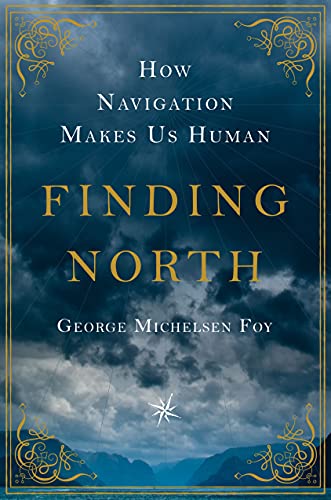
In 1844, Foy's great-great grandfather, captain of a Norwegian cargo ship, perished at sea after getting lost in a snowstorm. Foy decides to unravel the mystery surrounding Halvor Michelsen's death and the roots of his own obsession with navigation by re-creating his ancestor's trip using only period instruments. Beforehand, he meets a colourful cast of characters to learn whether men really have better directional skills than women, how cells, eels, and spaceships navigate; and how tragedy results from GPS glitches. He interviews a cabby who has memorized every street in London, sails on a Haitian cargo sloop, and visits the site of a secret navigational cult in Greece. At the heart of Foy's story is this fact: navigation and the brain's memory centers are inextricably linked. As Foy unravels the secret behind Halvor's death, he also discovers why forsaking our navigation skills in favor of GPS may lead not only to Alzheimers and other diseases of memory, but to losing a key part of what makes us human.
Die Inhaltsangabe kann sich auf eine andere Ausgabe dieses Titels beziehen.
Über die Autorin bzw. den Autor
George Michelsen Foy is the author of Zero Decibels: The Quest for Absolute Silence and twelve critically acclaimed novels. He was a recipient of a National Endowment of the Arts fellowship in fiction and his articles, reviews, and stories have been published by Rolling Stone, the Boston Globe, Harper's, the New York Times, and Men's Journal, among others. He teaches creative writing at NYU and is married with two children. Foy divides his time between coastal Massachusetts and New York.
Auszug. © Genehmigter Nachdruck. Alle Rechte vorbehalten.
Finding North
How Navigation Makes Us Human
By George Michelsen FoyFlatiron Books
Copyright © 2016 George Michelsen Foy
All rights reserved.
ISBN: 978-1-250-05268-1All rights reserved.
Contents
Title Page,
Copyright Notice,
Dedication,
1. Fear,
2.The Stavanger Paquet,
3. Birds, Memory, and London Cabbies,
4. Modeling Halvor,
5. At the Shrine of the Navigation Gods,
6. The "Exploration" Gene,
7. Adventures in the GPS Trade,
8. Stellar Screwup,
9. Sex and Navigation,
10. Bad Latitude,
11. Colorado: The Dark Heart of GPS,
12. Searching the Chart,
13. Odysseus in Haiti,
14. The Launch,
15. The Downside of Cybernav,
16. At Sea,
17. Navigate or Die?,
18. The Sail, and the Story of the Sail,
19. The Politics of Navigation,
20. Halvor's Wedding,
21. Finding North,
Acknowledgments,
Selected Bibliography,
Also by George Michelsen Foy,
About the Author,
Copyright,
CHAPTER 1
Fear
This story starts with fear, as so many stories do, harking back forever to that moment when, confused by light, we are dragged out of our mothers into an unknown space and must sort out, among these alien forms, where we are.
"Where" is the primal question, rather than "when," "how," or "who" because for any animal, figuring out where to move in defense or attack relative to the forces around us has always been the first step to survival. From the start, staying alive has depended on navigation: the art of figuring out our position and in what direction to travel.
* * *
I HAVE A HISTORY OF not knowing true position. Recently, near the end of a long late-night drive that took me from New York City to Route 195 in southeastern Massachusetts, I grew drowsy; pulling over at a rest area, I switched off the engine and quickly fell asleep. When I awoke I had not the slightest idea of where I was or how I had gotten there, to slouch in this tight, cold space in darkness. In that instant I could have been anywhere, I might have been kidnapped by aliens, I could have lost my memory and been shipped to Turkmenistan. In some ways, I was as helpless as a newborn once more. A strange terror gripped me then, and held me back from moving or calling out for what seemed like minutes, though it was probably only a few seconds. It was a panic somehow augmented by the emotional memory of similar situations, whose outcomes lay beyond the haze of fatigue, in a place I could not quite recall.
That feeling was matched by the desperation with which, as soon as panic furloughed my motor centers, I catalogued as quickly as possible what I could see or touch: steering wheel, windshield; and beyond the glass, a tall, highway-style lamppost, a dark stand of white pines. I remember the relief that washed over me when geophysical clues crossed lines on a mental map, suggesting a solid position and memories connected to them: car, rest area, highway. It was country that looked close to home, which as it turned out lay forty minutes to the east: home, where my brother, who was gravely ill, waited to see me.
* * *
LIVING IMPLIES CHANGE AND THUS movement, and since navigation is the art of computing where we are, where we've been, and where we are going, it's not an exaggeration to say that navigation in its myriad forms is not only a crucial survival tool but the prime expression of living. Of the generally accepted criteria for life, most imply knowing our current position and moving where we must to fulfill a particular goal. "We have a brain for one reason and one reason only," a Cambridge neuroscientist named Daniel Wolpert once stated, "to produce adaptable and complex movements." Producing movement means finding position and a direction in which to move. Our brains evolved by navigating.
Navigation is so basic, so present at all levels of our lives that, like the proverbial company of blind men touching various sectors of an elephant and coming up with different definitions — it's an archway, a wall, a fire hose — we rarely recognize the whole for what it is. We navigate when we search for Smith's office in a part of our workplace we've not visited before; we navigate when, on the East Coast, we think of e-mailing a friend in San Francisco, situating him mentally three thousand miles away in SoMa, in the darkness before dawn. Even waking up in a space we know well, requiring a glass of water at 3:00 A.M., we automatically use navigational skills to plot our journey: roll off the bed, stagger around the chest of drawers, the scattered jogging shoes, through a door, then turn left (fingers outstretched, touching a wall to guide us) down an unlit hallway to the kitchen tap. The process is so unconscious that if someone were to insist we were navigating within our own house we would probably scoff.
And yet, during our short voyage from bed to faucet, the navigation and memory centers in our brains perform a suite of calculations: of distance, course, time in relation to known landmarks; whose complexity is not watered down by the fact that we're not aware of them. These calculations are the same in kind — and performed, relatively speaking, with similar efficiency — as those employed by a World War II navigator using parallel rulers, pencil, and map to chart a bomber's journey from southern England to Berlin and back.
* * *
THE INCIDENT ON ROUTE 195 has shaken me. Over my thirty-plus years of adult life, I have traveled frequently and awoken in many odd places: a cornfield in southwestern France, a brothel in Indonesia, a rooftop in Damascus, a subway train (after a night of imprudent celebration) in the Bronx; but as a rule I've always been certain of what, and who, I would see when my eyes opened.
As I think back, I decide it was not the waking-up part that shook me as much as the particular flavor of associated terror and its familiarity. For I have known such extreme and debilitating panic twice before, and both times it was linked to losing track of where I was.
* * *
THE MONTHS THAT FOLLOW ARE full of turmoil and loss. My brother dies, and my wife and children and I have to absorb the emotional shock, as well as legal and financial fallout, from his death. At times, waking from the day-to-day routine that absorbs our lives, remembering Louis is no longer here, I feel I have lost track of myself in a fashion similar to what happened on Route 195. Is it despite or because of this that I become increasingly determined to examine not only the origins of my own propensity for navigational breakdown but everything else about this skill that so defines us?
I am not overly thrilled with the idea of exploring such personal navigational panic. I decide, therefore, to start my research at the furthest remove from the consciousness spectrum, at the level of a developing cell and how it knows which part of the body it's meant to reside in. I learn, after sifting through scientific papers from Germany, Israel, Taiwan, that one of the top researchers in the field works in the same college at which I teach; and I make an appointment, therefore, with Dr. Stephen Small at New York University in Manhattan.
To meet Small I must travel and therefore navigate. Driving from our house in southeastern Massachusetts I follow Route 195 west and then, in Providence, Rhode Island, alter course toward New York City. My car is not fitted with a Global Positioning System receiver, or GPS, so I match the Jeep's compass readout to the sun as our star swings...
„Über diesen Titel“ kann sich auf eine andere Ausgabe dieses Titels beziehen.
Suchergebnisse für Finding North: How Navigation Makes Us Human

Beispielbild für diese ISBN
Finding North: How Navigation Makes Us Human
Anbieter: World of Books (was SecondSale), Montgomery, IL, USA
Verkäuferbewertung 5 von 5 Sternen

Zustand: Very Good. Item in very good condition! Textbooks may not include supplemental items i.e. CDs, access codes etc. Artikel-Nr. 00105822262
Gebraucht kaufen
EUR 3,97
Versand gratis
Versand innerhalb von USA
Versand innerhalb von USA
Anzahl: 2 verfügbar
Beispielbild für diese ISBN
Finding North: How Navigation Makes Us Human
Anbieter: ThriftBooks-Dallas, Dallas, TX, USA
Verkäuferbewertung 5 von 5 Sternen
Hardcover. Zustand: Very Good. No Jacket. Former library book; May have limited writing in cover pages. Pages are unmarked. ~ ThriftBooks: Read More, Spend Less. Artikel-Nr. G1250052688I4N10
Gebraucht kaufen
EUR 6,83
Versand gratis
Versand innerhalb von USA
Versand innerhalb von USA
Anzahl: 1 verfügbar
Beispielbild für diese ISBN
Finding North: How Navigation Makes Us Human
Anbieter: ThriftBooks-Atlanta, AUSTELL, GA, USA
Verkäuferbewertung 5 von 5 Sternen
Hardcover. Zustand: Good. No Jacket. Pages can have notes/highlighting. Spine may show signs of wear. ~ ThriftBooks: Read More, Spend Less. Artikel-Nr. G1250052688I3N00
Gebraucht kaufen
EUR 6,83
Versand gratis
Versand innerhalb von USA
Versand innerhalb von USA
Anzahl: 1 verfügbar
Beispielbild für diese ISBN
Finding North: How Navigation Makes Us Human
Anbieter: ThriftBooks-Reno, Reno, NV, USA
Verkäuferbewertung 5 von 5 Sternen
Hardcover. Zustand: Very Good. No Jacket. Former library book; May have limited writing in cover pages. Pages are unmarked. ~ ThriftBooks: Read More, Spend Less. Artikel-Nr. G1250052688I4N10
Gebraucht kaufen
EUR 6,83
Versand gratis
Versand innerhalb von USA
Versand innerhalb von USA
Anzahl: 1 verfügbar
Beispielbild für diese ISBN
Finding North: How Navigation Makes Us Human
Anbieter: ThriftBooks-Atlanta, AUSTELL, GA, USA
Verkäuferbewertung 5 von 5 Sternen
Hardcover. Zustand: Very Good. No Jacket. May have limited writing in cover pages. Pages are unmarked. ~ ThriftBooks: Read More, Spend Less. Artikel-Nr. G1250052688I4N00
Gebraucht kaufen
EUR 6,83
Versand gratis
Versand innerhalb von USA
Versand innerhalb von USA
Anzahl: 1 verfügbar
Beispielbild für diese ISBN
Finding North : How Navigation Makes Us Human
Anbieter: Better World Books, Mishawaka, IN, USA
Verkäuferbewertung 5 von 5 Sternen
Zustand: Good. Pages intact with minimal writing/highlighting. The binding may be loose and creased. Dust jackets/supplements are not included. Stock photo provided. Product includes identifying sticker. Better World Books: Buy Books. Do Good. Artikel-Nr. 14684008-6
Gebraucht kaufen
EUR 6,87
Versand gratis
Versand innerhalb von USA
Versand innerhalb von USA
Anzahl: 1 verfügbar
Beispielbild für diese ISBN
Finding North : How Navigation Makes Us Human
Anbieter: Better World Books, Mishawaka, IN, USA
Verkäuferbewertung 5 von 5 Sternen
Zustand: Good. Former library copy. Pages intact with minimal writing/highlighting. The binding may be loose and creased. Dust jackets/supplements are not included. Includes library markings. Stock photo provided. Product includes identifying sticker. Better World Books: Buy Books. Do Good. Artikel-Nr. 12499517-6
Gebraucht kaufen
EUR 6,87
Versand gratis
Versand innerhalb von USA
Versand innerhalb von USA
Anzahl: 1 verfügbar
Beispielbild für diese ISBN
Finding North: How Navigation Makes Us Human
Anbieter: WorldofBooks, Goring-By-Sea, WS, Vereinigtes Königreich
Verkäuferbewertung 5 von 5 Sternen
Paperback. Zustand: Very Good. The book has been read, but is in excellent condition. Pages are intact and not marred by notes or highlighting. The spine remains undamaged. Artikel-Nr. GOR009886220
Gebraucht kaufen
EUR 17,08
EUR 6,53 Versand
Versand von Vereinigtes Königreich nach USA
Versand von Vereinigtes Königreich nach USA
Anzahl: 1 verfügbar
Beispielbild für diese ISBN
Finding North: How Navigation Makes Us Human
Anbieter: Revaluation Books, Exeter, Vereinigtes Königreich
Verkäuferbewertung 5 von 5 Sternen
Hardcover. Zustand: Brand New. 288 pages. 8.50x6.00x1.00 inches. In Stock. Artikel-Nr. 1250052688
Neu kaufen
EUR 68,46
EUR 11,66 Versand
Versand von Vereinigtes Königreich nach USA
Versand von Vereinigtes Königreich nach USA
Anzahl: 1 verfügbar