
Verwandte Artikel zu Navy Seal Dogs: My Tale of Training Canines for Combat
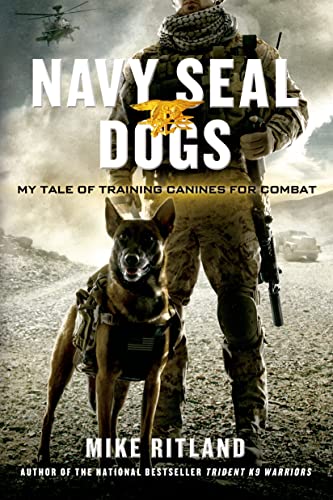
Inhaltsangabe
Before there was Max, there was Mike. A true story much like the touching movie, Navy SEAL Dogs explores the incomparable relationship between trainer and military dog.
Trident K9 Warriors gave readers an inside look at the SEAL teams' elite K9 warriors-who they are, how they are trained, and the extreme missions they undertake to save lives. From detecting explosives to eliminating the bad guys, these powerful dogs are also some of the smartest and highest skilled working animals on the planet. Mike Ritland's job is to train them.
This special edition re-telling presents the dramatic tale of how Ritland discovered his passion and grew up to become the trainer of the nation's most elite military working dogs. Ritland was a smaller-than-average kid who was often picked-on at school-which led him to spend more time with dogs at a young age. After graduating BUD/S training-the toughest military training in the world-to become a SEAL, he was on combat deployment in Iraq when he saw a military working dog in action and instantly knew he'd found his true calling.
Ritland started his own company to train and supply working and protection dogs for the U.S. Government, Department of Defense, and other clients. He also started the Warrior Dog Foundation to help retired Special Operations dogs live long and happy lives after their service.
This is the true story of how Mike Ritland grew from a skinny, bullied child, to a member of our nation's most elite SEAL Teams, to the trainer of the world's most highly skilled K9 warriors.
Die Inhaltsangabe kann sich auf eine andere Ausgabe dieses Titels beziehen.
Über die Autorin bzw. den Autor
MIKE RITLAND joined the Navy in 1996 and graduated with BUD/S class 215. After years as a member of SEAL Team 3, he became a BUD/S instructor and then started his own company to train dogs for the SEAL teams. Today he continues to supply working and protection dogs to a host of clients, including the U.S. government and Department of Defense. He also started the Warrior Dog Foundation to help retired Special Operations dogs live long and happy lives after their service.
Auszug. © Genehmigter Nachdruck. Alle Rechte vorbehalten.
Navy SEAL Dogs
By Michael Ritland, Gary Brozek, Thea FeldmanSt. Martin's Press
Copyright © 2014 Michael Ritland
All rights reserved.
ISBN: 978-1-250-04969-8All rights reserved.
1
A VISIT TO CHOPPER AND BRETT
Southeastern California, 2010
The dog lay in the shade of a palm tree, his head up and his ears at attention. He was scanning the desert scrubland, vigilant, the muscles beneath the heavy fur of his flanks taut and ready. Even from behind him, I could see his tongue lolling out of the side of his mouth, flopping like a pink fish.
“Chopper,” the man beside me said.
The dog turned to look at us, his expression keenly alert, his dark eyes intent.
“Heerre.”
The dog sprang to his feet and made his way across the dusty yard. Under other circumstances, I might have tensed up at the sight of a 75-pound package of fierce determination approaching. However, I could see a very tiny softening of the muscles around his eyes as he neared us and recognition dawned in them. He knew who I was.
He also knew not to approach me first, even though the two of us had spent the first few months of his life in the United States together. As commanded, he came up to Brett, his former SEAL team handler. He sat down alongside the man he served with on dozens of dangerous missions for six years. Now they were living on a small ranch outside Ranchita, California. Brett and Chopper had ceased being on active military duty only three months earlier, but they both would have chafed at being called “retirees.”
Chopper sat, still very much at attention, until Brett told him it was okay. Then Chopper looked at me, and I gave his head a few rubs with the flat of my hand. I ran my hand down his shoulder and along his rib cage. He was still in fine fighting form, but I noticed that he relaxed a bit and leaned into me. I smiled at this sign of affection and appreciation for the attention I was giving him.
I noticed that the fur around Chopper’s muzzle and eyes had lightened a bit since I’d last seen him. It was no longer the deep ebony that had glowed like a spit-polished dress boot. The slight unevenness to the side of one of his large ears was still there, though. Some scuffle as a pup in his kennel outside of Tilburg in the Netherlands had left him with an identifying mark. In my mind it was never a flaw. Rather, it was a mark of distinction.
“He’s doing good,” I said to Brett.
“Always. He’s a good ol’ boy,” said Brett. He pushed his sunglasses up and squinted into the distance. “He likes it here. Looks a little like the sandbox, but there’s a lot less action. I thought we’d both miss it, but we don’t at all.” Brett had spent more than a dozen years as a West Coast SEAL team member, the last of his time as a handler working with Chopper.
Having served my own time as a SEAL team member, I knew exactly what Brett meant. The transition from active duty to civilian life takes time for both servicemen and military working dogs (MWDs). Given my experience as a trainer of both Navy SEAL dogs and their handlers, I also understood quite a lot about the deep bond that the two had formed and would share for the rest of Chopper’s life.
My trip to visit Chopper and Brett wasn’t just a social call. It was a part of a responsibility I take very seriously. I founded a nonprofit organization, the Warrior Dog Foundation, to make certain that retired MWDs are able to live out the remainder of their lives in a positive environment. Though I knew that Chopper was well cared for, I still wanted to check in on him, just like I do with fellow members of SEAL Team Three, or members of other SEAL teams I’ve come to know in my new role. Whether you’re a canine or a human, if you’ve been a SEAL team member that means you’re a brother, and we are all our brothers’ keepers for life.
Visiting Chopper and Brett was a privilege and an honor, and, most importantly, it was a great pleasure to see them still together.
* * *
In most ways, Chopper is still more fit and more capable than 90 percent of the dogs in this country. Even so, that isn’t good enough for the kind of demands a military dog has to meet downrange in places like Afghanistan. Not only is the work extremely demanding, but also the stakes are so high that anything less than the absolute best is not acceptable. It wasn’t a question of heart. Chopper still has the drive and determination, but the inevitable toll of age and years of stress has started to creep in.
I knelt down alongside Chopper and draped my arm around him, “Braafy,” I said. It always amazed me that something as simple as that short statement of approval could mean so much to a dog that, over the years, teams like Brett and Chopper had developed such a bond of trust that the dog would willingly and gladly place himself in positions of peril.
A few minutes later, Brett and I sat down on the deck he’d recently built. Chopper resumed his perimeter position in the shade. Brett told me a little bit about the enclosure he had built out of split rail and wire. Then he nodded out past the line of post holes that he’d dug and the piles of dirt like overturned funnels flanking them.
“I’m not sure if I’m keeping the coyotes from getting in or Chopper from getting out,” he said. “I’m likely doing those varmints a favor either way. Chopper would give them more than they bargained for, no doubt.” Brett’s voice still had a mild twang that revealed his Smoky Mountain roots.
Inevitably, our talk turned to war stories and to stories of Brett’s work with Chopper. Brett recalled one incident, while he and Chopper were still training together, that forged his bond with the dog.
“That time you took us out on that training exercise doing the house-to-house maneuvers.” Brett shook his head and smiled. “He got hold of that target and I thought I was going to have to choke him out to get him to release it.”
“They do like to bite,” I said flatly, underscoring my understatement. “And Chopper does more than most.”
“I remember looking him in the eye,” said Brett, “and neither of us was willing to give in. Then it dawned on that dog that he was the one who was going to have to give in, and it was on account of me, and not because he wanted to. Then I knew I had him.”
Brett said he believed that was the moment when he and Chopper came to truly understand one another. “I think of it this way,” he said. “My daddy raised me to fear and respect him, and I did. But with how you conducted the training, Chopper obeyed me because he got the idea that it was the right thing to do and not because he was afraid of me.” Brett paused, then said, “Never in my life would I have thought a dog could communicate so much with just a look and his posture.”
“It doesn’t always happen,” I said, “but when it does, it almost defies explanation.”
“Hard work and love,” Brett added, summing it up pretty nicely, I thought. “Hey, Bud,” he said gently to the dog. Chopper turned to look at Brett, his eyes and ears alert. Brett smiled and said, “Good boy.”
* * *
Brett reached into a wooden planter on the picnic table and pulled out a tennis ball. Then he let out a soft whistle....
A VISIT TO CHOPPER AND BRETT
Southeastern California, 2010
The dog lay in the shade of a palm tree, his head up and his ears at attention. He was scanning the desert scrubland, vigilant, the muscles beneath the heavy fur of his flanks taut and ready. Even from behind him, I could see his tongue lolling out of the side of his mouth, flopping like a pink fish.
“Chopper,” the man beside me said.
The dog turned to look at us, his expression keenly alert, his dark eyes intent.
“Heerre.”
The dog sprang to his feet and made his way across the dusty yard. Under other circumstances, I might have tensed up at the sight of a 75-pound package of fierce determination approaching. However, I could see a very tiny softening of the muscles around his eyes as he neared us and recognition dawned in them. He knew who I was.
He also knew not to approach me first, even though the two of us had spent the first few months of his life in the United States together. As commanded, he came up to Brett, his former SEAL team handler. He sat down alongside the man he served with on dozens of dangerous missions for six years. Now they were living on a small ranch outside Ranchita, California. Brett and Chopper had ceased being on active military duty only three months earlier, but they both would have chafed at being called “retirees.”
Chopper sat, still very much at attention, until Brett told him it was okay. Then Chopper looked at me, and I gave his head a few rubs with the flat of my hand. I ran my hand down his shoulder and along his rib cage. He was still in fine fighting form, but I noticed that he relaxed a bit and leaned into me. I smiled at this sign of affection and appreciation for the attention I was giving him.
I noticed that the fur around Chopper’s muzzle and eyes had lightened a bit since I’d last seen him. It was no longer the deep ebony that had glowed like a spit-polished dress boot. The slight unevenness to the side of one of his large ears was still there, though. Some scuffle as a pup in his kennel outside of Tilburg in the Netherlands had left him with an identifying mark. In my mind it was never a flaw. Rather, it was a mark of distinction.
“He’s doing good,” I said to Brett.
“Always. He’s a good ol’ boy,” said Brett. He pushed his sunglasses up and squinted into the distance. “He likes it here. Looks a little like the sandbox, but there’s a lot less action. I thought we’d both miss it, but we don’t at all.” Brett had spent more than a dozen years as a West Coast SEAL team member, the last of his time as a handler working with Chopper.
Having served my own time as a SEAL team member, I knew exactly what Brett meant. The transition from active duty to civilian life takes time for both servicemen and military working dogs (MWDs). Given my experience as a trainer of both Navy SEAL dogs and their handlers, I also understood quite a lot about the deep bond that the two had formed and would share for the rest of Chopper’s life.
My trip to visit Chopper and Brett wasn’t just a social call. It was a part of a responsibility I take very seriously. I founded a nonprofit organization, the Warrior Dog Foundation, to make certain that retired MWDs are able to live out the remainder of their lives in a positive environment. Though I knew that Chopper was well cared for, I still wanted to check in on him, just like I do with fellow members of SEAL Team Three, or members of other SEAL teams I’ve come to know in my new role. Whether you’re a canine or a human, if you’ve been a SEAL team member that means you’re a brother, and we are all our brothers’ keepers for life.
Visiting Chopper and Brett was a privilege and an honor, and, most importantly, it was a great pleasure to see them still together.
* * *
In most ways, Chopper is still more fit and more capable than 90 percent of the dogs in this country. Even so, that isn’t good enough for the kind of demands a military dog has to meet downrange in places like Afghanistan. Not only is the work extremely demanding, but also the stakes are so high that anything less than the absolute best is not acceptable. It wasn’t a question of heart. Chopper still has the drive and determination, but the inevitable toll of age and years of stress has started to creep in.
I knelt down alongside Chopper and draped my arm around him, “Braafy,” I said. It always amazed me that something as simple as that short statement of approval could mean so much to a dog that, over the years, teams like Brett and Chopper had developed such a bond of trust that the dog would willingly and gladly place himself in positions of peril.
A few minutes later, Brett and I sat down on the deck he’d recently built. Chopper resumed his perimeter position in the shade. Brett told me a little bit about the enclosure he had built out of split rail and wire. Then he nodded out past the line of post holes that he’d dug and the piles of dirt like overturned funnels flanking them.
“I’m not sure if I’m keeping the coyotes from getting in or Chopper from getting out,” he said. “I’m likely doing those varmints a favor either way. Chopper would give them more than they bargained for, no doubt.” Brett’s voice still had a mild twang that revealed his Smoky Mountain roots.
Inevitably, our talk turned to war stories and to stories of Brett’s work with Chopper. Brett recalled one incident, while he and Chopper were still training together, that forged his bond with the dog.
“That time you took us out on that training exercise doing the house-to-house maneuvers.” Brett shook his head and smiled. “He got hold of that target and I thought I was going to have to choke him out to get him to release it.”
“They do like to bite,” I said flatly, underscoring my understatement. “And Chopper does more than most.”
“I remember looking him in the eye,” said Brett, “and neither of us was willing to give in. Then it dawned on that dog that he was the one who was going to have to give in, and it was on account of me, and not because he wanted to. Then I knew I had him.”
Brett said he believed that was the moment when he and Chopper came to truly understand one another. “I think of it this way,” he said. “My daddy raised me to fear and respect him, and I did. But with how you conducted the training, Chopper obeyed me because he got the idea that it was the right thing to do and not because he was afraid of me.” Brett paused, then said, “Never in my life would I have thought a dog could communicate so much with just a look and his posture.”
“It doesn’t always happen,” I said, “but when it does, it almost defies explanation.”
“Hard work and love,” Brett added, summing it up pretty nicely, I thought. “Hey, Bud,” he said gently to the dog. Chopper turned to look at Brett, his eyes and ears alert. Brett smiled and said, “Good boy.”
* * *
Brett reached into a wooden planter on the picnic table and pulled out a tennis ball. Then he let out a soft whistle....
„Über diesen Titel“ kann sich auf eine andere Ausgabe dieses Titels beziehen.
Suchergebnisse für Navy Seal Dogs: My Tale of Training Canines for Combat

Beispielbild für diese ISBN
Navy Seal Dogs
Anbieter: World of Books (was SecondSale), Montgomery, IL, USA
Verkäuferbewertung 5 von 5 Sternen

Paperback. Zustand: Very Good. Tells the true story of how Mike Ritland grew from a skinny, bullied child, to a member of our nation's most elite SEAL Teams, to the trainer of the world's most highly skilled K9 warriors. Artikel-Nr. 00098303607
Gebraucht kaufen
EUR 4,04
Versand gratis
Versand innerhalb von USA
Versand innerhalb von USA
Anzahl: 9 verfügbar
Beispielbild für diese ISBN
Navy Seal Dogs
Anbieter: World of Books (was SecondSale), Montgomery, IL, USA
Verkäuferbewertung 5 von 5 Sternen
Paperback. Zustand: Fair. Tells the true story of how Mike Ritland grew from a skinny, bullied child, to a member of our nation's most elite SEAL Teams, to the trainer of the world's most highly skilled K9 warriors. Artikel-Nr. 00097662924
Gebraucht kaufen
EUR 4,04
Versand gratis
Versand innerhalb von USA
Versand innerhalb von USA
Anzahl: 2 verfügbar
Beispielbild für diese ISBN
Navy Seal Dogs
Anbieter: World of Books (was SecondSale), Montgomery, IL, USA
Verkäuferbewertung 5 von 5 Sternen
Paperback. Zustand: Good. Tells the true story of how Mike Ritland grew from a skinny, bullied child, to a member of our nation's most elite SEAL Teams, to the trainer of the world's most highly skilled K9 warriors. Artikel-Nr. 00103340297
Gebraucht kaufen
EUR 4,04
Versand gratis
Versand innerhalb von USA
Versand innerhalb von USA
Anzahl: 9 verfügbar
Foto des Verkäufers
Navy SEAL Dogs: My Tale of Training Canines for Combat
Anbieter: Dream Books Co., Denver, CO, USA
Verkäuferbewertung 5 von 5 Sternen
Zustand: acceptable. This copy has clearly been enjoyedâ"expect noticeable shelf wear and some minor creases to the cover. Binding is strong, and all pages are legible. May contain previous library markings or stamps. Artikel-Nr. DBV.1250049695.A
Gebraucht kaufen
EUR 4,78
Versand gratis
Versand innerhalb von USA
Versand innerhalb von USA
Anzahl: 1 verfügbar
Beispielbild für diese ISBN
Navy Seal Dogs: My Tale of Training Canines for Combat
Anbieter: ThriftBooks-Reno, Reno, NV, USA
Verkäuferbewertung 5 von 5 Sternen
Paperback. Zustand: Good. No Jacket. Pages can have notes/highlighting. Spine may show signs of wear. ~ ThriftBooks: Read More, Spend Less. Artikel-Nr. G1250049695I3N00
Gebraucht kaufen
EUR 6,02
Versand gratis
Versand innerhalb von USA
Versand innerhalb von USA
Anzahl: 1 verfügbar
Beispielbild für diese ISBN
Navy Seal Dogs: My Tale of Training Canines for Combat
Anbieter: ThriftBooks-Atlanta, AUSTELL, GA, USA
Verkäuferbewertung 5 von 5 Sternen
Paperback. Zustand: Good. No Jacket. Pages can have notes/highlighting. Spine may show signs of wear. ~ ThriftBooks: Read More, Spend Less. Artikel-Nr. G1250049695I3N00
Gebraucht kaufen
EUR 6,02
Versand gratis
Versand innerhalb von USA
Versand innerhalb von USA
Anzahl: 1 verfügbar
Beispielbild für diese ISBN
Navy Seal Dogs: My Tale of Training Canines for Combat
Anbieter: ThriftBooks-Dallas, Dallas, TX, USA
Verkäuferbewertung 5 von 5 Sternen
Paperback. Zustand: Good. No Jacket. Pages can have notes/highlighting. Spine may show signs of wear. ~ ThriftBooks: Read More, Spend Less. Artikel-Nr. G1250049695I3N00
Gebraucht kaufen
EUR 6,02
Versand gratis
Versand innerhalb von USA
Versand innerhalb von USA
Anzahl: 1 verfügbar
Beispielbild für diese ISBN
Navy SEAL Dogs : My Tale of Training Canines for Combat
Anbieter: Better World Books, Mishawaka, IN, USA
Verkäuferbewertung 5 von 5 Sternen
Zustand: Good. Pages intact with minimal writing/highlighting. The binding may be loose and creased. Dust jackets/supplements are not included. Stock photo provided. Product includes identifying sticker. Better World Books: Buy Books. Do Good. Artikel-Nr. 9796570-6
Gebraucht kaufen
EUR 6,54
Versand gratis
Versand innerhalb von USA
Versand innerhalb von USA
Anzahl: 1 verfügbar
Beispielbild für diese ISBN
Navy SEAL Dogs : My Tale of Training Canines for Combat
Anbieter: Better World Books: West, Reno, NV, USA
Verkäuferbewertung 5 von 5 Sternen
Zustand: Very Good. Pages intact with possible writing/highlighting. Binding strong with minor wear. Dust jackets/supplements may not be included. Stock photo provided. Product includes identifying sticker. Better World Books: Buy Books. Do Good. Artikel-Nr. 10218690-6
Gebraucht kaufen
EUR 6,54
Versand gratis
Versand innerhalb von USA
Versand innerhalb von USA
Anzahl: 1 verfügbar
Beispielbild für diese ISBN
Navy SEAL Dogs : My Tale of Training Canines for Combat
Anbieter: Better World Books, Mishawaka, IN, USA
Verkäuferbewertung 5 von 5 Sternen
Zustand: Good. Former library copy. Pages intact with minimal writing/highlighting. The binding may be loose and creased. Dust jackets/supplements are not included. Includes library markings. Stock photo provided. Product includes identifying sticker. Better World Books: Buy Books. Do Good. Artikel-Nr. 5591310-6
Gebraucht kaufen
EUR 6,54
Versand gratis
Versand innerhalb von USA
Versand innerhalb von USA
Anzahl: 2 verfügbar