
Verwandte Artikel zu Beautiful Souls: The Courage and Conscience of Ordinary...
Inhaltsangabe
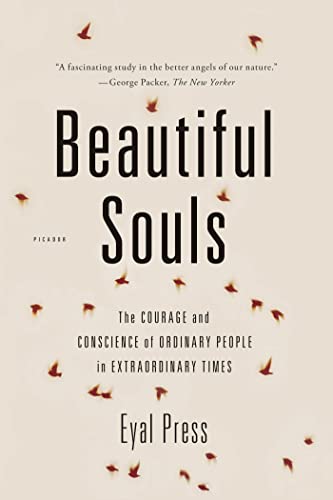
"A fascinating study in the better angels of our nature."--George Packer, The New Yorker
A New York Times Book Review Editors' Choice History has produced many specimens of the banality of evil, but what about its flip side, what impels ordinary people to defy the sway of authority and convention? Through these dramatic stories of unlikely resisters, Eyal Press' Beautiful Souls shows that the boldest acts of dissent are often carried out not only by radicals seeking to overthrow the system but also by true believers who cling with unusual fierceness to their convictions. Drawing on groundbreaking research by moral psychologists and neuroscientists, this deeply reported work of narrative journalism examines the choices and dilemmas we all face when our principles collide with the loyalties we harbor and the duties we are expected to fulfill.Die Inhaltsangabe kann sich auf eine andere Ausgabe dieses Titels beziehen.
Über die Autorin bzw. den Autor
Eyal Press is an author and a journalist based in New York. The recipient of the James Aronson Award for Social Justice Journalism, an Andrew Carnegie fellowship, a Cullman Center fellowship at the New York Public Library, and a Puffin Foundation fellowship at Type Media Center, he is a contributor to The New Yorker, The New York Times, and numerous other publications. He is the author of Beautiful Souls and Absolute Convictions.
Auszug. © Genehmigter Nachdruck. Alle Rechte vorbehalten.
Beautiful Souls
The Courage and Conscience of Ordinary People in Extraordinary TimesBy Eyal PressPicador
Copyright © 2013 Eyal PressAll right reserved.
ISBN: 9781250024084
1. DISOBEYING THE LAW
I. Underhanded Practices
I. Underhanded Practices
One night in November 1938, a fourteen-year-old boy named Erich Billig slipped across the Austrian border into Switzerland. It was, he hoped, the final leg of a hastily arranged journey that had begun ten days earlier, on November 9–10, when Billig and Jews throughout Vienna hid in their apartments or ducked for cover while Nazi storm troopers led a bloody rampage through the streets. In the organized pogrom known as Kristallnacht, which turned Austria’s stately capital into a cauldron of terror and violence, hundreds of Jewish shops were vandalized, dozens of temples burned down, and scores of injuries and fatalities recorded. The shattered storefronts and smoldering synagogues left little doubt what the unification of Austria and Germany, which Adolf Hitler had announced before cheering throngs of jubilant supporters in Vienna’s Heldenplatz (“Heroes’ Square”) in March, would mean for Jews. Erich Billig already had a sense. A few months earlier his father had been deported to Dachau, a concentration camp near Munich; his older brother, Herbert, had fled the country after landing on the Gestapo’s wanted list, and was now in Zurich. After Kristallnacht, Billig’s mother, Hilde, put her youngest son on a train bound for Altach, a town near the Swiss border, where he holed up in an abandoned shed and pondered how to get to Zurich himself.
There was one problem: Switzerland, like every other country in the world, didn’t want to take in masses of Jewish refugees. At the Evian Conference, held at the Hotel Royal on the shores of Lake Geneva in July that same year, representatives from thirty-two countries had gathered to discuss the plight of Jews fleeing Nazi persecution. Expressions of sympathy rained down from the dignitaries; promises to take in more refugees did not. Unlike some countries, including the United States, Switzerland did not have a fixed quota limiting immigration on the basis of nationality. It did have a statute requiring Austrian refugees to secure an entry visa beforehand, which the Swiss consulate in Vienna had been directed to grant only to applicants of “Aryan” ancestry.
Lacking the proper lineage, Billig staked his hopes on finding a more discreet path across the border. One night, he and two other Jews he met in Altach entrusted their fate to an Austrian gendarme who claimed to know of such a route. After pocketing the money they’d pooled, the gendarme led them through a forest to a clearing bordered by a shallow creek, a place known to the villagers on the other side of the border as le vieux Rhin. Here, for a brief stretch, the great river that flowed down from the Alps and snaked its way along the Swiss-Austrian border before emptying into Lake Constance tapered off into a narrow, easily passable stream. The gendarme motioned toward it and said, “Okay, there’s the border. Now you can go to the other side.”
The trio of fugitives waded across the knee-high water and followed a footpath into an open field, moving soundlessly along what they thought was an unobstructed path. They hadn’t gone far before the sound of dogs barking pierced the silence, tipping off the guards on duty that night.
Hours later, as morning light filtered through the alder trees and spread over the hills and meadows of the neighboring villages, the Swiss authorities confirmed that Billig lacked an entry visa and sent him back to Austria.
* * *
Three months before Erich Billig’s thwarted expedition, the chiefs of police from the cantons of Switzerland were summoned to attend a conference on immigration in Bern, the Swiss capital. It took place on August 17, 1938, during a spell of glorious weather, a string of cloudless days ideal for leisurely strolls along the banks of the Aare River, which looped around the peninsula on which Bern’s cobbled streets and medieval-style buildings were spread out.
The officials at the conference gathered inside the Bundeshaus, a domed edifice set on a promontory where Heinrich Rothmund, head of the Federal Police for Foreigners, held forth. A tall man with a clean-shaven jaw and neatly trimmed mustache, Rothmund was responsible for refugee policy in a country that had long prided itself on its hospitality to strangers, a tradition dating back to the Protestant Reformation, when French Huguenots had settled in Geneva to escape religious persecution. In more recent times, Switzerland had burnished its reputation for neutrality in part by offering shelter to the victims of conflict in bordering states. Rothmund was not unaware of this heritage. “The asylum tradition of our country is so firmly anchored that not only the Swiss citizen but every office that must deal with an individual refugee case is inclined to accept the person without reservations,” he observed at one point. But his tolerance was hedged by other concerns. One of these concerns was Überfremdung—“foreign overpopulation,” an expression that cropped up with growing frequency as the Great Depression fueled anxiety among Swiss citizens that foreigners might take their jobs. Another was Verujudung—“Jewification,” which Rothmund, among others, portrayed as a virus that could produce unwelcome side effects if allowed to metastasize and spread. “If we do not want to let a movement that is anti-Semitic and unworthy of our country take legitimate roots here, then we need to fend off the immigration of foreign Jews with all our power,” Rothmund warned. “We have not used the foreign registration office to oppose foreign penetration, particularly the Jewification of Switzerland, just to let ourselves be flooded by immigrants today.”
As the statement suggests, the custom of welcoming strangers gave way to other priorities as the political skies darkened over Europe during the 1930s, all the more so when Jews began spilling over the Swiss border in unprecedented numbers after Germany’s annexation of Austria in March 1938. In the months that followed, even refugees with work permits were picked up in Switzerland for “looking Jewish” and sent back. Yet more and more kept coming, driven by desperate circumstances that, in Bern, elicited little sympathy from the officials on hand. “Can’t we close our borders better?” asked the chief of police from Zurich during the conference. They certainly spared no effort to try. To make it easier to pick out and identify “non-Aryan” refugees, the Swiss authorities soon prodded Germany to place a special mark on the papers of Jews, a request the Nazis obliged by stamping their passports with a large red J. Meanwhile, under the new policy unanimously adopted at the conference organized by Heinrich Rothmund, anyone who crossed the Swiss border without proper papers after August 19, 1938, was to be denied entry “without exception.”
The policy of no exceptions is what prevented Erich Billig from being welcomed after he’d been caught sneaking across the Rhine. It did not prevent Billig from trying again, the very next night, with the help of two Swiss guides who distracted the border guards as he forded the river a second time, then spirited him to a secluded...
„Über diesen Titel“ kann sich auf eine andere Ausgabe dieses Titels beziehen.
Suchergebnisse für Beautiful Souls: The Courage and Conscience of Ordinary...

Beispielbild für diese ISBN
Beautiful Souls
Anbieter: World of Books (was SecondSale), Montgomery, IL, USA
Verkäuferbewertung 5 von 5 Sternen

Paperback. Zustand: Very Good. On the Swiss border with Austria in 1938, a police captain refuses to enforce a law barring Jewish refugees from entering his country. In the Balkans half a century later, a Serb from the war-blasted city of Vukovar defies his superiors in order to save the lives of Croats. At the height of the Second Intifada, a member of Israel's most elite military unit informs his commander he doesn't want to serve in the occupied territories.Fifty years after Hannah Arendt examined the dynamics of conformity in her seminal account of the Eichmann trial, Beautiful Souls explores the flipside of the banality of evil, mapping out what impels ordinary people to defy the sway of authority and convention. Through the dramatic stories of unlikely resisters who feel the flicker of conscience when thrust into morally compromising situations, Eyal Press shows that the boldest acts of dissent are often carried out not by radicals seeking to overthrow the system but by true believers who cling with unusual fierceness to their convictions. Drawing on groundbreaking research by moral psychologists and neuroscientists, Beautiful Souls culminates with the story of a financial industry whistleblower who loses her job after refusing to sell a toxic product she rightly suspects is being misleadingly advertised. At a time of economic calamity and political unrest, this deeply reported work of narrative journalism examines the choices and dilemmas we all face when our principles collide with the loyalties we harbor and the duties we are expected to fulfill. Artikel-Nr. 00092776023
Gebraucht kaufen
EUR 4,05
Versand gratis
Versand innerhalb von USA
Versand innerhalb von USA
Anzahl: 9 verfügbar
Beispielbild für diese ISBN
Beautiful Souls: The Courage and Conscience of Ordinary People in Extraordinary Times
Anbieter: World of Books (was SecondSale), Montgomery, IL, USA
Verkäuferbewertung 5 von 5 Sternen
Zustand: Acceptable. Item in acceptable condition! Textbooks may not include supplemental items i.e. CDs, access codes etc. Artikel-Nr. 00095957570
Gebraucht kaufen
EUR 4,05
Versand gratis
Versand innerhalb von USA
Versand innerhalb von USA
Anzahl: 3 verfügbar
Beispielbild für diese ISBN
Beautiful Souls
Anbieter: World of Books (was SecondSale), Montgomery, IL, USA
Verkäuferbewertung 5 von 5 Sternen
Paperback. Zustand: Good. On the Swiss border with Austria in 1938, a police captain refuses to enforce a law barring Jewish refugees from entering his country. In the Balkans half a century later, a Serb from the war-blasted city of Vukovar defies his superiors in order to save the lives of Croats. At the height of the Second Intifada, a member of Israel's most elite military unit informs his commander he doesn't want to serve in the occupied territories.Fifty years after Hannah Arendt examined the dynamics of conformity in her seminal account of the Eichmann trial, Beautiful Souls explores the flipside of the banality of evil, mapping out what impels ordinary people to defy the sway of authority and convention. Through the dramatic stories of unlikely resisters who feel the flicker of conscience when thrust into morally compromising situations, Eyal Press shows that the boldest acts of dissent are often carried out not by radicals seeking to overthrow the system but by true believers who cling with unusual fierceness to their convictions. Drawing on groundbreaking research by moral psychologists and neuroscientists, Beautiful Souls culminates with the story of a financial industry whistleblower who loses her job after refusing to sell a toxic product she rightly suspects is being misleadingly advertised. At a time of economic calamity and political unrest, this deeply reported work of narrative journalism examines the choices and dilemmas we all face when our principles collide with the loyalties we harbor and the duties we are expected to fulfill. Artikel-Nr. 00084542993
Gebraucht kaufen
EUR 4,05
Versand gratis
Versand innerhalb von USA
Versand innerhalb von USA
Anzahl: 9 verfügbar
Beispielbild für diese ISBN
Beautiful Souls: The Courage and Conscience of Ordinary People in Extraordinary Times
Anbieter: BooksRun, Philadelphia, PA, USA
Verkäuferbewertung 5 von 5 Sternen
Paperback. Zustand: Fair. The item might be beaten up but readable. May contain markings or highlighting, as well as stains, bent corners, or any other major defect, but the text is not obscured in any way. Artikel-Nr. 1250024080-7-1
Gebraucht kaufen
EUR 4,28
Versand gratis
Versand innerhalb von USA
Versand innerhalb von USA
Anzahl: 1 verfügbar
Beispielbild für diese ISBN
Beautiful Souls: The Courage and Conscience of Ordinary People in Extraordinary Times
Anbieter: ThriftBooks-Atlanta, AUSTELL, GA, USA
Verkäuferbewertung 5 von 5 Sternen
Paperback. Zustand: Very Good. No Jacket. May have limited writing in cover pages. Pages are unmarked. ~ ThriftBooks: Read More, Spend Less. Artikel-Nr. G1250024080I4N00
Gebraucht kaufen
EUR 6,27
Versand gratis
Versand innerhalb von USA
Versand innerhalb von USA
Anzahl: 1 verfügbar
Beispielbild für diese ISBN
Beautiful Souls: The Courage and Conscience of Ordinary People in Extraordinary Times
Anbieter: ThriftBooks-Dallas, Dallas, TX, USA
Verkäuferbewertung 5 von 5 Sternen
Paperback. Zustand: Very Good. No Jacket. May have limited writing in cover pages. Pages are unmarked. ~ ThriftBooks: Read More, Spend Less. Artikel-Nr. G1250024080I4N00
Gebraucht kaufen
EUR 6,27
Versand gratis
Versand innerhalb von USA
Versand innerhalb von USA
Anzahl: 1 verfügbar
Beispielbild für diese ISBN
Beautiful Souls: The Courage and Conscience of Ordinary People in Extraordinary Times
Anbieter: ThriftBooks-Dallas, Dallas, TX, USA
Verkäuferbewertung 5 von 5 Sternen
Paperback. Zustand: As New. No Jacket. Pages are clean and are not marred by notes or folds of any kind. ~ ThriftBooks: Read More, Spend Less. Artikel-Nr. G1250024080I2N00
Gebraucht kaufen
EUR 6,27
Versand gratis
Versand innerhalb von USA
Versand innerhalb von USA
Anzahl: 1 verfügbar
Beispielbild für diese ISBN
Beautiful Souls: The Courage and Conscience of Ordinary People in Extraordinary Times
Anbieter: Wonder Book, Frederick, MD, USA
Verkäuferbewertung 5 von 5 Sternen
Zustand: Very Good. Very Good condition. A copy that may have a few cosmetic defects. May also contain light spine creasing or a few markings such as an owner's name, short gifter's inscription or light stamp. Artikel-Nr. X10G-01801
Gebraucht kaufen
EUR 6,42
Versand gratis
Versand innerhalb von USA
Versand innerhalb von USA
Anzahl: 1 verfügbar
Beispielbild für diese ISBN
Beautiful Souls: The Courage and Conscience of Ordinary People in Extraordinary Times
Anbieter: Wonder Book, Frederick, MD, USA
Verkäuferbewertung 5 von 5 Sternen
Zustand: Good. Good condition. A copy that has been read but remains intact. May contain markings such as bookplates, stamps, limited notes and highlighting, or a few light stains. Artikel-Nr. K14B-01136
Gebraucht kaufen
EUR 6,42
Versand gratis
Versand innerhalb von USA
Versand innerhalb von USA
Anzahl: 1 verfügbar
Beispielbild für diese ISBN
Beautiful Souls : The Courage and Conscience of Ordinary People in Extraordinary Times
Anbieter: Better World Books, Mishawaka, IN, USA
Verkäuferbewertung 5 von 5 Sternen
Zustand: Good. Pages intact with minimal writing/highlighting. The binding may be loose and creased. Dust jackets/supplements are not included. Stock photo provided. Product includes identifying sticker. Better World Books: Buy Books. Do Good. Artikel-Nr. 4068500-6
Gebraucht kaufen
EUR 6,56
Versand gratis
Versand innerhalb von USA
Versand innerhalb von USA
Anzahl: 1 verfügbar