
Verwandte Artikel zu ALIX AND NICKY: The Passion of the Last Tsar and Tsarina
Inhaltsangabe
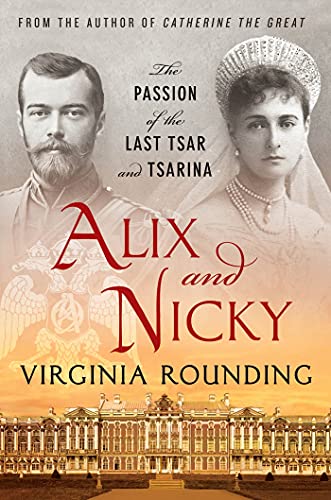
Alix & Nicky tells the dramatic story of Emperor Nicholas II and his wife Alexandra Fyodorovna, the last Tsar and Tsarina of Russia-A penetrating and deeply personal study that gives profound psychological insight into their marriage and how it shaped the events that engulfed them.
There are few characters in history about whom opinion has been more divided than the last Tsar of Russia, Nicholas II, and his wife the Empress Alexandra Fyodorovna. On one hand, they are venerated as saints, innocent victims of Bolshevik assassins, and on the other they are impugned as the unwitting harbingers of revolution and imperial collapse, blamed for all the ills that befell the Russian people in the 20th century. Theirs was also a tragic love story; for whatever else can be said of them, there can be no doubt that Alix and Nicky adored one another. Soon after their engagement, Alix wrote in her fiancé's diary: "Ever true and ever loving, faithful, pure and strong as death"-words which met their fulfillment twenty-four years later in a blood-spattered cellar in Ekaterinburg. Through the letters and diaries written by the couple and by those around them, Virginia Rounding presents an intimate, penetrating, and fresh portrayal of these two complex figures and of their passion-their love and their suffering. She explores the nature and possible causes of the Empress's ill health, and examines in depth the enigmatic triangular relationship between Nicky, Alix and their 'favourite, ' Ania Vyrubova, protégée of the infamous Rasputin, extracting the meaning from words left unsaid, from hints and innuendoes.. The story of Alix and Nicky, of their four daughters known collectively as 'OTMA' and of their hemophiliac little boy Alexei, is endlessly fascinating, and Rounding makes these characters come alive, presenting them in all their human dimensions and expertly leading the reader into their vanished world.Die Inhaltsangabe kann sich auf eine andere Ausgabe dieses Titels beziehen.
Über die Autorin bzw. den Autor
VIRGINIA ROUNDING is a translator and writer who lives in London. She studied Russian at the University of London. She is the author of the critically acclaimed Catherine the Great and Grandes Horizontales.
Auszug. © Genehmigter Nachdruck. Alle Rechte vorbehalten.
Alix and Nicky
The Passion of the Last Tsar and Tsarina
By Virginia RoundingSt. Martin's Press
Copyright © 2013 Virginia Rounding
All rights reserved.
ISBN: 978-1-250-02219-6All rights reserved.
CHAPTER ONE
Setting the Scene: The Romanov Tercentenary
1913
The final curtain is about to drop,
Some fool in the gallery still clasps his hands;
Around their bonfires, cabmen stamp and hop.
Somebody’s carriage! Off they go. The end.
—Osip Mandelstam, 1913 (tr. Robert Tracy)
AT NINE O’CLOCK on the morning of May 19, 1913, the firing of cannon, the clashing of cathedral bells, and the cheering of expectant crowds welcomed the stately appearance of the steamship Mezhen, flying the imperial flag with its double-headed eagle, steaming up the Volga to the city of Kostroma, birthplace of the three-hundred-year-old Romanov dynasty. As the Mezhen slowly approached the specially constructed landing stage, a procession bearing the wonder-working icon of the Fyodorovsky Virgin emerged from the Cathedral of the Assumption, golden vestments glinting in the occasional rays of morning sun breaking through the clouds. Everyone on the imperial ship crossed themselves, as both procession and ship advanced slowly toward the Ipatyev Monastery, the very place from which Mikhail Romanov was summoned in 1613 to become the Tsar of Russia.
At a quarter to ten the imperial family—Tsar (or Emperor) Nicholas II; his wife the Tsarina (or Empress) Alexandra; their four daughters, the Grand Duchesses Olga, Tatiana, Maria, and Anastasia; and their son, the Tsarevich, Alexei—disembarked, to be greeted by the city’s official delegation and offered bread and salt, traditional symbols of hospitality. They then climbed into the waiting cars and were driven the short distance to the monastery, the road flanked by a double line of soldiers, holding back the dense crowds.
At the monastery, the Emperor was greeted by another procession, this one headed by Tikhon, the Archbishop of Kostroma and Galich. Here were also gathered representatives of the local peasantry and descendants of those who had come to beg Mikhail Romanov to accept the throne, at the end of the “Time of Troubles,” three hundred years earlier. They carried objects dating from that momentous occasion, including a cross and an icon that the Emperor and his family duly kissed. They then followed the procession into the grounds of the monastery and toward the Cathedral of the Trinity, in front of which they found other members of the wider imperial family, the array of tall, imposing, and bearded Grand Dukes, most in military uniform, with their assorted wives, mothers, and children. The Empress and her son, both afflicted with physical ailments and unable to stand for long periods, went straight inside the cathedral, while all the other members of the family and their retinue set off again, this time to meet the procession coming from the town with the wonder-working icon, followed by a crowd of thousands. Absolute silence fell as Tsar and procession came face-to-face, broken only by the discordant clashing of the ancient monastery bells.
The Emperor crossed himself, right to left in the Orthodox fashion, and kissed the holy icon, as did his daughters. Then all entered the cathedral to hear the liturgy, followed by a Te Deum. After the lengthy service Nicholas and his daughters went to visit the house of Tsar Mikhail, which had been turned into a museum for the occasion, and where many objects that had belonged to the first Tsar were on display. The Empress was not feeling well enough to go to the museum, and remained in the cathedral with her sister, the Grand Duchess Elisabeth (known to the family as Ella), dressed as usual in her elegant grey habit, as the abbess of her own order of nuns. After a series of farewells, the immediate family returned on board the Mezhen, where they lunched in private.
This brief glimpse of the imperial family afforded to the citizenry and ecclesiastical dignitaries of Kostroma, when the last in the line of Romanov tsars came to venerate the memory of the first, can be examined, like a photograph, to reveal much about the apparently straightforward scene. Central to it is the figure of the forty-five-year-old Tsar himself. Slighter than many of his Romanov uncles and cousins, of medium height, his brown beard and moustache carefully tended, his face lined—sometimes he could look very weary, though the creases around his eyes also came from laughter—nearly always in military uniform and often with a cigarette in his hand, he presented a picture of affable dignity. Very conscious of his own status as autocrat, anointed by God, he nevertheless appeared modest and—overwhelmingly—charming. So many people who met Nicholas (or Nicky, as he was known within the family), whether friend or foe, testify to that charm. “With his usual simplicity and friendliness,” wrote his Prime Minister, Vladimir Kokovtsov. “A rare kindness of heart,” commented Foreign Minister Sergei Sazonov. “A charm that attracted all who came near him,” wrote British Ambassador Sir George Buchanan, who added that he always felt he was talking “with a friend and not the Emperor.” “Charming in the kindly simplicity of his ways,” said his niece’s husband, Felix Yusupov. Nicholas’s eyes, in particular, attracted people to him. His cousin, Grand Duke Konstantin Konstantinovich (a poet, also known by his initials “KR”) wrote of “that clear, deep, expressive look [that] cannot fail but charm and enchant.” Yet the color of these attractive eyes seems to be in dispute. His early biographer Sergei Oldenburg refers to his “large radiant grey eyes” which “peered directly into one’s soul and lent power to his words”; Hélène Vacaresco, who met Nicky when he was still Tsarevich, also wrote of his “large grey eyes.” The English historian and scholar Sir Bernard Pares, on the other hand, who also met the Tsar, refers to the “beauty of his frank blue eyes.” More strangely, Kokovtsov, who had the chance to stare into those eyes many times, writes that they were “usually of a velvety dark brown.” In Serov’s famous portrait, painted in 1900, the eyes are a grey-blue, matching the color of his uniform.
Charm—the art of pleasing other people, and the desire to please—seems never to have been a characteristic of Empress Alexandra Fyodorovna (Alix or Alicky to friends and family). Though possessed of many fine qualities (the chief of which consisted in wholeheartedness and utter loyalty toward any cause, or person, in which she believed), she was also afflicted by self-consciousness and an extreme shyness, which led her to hold herself aloof. Footage that has survived of her at public ceremonies shows her repeatedly bowing her head at the crowds—but stiffly, like a puppet, and only from the neck. Even taking into account the jerky nature of early film, she looks strained, unnatural, ill at ease—quite unlike her genial husband. An attractive woman with fine features and auburn-tinged hair, she was too tense, her mouth too set, her gait too rigid, for her natural endowments to be fully appreciated. And at intervals throughout her life—almost constantly from 1908—Alix had been an invalid, spending much of her time lying down (as can be seen in the family photograph albums) and frequently absent from public...
Setting the Scene: The Romanov Tercentenary
1913
The final curtain is about to drop,
Some fool in the gallery still clasps his hands;
Around their bonfires, cabmen stamp and hop.
Somebody’s carriage! Off they go. The end.
—Osip Mandelstam, 1913 (tr. Robert Tracy)
AT NINE O’CLOCK on the morning of May 19, 1913, the firing of cannon, the clashing of cathedral bells, and the cheering of expectant crowds welcomed the stately appearance of the steamship Mezhen, flying the imperial flag with its double-headed eagle, steaming up the Volga to the city of Kostroma, birthplace of the three-hundred-year-old Romanov dynasty. As the Mezhen slowly approached the specially constructed landing stage, a procession bearing the wonder-working icon of the Fyodorovsky Virgin emerged from the Cathedral of the Assumption, golden vestments glinting in the occasional rays of morning sun breaking through the clouds. Everyone on the imperial ship crossed themselves, as both procession and ship advanced slowly toward the Ipatyev Monastery, the very place from which Mikhail Romanov was summoned in 1613 to become the Tsar of Russia.
At a quarter to ten the imperial family—Tsar (or Emperor) Nicholas II; his wife the Tsarina (or Empress) Alexandra; their four daughters, the Grand Duchesses Olga, Tatiana, Maria, and Anastasia; and their son, the Tsarevich, Alexei—disembarked, to be greeted by the city’s official delegation and offered bread and salt, traditional symbols of hospitality. They then climbed into the waiting cars and were driven the short distance to the monastery, the road flanked by a double line of soldiers, holding back the dense crowds.
At the monastery, the Emperor was greeted by another procession, this one headed by Tikhon, the Archbishop of Kostroma and Galich. Here were also gathered representatives of the local peasantry and descendants of those who had come to beg Mikhail Romanov to accept the throne, at the end of the “Time of Troubles,” three hundred years earlier. They carried objects dating from that momentous occasion, including a cross and an icon that the Emperor and his family duly kissed. They then followed the procession into the grounds of the monastery and toward the Cathedral of the Trinity, in front of which they found other members of the wider imperial family, the array of tall, imposing, and bearded Grand Dukes, most in military uniform, with their assorted wives, mothers, and children. The Empress and her son, both afflicted with physical ailments and unable to stand for long periods, went straight inside the cathedral, while all the other members of the family and their retinue set off again, this time to meet the procession coming from the town with the wonder-working icon, followed by a crowd of thousands. Absolute silence fell as Tsar and procession came face-to-face, broken only by the discordant clashing of the ancient monastery bells.
The Emperor crossed himself, right to left in the Orthodox fashion, and kissed the holy icon, as did his daughters. Then all entered the cathedral to hear the liturgy, followed by a Te Deum. After the lengthy service Nicholas and his daughters went to visit the house of Tsar Mikhail, which had been turned into a museum for the occasion, and where many objects that had belonged to the first Tsar were on display. The Empress was not feeling well enough to go to the museum, and remained in the cathedral with her sister, the Grand Duchess Elisabeth (known to the family as Ella), dressed as usual in her elegant grey habit, as the abbess of her own order of nuns. After a series of farewells, the immediate family returned on board the Mezhen, where they lunched in private.
This brief glimpse of the imperial family afforded to the citizenry and ecclesiastical dignitaries of Kostroma, when the last in the line of Romanov tsars came to venerate the memory of the first, can be examined, like a photograph, to reveal much about the apparently straightforward scene. Central to it is the figure of the forty-five-year-old Tsar himself. Slighter than many of his Romanov uncles and cousins, of medium height, his brown beard and moustache carefully tended, his face lined—sometimes he could look very weary, though the creases around his eyes also came from laughter—nearly always in military uniform and often with a cigarette in his hand, he presented a picture of affable dignity. Very conscious of his own status as autocrat, anointed by God, he nevertheless appeared modest and—overwhelmingly—charming. So many people who met Nicholas (or Nicky, as he was known within the family), whether friend or foe, testify to that charm. “With his usual simplicity and friendliness,” wrote his Prime Minister, Vladimir Kokovtsov. “A rare kindness of heart,” commented Foreign Minister Sergei Sazonov. “A charm that attracted all who came near him,” wrote British Ambassador Sir George Buchanan, who added that he always felt he was talking “with a friend and not the Emperor.” “Charming in the kindly simplicity of his ways,” said his niece’s husband, Felix Yusupov. Nicholas’s eyes, in particular, attracted people to him. His cousin, Grand Duke Konstantin Konstantinovich (a poet, also known by his initials “KR”) wrote of “that clear, deep, expressive look [that] cannot fail but charm and enchant.” Yet the color of these attractive eyes seems to be in dispute. His early biographer Sergei Oldenburg refers to his “large radiant grey eyes” which “peered directly into one’s soul and lent power to his words”; Hélène Vacaresco, who met Nicky when he was still Tsarevich, also wrote of his “large grey eyes.” The English historian and scholar Sir Bernard Pares, on the other hand, who also met the Tsar, refers to the “beauty of his frank blue eyes.” More strangely, Kokovtsov, who had the chance to stare into those eyes many times, writes that they were “usually of a velvety dark brown.” In Serov’s famous portrait, painted in 1900, the eyes are a grey-blue, matching the color of his uniform.
Charm—the art of pleasing other people, and the desire to please—seems never to have been a characteristic of Empress Alexandra Fyodorovna (Alix or Alicky to friends and family). Though possessed of many fine qualities (the chief of which consisted in wholeheartedness and utter loyalty toward any cause, or person, in which she believed), she was also afflicted by self-consciousness and an extreme shyness, which led her to hold herself aloof. Footage that has survived of her at public ceremonies shows her repeatedly bowing her head at the crowds—but stiffly, like a puppet, and only from the neck. Even taking into account the jerky nature of early film, she looks strained, unnatural, ill at ease—quite unlike her genial husband. An attractive woman with fine features and auburn-tinged hair, she was too tense, her mouth too set, her gait too rigid, for her natural endowments to be fully appreciated. And at intervals throughout her life—almost constantly from 1908—Alix had been an invalid, spending much of her time lying down (as can be seen in the family photograph albums) and frequently absent from public...
„Über diesen Titel“ kann sich auf eine andere Ausgabe dieses Titels beziehen.
Suchergebnisse für ALIX AND NICKY: The Passion of the Last Tsar and Tsarina

Beispielbild für diese ISBN
Alix and Nicky : The Passion of the Last Tsar and Tsarina
Anbieter: Better World Books, Mishawaka, IN, USA
Verkäuferbewertung 5 von 5 Sternen

Zustand: Very Good. Pages intact with possible writing/highlighting. Binding strong with minor wear. Dust jackets/supplements may not be included. Stock photo provided. Product includes identifying sticker. Better World Books: Buy Books. Do Good. Artikel-Nr. 5405402-6
Gebraucht kaufen
EUR 6,78
Versand gratis
Versand innerhalb von USA
Versand innerhalb von USA
Anzahl: 1 verfügbar
Beispielbild für diese ISBN
Alix and Nicky: The Passion of the Last Tsar and Tsarina
Anbieter: ThriftBooks-Atlanta, AUSTELL, GA, USA
Verkäuferbewertung 5 von 5 Sternen
Paperback. Zustand: Good. No Jacket. Pages can have notes/highlighting. Spine may show signs of wear. ~ ThriftBooks: Read More, Spend Less. Artikel-Nr. G1250022193I3N00
Gebraucht kaufen
EUR 7,83
Versand gratis
Versand innerhalb von USA
Versand innerhalb von USA
Anzahl: 1 verfügbar
Beispielbild für diese ISBN
Alix and Nicky: The Passion of the Last Tsar and Tsarina
Anbieter: ThriftBooks-Atlanta, AUSTELL, GA, USA
Verkäuferbewertung 5 von 5 Sternen
Paperback. Zustand: Fair. No Jacket. Readable copy. Pages may have considerable notes/highlighting. ~ ThriftBooks: Read More, Spend Less. Artikel-Nr. G1250022193I5N00
Gebraucht kaufen
EUR 7,83
Versand gratis
Versand innerhalb von USA
Versand innerhalb von USA
Anzahl: 1 verfügbar
Beispielbild für diese ISBN
ALIX AND NICKY: The Passion of the Last Tsar and Tsarina
Anbieter: WorldofBooks, Goring-By-Sea, WS, Vereinigtes Königreich
Verkäuferbewertung 5 von 5 Sternen
Paperback. Zustand: Very Good. The book has been read, but is in excellent condition. Pages are intact and not marred by notes or highlighting. The spine remains undamaged. Artikel-Nr. GOR013461176
Gebraucht kaufen
EUR 3,88
EUR 6,55 Versand
Versand von Vereinigtes Königreich nach USA
Versand von Vereinigtes Königreich nach USA
Anzahl: 1 verfügbar
Beispielbild für diese ISBN
Alix And Nicky: The Passion Of The Last Tsar And Tsarina
Verlag:
St. Martin's Publishing Group, 2013
ISBN 10: 1250022193
ISBN 13: 9781250022196
Gebraucht
Paperback
Anbieter: Book Haven, Wellington, WLG, Neuseeland
Verkäuferbewertung 5 von 5 Sternen
Paperback. Zustand: Good. Alix & Nicky tells the dramatic story of Emperor Nicholas II and his wife Alexandra Fyodorovna, the last Tsar and Tsarina of Russia-A penetrating and deeply personal study that gives profound psychological insight into their marriage and how it shaped the events that engulfed them. There are few characters in history about whom opinion has been more divided than the last Tsar of Russia, Nicholas II, and his wife the Empress Alexandra Fyodorovna. On one hand, they are venerated as saints, innocent victims of Bolshevik assassins, and on the other they are impugned as the unwitting harbingers of revolution and imperial collapse, blamed for all the ills that befell the Russian people in the 20th century. Minimal foxing. 400 pages. Artikel-Nr. 1594779
Gebraucht kaufen
EUR 6,07
EUR 21,41 Versand
Versand von Neuseeland nach USA
Versand von Neuseeland nach USA
Anzahl: 1 verfügbar