
Verwandte Artikel zu Intuitive Eating: A Revolutionary Program That Works
Inhaltsangabe
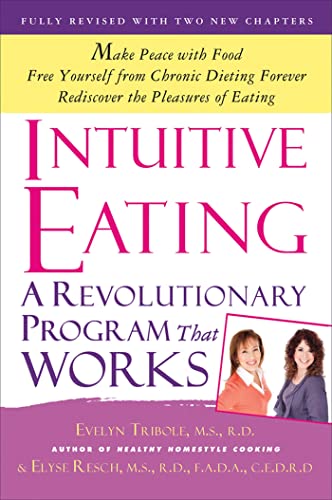
First published in 1995, "Intuitive Eating" has become the go-to book on rebuilding a healthy body image and making peace with food. We've all been there - angry with ourselves for overeating, for our lack of willpower, for failing at yet another diet. But the problem is not us; it's that dieting, with its emphasis on rules and regulations, has stopped us from listening to our bodies. Written by two prominent nutritionists, "Intuitive Eating" will teach you: how to reject diet mentality forever; how our three Eating Personalities define our eating difficulties; how to fine satisfaction in your eating; how to feel your feelings without using food; how to honour hunger and feel fullness; how to follow the ten principles of "Intuitive Eating"; how to achieve a new and safe relationship with food and, ultimately, your body; how to raise an "intuitive eater" - NEW!; and, the incredible science behind intuitive eating - NEW! This revised edition includes updates and expansions throughout, as well as two brand new chapters that will help readers integrate intuitive eating even more fully into their daily lives.
Die Inhaltsangabe kann sich auf eine andere Ausgabe dieses Titels beziehen.
Über die Autorin bzw. den Autor
EVELYN TRIBOLE, M.S., R.D., is an award-winning registered dietitian with a nutrition counseling practice in Newport Beach, California. She was the nutrition expert for "Good Morning America" and was a national spokesperson for the American Dietetic Association for six years. ELYSE RESCH, M.S., R.D., F.A.D.A., has been in private practice in Beverly Hills, California, as a nutrition therapist for thirty years, specializing in eating disorders, Intuitive Eating, and preventative nutrition.
Auszug. © Genehmigter Nachdruck. Alle Rechte vorbehalten.
Intuitive Eating, 3rd Edition
By Evelyn TriboleSt. Martin's Griffin
Copyright © 2012 Evelyn TriboleAll right reserved.
ISBN: 9781250004048
Chapter 1
Hitting Diet Bottom
“I just can’t go on another diet, you’re my last resort.” Sandra had been dieting all her life and knew she could no longer endure a single diet. She’d been on them all, Atkins, Dukan, The Zone, South Beach, grapefruit diet … diets too numerous to itemize. Sandra was a dieting pro. At first dieting was fun, even exhilarating. “I always thought, this diet would be different, this time.” And so the cycle would recharge with each new diet, each and every summer. But the weight lost would eventually rebound like an unwanted tax bill.
Sandra had hit diet bottom. By now, however, she was more obsessed about food and her body than ever. She felt silly. “I should have had this dealt with and controlled long ago.” What she didn’t realize was that it was the process of dieting that had done this to her. Dieting had made her more preoccupied with food. Dieting had made food the enemy. Dieting had made her feel guilty when she wasn’t eating diet-types of foods (even when she wasn’t officially dieting). Dieting had slowed her metabolism.
It took years for Sandra to truly know dieting doesn’t work (yes, she was familiar with the emerging concept that dieting doesn’t work, but she always thought she would be different). While most experts and consumers accept the premise that fad diets don’t work—it’s tough for a nation of people obsessed with their bodies to believe that even “sensible dieting” is futile. Sandra had been hooked into modern-age social mythology, the “big diet hope,” for most of her life since her first diet at the age of fourteen.
By the age of thirty, Sandra felt stuck—she still wanted to lose weight and was uncomfortable in her body. While Sandra couldn’t bear the thought of another diet, she didn’t realize that most of her food issues were actually caused by her dieting. Sandra was also frustrated and angry—“I know everything about diets.” Indeed, she could recite calories and fat grams like a walking nutritional database. That’s the big caveat—losing weight and keeping it off is not usually a knowledge issue. If all we needed to be normal weight was knowledge about food and nutrition, most Americans wouldn’t have weight problems. The information is readily available. (Pick up any women’s magazine, and you’ll find diets and food comparisons galore.)
Also, the harder you try to diet, the harder you fall (it really hurts not to succeed if you did everything right). The best description for this effect is given by John Foreyt, Ph.D., a noted expert in dieting psychology. He likened it to a Chinese finger puzzle (the hollow cylindrical straw puzzle, into which you insert an index finger on each end). The harder you try to get out, the more pressure you exert, the more difficult it is to get out of the puzzle. Instead you find yourself locked in tighter … trapped … frustrated.
SYMPTOMS OF DIET BACKLASH
Diet backlash is the cumulative side effect of dieting—it can be short term or chronic, depending how long a person has been dieting. It may be just one side effect or several.
By the time Sandra came to the office, she had the classic symptoms of diet backlash. Not only diet weary, she was eating less food, yet had trouble losing weight during her more recent diet attempts. Other symptoms included:
• The mere contemplation of going on a diet brings on urges and cravings for “sinful” foods and “fatty favorites,” such as ice cream, chocolate, cookies, and so forth.
• Upon ending a diet, going on a food binge and feeling guilty. One study indicated that post-dieting binges occur in 49 percent of all people who end a diet.
• Having little trust in self with food. Understandably, every diet has taught you not to trust your body or the food you put in it. Even though it is the process of dieting that fails you, the failure continues to undermine your relationship with food.
• Feeling that you don’t deserve to eat, because you’re overweight.
• Shortened dieting duration. The life span of a diet gets shorter and shorter. (Is it no wonder that Ultra Slim-Fast’s sales pitch is, “Give us a week … and we’ll…”
• The Last Supper. Every diet is preceded by consuming foods you presume you won’t eat again. Food consumption often goes up during this time. It may occur over one meal or over a couple of days. The Last Supper seems to be the final step before “dietary cleansing”—almost a farewell-to-food party. For one client, Marilyn, every meal felt as if it were her last. She would eat each meal until she was uncomfortably stuffed, as she was terrified she would never eat again. For good reason! She had been dieting since the sixth grade—over two-thirds of her life! She had attempted periods of fasting and a series of low calorie diets. As far as her body was concerned, a diet was only around the corner—so better eat while you can. Each meal for Marilyn was famine relief.
• Social withdrawal. Since it’s hard to stay on a diet and go to a party or out to dinner, it just becomes easier to turn down social invitations. At first, social food avoidance may seem like the wise thing to do for the good of the diet, but it escalates into a bigger problem. There’s often a fear of being able to stay in control. It’s not uncommon for this experience to be reinforced by “saving up the calories or fat grams for the party,” which usually means eating very little. But by the time the dieter arrives at the party, ravenous hunger dominates and eating feels very out of control.
• Sluggish metabolism. Each diet teaches the body to adapt better for the next self-imposed famine (another diet). Metabolism slows as the body efficiently utilizes each calorie, as if it’s the last. The more drastic the diet, the more it pushes the body into the calorie-pinching survival mode. Fueling metabolism is like stoking a fire. Remove the wood, and the fire diminishes. Similarly, to fuel metabolism, we must eat a sufficient amount of calories, or our bodies will compensate and slow down.
• Using caffeine to survive the day. Coffee and diet drinks are often abused as management tools to feel energetic, while being underfed.
• Eating disorders. Finally, for some, repeated dieting is often the stepping-stone to an eating disorder (ranging from anorexia nervosa or bulimia, to compulsive overeating).
Although Sandra felt she could never diet again, she still engaged in the Last Supper phenomenon. (We regularly encounter this when we see someone for the first time.) She literally ate higher quantities of food than usual, and ate plenty of her favorite foods (she thought she would never see these foods again). It’s as if she were getting ready for a long trip and was packing extra clothes. Just the thought of working on her food issues put her into the pre-diet mentality, a common occurrence.
While Sandra was just beginning to understand the futility of dieting, her desire to be thin had not changed—clearly a dilemma. She...
Hitting Diet Bottom
“I just can’t go on another diet, you’re my last resort.” Sandra had been dieting all her life and knew she could no longer endure a single diet. She’d been on them all, Atkins, Dukan, The Zone, South Beach, grapefruit diet … diets too numerous to itemize. Sandra was a dieting pro. At first dieting was fun, even exhilarating. “I always thought, this diet would be different, this time.” And so the cycle would recharge with each new diet, each and every summer. But the weight lost would eventually rebound like an unwanted tax bill.
Sandra had hit diet bottom. By now, however, she was more obsessed about food and her body than ever. She felt silly. “I should have had this dealt with and controlled long ago.” What she didn’t realize was that it was the process of dieting that had done this to her. Dieting had made her more preoccupied with food. Dieting had made food the enemy. Dieting had made her feel guilty when she wasn’t eating diet-types of foods (even when she wasn’t officially dieting). Dieting had slowed her metabolism.
It took years for Sandra to truly know dieting doesn’t work (yes, she was familiar with the emerging concept that dieting doesn’t work, but she always thought she would be different). While most experts and consumers accept the premise that fad diets don’t work—it’s tough for a nation of people obsessed with their bodies to believe that even “sensible dieting” is futile. Sandra had been hooked into modern-age social mythology, the “big diet hope,” for most of her life since her first diet at the age of fourteen.
By the age of thirty, Sandra felt stuck—she still wanted to lose weight and was uncomfortable in her body. While Sandra couldn’t bear the thought of another diet, she didn’t realize that most of her food issues were actually caused by her dieting. Sandra was also frustrated and angry—“I know everything about diets.” Indeed, she could recite calories and fat grams like a walking nutritional database. That’s the big caveat—losing weight and keeping it off is not usually a knowledge issue. If all we needed to be normal weight was knowledge about food and nutrition, most Americans wouldn’t have weight problems. The information is readily available. (Pick up any women’s magazine, and you’ll find diets and food comparisons galore.)
Also, the harder you try to diet, the harder you fall (it really hurts not to succeed if you did everything right). The best description for this effect is given by John Foreyt, Ph.D., a noted expert in dieting psychology. He likened it to a Chinese finger puzzle (the hollow cylindrical straw puzzle, into which you insert an index finger on each end). The harder you try to get out, the more pressure you exert, the more difficult it is to get out of the puzzle. Instead you find yourself locked in tighter … trapped … frustrated.
SYMPTOMS OF DIET BACKLASH
Diet backlash is the cumulative side effect of dieting—it can be short term or chronic, depending how long a person has been dieting. It may be just one side effect or several.
By the time Sandra came to the office, she had the classic symptoms of diet backlash. Not only diet weary, she was eating less food, yet had trouble losing weight during her more recent diet attempts. Other symptoms included:
• The mere contemplation of going on a diet brings on urges and cravings for “sinful” foods and “fatty favorites,” such as ice cream, chocolate, cookies, and so forth.
• Upon ending a diet, going on a food binge and feeling guilty. One study indicated that post-dieting binges occur in 49 percent of all people who end a diet.
• Having little trust in self with food. Understandably, every diet has taught you not to trust your body or the food you put in it. Even though it is the process of dieting that fails you, the failure continues to undermine your relationship with food.
• Feeling that you don’t deserve to eat, because you’re overweight.
• Shortened dieting duration. The life span of a diet gets shorter and shorter. (Is it no wonder that Ultra Slim-Fast’s sales pitch is, “Give us a week … and we’ll…”
• The Last Supper. Every diet is preceded by consuming foods you presume you won’t eat again. Food consumption often goes up during this time. It may occur over one meal or over a couple of days. The Last Supper seems to be the final step before “dietary cleansing”—almost a farewell-to-food party. For one client, Marilyn, every meal felt as if it were her last. She would eat each meal until she was uncomfortably stuffed, as she was terrified she would never eat again. For good reason! She had been dieting since the sixth grade—over two-thirds of her life! She had attempted periods of fasting and a series of low calorie diets. As far as her body was concerned, a diet was only around the corner—so better eat while you can. Each meal for Marilyn was famine relief.
• Social withdrawal. Since it’s hard to stay on a diet and go to a party or out to dinner, it just becomes easier to turn down social invitations. At first, social food avoidance may seem like the wise thing to do for the good of the diet, but it escalates into a bigger problem. There’s often a fear of being able to stay in control. It’s not uncommon for this experience to be reinforced by “saving up the calories or fat grams for the party,” which usually means eating very little. But by the time the dieter arrives at the party, ravenous hunger dominates and eating feels very out of control.
• Sluggish metabolism. Each diet teaches the body to adapt better for the next self-imposed famine (another diet). Metabolism slows as the body efficiently utilizes each calorie, as if it’s the last. The more drastic the diet, the more it pushes the body into the calorie-pinching survival mode. Fueling metabolism is like stoking a fire. Remove the wood, and the fire diminishes. Similarly, to fuel metabolism, we must eat a sufficient amount of calories, or our bodies will compensate and slow down.
• Using caffeine to survive the day. Coffee and diet drinks are often abused as management tools to feel energetic, while being underfed.
• Eating disorders. Finally, for some, repeated dieting is often the stepping-stone to an eating disorder (ranging from anorexia nervosa or bulimia, to compulsive overeating).
Although Sandra felt she could never diet again, she still engaged in the Last Supper phenomenon. (We regularly encounter this when we see someone for the first time.) She literally ate higher quantities of food than usual, and ate plenty of her favorite foods (she thought she would never see these foods again). It’s as if she were getting ready for a long trip and was packing extra clothes. Just the thought of working on her food issues put her into the pre-diet mentality, a common occurrence.
While Sandra was just beginning to understand the futility of dieting, her desire to be thin had not changed—clearly a dilemma. She...
„Über diesen Titel“ kann sich auf eine andere Ausgabe dieses Titels beziehen.
Suchergebnisse für Intuitive Eating: A Revolutionary Program That Works

Beispielbild für diese ISBN
Intuitive Eating
Anbieter: World of Books (was SecondSale), Montgomery, IL, USA
Verkäuferbewertung 5 von 5 Sternen

Zustand: Very Good. Item in very good condition! Textbooks may not include supplemental items i.e. CDs, access codes etc. Artikel-Nr. 00110472101
Gebraucht kaufen
EUR 3,66
Versand gratis
Versand innerhalb von USA
Versand innerhalb von USA
Anzahl: 2 verfügbar
Beispielbild für diese ISBN
Intuitive Eating
Anbieter: World of Books (was SecondSale), Montgomery, IL, USA
Verkäuferbewertung 5 von 5 Sternen
Zustand: Good. Item in good condition. Textbooks may not include supplemental items i.e. CDs, access codes etc. Artikel-Nr. 00065661976
Gebraucht kaufen
EUR 3,66
Versand gratis
Versand innerhalb von USA
Versand innerhalb von USA
Anzahl: Mehr als 20 verfügbar
Beispielbild für diese ISBN
Intuitive Eating: A Revolutionary Program that Works
Verlag:
St. Martin's Griffin (edition Third), 2012
ISBN 10: 1250004047
ISBN 13: 9781250004048
Gebraucht
Paperback
Anbieter: BooksRun, Philadelphia, PA, USA
Verkäuferbewertung 5 von 5 Sternen
Paperback. Zustand: Very Good. Third. It's a well-cared-for item that has seen limited use. The item may show minor signs of wear. All the text is legible, with all pages included. It may have slight markings and/or highlighting. Artikel-Nr. 1250004047-11-18
Gebraucht kaufen
EUR 5,24
Versand gratis
Versand innerhalb von USA
Versand innerhalb von USA
Anzahl: 3 verfügbar
Beispielbild für diese ISBN
Intuitive Eating: A Revolutionary Program That Works
Verlag:
St. Martin's Griffin (edition Third), 2012
ISBN 10: 1250004047
ISBN 13: 9781250004048
Gebraucht
Paperback
Anbieter: BooksRun, Philadelphia, PA, USA
Verkäuferbewertung 5 von 5 Sternen
Paperback. Zustand: Very Good. Third. It's a well-cared-for item that has seen limited use. The item may show minor signs of wear. All the text is legible, with all pages included. It may have slight markings and/or highlighting. Artikel-Nr. 1250004047-8-18
Gebraucht kaufen
EUR 5,29
Versand gratis
Versand innerhalb von USA
Versand innerhalb von USA
Anzahl: 1 verfügbar
Beispielbild für diese ISBN
Intuitive Eating: A Revolutionary Program That Works
Anbieter: ThriftBooks-Reno, Reno, NV, USA
Verkäuferbewertung 5 von 5 Sternen
Paperback. Zustand: As New. No Jacket. Pages are clean and are not marred by notes or folds of any kind. ~ ThriftBooks: Read More, Spend Less. Artikel-Nr. G1250004047I2N00
Gebraucht kaufen
EUR 5,87
Versand gratis
Versand innerhalb von USA
Versand innerhalb von USA
Anzahl: 2 verfügbar
Beispielbild für diese ISBN
Intuitive Eating: A Revolutionary Program That Works
Anbieter: ThriftBooks-Dallas, Dallas, TX, USA
Verkäuferbewertung 5 von 5 Sternen
Paperback. Zustand: As New. No Jacket. Pages are clean and are not marred by notes or folds of any kind. ~ ThriftBooks: Read More, Spend Less. Artikel-Nr. G1250004047I2N00
Gebraucht kaufen
EUR 5,87
Versand gratis
Versand innerhalb von USA
Versand innerhalb von USA
Anzahl: 2 verfügbar
Beispielbild für diese ISBN
Intuitive Eating: A Revolutionary Program That Works
Anbieter: ThriftBooks-Phoenix, Phoenix, AZ, USA
Verkäuferbewertung 5 von 5 Sternen
Paperback. Zustand: As New. No Jacket. Pages are clean and are not marred by notes or folds of any kind. ~ ThriftBooks: Read More, Spend Less. Artikel-Nr. G1250004047I2N00
Gebraucht kaufen
EUR 5,87
Versand gratis
Versand innerhalb von USA
Versand innerhalb von USA
Anzahl: 1 verfügbar
Beispielbild für diese ISBN
Intuitive Eating: A Revolutionary Program That Works
Anbieter: ThriftBooks-Atlanta, AUSTELL, GA, USA
Verkäuferbewertung 5 von 5 Sternen
Paperback. Zustand: As New. No Jacket. Pages are clean and are not marred by notes or folds of any kind. ~ ThriftBooks: Read More, Spend Less. Artikel-Nr. G1250004047I2N00
Gebraucht kaufen
EUR 5,87
Versand gratis
Versand innerhalb von USA
Versand innerhalb von USA
Anzahl: 2 verfügbar
Beispielbild für diese ISBN
Intuitive Eating : A Revolutionary Program That Works
Anbieter: Better World Books, Mishawaka, IN, USA
Verkäuferbewertung 5 von 5 Sternen
Zustand: Good. Pages intact with minimal writing/highlighting. The binding may be loose and creased. Dust jackets/supplements are not included. Stock photo provided. Product includes identifying sticker. Better World Books: Buy Books. Do Good. Artikel-Nr. 4066900-6
Gebraucht kaufen
EUR 6,09
Versand gratis
Versand innerhalb von USA
Versand innerhalb von USA
Anzahl: 5 verfügbar
Beispielbild für diese ISBN
Intuitive Eating : A Revolutionary Program That Works
Anbieter: Better World Books: West, Reno, NV, USA
Verkäuferbewertung 5 von 5 Sternen
Zustand: Good. Pages intact with minimal writing/highlighting. The binding may be loose and creased. Dust jackets/supplements are not included. Stock photo provided. Product includes identifying sticker. Better World Books: Buy Books. Do Good. Artikel-Nr. 4066900-6
Gebraucht kaufen
EUR 6,09
Versand gratis
Versand innerhalb von USA
Versand innerhalb von USA
Anzahl: 2 verfügbar