
Verwandte Artikel zu A Scientific Approach to Writing for Engineers and...
A Scientific Approach to Writing for Engineers and Scientists (IEEE PCS Professional Engineering Communication Series) - Softcover
Buch 3 von 13: IEEE PCS Professional Engineering Communication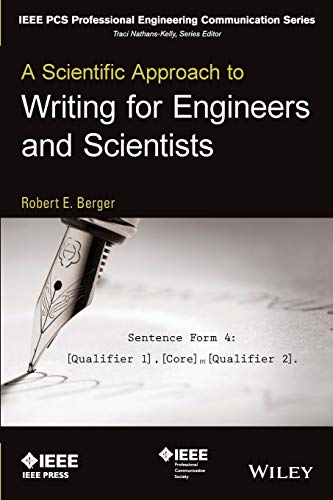
Inhaltsangabe
A SCIENTIFIC APPROACH TO WRITING
Technical ideas may be solid or even groundbreaking, but if these ideas cannot be clearly communicated, reviewers of technical documents―e.g., proposals for research funding, articles submitted to scientific journals, and business plans to commercialize technology―are likely to reject the argument for advancing these ideas.
The problem is that many engineers and scientists, entirely comfortable with the logic and principles of mathematics and science, treat writing as if it possesses none of these attributes. The absence of a systematic framework for writing often results in sentences that are difficult to follow or arguments that leave reviewers scratching their heads.
This book fixes that problem by presenting a “scientific” approach to writing that mirrors the sensibilities of scientists and engineers, an approach based on an easily-discernable set of principles. Rather than merely stating rules for English grammar and composition, this book explains the reasons behind these rules and shows that good reasons can guide every writing decision.
This resource is also well suited for the growing number of scientists and engineers in the U.S. and elsewhere who speak English as a second language, as well as for anyone else who just wants to be understood.
Die Inhaltsangabe kann sich auf eine andere Ausgabe dieses Titels beziehen.
Über die Autorin bzw. den Autor
ROBERT E. BERGER, PHD, brings a unique set of experiences to the subject of writing. In addition to his training as a scientist, he has edited thousands of research proposals, technical topics in solicitations for such proposals, abstracts of winning proposals, and commercialization plans for converting technology to businesses.
Von der hinteren Coverseite
A SCIENTIFIC APPROACH TO WRITING
Technical ideas may be solid or even groundbreaking, but if these ideas cannot be clearly communicated, reviewers of technical documents―e.g., proposals for research funding, articles submitted to scientific journals, and business plans to commercialize technology―are likely to reject the argument for advancing these ideas.
The problem is that many engineers and scientists, entirely comfortable with the logic and principles of mathematics and science, treat writing as if it possesses none of these attributes. The absence of a systematic framework for writing often results in sentences that are difficult to follow or arguments that leave reviewers scratching their heads.
This book fixes that problem by presenting a “scientific” approach to writing that mirrors the sensibilities of scientists and engineers, an approach based on an easily-discernable set of principles. Rather than merely stating rules for English grammar and composition, this book explains the reasons behind these rules and shows that good reasons can guide every writing decision.
This resource is also well suited for the growing number of scientists and engineers in the U.S. and elsewhere who speak English as a second language, as well as for anyone else who just wants to be understood.
Aus dem Klappentext
A SCIENTIFIC APPROACH TO WRITING
Technical ideas may be solid or even groundbreaking, but if these ideas cannot be clearly communicated, reviewers of technical documents—e.g., proposals for research funding, articles submitted to scientific journals, and business plans to commercialize technology—are likely to reject the argument for advancing these ideas.
The problem is that many engineers and scientists, entirely comfortable with the logic and principles of mathematics and science, treat writing as if it possesses none of these attributes. The absence of a systematic framework for writing often results in sentences that are difficult to follow or arguments that leave reviewers scratching their heads.
This book fixes that problem by presenting a “scientific” approach to writing that mirrors the sensibilities of scientists and engineers, an approach based on an easily-discernable set of principles. Rather than merely stating rules for English grammar and composition, this book explains the reasons behind these rules and shows that good reasons can guide every writing decision.
This resource is also well suited for the growing number of scientists and engineers in the U.S. and elsewhere who speak English as a second language, as well as for anyone else who just wants to be understood.
„Über diesen Titel“ kann sich auf eine andere Ausgabe dieses Titels beziehen.
Suchergebnisse für A Scientific Approach to Writing for Engineers and...

Beispielbild für diese ISBN
A Scientific Approach to Writing for Engineers and Scientists (IEEE PCS Professional Engineering Communication Series)
Verlag:
Wiley-IEEE Press (edition 1), 2014
ISBN 10: 1118832523
ISBN 13: 9781118832523
Gebraucht
Paperback
Anbieter: BooksRun, Philadelphia, PA, USA
Verkäuferbewertung 5 von 5 Sternen

Paperback. Zustand: Very Good. 1. It's a well-cared-for item that has seen limited use. The item may show minor signs of wear. All the text is legible, with all pages included. It may have slight markings and/or highlighting. Artikel-Nr. 1118832523-11-1
Gebraucht kaufen
EUR 10,66
Versand gratis
Versand innerhalb von USA
Versand innerhalb von USA
Anzahl: 1 verfügbar
Beispielbild für diese ISBN
A Scientific Approach to Writing for Engineers and Scientists
Verlag:
Wiley & Sons, Incorporated, John, 2014
ISBN 10: 1118832523
ISBN 13: 9781118832523
Gebraucht
Softcover
Anbieter: Better World Books, Mishawaka, IN, USA
Verkäuferbewertung 5 von 5 Sternen
Zustand: Very Good. Former library copy. Pages intact with possible writing/highlighting. Binding strong with minor wear. Dust jackets/supplements may not be included. Includes library markings. Stock photo provided. Product includes identifying sticker. Better World Books: Buy Books. Do Good. Artikel-Nr. 49619420-6
Gebraucht kaufen
EUR 15,08
Versand gratis
Versand innerhalb von USA
Versand innerhalb von USA
Anzahl: 1 verfügbar
Beispielbild für diese ISBN
A Scientific Approach to Writing for Engineers and Scientists
Verlag:
Wiley & Sons, Incorporated, John, 2014
ISBN 10: 1118832523
ISBN 13: 9781118832523
Gebraucht
Softcover
Anbieter: Better World Books Ltd, Dunfermline, Vereinigtes Königreich
Verkäuferbewertung 5 von 5 Sternen
Zustand: Very Good. Former library copy. Pages intact with possible writing/highlighting. Binding strong with minor wear. Dust jackets/supplements may not be included. Includes library markings. Stock photo provided. Product includes identifying sticker. Better World Books: Buy Books. Do Good. Artikel-Nr. 49619420-6
Gebraucht kaufen
EUR 14,62
EUR 5,83 Versand
Versand von Vereinigtes Königreich nach USA
Versand von Vereinigtes Königreich nach USA
Anzahl: 1 verfügbar
Beispielbild für diese ISBN
A Scientific Approach to Writing for Engineers and Scientists
Anbieter: PBShop.store UK, Fairford, GLOS, Vereinigtes Königreich
Verkäuferbewertung 5 von 5 Sternen
PAP. Zustand: New. New Book. Shipped from UK. Established seller since 2000. Artikel-Nr. FW-9781118832523
Neu kaufen
EUR 48,55
EUR 4,85 Versand
Versand von Vereinigtes Königreich nach USA
Versand von Vereinigtes Königreich nach USA
Anzahl: 15 verfügbar
Beispielbild für diese ISBN
A Scientific Approach to Writing for Engineers and Scientists
Anbieter: Majestic Books, Hounslow, Vereinigtes Königreich
Verkäuferbewertung 4 von 5 Sternen

Zustand: New. pp. 256. Artikel-Nr. 96149678
Neu kaufen
EUR 58,73
EUR 7,58 Versand
Versand von Vereinigtes Königreich nach USA
Versand von Vereinigtes Königreich nach USA
Anzahl: 1 verfügbar
Beispielbild für diese ISBN
A Scientific Approach to Writing for Engineers and Scientists (IEEE PCS Professional Engineering Communication Series)
Anbieter: Ria Christie Collections, Uxbridge, Vereinigtes Königreich
Verkäuferbewertung 5 von 5 Sternen
Zustand: New. In English. Artikel-Nr. ria9781118832523_new
Neu kaufen
EUR 63,11
EUR 10,93 Versand
Versand von Vereinigtes Königreich nach USA
Versand von Vereinigtes Königreich nach USA
Anzahl: Mehr als 20 verfügbar
Beispielbild für diese ISBN
A Scientific Approach to Writing for Engineers and Scientists
Anbieter: Revaluation Books, Exeter, Vereinigtes Königreich
Verkäuferbewertung 5 von 5 Sternen
Paperback. Zustand: Brand New. 1st edition. 232 pages. 9.00x6.25x0.75 inches. In Stock. Artikel-Nr. x-1118832523
Neu kaufen
EUR 71,41
EUR 11,67 Versand
Versand von Vereinigtes Königreich nach USA
Versand von Vereinigtes Königreich nach USA
Anzahl: 2 verfügbar
Beispielbild für diese ISBN
A Scientific Approach to Writing for Engineers and Scientists
Anbieter: Kennys Bookstore, Olney, MD, USA
Verkäuferbewertung 5 von 5 Sternen
Zustand: New. Technical ideas may be solid or even groundbreaking, but if these ideas cannot be clearly communicated, reviewers of technical documents are likely to reject the argument for advancing these ideas. This book presents a scientific approach to writing that mirrors the sensibilities of scientists and engineers. Series: IEEE PCS Professional Engineering Communication Series. Num Pages: 232 pages, black & white illustrations. BIC Classification: CBWT; PD; TB. Category: (P) Professional & Vocational. Dimension: 233 x 160 x 14. Weight in Grams: 358. . 2014. 1st Edition. Paperback. . . . . Books ship from the US and Ireland. Artikel-Nr. V9781118832523
Neu kaufen
EUR 80,54
EUR 9,26 Versand
Versand innerhalb von USA
Versand innerhalb von USA
Anzahl: Mehr als 20 verfügbar
Foto des Verkäufers
A Scientific Approach to Writing for Engineers and Scientists
Anbieter: moluna, Greven, Deutschland
Verkäuferbewertung 5 von 5 Sternen
Zustand: New. ROBERT E. BERGER, PHD, brings a unique set of experiences to the subject of writing. In addition to his training as a scientist, he has edited thousands of research proposals, technical topics in solicitations for such proposals, abstracts of winning propos. Artikel-Nr. 447233836
Neu kaufen
EUR 55,59
EUR 48,99 Versand
Versand von Deutschland nach USA
Versand von Deutschland nach USA
Anzahl: Mehr als 20 verfügbar
Foto des Verkäufers
A Scientific Approach to Writing for Engineers and Scientists
Anbieter: AHA-BUCH GmbH, Einbeck, Deutschland
Verkäuferbewertung 5 von 5 Sternen
Taschenbuch. Zustand: Neu. Neuware - A SCIENTIFIC APPROACH TO WRITINGTechnical ideas may be solid or even groundbreaking, but if these ideas cannot be clearly communicated, reviewers of technical documents--e.g., proposals for research funding, articles submitted to scientific journals, and business plans to commercialize technology--are likely to reject the argument for advancing these ideas.The problem is that many engineers and scientists, entirely comfortable with the logic and principles of mathematics and science, treat writing as if it possesses none of these attributes. The absence of a systematic framework for writing often results in sentences that are difficult to follow or arguments that leave reviewers scratching their heads.This book fixes that problem by presenting a 'scientific' approach to writing that mirrors the sensibilities of scientists and engineers, an approach based on an easily-discernable set of principles. Rather than merely stating rules for English grammar and composition, this book explains the reasons behind these rules and shows that good reasons can guide every writing decision.This resource is also well suited for the growing number of scientists and engineers in the U.S. and elsewhere who speak English as a second language, as well as for anyone else who just wants to be understood. Artikel-Nr. 9781118832523
Neu kaufen
EUR 73,88
EUR 35,00 Versand
Versand von Deutschland nach USA
Versand von Deutschland nach USA
Anzahl: 2 verfügbar